1 free read left. Create a free account for unlimited reading + AI research.
Create free account
Keynote: Hybrid Monetisation Deserves a Hybrid Investment Strategy / Supercharge Your Instant Games
Key insights
6 takeaways- 01Facebook’s Instant Games platform currently reaches over 700 million players globally using HTML5 technology within the Facebook and Messenger ecosystems.
- 02Success on the Instant Games platform requires genre-specific strategies: hyper-casual games should focus on viral sharing, turn-based games on referral incentives, and puzzle games on personalized storytelling and A/B testing.
- 03Adopting a hybrid monetization model that combines in-app purchases with in-app advertising is now standard, with over 50% of developers utilizing this approach and 89% of top-performing titles integrating ad SDKs.
- 04Developers often fail to capture latent value by limiting user acquisition to purchase-focused optimization, thereby neglecting the majority of their player base who do not make in-app purchases.
- 05Transitioning to a hybrid investment strategy—balancing mobile app installs, app event optimization, and value optimization—can drive a 50% increase in installs and a 60% boost in day-two retention.
- 06Maximizing long-term return on ad spend requires a holistic approach to KPIs, specifically tracking daily session duration, retention rates, and total ad revenue rather than siloing monetization efforts.
Ask AI about this video
Transcript
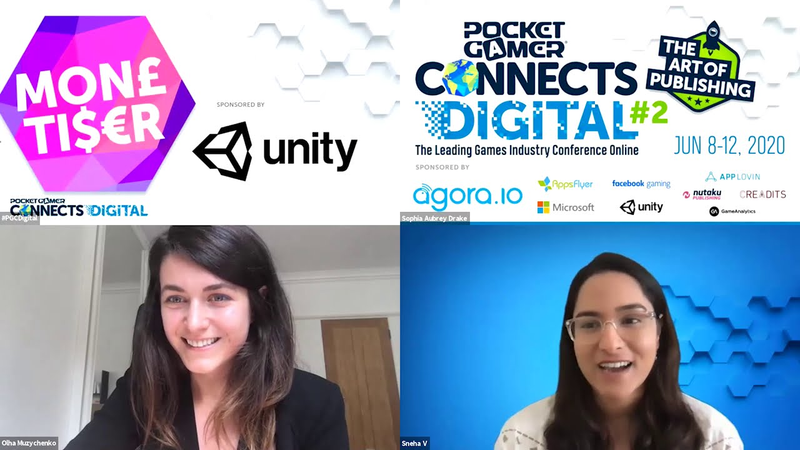
next up though we have our keynote talk from Facebook and it's a double header so I hope you're all looking forward to it we're going to be starting off with all talking about hybrid monetization deserves a hybrid investment strategy and then afterwards she'll be introducing her colleague to talk all about supercharge your instant games revenue if I'm correct hi morning how are you I'm fine thank you where whereabouts you based at the moment no great so you're here as well in the UK so yeah so it's a it's not too early it's not too late it's just a nice morning slot for you thank you for the intro and then ready to start cheering
yeah carry on I'll be here in the background if you need anything but I think we're all looking forward to seeing the talks great all right can you see my screen yeah we've got your screen awesome so hi everyone it's my first virtual talk a digital presentation did digital conference and it's a really special moment for me I'm super happy to share it with you so I'm olya I'm strategic partner manager for instant games team and I'm a proud member of Facebook game and partnerships team to give you a brief idea or where does game and partnerships stand with a whole Facebook game and family it's a team with a mission to create a gaming community and a focus to design a gaming experience for three key pillars which
are developers creators and game enthusiasts that translates into three key players activities play watch and share that help people discover experience and share gaming contents all over Facebook so Facebook gaming community accounts for more than 700 million players that's already huge an instant game specifically it's a lot is a large part of it so this is what I'm gonna focus today and for those of you who are not familiar with instant games platform specifics instant games is a home for html5 games that that have social experience at their core that are playable across Facebook and messenger and that are monetized through audience Network ads and purchases on Android we're also excited to share the news
that within the last few months we lounge is quite a few big new titles on instant games some of them you can see on the slides for example gogo BOTS is it which is a game with a big focus on design on interactivity on social interaction that is now available on the platform it's a game that we launched in partnerships with us to studio and that you can go ahead and check out and play the other example is monopoly Sudoku the game by a cool game studio it's a big historical title with a big loyal gaming community all over the world and we see it as a great example of how big large gaming title can evolve on its own instant games platform so instant games is still a young platform and we continue investing into improving experience for both developers and
players and to give you a few words on our current priorities it's first of all improving unit economics for the games so we invest in a click to play ads and user acquisition tasks on the platform with various types of games and hope to share more learnings and more guidance for you guys to test user acquisition specifically on instant games in the nearest future second thing we focus on O Lord is ecosystem helps health so we invest in improving integrity and quality of both existing games and upcoming games and last one but not least one is we focus a lot on building strong social features that would be suitable for different developers and different games to well different games honors to succeed on instant games I'm sure within the last few years you've seen various types of game genres to be launched in instant
games but to summarize our whole experience we can highlight three keys honors that with Inc have a proven success on the platform so those are hyper casual turn-based and puzzle with hyper casual genre it generally made a lot of noise within the last few years and it was it has proven its success on a number of platforms including instant games so within the last six months we invested a lot into hyper casual genre and figuring out how to make it succeed even more on our platform and how to drive wirel grows for hyper casuals for sharing and we Stern based games they historically proven to be really successful on instant games right from the very beginning and they we have a number of best-case turn-based games that provide guidance in terms of social
mechanics and usage of the tools platform provides for developers so we thought it's worth pausing here and giving you some practical tips of how turn-based games succeeded and was puzzled games they demonstrated a high engagement experience with players and have proven a number of use cases that are quite unique specific to instant games platform so through the talk I will give you a couple of practical examples of how to succeed specifically with the puzzle game so let's kick it off with hyper casual 4 hyper casual games then day 1 retention is a crucial metric that's why it's important to start engaging with players as early as possible one of the efficient ways to communicate with players and instant games is to use a game board so to use a game board you need to ask a player to subscribe for it and a good practice is
to do it as in the gameplay as possible this is exactly what the chop-chop game by cap joy does and you can see it on the slide after after a user subscribes to a game boards you can start engaging him and notifying him on game updates and in this way communicating to a player and bringing them back second thing to keep in mind is fast onboarding for hyper casual games average session is normally quite short so we can't afford spending time on lawn and complex onboarding players need to be need to be able to jump into a gameplay right away so a couple of things to keep in mind for you first of all reduce the loading time as much as possible second provide clear action items for the pool for the first time player who just enter your game and third one in case the game might not be
familiar the game mechanics might not be familiar to a player two players suggest them to go through a crystal-clear tutorial that would explain them the rules and reduce the friction and last one is as I mentioned the average session for hyper casual is quite short it's important to give a player a chance to progress really fast within the game players come to have come to hyper casual games for fast snackable experience so it's important to give them a chance to experience it within a few minutes I already mentioned that average session for for hyper casual games is quite short and so when it comes to sharing and social experience frequency is the key it's important to provide players a frequent fun and
really simple incentive to share content it has to be something meaningful but it also has to be something that players receive every second time they spend two minutes of fun within your game a good example of those of this is sharing yours or after you come you completed a level within the game that's exactly what frv our basketball game does on the slide and that would help the game to boost their virality some other ways to provide an opportunity for players to experience to experience social interaction is upselling them from solo mode to to social mode right after they complete the completed level or suggestion suggesting them to share what the experience they they had through the level share a challenge of friends or invited friend or send a friendly gift
by the after day they managed to complete some part of the gameplay that brings me to turn-based games and when it comes to turn-based games connectivity is the key so what we would need to work with is expanding the friend circle within the game that's exactly what you see on quiz planet which is also on the slide once players enter the gameplay they see who are among their friends already in the game in my case this is joy and players are able to jump and challenge their friends through the gameplay right away in case the players don't have any friends playing what you need to focus on even is incentivizing them to invite friends and showing the benefit of it you can get you can do so by rewarding players for inviting friends and they would be able to get River rewards once friends join just like with hyper casual who is
turn-based games it's important to also work on the engagement you can also do so with custom updates and game modes some ways to communicate with players are notifying players when their friends have joined or not you find players when their friend has completed a turn so that players can go back to the game and start another round and finally puzzle games so those puzzle games the game mechanics might be quite simple but what is really important is to focus on personalizing experience for players as much as possible as an example the developer you see on the slide is a zone mob game studio and within their actual game they enabled friends to cheer for players give them
compliments and encouragement through the gameplay it provides a sense of connection drives engagement drives average session duration and also kind of provides emotional connection with the game what is also a good idea is to work on whole game and storytelling meaning showing players a mission once they enter the game showing them the journey they're gonna be going through with your game and rewarded them on every single milestone so there they're encouraged to keep on going if you want to go further with your puzzle game what we recommend looking into is first of all a be test in rewards both rewards within the gameplay and rewards on milestones that players complete in this way you will see which rewards motivate users best second is working on your monetization strategy by providing extra
rewards with rewarded video and in-game purchases and last one test limited and seasonal offers as scarcity works really well with players as well as relevant seasonal connected offers so to give you a summary and key takeaways for hyper casual games what you need to focus on is fast and boardin fast progression and frequent content sharing incentives for turn-based games what what you need to focus on is connectivity expanding your friends circle within the game incentivizing referrals and notifying players why why game bots on the other fronts activities and with spots all games what you need to focus on is personalized experience
and driving engagements from milestones so we've given you quite quite a lot of information today and I will thinking of leaving a few resources that you can go back any time and deep dive into details first one is instant games developers documentation it's a resource that has all technical guidance for you and even he week's examples so it has all information on the platform tools to make your game succeed second one is our developer blog it has already a lot of cases on instant games you can go and check out but we are also working on a few updates specific to instant games that will be launched within the next month so please subscribe to check our news and that's briefly it for me to
today so at this point I will invite my colleague Sneha who will talk about hybrid monetization and hub hybrid approach to UA thanks so much all yeah thank you hey everyone hi I'm singer I'm a vertical strategy lead for gaming and Amir and I will just start with my session in a moment as I share my screen I hope you're all able to see the screen and the deck today I'm gonna be talking to you about how we believe that hybrid monetization deserves a hybrid approach to you a so even before we were all restricted to staying mostly indoors in
the last couple of months 2020 was forecast by a Pawnee to be Mobile's biggest year with advertising fueling nearly 240 billion in revenue growing twenty six percent year-on-year if you were to greatness further down we've seen that annual spend on display and in video ads through games through 2023 was forecast to grow by 23% and 33% respectively this was in an IDC worldwide handheld gaming report that just came out so we know that there's you tremendous opportunity across the board and yet we know that a lot of this advertising spend is chasing the fewer than 5% of players who we know pay through in-app purchases estimates range from anywhere between three point five and five percent of overall players going ahead and actually purchasing something within a game and so I thought we'd play a bit of a game and get your
input if you could all open out your phones or if you're catching this on your laptop if you could open out a tab go to mental calm and use the code seven eight four zero six and take a shot at this so the question is what percent of app a DS top thousand games in 2019 had an ad SDK installed yes it's coming in 73% says say most folks anybody with any other guesses all right 89% I love how that's gone ahead and switched up in between there's somebody on board with our 28 there all right
maybe we will see 54% come on board there we go interesting so pretty close throughout and I think with that hopefully we've got everyone who's had a boat looks like that stable for a while yeah so the right answer in fact is the majority bang on it was 89% of a penny stop thousand games last year that had at least one our SDK installed and that's what you can see visualized here you can also see that even across the earth this tremendous growth in this weather you cut this by downloads by monthly active users or even by consumer spend hang on to your mentees will we'll play another quick game so by usage how would you rank to following monetization methods for app developers you could go ahead
and reorder it as you feel relevant the same code on Mandy calm it's seven eight four zero six interesting guesses keep them coming I love seeing the teams there so looks like combination of in-app ads and purchases on is currently on top we're seeing things move there we go
does everyone think the majority is going to be right this time as well it'll be interesting to see I think we'll wait another minute for all the votes to come in and and and then figure out what's the what's what's right answer and I go on so in-app purchases in fact is still the top used monetization method with 56% but the next one's very close the combination of in-app ads and in-app purchases is fast catching up with more than half the developers today actually taking a hybrid approach things like pure in-app ads only in fact is is followed by about 49 percent of the developers paid premium apps by 43 and subscriptions which earlier would have in fact been a much smaller share we stream that grew to about 25 percent overall so we know that more than half
the developers today are taking a hybrid approach so why do the vast majority of developers monetizing with a hybrid approach exclusively use UA only for investing in pairs that's the big question that we have and so we really believe that hybrid monetization deserves a hybrid investment strategy and to make this a little bit easier and simplify this consider this analogy you can you can imagine that obviously is spending a lot of time in lockdowns prompted a lot of thinking about this almost from an alcohol and energy point of view but you can actually envision Facebook's acquisition strategies as a liquor cabinet and so if you were to think about our different optimization types whether it's across mobile app installs or Mei app in an optimization or a EO or value optimization or vo each of these will go ahead and help you maximize a certain KPI so when you're thinking about mobile app installs Mei we're
looking at installed volume Dao retention and the key stakeholders there are you add more and product themes so you're trying to drive a steady stream of new users into the game when it comes to app event optimization the KPIs are really important to you are along the lines of payer conversion rates average revenue per paying user CPA and the key stakeholders I typically tend to be more along the marketing lines as well as on from the game's themes and the business objective there would be to acquire low mid value pairs that together drive your overall revenue and then finally we've got what we think of as the equivalent of the term fare in yarn or value optimisation where the Cape here that you're looking at would typically tend to be return on adspend are poo keepsake or purely be the marketing team where you're looking at getting all of those high value payers as well for your game so you think about it each of these you could go ahead and think in visualize vo as you said as a dumper in yarn as a
champagne to get you like your premium players and payers aeo as your Grey Goose vodka it's like it smooth it goes down easy and helps you drive up the overall value for your game and mobile app installs or burn light if you were to think about an equivalent I I think if we're in Ireland I don't know if you'd have called it the Guinness but it's really it goes down easy is to drive your steady stream of new users into the game so when you think about all of this we see that when you focus your UA acquisition strategy on just a particular type of optimization you're only maximizing for a certain KPI and so what that helps is it compromises your long-term performance without when you're not taking all your other kpi's into account and so we believe that a diverse mix of optimizations leads to your improved long-term performance and improve and make sure that all your stakeholders and all your KPIs across the board Ichabod for your game if you have a you a strategy that's
exclusively focused only on return on adspend you will of course go ahead and optimize on value optimisation you tend to get all your high value payers for the game but what that leads you to miss out is missile on a ninety five percent or more of the audience that you can monetize in other whales and so we believe that if you cast wider you a net basis the signals that we have whether that's people who have a new device will have a particular genre who cared about building community who play every day who love a particular type of IP or whether they watch a lot of rewarded video somebody who's an advil somebody who's highly engaged we believe that maximizing and diversifying across the optimization types helps you get all of these other people on board into your game who will monetize through not just IEP outcomes but to ia an IEP outcomes as well and thereby give you incremental advertising revenue and so that's really the principle if you were to visualize this
from a numbers point of view because I knew that I'm a bit more of a numbers person as well and it's easier it is sort of visualize it that way here's why we believe it's critical to consider more than one KPI so consider that each symbol of a person represents a hundred payers so you could have the option of twenty thousand payers with an R Pugh of let's say two dollars and that would go ahead and get you an overall revenue of forty thousand versus acquiring a hundred payers with an r2 of let's say two hundred dollars that would lead you to monetize to let's say a 20 thousand dollar value as an illustration and so we can see that investing and Clair's doesn't just boost ad revenue view it helps you drive incremental volume in terms of lower delivery costs more installs more app opens more sessions and it also leads you to grow your engaged quality community help you grow
players and retention and manner while minimizing fraudulent installs and while controlling for age gating and so we believe that there's a really strong proposition across the board when you diversify optimization types for you a and we went ahead and tested this out internally on Facebook and here are some interesting numbers across a series of ten studies that we did globally across advertisers we solve this diversified optimization strategy of adding in mobile app installs Apple air optimization and value optimization leads to more incremental outcomes than just a Leo or B or only so you saw nearly 50% more incremental app installs nearly a third more incremental app opens nearly 60% incremental d2 retention which we think is super important and also 5% increase in seven-day unique purchases so while we might not have seen a statistical significance or a difference in return
on adspend you're getting all of these upper funnel as well as key revenue metrics to grow for you without denting your overall return on adspend which we think is a super big win so here are some you apron best practices for you to drive this ad revenue from a targeting standpoint we know the broad audiences lead to lower costs consider using manual suppression lists to keep your costs low break out males and females in a separate ad sets if you see that costs are different from an optimization standpoint use a you of specific events that are mapped strong retention or strong ad revenue in your game so for example if you think that somebody getting to the level 15 of your game is a big signal for them to become a big monetize or from playing point of view or from an ad view point of view select that event and do make sure you're selecting an event that occurs within a 1 to 7 day window for optimization from a creative standpoint we know that frequent ad rotation is
essential for keeping your costs low and we see the large volume of creatives is common to find a pocket of success from monetization point of view all the errors of course talk to our instant games but here we also see that rewarded videos particularly strong as an opt-in experience it's not detrimental to the user experience in fact but improves engagement and monetization since you're giving you the option to unlock something that did not send before and from a measurement and testing point of view experiment with the ad load and timing test a combination of rewarded video and interstitial and capture the UA impact on ad revenue you could consider isolating a market and measuring the pre post lift in ad revenue so there's a quick template of what this something like this could look like from a testing point of view where you're doing a pre post setup and you're looking at admin revenue so as an illustration let's say you're looking at cumulatively 0 to 2 ad revenue you're looking at D 0 to 7 ad revenue and let's say the 14 30 90 ad
revenue whichever way you look at it and you look at you a KPI is from an installs let's say daily daily session time Dow D to D some retention and the count of pairs and go ahead test our diversified optimization we're confident that you'll see the value in in driving incremental revenue for you as well as seeing all your app funnel as well as other metrics improve while retaining or maintaining the level of return of ads and that you have so with that thank you very much for your attention and I hope that you have a great time at the rest of the sessions today thanks so much I thank you thank you so much for some yeah really interesting talks there I think there's some yeah great insights and things to add you know for developers to actually action and users there moving forward but you know thank you so much I know you guys have to run so I will say to everyone who obviously wants to continue the channel so you can
all chat amongst yourselves in the discord and we've got that area going so yeah definitely head down into the discord area for all of you in the audience that wants to continue the chat about all that but I won't yeah sure I won't keep facebook because they had to - unfortunately so very sorry that we didn't have any time for the question and answers section
Summary
Facebook’s Instant Games platform currently serves a global audience of over 700 million players, leveraging HTML5 technology to facilitate seamless social gaming experiences within the Facebook and Messenger ecosystems. The platform’s strategic focus centers on enhancing unit economics and ecosystem quality, with specific success strategies tailored to distinct genres. Hyper-casual titles thrive on rapid onboarding and viral sharing mechanics, while turn-based games benefit from expanding social networks through referral incentives. Meanwhile, puzzle games achieve higher engagement through personalized storytelling and rigorous A/B testing of monetization rewards.
A critical shift in the mobile gaming landscape reveals that 89% of top-performing titles now integrate ad SDKs, with over half of all developers adopting a hybrid monetization model that blends in-app purchases with in-app advertising. Despite this industry-wide transition, many developers continue to limit their user acquisition strategies to purchase-focused optimization, effectively neglecting the majority of their player base. To capture this latent value, developers must move toward a diversified investment strategy that balances mobile app installs, app event optimization, and value optimization.
Adopting this hybrid approach yields substantial performance improvements, including a 50% increase in installs and a 60% boost in day-two retention. By prioritizing a holistic set of key performance indicators—such as daily session duration, retention rates, and total ad revenue—developers can drive incremental growth across the entire funnel. This strategy ensures that monetization efforts are not siloed, ultimately maximizing long-term return on ad spend without compromising the stability of existing revenue streams.













Comments