More from Kinephanos
View all
Article
Vaccin vidéoludique: Les jeux comme remède à l'isolement, à l'anxiété et à la désinformation
Kinephanos · 2023
Whitepaper
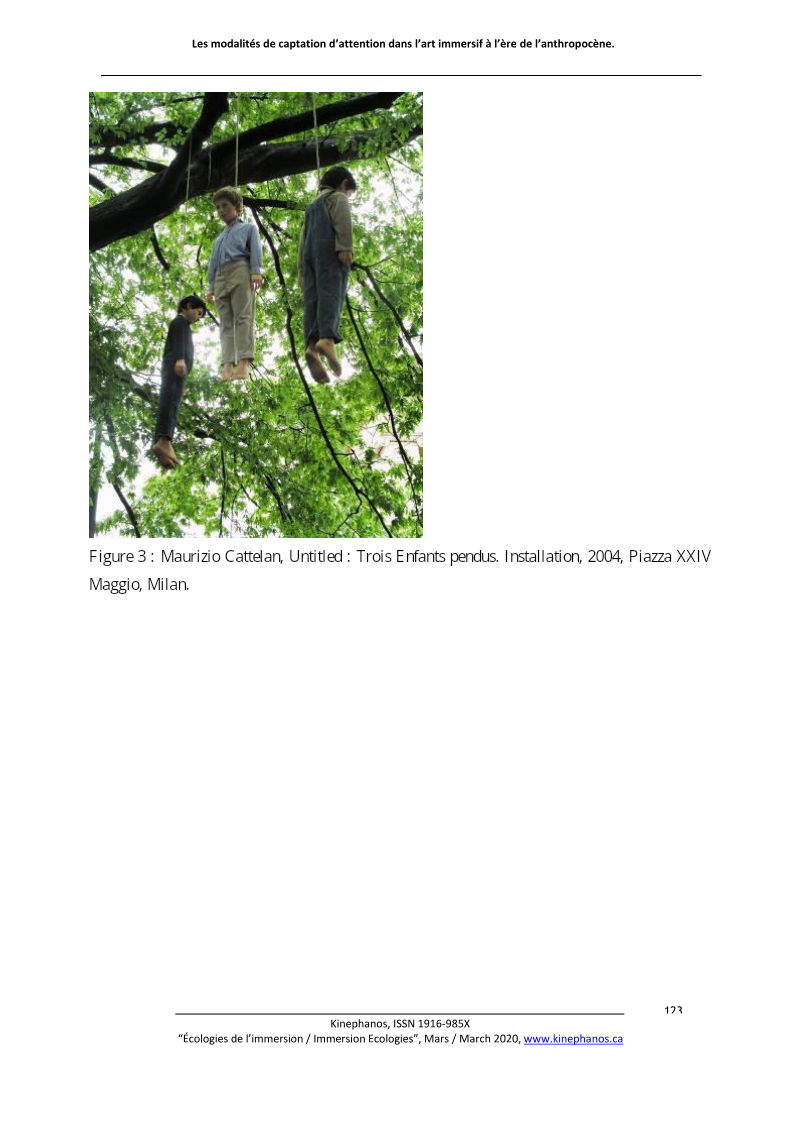
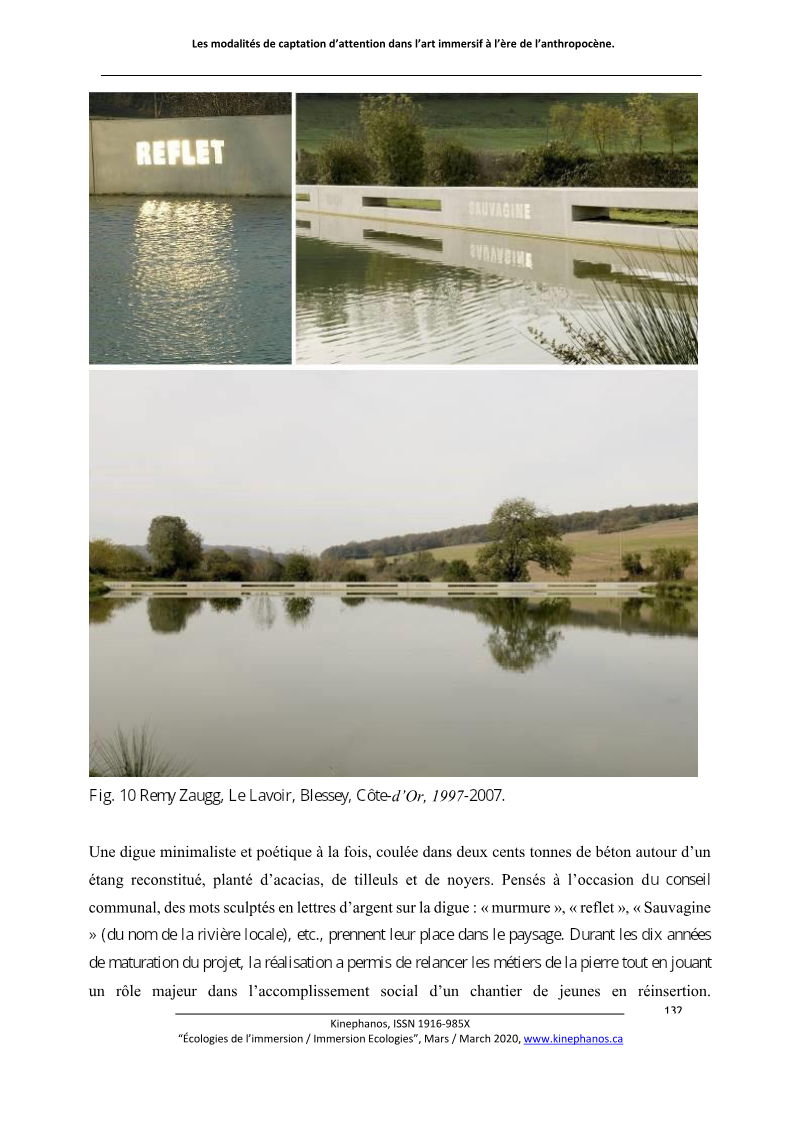
Les Modalités de Captation d’Attention dans l’Art Immersif à l’ère de l’Anthropocène
Kinephanos · 2020
Article
Éléments naturels et espaces immersifs dans les œuvres de Doug Aitken à l’ère de l’Anthropocène
Kinephanos · 2020
Article
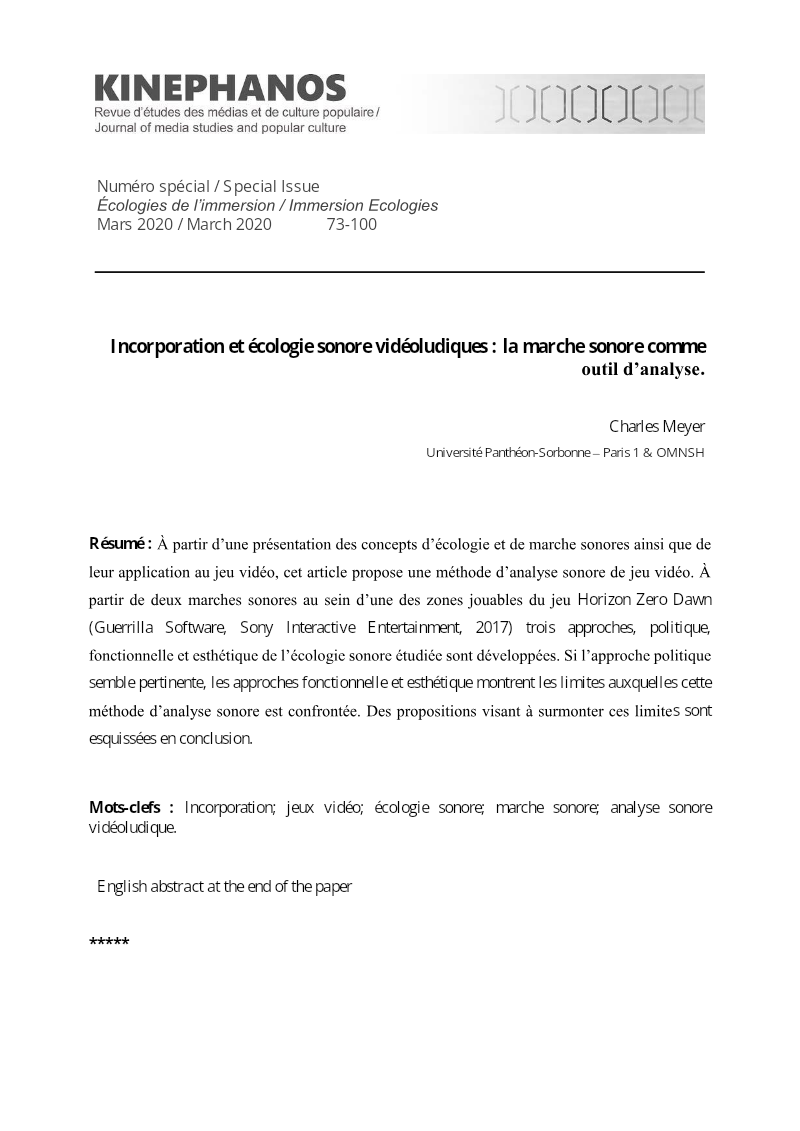
Incorporation et écologie sonore vidéoludiques: La marche sonore comme outil d’analyse
Kinephanos · 2020
Article
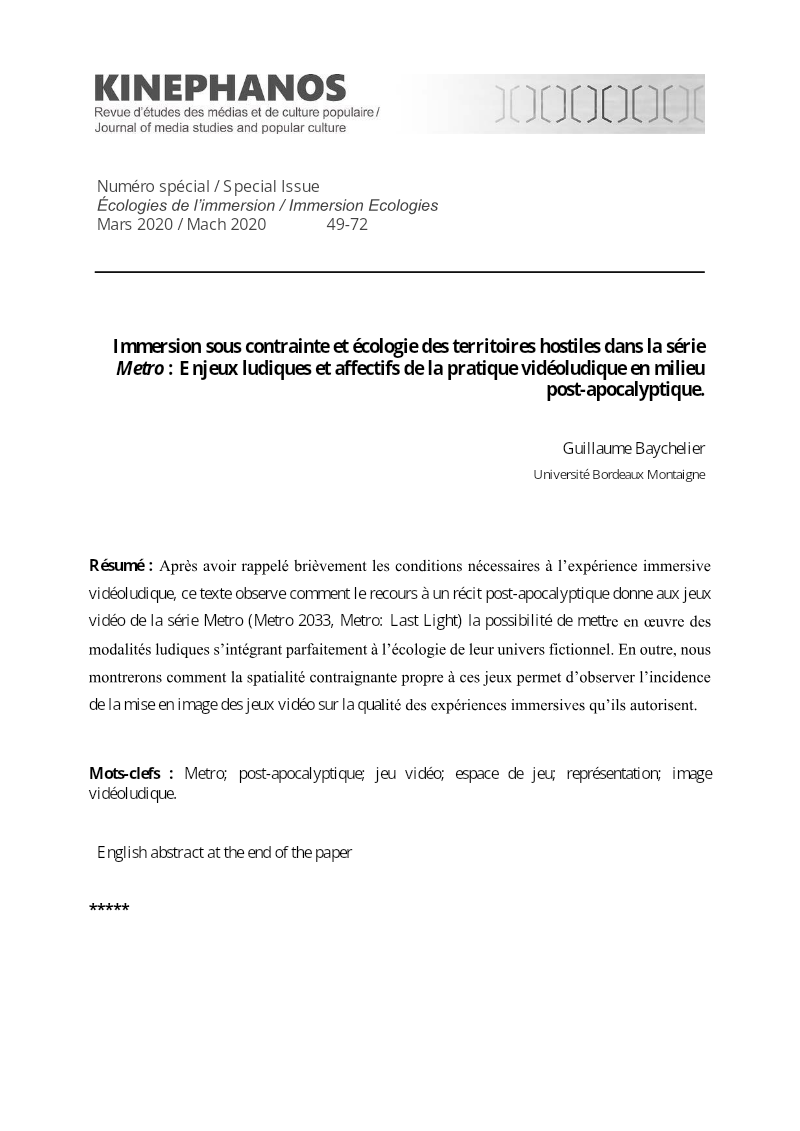
Immersion sous contrainte et écologie des territoires hostiles dans la série Metro
Kinephanos · 2020
Article
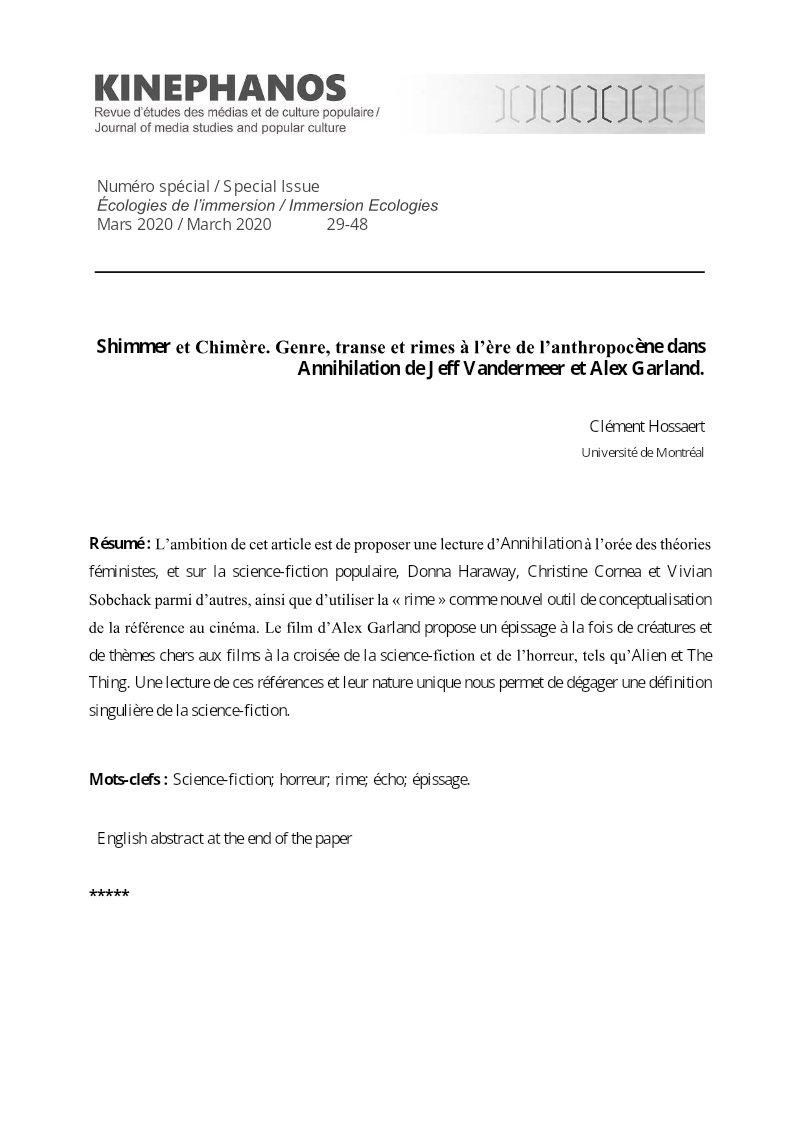
Shimmer et Chimère: Genre, Transe et Rimes à l’Ère de l’Anthropocène dans Annihilation
Kinephanos · 2020
Whitepaper
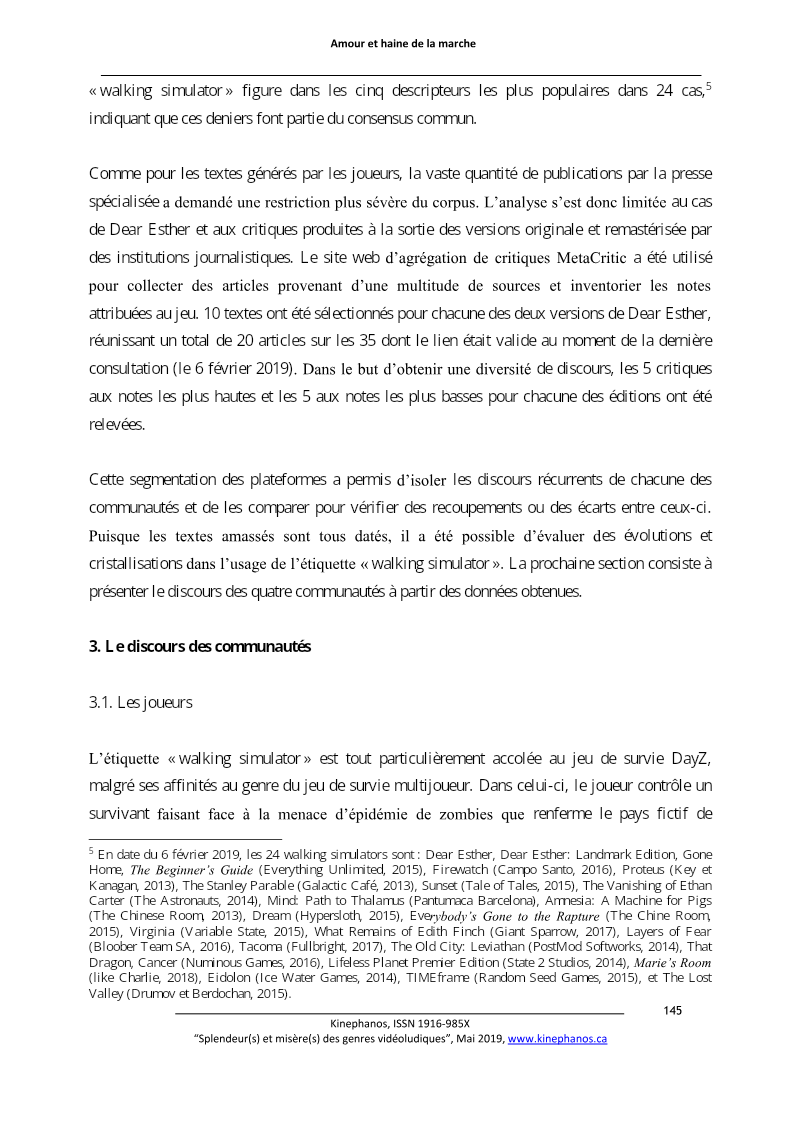
Amour et haine de la marche: Évolution et cristallisation discursives sur le walking simulator
Kinephanos · 2019
Whitepaper
The Ambiguity of Casual Game Parodies
Kinephanos · 2019
Whitepaper
Wargame, Strategy, Action, and Multiplayer in the Early 1980s
Kinephanos · 2019
Whitepaper
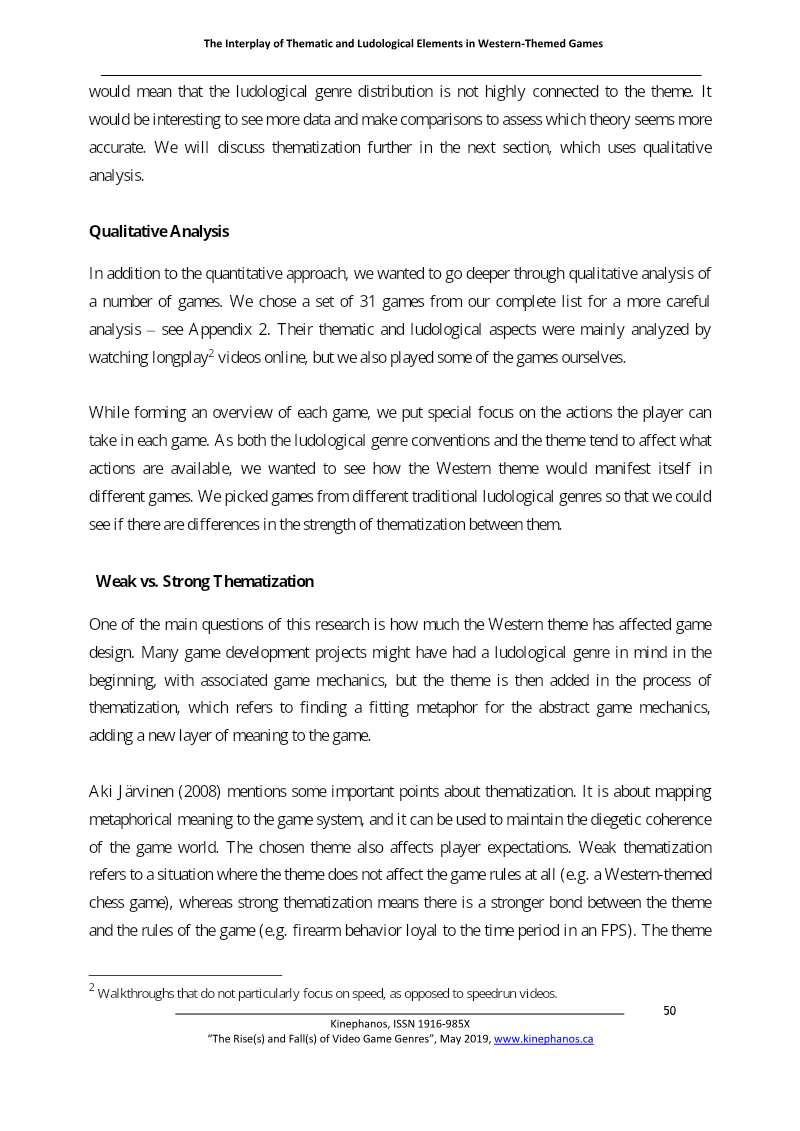
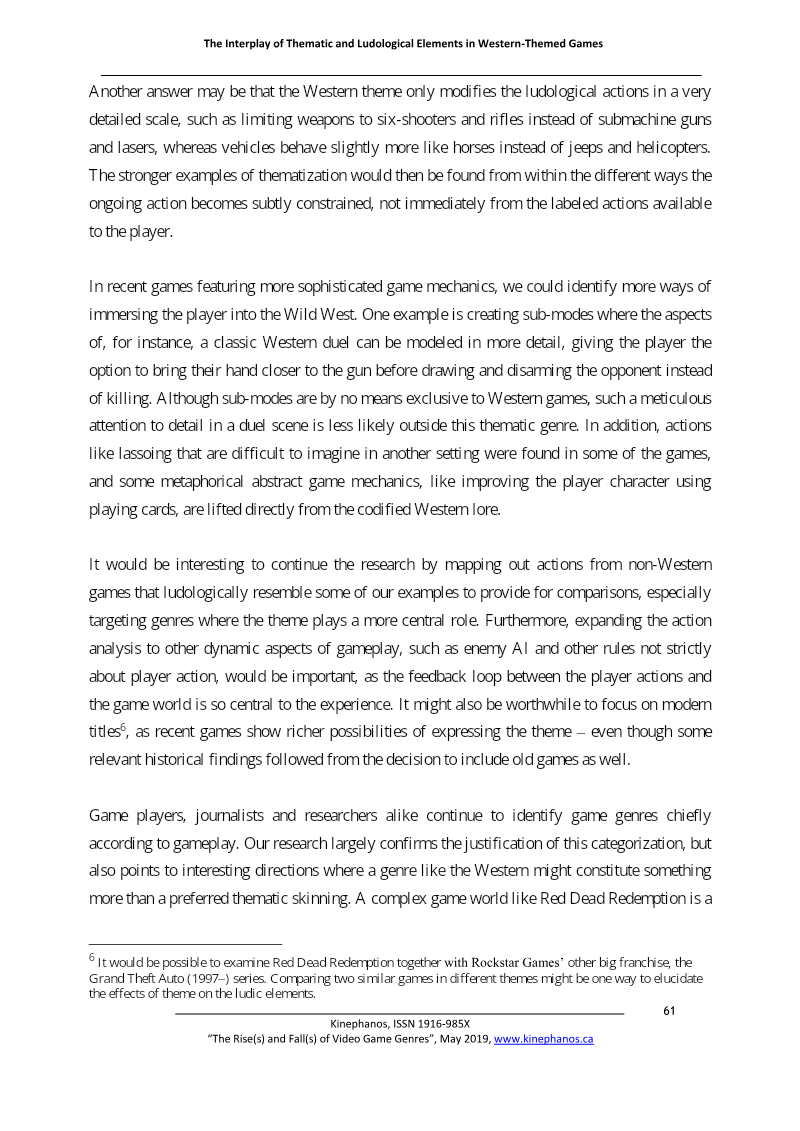
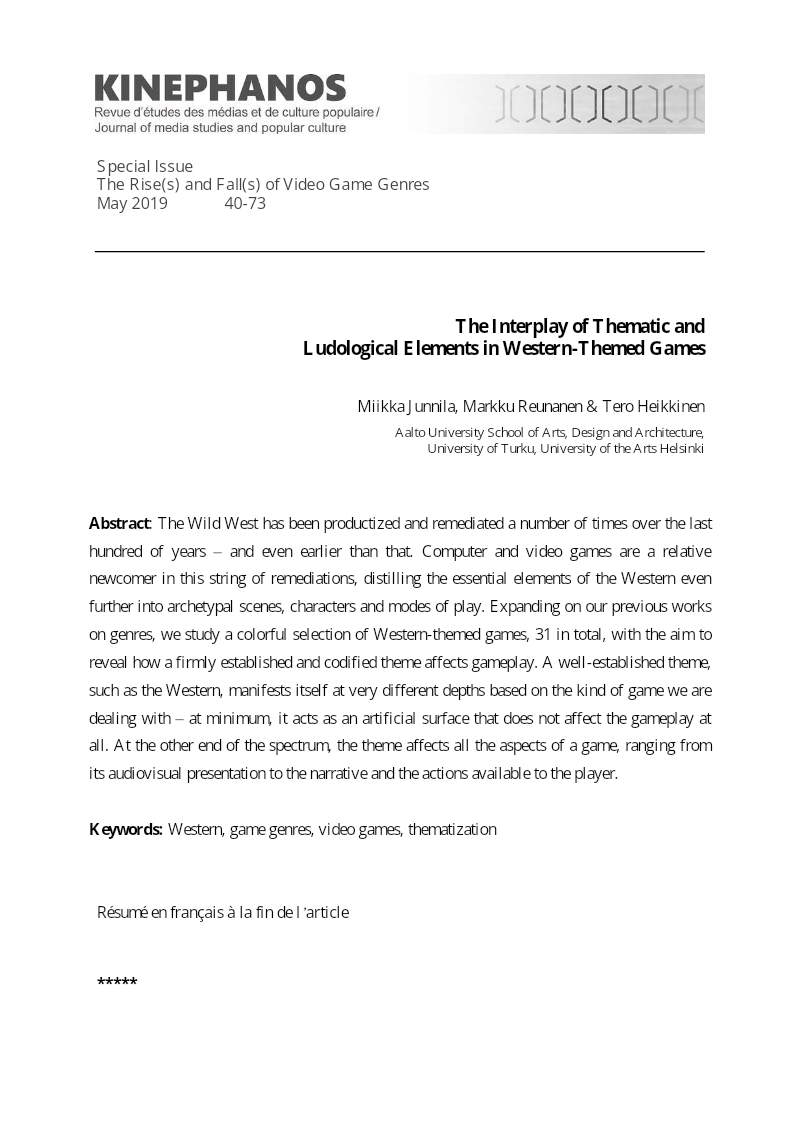
The Interplay of Thematic and Ludological Elements in Western-Themed Games
Kinephanos · 2019
Article
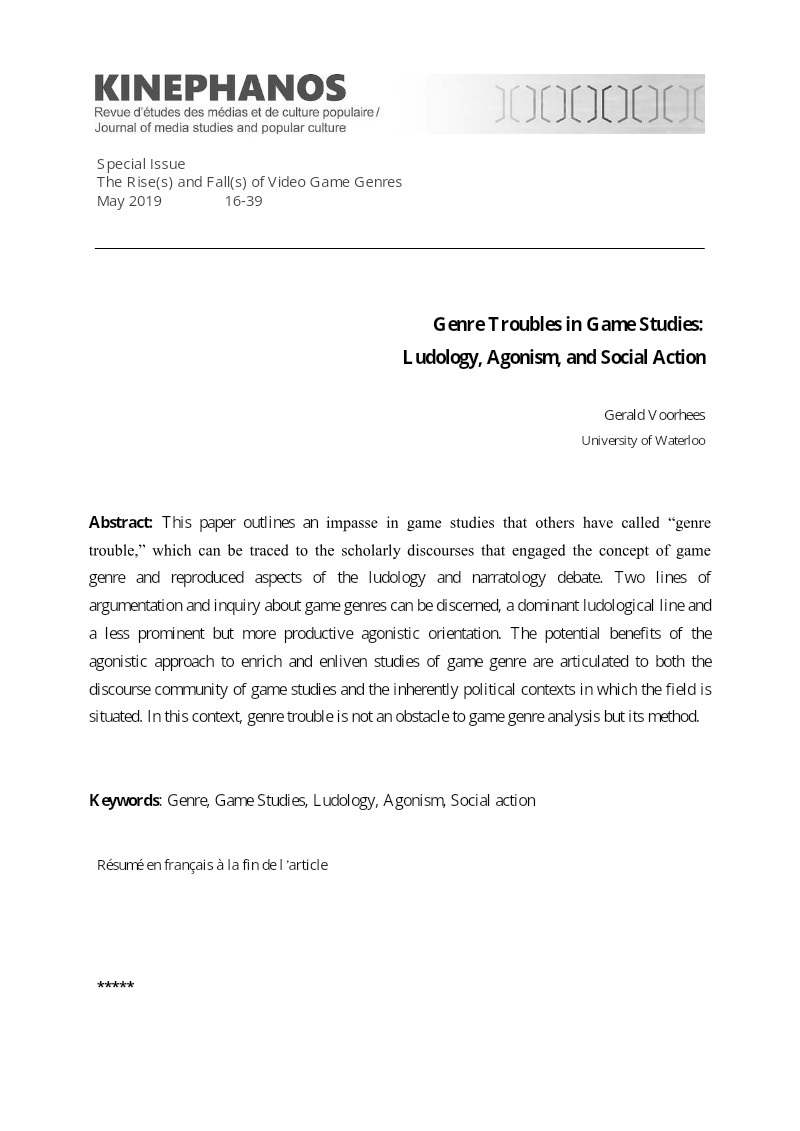
Genre Troubles in Game Studies: Ludology, Agonism, and Social Action
Kinephanos · 2019
Article
Is Game Design for Everybody? Women and Innovation in Video Games
Kinephanos · 2017