ArticleBrutally Honest
I Spent $5,000 Surveying Whales about Fake Ads: Here’s What the Industry Has Completely Wrong
10 Dec 20251 page~2 min full read
Key insights
4 slides
The setup
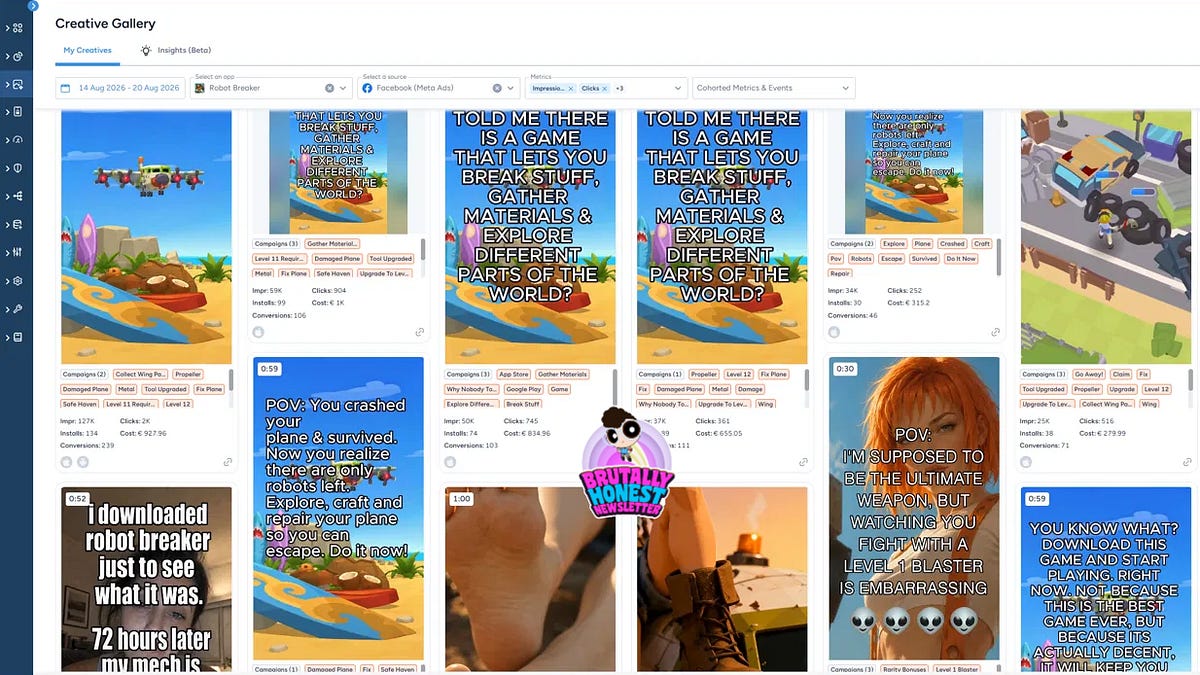
A $5,000 survey asked mobile players about fake ads.
The survey covered mobile players, including high-spending whales.
The disconnect
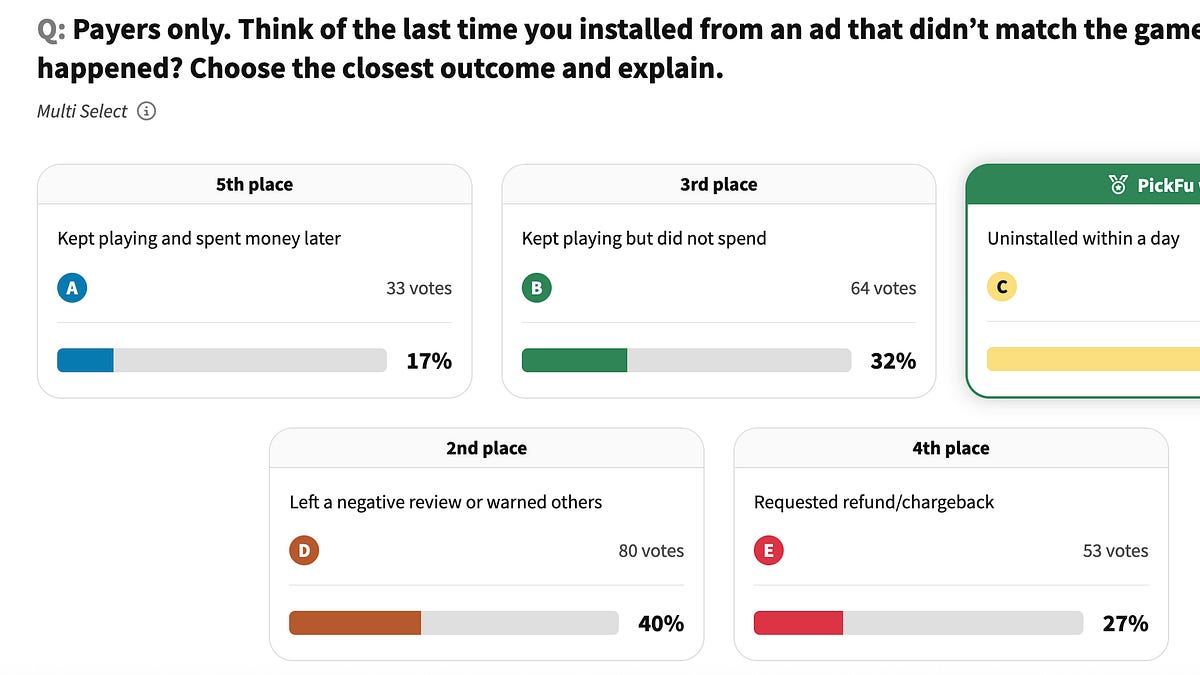
Most users leave, but 17% of whales keep spending.
75% of users uninstall a game immediately upon discovering the gameplay does not match the advertisement. 40% leave negative reviews, while 17% of whales choose to remain and continue spending.
The math
Retained whales can offset high churn and refunds.
Refund rates reach 27%. The revenue generated by retained whales can offset the costs of high churn and refund rates for some studios.
The trade-off
Fake ads depend on cost per install versus retention.
The viability of fake ads depends on whether lower cost per install outweighs the loss in long-term retention and return on ad spend. Professionals must balance reduced acquisition costs against long-term erosion of brand trust.
1 / 4
Ask AI about this report