ArticleBrutally Honest
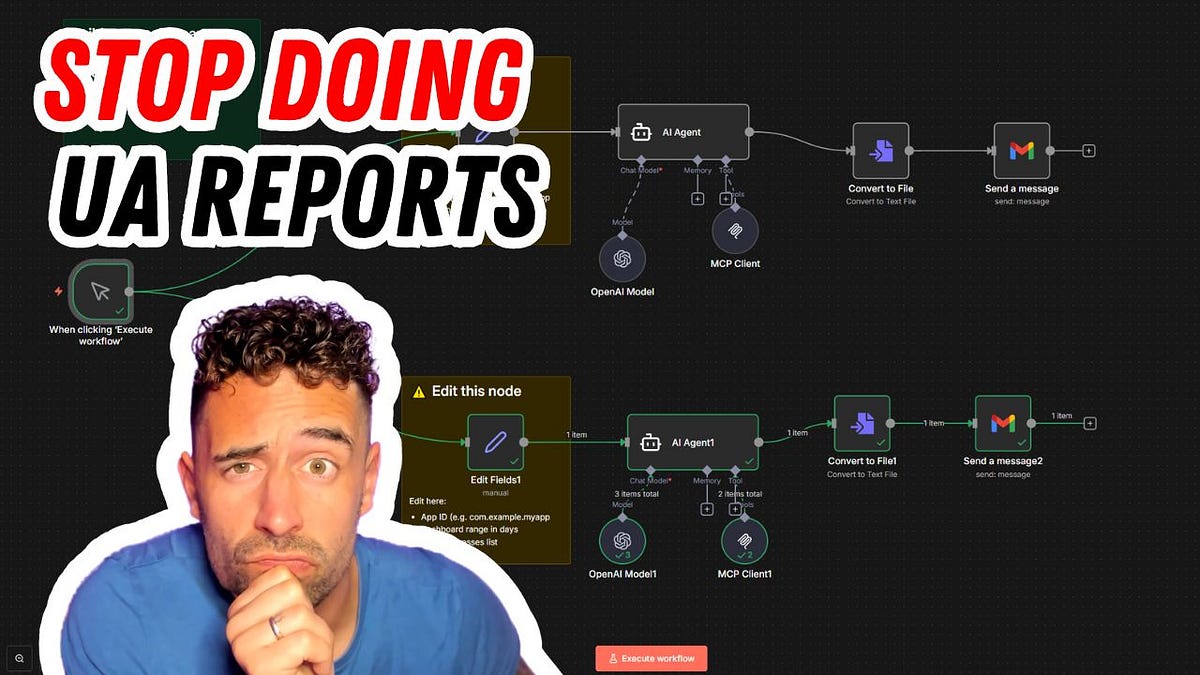
I Automated My Weekly UA Reporting Using AppsFlyer MCP: Here’s How
25 Mar 20261 page~9 min full read
Key insights
4 slides
The manual burden
Weekly UA reporting consumes time on gathering and formatting metrics.
UA managers spend significant time on the mechanical act of gathering and formatting performance metrics.
Key number
Initial setup for an MCP-based integration takes 10 to 20 minutes.
The methodology involves connecting an AppsFlyer account to an MCP-compatible client using an API-based integration. The setup process is estimated to take between 10 and 20 minutes.
What changed
Automated agents monitor installs, CPI, and ROAS with 15% drop alerts.
Automated agents can be configured to monitor key metrics like installs, CPI, and ROAS. They can trigger alerts for performance drops exceeding 15% week-over-week.
Scaling up
Multi-agent architecture consolidates data from multiple client accounts.
For managers handling multiple accounts, the process can be scaled by creating a multi-agent architecture. A central "super-agent" orchestrates data collection across various client accounts to produce a single, consolidated summary.
Multi-account scale. Workflow automation tools like n8n enable the consolidation of data from multiple client accounts into a single summary report via a multi-agent architecture.
1 / 4
Ask AI about this report