1 free read left. Create a free account for unlimited reading + AI research.
Create free accountArticle Naavik
1 free read left. Create a free account for unlimited reading + AI research.
Create free accountArticleNaavik
They are designed to achieve millions of downloads.
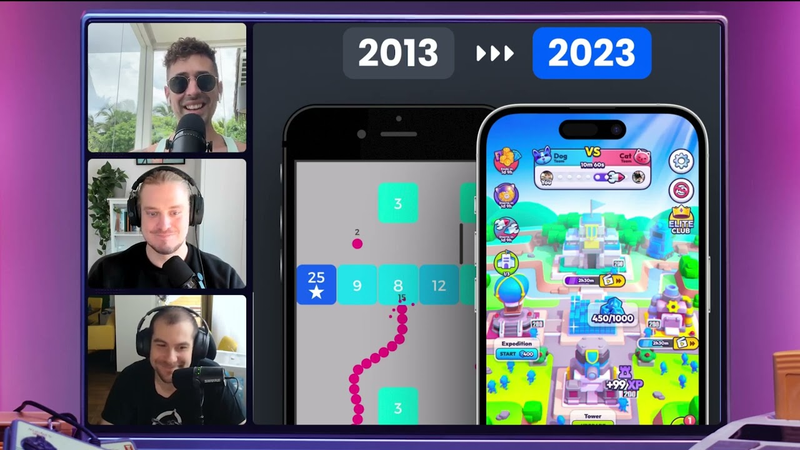
The hypercasual mobile gaming sector has evolved from a niche category of simple, ad-supported titles into a dominant industry force, accounting for over one-quarter of all mobile game downloads. This analysis tracks the genre’s progression from its 2014 origins, characterized by viral hits like Flappy Bird, through its rapid expansion and maturation. The industry is defined by a "try fast, fail faster" development philosophy, prioritizing simple mechanics, portrait orientation, and high-volume user acquisition through advertising.
Data highlights the exponential growth in download volume, moving from 1.1 billion downloads in the 2014–2015 period to 25 billion downloads between 2020 and 2021. The competitive landscape has shifted significantly, with early leaders like Ketchapp losing market dominance to more agile publishers such as Voodoo and Supersonic Studios. The genre has also seen a transition in popular subgenres, moving from early traversal and arcade titles to a current emphasis on puzzle and simulation mechanics, often incorporating deeper progression systems and meta-elements to improve player retention.
Looking forward, the sector is increasingly blurring the lines between hypercasual and casual gaming. Future growth is expected to be driven by the integration of more complex features, such as real-time multiplayer, rogue-lite mechanics, and battle-pass systems. While the industry faces constant pressure to innovate, the core model of rapid prototyping and data-driven iteration remains the primary engine for success. By leveraging technological advancements and borrowing engagement strategies from traditional casual games, the hypercasual segment continues to demonstrate resilience and adaptability in a highly competitive mobile market.
Naavik · 2026

Naavik · 2026

Naavik · 2026

Naavik · 2026

Naavik · 2026

Naavik · 2026

Naavik · 2026

Naavik · 2026

Naavik · 2026

Naavik · 2026

Naavik · 2026

Naavik · 2026
Two & a Half Gamers · 2024