Key insights
4 slides
Market scale
Hybrid-casual games reached 5 billion global downloads in 2022.
The sector represents a strategic evolution in mobile entertainment. It bridges the gap between hypercasual accessibility and mid-core depth.
5 billion
Global downloads in 2022
- Year-over-year increase
- 3%
Revenue mix
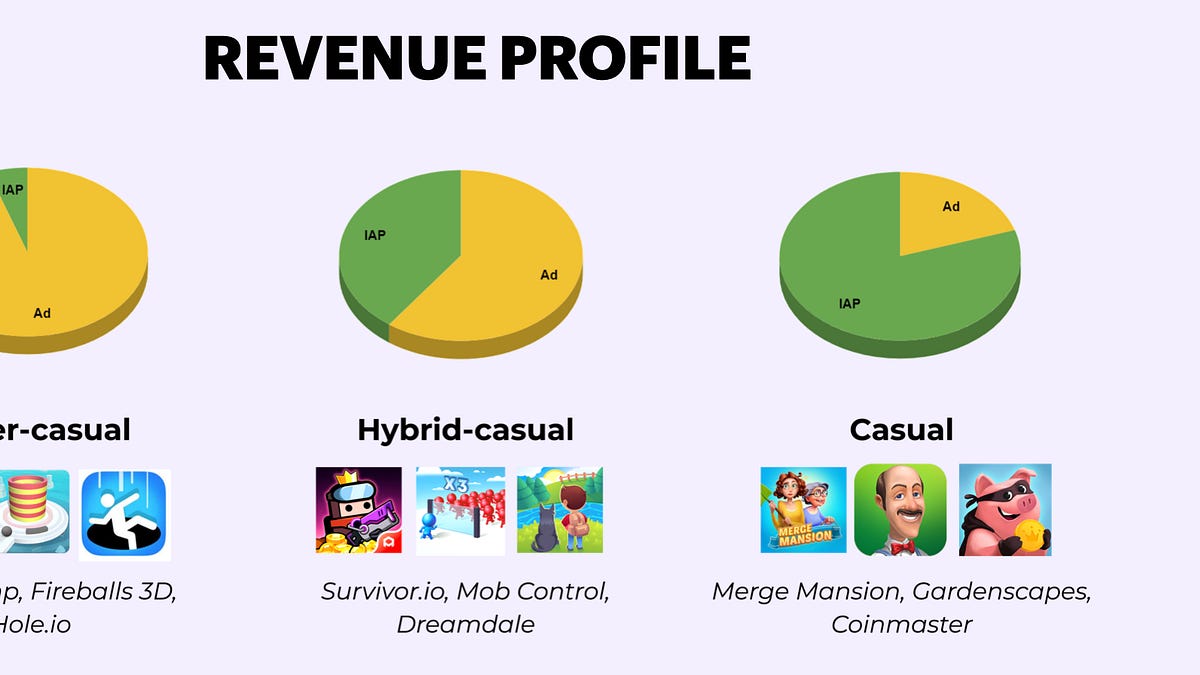
In-app purchases typically account for 40% to 50% of revenue.
Ad revenue remains the primary income source for the genre. This structure enables developers to utilize blended ROAS campaigns.
IAP share. Successful titles typically derive 40% to 50% of their revenue from in-app purchases.
Entry point
Facebook serves as an ideal entry point for smaller developers.
Its native SDK provides sufficient data for effective targeting. Developers do not need an immediate mobile measurement partner.
Platform choice. Facebook is the recommended entry point for smaller-scale developers.
Core thesis
Success depends on disciplined creative strategy and competitive intelligence.
Developers must balance high-volume acquisition with higher lifetime value. Data-driven creative testing maintains competitive performance in a crowded landscape.
1 / 4
Ask AI about this report


















Comments