Key insights
5 slides
The core purpose
Soft launch mitigates risk before global release.
A structured, data-driven soft launch validates server infrastructure, retention profiles, and monetization mechanics. It determines whether a title is viable for long-term profitability or should be discontinued.
The method
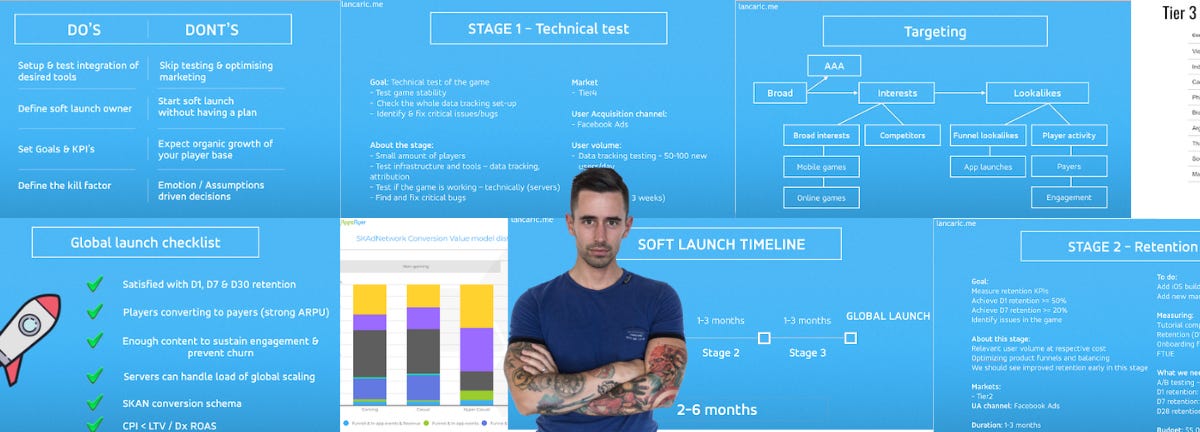
Testing follows a three-stage methodology.
The process is categorized into technical performance, user retention, and monetization efficiency. Each stage requires tracking specific key performance indicators to inform iterative product development.
The loop
Build-measure-learn determines a title's viability.
Developers use a build-measure-learn loop to determine if a title is viable for long-term profitability. It also determines if the title should be discontinued to prevent wasted resources.
Market demands
Rapid iteration ensures technical and commercial stability.
The current mobile landscape requires rapid iteration based on real-world user behavior. This ensures games are both technically stable and commercially sustainable before a wider rollout.
The framework
Rigorous testing ensures commercial sustainability.
The guide outlines the essential framework for conducting a mobile game soft launch in 2024. It emphasizes the necessity of rigorous testing to ensure games are technically stable and commercially sustainable.
1 / 5
Ask AI about this report