1 free read left. Create a free account for unlimited reading + AI research.
Create free account
Creating Impactful Player Experiences With Monetisation
Key insights
6 takeaways- 01Well-implemented ad formats like rewarded videos and interstitials do not negatively impact player retention and can actually enhance the user experience by providing a democratic path for progression.
- 02Success requires a data-driven approach that analyzes specific performance metrics including eCPM, ARPDAU, and impressions per daily active user to isolate the causes of revenue fluctuations.
- 03Advertising must be treated as a core design element integrated into game loops rather than an afterthought to ensure placements feel additive rather than intrusive.
- 04Continuous A/B testing is essential for refining ad placements and tailoring monetization strategies to the specific requirements of different regional markets.
- 05Hybrid monetization models combining in-app purchases with strategic advertising create sustainable revenue streams that support long-term content updates for non-paying players.
- 06Leveraging external expertise for ad mediation and regulatory compliance enables studios to implement sophisticated player segmentation and improve technical waterfall efficiency.
Ask AI about this video
Transcript
[Music] thank you [Music] our next session creating impactful player experiences with monetization we have Eric and Ilya spoke to Eric earlier on hello there a thrilling mobile game keeps players coming back for more but how do you generate the funds to continue building your game a smart monetization strategy puts gameplay first and keeps your players engaged and retained
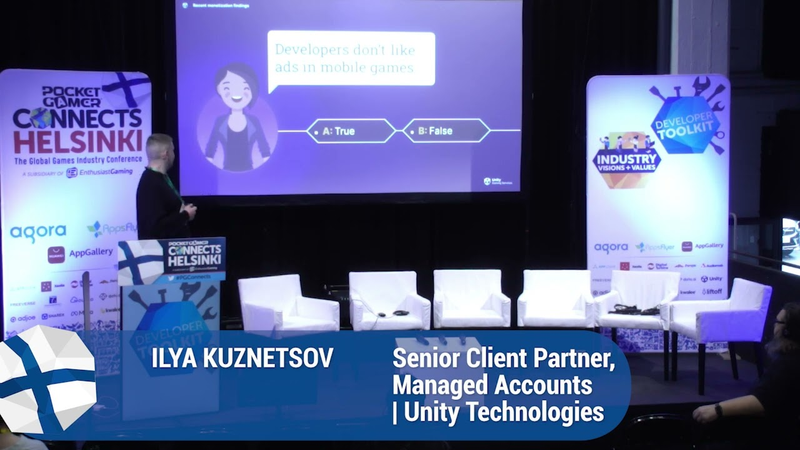
fantastic fellas but it's not going to be a panel at first I will just be presenting alone all right okay and then I will invite Eric to this day ah beautiful Yeah by all means uh Step Up all right thank you and welcome everyone to this second session in the morning of second day of bucket game and connects Helsinki um I really appreciated you waking up early to come and listen to this session and today we will be talking about how can we create impactful player experiences with monetization and optimizing monetization strategy in the game so I will quickly introduce myself my name is Ilya I work for Unity for the last four and a half years and I've been managing supply side of our monetized business managing relationships with our partners and focusing primarily on Nordica Europe uh by the way can you hear me well please let me know okay thank you and
later throughout the session I will invite Eric bonziskowski from deutschemy to CEO of door dreams where we will talk more about their Journey with ad monetization and how it has helped improve their player experience so one second so so today's topic will be surrounding a specifically admonetization and hybrid monetization in fact in nowadays world we know how much uh the competition of the players has increased and that is due to availability of engines due to a
lot of games coming up on App Stores and I'm actually talking about mobile just for reference and uh we also are seeing a lot of viral hits coming out in stores and actually stealing all the attentions of players so in order to stay um relevant it is important to create impactful experiences that are engaging and AD monetization does actually play an important role in this um and as an example we have a great game from the dreams called Drive ahead I'm pretty sure many of you have heard of it many of you have played it but this game is just you know it's fun to play it has amazing gameplay mechanics it has utilized social aspects of shareability of clips and different game modes and it's it's just a good example of how you can create impactful experience and it also utilizes hybrid monetization model which we will dive into a little bit later and so when done right monetization
strategy can actually help create this impactful experience that we're all looking for and we will talk about this a little bit more in details as we dive into this session so I will share a little bit more about the agenda so first we will look at the findings that the unity and meta have found in the recent reports where we surveyed hundreds of thousands of developers next we will break down the steps required to achieve that goal into three separate steps followed by an q a with Eric and closing remarks on how the right partner can help you achieve those goals and if we have enough time we will ask the audience for questions and try to answer them all right so I would like to start with some wake up activity and we're gonna have a couple of myths or misconceptions about ads
specifically ads monetization and I would like to I would like the audience to be engaged into this activity so number one we have a statement that says ads negatively impact player retention could you please raise your hand if you agree with that statement and we have one two three four five and if you disagree please raise your hands yes that's my audience uh it and it's in fact it is false um I would like to um uh well it is false because it first of all it does not negatively impact uh retention and if if ads are implemented right it actually boosts retention and according to the Unity gaming report of 2020 2022 we found that implementing ads in a right way improves day one seven
and 30 retention rates by the percentages you can see on the screen so 26.3 percent for 8.27 and 3.42 respectively um it is it is an important uh it is a very common misconception that as negatively impact yet the data shows the opposite if done right it helps with player retention number two uh developers don't like ads and games so if the first one was about players and how they react to ads now we have developers now I'm pretty sure many of of you in the audience are representing this group could you please raise your hand if you believe that this is true developers or you don't like ads and games one two three four five six seven all right we have uh close to 50 50 and uh well if you if you believe this is false please there is okay actually no more developers disagree with this and
well drum roll moment it is false and it's not just me telling you that this is false we have some data to back it up um in that moment we will look at metas report and if many of you have been yesterday here and uh at the sessions meta has provided meta has shown the findings from their previous report they run um called metas ads and I IEP sorry matters ads IEP and Beyond report and it has shown that 93 of developers they have surveyed uh use in-game ads as part of a hybrid monetization model so in fact more and more developers are moving towards this structure of monetization as it is more difficult nowadays to rely on just one source of Revenue but it's
not only about revenue and later throughout the session you will see why okay let's go to the third misconception in-app purchase content is often not enough to achieve Revenue targets that's a trick question I'll give a hint uh please there is a hand if you believe this is true or not sorry if this is true one two three four and if you believe that this statement is false careful yeah we still have 50 50. uh well in that case it is true in-app purchase content is often not enough to achieve Revenue targets the key word is often and why is this so uh from meta's report once again we're coming back to their uh in-app advertising and ads Beyond report 62 of developers that were surveyed believe in the combination of uh in-app advertising and IEP as the best strategy to meet their uh average revenue per daily
active user goals as well as uh retention goals as they launch as developers launch the game uh and now if we use this finding together with uh another number we found in the unity a mobile insights report which states that less than 1.8 percent spend uh in game that means the majority of audience well many of you know doesn't spend a penny in games and there has to be a way to monetize them every additional Dau is a cost for for the studio in terms of live Ops and uh just by missing out on this opportunity you may be missing a lot of uh on a lot of Revenue um but now as we have gone through these three sorry my voice is not in the best shape in the morning now as we've gone through these three misconceptions let's let's wait a little bit
oh let's talk about three steps that are necessary to align monetization with player Journey so we have just looked at three misconceptions or surrounding ad monetization and I would like to bring your attention to uh the strategy that you may follow in order to create a impactful player experience before I dive into these three steps I would like to um set advertising goals so for example if if a developer decides to implement ad monetization into their game what would be the goals they're trying to achieve and I'm not gonna really uh expect you to come up with these I will help you with that we believe that there are three main goals that advertising can help achieve first of all that is monetizing your player base that includes both pairs and
known pairs the second would be improving with player retention and third would be converting pay non-payers into pairs and throughout these three steps we will see how this can help you achieve these three goals so number one would be identifying surfacing points in your game loops of I'm pretty sure everyone is [Music] um familiar with the with three different Loops there are in game development so it would be core Loop secondary Loop and tertiary group we will be looking at the first two but not in too much details so as we talk about surfacing points what is the surfacing point in the game surfacing point is more is an opportunity where developers can Implement their ads in order to achieve one of their goals that they have set with their ad monetization strategy that could be uh Help The Help a player progress faster whenever they're stuck or introduce new content through ad
Rewards or for example uh fill the gap of transition moment in the game so if there's a natural transition between a level and the menu this could be used as an opportunity to show an interstitial ad now I know many people believe that this is not the best experience although if if implemented right and not intrusively this is not really negatively impact player experience so as we just mentioned we have three advertising goals we would like to achieve with ad monetization for NDS and we also discussed three uh different possible implementations uh depending on your game genre depending on uh the structure of your Loops they could be many and multiple different opportunities this is where ad monetization managers work together with game designers to align on the strategy so that ad monetization does not only
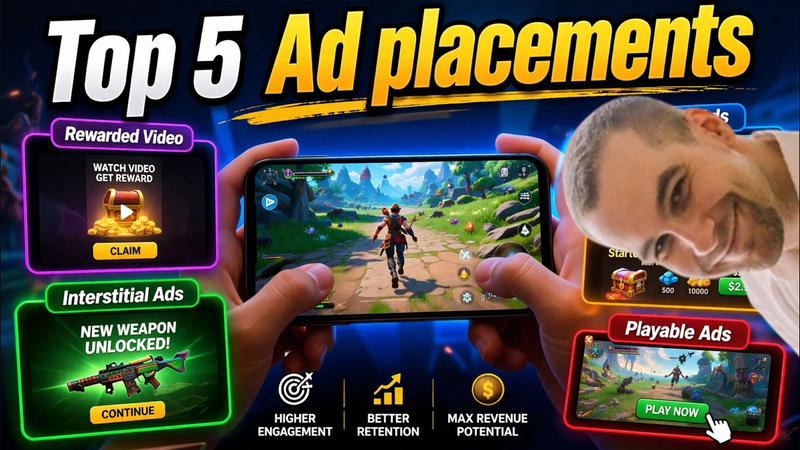
cannibalize the experience it actually supplements it by providing additional value how to do that let's look at our next slide which is actually which covers the integration part so as we have identified multiple surfacing points uh that help us achieve the goals we have set out in the first place and I would like to remind them monetizing our player base improving player retention as well as converting pairs into non-pairs it is now the time where we look at the potential opportunities and integrate the right format commonly used formats in mobile games nowadays are well first of all video advertising and video ads are divided into two categories it's either interstitials or rewarded videos both formats typically cover the whole screen yet they're used in different ways and have some specifics in terms of their configurations for example as mentioned before the
first advertising goal which is monetizing your player base can be very effectively achieved by interstitials now if we are worried about our paying audience we may exclude them from seeing these ads so those who are in your pairs pairs category or cohort there are ways to make sure they are only exposed to rewarded video ads once again that is depending on your structure and how you believe what you believe is the right strategy for an impactful player experience next we have a lot of Mechanics for example it's a very complicated game with 12 different game modes you don't want to introduce all the game modes at once uh to to the player this can be really overwhelming instead these can be unlocked through an ad reward uh properly dosing content and actually incentivizing the player to get access to it is one of the good strategies to make sure your players are
having enough time to process the new information they're being exposed to next we can also introduce in-app purchases so whenever you have a new game mode you may also likely introduce a new uh in-app purchase product offering to try it out or offering it as a temporary let's say gift as a reward for watching a video ad is also one of the ways how you can convert your pairs players into non-payers oh sorry players into payers uh once again uh these three goals these three is uh sorry we just covered the three goals we initially set out and how integrating ad monetization can help you achieve them um if if by the way you have questions about this part please remember them we we should have enough time after the session to cover them all right now once you have integrated ad monetization into your game it is important to one second I think
it's once again Frozen yeah so it is important not to stop there and actually continue optimizing and measuring your results so I would say level up your strategy by measuring and optimizing game development in general games are a data product in addition to entertainment value they provide it is important to identify the key metrics that ad monetization managers have to follow there's so many of them but I would like to point out three most important ones that would be ecpm arpdale and impdow ecpm stands for Effective cost per mil which is essentially the revenue generate per thousand Impressions shown in your game Impressions being a video ad show then arpdale well average revenue daily active user and Impressions per daily active user once you have set out the analytics tools to track these metrics it is important to iterate a different
adminization strategies but never avoid never avoid a b testing a b testing is your best friend actually because there are many different factors that may affect your results and metrics in order to factor out external sorry in order to factor out external events that may be affecting your results please make sure you a B test everything so if you decide to add an additional placement in your game it is important to a B test it over time you will see that there may be very not obvious ad placements that work really well and there every placement is unique to your game to your audience and to your genre don't try to copycat be creative and iterate always reiterate in addition to testing different placements in your game it is important to uh uh work with your ad monetization software or very
often developers use mediation software and access uh and unlock access to more demand sources by uh adding more networks in your stack uh whenever as your game grows there's more uh potential ad viewers meaning that more and more demand sources will be needed in order to compete for the impression in addition to that once the game grows and your audience spreads out globally well it is important to work on every country tier or every uh sorry it is important to set out a strategy specific to uh your country groups for example you have tier one countries you have tier two and three they have different pricing structures and it is important to make sure that all these are aligned with the region you're working with on that note I would like to and one second we have
a slightly delayed with load I would like to invite my friend and colleague and uh great partner Eric Francisco on stage uh we will talk about how do dreams supports a winning player experience and how advancing has helped them achieve all the goals we have set out today and yes um Eric would you like to share a little bit more about uh oh yeah I'm gonna take a seat off would you like to share a little bit more about Drive ahead and the door dream studio with the audience hello folks my name is Eric I'm CEO at the dude dreams game Studio uh we believe that most games out there just provide mere uh competition against faceless strangers and we'd like to be a studio that really brings your family and friends together to play We're the developers of Drive ahead Drive ahead is a gladiator car fight game so the simple
premise of the game is that you get points by knocking friends in the head with a car and I'm glad to see some people chuckle there because that's the reaction we've received from about 225 million people all over the world so so that's the number of organic downloads We have with the with the game so far uh we're a studio based in Helsinki nearly 20 people and we're all focusing on developing Drive ahead there's lots of cool stuff we can do with live Ops still and we're even bringing new features like real-time online multiplayer into the game thank you Eric and actually I remember when I was looking at metrics majority of player base uh comes back to your game even after months of playing so it's like an evergreen title that lives in hearts of mobile Gamers for ages and uh yeah that's just an amazing success story and I love coming back to that
game myself so thank you for developing it um I think it's good if we just discuss a bit more in details your journey and uh could you could you share a little bit more about the goals that dog dreams was trying to achieve with ad monetization in Drive ahead and if those goals aligned with the ones I just talked about surely yeah well obviously when we first launched the game and we put the ads there it was to make money so so I think like ads are really great great solution for monetizing a large player base or a large the large portion of the player base we were quite young Studio quite young team when we originally launched the game and and when it came to like this free to play monetization the the system wasn't very Advanced so by putting rewarded video and interstitials in the in the game you
could start monetizing the audience and the game right away and that Revenue provided us with the runway to make updates bring new content experiment things with in-app purchases and and allows us to consistently work towards towards uh increasing the lifetime value of the user so so just simply making money was like the the thing the the important thing because you know we are a professional studio and you know you need to pay salaries to the team after that then of course the free-to-play thinking has evolved in our studio and and we've been thinking of this what gets people to play the game for a long time and and uh I think ads are a really great way to to give these players uh a sense of progression and access to fun because we we realize that not everybody
is able or they don't necessarily want to spend money in the game so so we want to give them that opportunity also so so then you enter into this more like this this optimization phase where where let's say that you have ad placements with timers and and that allows to create an appointment mechanics so if the player in in the case of Drive ahead you know you want to unlock cars and you want to level them up for more power and you need those parts and you can get them of course by grinding by play by playing the game actively but maybe there's a boss fight going and you really want to level up before that so you know you can watch a bar watch an ad and you get a container and you might get some something that's really useful for the next battle so this is more like optimizing and and using rewarded video for an appointment mechanic and then lastly you know I I think that uh people who it's it's not that either you
spend money in the game or you don't so so often people who make in-app purchases also like to watch rewarded video and and we can use these these ads in the game to give them uh a free taste of what you could get if you spend money in the game and we've been using rewarded video to teach people to go to the shop in the game that you know in the shop you can buy gems and you can buy car parts but there's a part of the shop where there is a free box and and some of them are really good but then you know they're not available all the time so so you go there and you can get the box and then then you want to go check like when is it available again the next time and while you're there maybe you browse some other offers and and that way you know you might convert into a paying user so what we just heard is exactly confirming that there are three goals making money or monetizing your player base helping your players progress so making them giving them this
sense of progress by appointing mechanics and encouraging them to check out your storefront in the IAP store so that's great and you mentioned you're using both interstitials and reverted video ads yeah so in Drive ahead we want to have a hybrid approach in monetization so yes there are these in-app purchases there there's rewarded video and and we do use interstitials also and we even have been using in-game ads now like these native in-game ads for for about a year and I think it's it's a question of like allowing everybody to choose how they want to invest and spend money in the game so it's a free to play game if you want to grind and you want to play a lot show your skill you know you can progress we we don't want to put pay walls there if you want to want to take a chance and feel lucky then you can watch rewarded video you're going to get
something good but it's going to be a little bit random so so so so so uh yeah you wanna may want to play the gotcha a couple of times randomize the rewards yeah yeah but and then if you want something for certain and you want it right away then you spend money and you make an in-app purchase so the the player always has a choice how they want to want to monetize in the game yeah and has your game always followed like a hybrid monetization model of where you have both ads and IAP monetization structure yes it's been there from the beginning and I think like you know sometimes you hear game developers say that that my goal is to make this game design so good and the monetization so good that someday we're gonna take out all the ads and my reaction then usually is that wow you're a real jerk you know like like we are very wealthy
so somebody is talking to me drinking a seven Euro smoothie they picked up from the subway station on the way way here and you're saying that I want to take out the ads you know this is the most democratic way to monetize players and the reason why we need to monetize them is that we want to continue updating the game bringing awesome new content new features and that's not possible without monetizing so so that's why there has to be a hybrid approach so you want to make in-app purchases you can make in-app purchases that's great this is what we offer there's rewarded video if you just love playing the game that yeah okay we're gonna start showing those interstitials at some point yeah so essentially hybrid model really meets both Studios goals and players goals especially those who can't really uh let's say spend in games um yeah I agree with you it's a very Democratic way of monetizing game and actually improving player experience and
helping the studio continue running their operations okay um well that's a lot of insights you shared today thank you Eric I think we have a lot of um both beginning beginner and advanced developers here in the studio uh I would say what do you think what advice could you give to a Publishers and developers in our audience and listening to us online uh in terms of monetization how can they succeed with monetization what should they do in order to succeed with monetization well my most important advice for everybody is remember to drink a lot of water so so many people complained to me yesterday that they had a headache and you know when you're working hard and you're focusing on the job or you're at an event like this you might forget to drink water so and I even actually had a
bit of a headache when I went to bed last night so so that's the most important thing then then uh after that uh I would say that uh game developers often have a complex relationship with monetization so everybody knows you need to make money but you're kind of like need to show or at least pretend that you don't really care about money and and uh you know just get over it that's that's my advice because the thing is that that if you give everything away for free if you give it away too easily and players aren't going to Value what you offer in the game so people play games because they want to have fun want to have fun with their friends and they want to have this experience of progression and all the numbers that Elias showed like like do players like like ads or not they work only when you do a good implementation so a lousy
implementation of ads is not going to give you a good result that's why this this game design and monetization design has to go hand in hand and Revenue is the outcome of the action you did before so depending on what how well you did your job in the design and implementation phase then the result and outcome of that is going to be Revenue and earlier I made the mistake a CEO when I was talking to the team and you know trying to get good ideas how we could grow the grow the business so we can invest more in the team and invest in making a portfolio games that I asked the team that how are you going to grow Revenue how is this next update going to grow revenue and if you give these very poorly structured questions and assignments to the team you're going to get really bad ideas because the ideas are all over the place
and and what really helped us when when we actually reached out to our accounting partner and we brought in an interim CFO and the Chief Financial Officer sat down with us a fellow who has no experience in games and we created the formula of a free-to-play game Revenue so we all know that Revenue equals ARP Dao average revenue per daily active users multiplied by Dao and how can you like where does Dau come from where did the daily active users come from it comes from the new users and the returning users and you can start breaking down the ad the revenue into iaps and ads so so uh let's take uh ad Revenue as an example so you have a certain number of daily active users and and then uh you you have conversion rate or the engagement rate what percentage of these users are engaging with video ads
then you have the Impressions per daily active user and then you have the ecpm that the advertiser is paying for those views so what is the problem here we're solving so you can't just say that let's make more ad Revenue so is it for example that when we're looking at our data that not very many people are watching these ads the engagement rate is low then then you have to ask the team the question that what do we need to change in the game to get more people to watch at least one ad and the thinking there is of course that the ecpm the price you get for the first view of the day and the session is the highest so essentially you could to start playing the game please watch an ad yeah yeah I mean you can do it that some some do it so that okay we're going to force one interstitial to everybody I mean that is an approach I don't know if I'd recommend it but it is your approach and
you can try it okay so that's that's the engagement rate so maybe you know you need to look at the data that you know are enough people engaging with this content and it might be that you know they don't really get the value that they don't realize that why should I watch the ad then the second problem could be that well you know like people are watching these ads but not very many maybe there's something wrong with the the placements you know you know that's maybe it's a UI ux in-game communication or the reward is not really rewarded timing is not right in the place yeah and then lastly is ecpm well of course as a developer there's not much you can do for it but then you might want to consider that okay are we going to go with mediation do we do we work on the waterfall here somehow and and or ecpm Price floors well just the point is and I'm going to end here now Elia don't worry is that all these questions you know it might be different people that you're dealing with in your organization discussing to solve them
yep and that's a very good point you mentioned actually Eric uh regarding uh optimizing your waterfall it does take it may take quite a lot of time and uh it is important to work with the right partner when dealing with ad monetization and actually on that note I think we're coming close to the end of our presentation thank you Eric for sharing your insights by the way uh I'm pretty sure the audience found them really helpful but I would like to move on to some of the closing remarks um right oh yeah that would that was a specific slide for Q a sorry I kind of skipped that one uh so how can the right uh ad monetization partner help you actually know what I'm gonna sit down still um so when you manage uh your waterfall um it may look like rocket science and completely new uh discipline if you never worked with it before so it is important to work with the right partner that can actually help drive your
um optimization strategy and help you to get going especially if your studio has limited resources uh optimize utilizing so-called header bidding Solutions can help you save a lot of time on waterfall optimization and in addition to that while you have header bidding Solutions uh automatically optimizing your waterfall structure which is essentially the pricing strategy you're also unlocking additional demand sources and by demand sources I mean sources of advertisers who are competing for the attention of your players but those are these two points are revenue-centric right and you're a resource-centric as you you want to invest more time into actually working on your game design rather than uh optimizing numbers all the time it is important to remember about compliance and I remember who had that conversation with you as well uh there's so many different regulations developers have to stay compliant with nowadays and
the right partner can actually help you stay compliant uh it it's covered it's covering it's regarding gdpr pipl CCPA Copa regulations and I'm pretty sure there are more and more coming of them globally so in the right partner has uh the necessary tools or so-called pop-ups that helps the help you stay compliant and please keep that in mind and not knowing does not free you from responsibility and that's very important and finally as we just mentioned as it may sound like rocket science the right partner can help with their expertise and with benchmarks we work with a lot of developers we've seen different stories case studies and in fact there's one case study we would like to share with you on the next slide but don't don't be shy to ask questions uh the partner is there exactly to help you and not uh there's no other reason for us to be there and waiting for your questions so on that note
I think I just double clicked is there hey no no yes so on that note I would like to have Zoo coming to the end of this presentation I would like to thank everyone for coming here and Eric thank you so much for sharing all the insights and actually driving the the most impactful part of this conversation uh we I truly encourage uh the audience and everyone listening to us online or in the recording to check uh the links uh in the presentation to learn more about our monetized products as well as our mediation software and make sure you check out the case study we've done together with Eric on those dreams uh specifically on Drive ahead and well if if you go and check it out it's not if is when uh please do also check out the game itself in the App Stores it's a very engaging game and Eric and yours to your studio and I see some of your
colleagues in the audience as well thank you so much for working on it uh and showing an example how developers can deliver impactful player experiences yeah thanks Celia for having me here and and I'd love for you to check out the case study and you know reach out to us on on LinkedIn or or whatnot if you have any thoughts and we'd love to hear how you've been developing your your monetization and what you learned thank you oh yes thank you sorry fantastic give it up for Ilya and Eric any questions for the guys do corner them anytime I'm sure that they want to hear from you that was great thank you for that fellas moving on uh there's there was a question oh there is a question make it quick make it quick we we're going to get moving go on very quickly thanks for the discussion Eric by the way great first name I'm Eric from tactile wow I have a very quick question about segmentation because you touched upon
this topic very quickly do you have any segmentation between payers and non-payers in your ad monetization strategy yes I do that in the optimization phase so we have a this our own game as a service back end where you know you can segment basically based on any criteria you track in the in the analytics and and and you know paying or non-paying users you know that's that's a really great way for example with with planning with interstitials but there's also a lot more you can do to make sure that the ad offer is relevant you know and and it's presented at the right time so so basically like you know what has the player been playing did they win lose what do they have in their inventory in the game so so lots lots of good stuff to use in in segmentation cool as I said any further questions do do catch up with the guys later on fellas thank you so much for that
Summary
Hybrid monetization models that combine in-app purchases with strategic advertising represent a sustainable approach to game development, effectively serving the vast majority of players who do not engage in traditional microtransactions. By integrating ads into core and secondary game loops, developers can secure a consistent revenue stream that funds ongoing content updates and long-term support. Contrary to industry concerns, well-implemented advertising formats—such as rewarded videos and interstitials—do not inherently degrade player retention; rather, they provide a democratic path for progression that enhances the overall user experience.
Success in this model relies on a rigorous, data-driven methodology that prioritizes the intersection of game design and revenue optimization. Developers must move beyond generalized growth targets to analyze specific performance metrics, including eCPM, ARPDAU, and impressions per daily active user. By systematically breaking down these figures, studios can isolate whether revenue fluctuations originate from player behavior, interface design, or technical waterfall inefficiencies. Continuous A/B testing remains essential for refining ad placements and tailoring strategies to specific regional markets.
Ultimately, the most impactful monetization strategies treat advertising as a core design element rather than an afterthought. By collaborating closely with designers to identify natural surfacing points, studios can ensure that ad placements feel additive rather than intrusive. Leveraging external expertise for ad mediation and regulatory compliance further allows developers to implement sophisticated player segmentation. This balanced approach ensures that profitability remains aligned with player engagement, fostering a healthy ecosystem where monetization supports, rather than compromises, the integrity of the game experience.