1 free read left. Create a free account for unlimited reading + AI research.
Create free account
How to combine user engagement and monetisation
Key insights
7 takeaways- 01A hybrid monetization model is increasingly standard, where in-app purchases remove non-voluntary ads while rewarded videos remain to sustain long-term engagement.
- 02Rewarded video advertising serves as a primary strategy for balancing monetization with player retention by utilizing an opt-in model that maintains neutral or positive engagement.
- 03Successful ad integration requires planning placements during pre-production to ensure they function as a core design element rather than an afterthought.
- 04Maintaining game economy integrity requires a commitment to continuous A/B testing and the strategic application of frequency capping.
- 05Market trends are shifting toward programmatic buying and real-time bidding to identify and target high-value players who engage most frequently with ad units.
- 06Rewarded video adoption rates range from 30% to 80%, with higher engagement occurring when rewards are perceived as essential for game progression.
- 07Developers should implement scaling rewards, such as mystery boxes that adjust to a player's current level, to maintain consistent incentive and relevance.
Ask AI about this video
Transcript
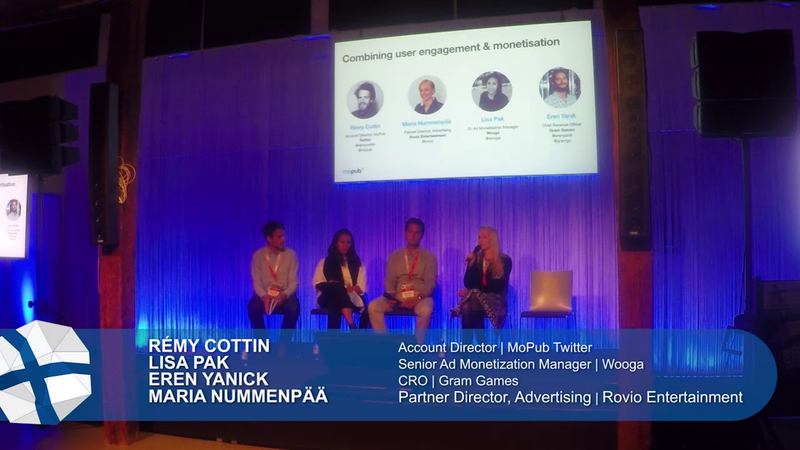
[Music] [Music] all right thanks everyone for attending this this this session so my name is Remy cutter I am an anaconda rector at Moab slash Twitter and it's my pleasure to be hosting this panel so as Polly said who can I discuss how to make the most of monetization channels while ensuring the the highest user engagements so I hope decision would be like as informative and interesting for you guys will have like five minutes of Q&A at the end and I'm delighted to be joined with three great panelists who are gonna share their expertise on this
on this on this topic so thank you guys for taking the time to be here so before we jump right into the questions if you could introduce yourself and give like a brief summary about your role in your companion hello everyone my name is Lisa and I've been with Booga for a bit over a year I started off in the you a team and I'm currently responsible for our at revenues Aaron Aaron Yannick with Graham games and chief revenue officer there is possible for monetization both the outside and in-app purchase hello Mariano Mempa been working for Rabia for five years now and currently leading the third-party ad monetization business thank you so let's start with the content so first of all the first question will be like around like ad format so we know that you know today developers face complex decisions with
today's arrays of ad formats it can be tricky to find the right ad format to to find the right balance between UX and in revenue so I think Maria it would be interesting for to have your perspective from review of which automats are you leveraging right now yep so throughout the years we've actually utilized all these traditional ad formats meaning the standard banner static interstitials and then moving towards videos and now with all the newest game launches we've been purely focusing on the rewarded videos and the reason being that we see that those are the ones that actually add value for for the players while the others might actually be offering a bit bit bad user experience not not adding real value what about you on our side we we are a
company that was heavily relying on ads as the main source of revenue so far so we used all ads ad types ad units we use banners interstitials rewarded video heavily more recently actually more rewarded video but prior to that more banners and interstitials and it's the trade-off between how often you show ads and of course what the user experience evolves into there's of course a limit but good to test and find out okay and we will so we're in Google we have both word video and interstitials currently we have about 90 percent of our revenues coming from reward video and just 10% from interstitials you do to the opt-in form at of reward video we will continue to focus more on this format rather than interstitials mm-hmm so as you can
understand from from those descriptions it seems every all video is you know it's really is read the main formats being used at least on this panel so let me turn to the audience and I think it would be good in flipping testing for us to take the post on the onions to understand if you guys you know as well using relative so can you please raise your hand for all the press in the room who are actually using everybody to do cool okay yeah that's quite a lot yeah I mean at Colony were showing like like a steady and it was it was interesting to see that 33 percent of mobile revenue was actually coming from about to do so the next questions are actually gonna be like digging into our video and specifically so so Lisa speaking about Roberto specifically so how you meant if think you want to at first understand how do you measure performance and what would be like a good performance best benchmark for you so looking at reward video specifically
I think there's not just one metric that you look at we heavily look at the conversion rate or an engagement rate of the different reward video placements next to that we look at the number of impressions per da you we look at the eCPMs and how those go together with the different fill rates but also at the at our brow so I think for each of the games the placements are different and the the metrics will therefore look different as well so especially for the ad types that are not rewarded video they generally have a an adverse effect on retention in lifetime it's slightly so you need to have a very high retention high life time game to introduce ads but rewarded video has somewhat as a neutral to positive effect because it's opt-in players actually are happy when they've watched a rewarded video so this reflects itself on both
CPMs and other performance metrics as Lisa said adapt is the main thing we look at so we don't do a very granular analysis of the fill rates of that but most likely say how many people adopt it and how many people watch it per day once they adopted it so that reflects this off and add up top hmm okay okay okay and so for you Maria can you share some few insights ons what would be the the impacts of implementing a video on the the main game metric so for example like the time spent on the app the the retention rate like another others well personal experience if if the implementation is done well enough it can actually have a positive impact on the engagement and actually one very interesting finding that we did recently with the research was that in it was
done in US and obviously for for our games only but it showed that if the reward videos are implemented well enough they can actually be as effective as TV ads which is really promising result because from the brand perspective mobile ads are usually much more cost efficient so I think that's a very promising result and that's the first this kind of research that we've done nice that's great and and for Lisa what kind of impact are you seeing on those metrics I think an important finding that we we have seen maybe between payers and non non payers within the game is that payers actually tend to engage much more with with rewarded video ads and I think this is makes sense because they are generally the more engaged user within the game so
naturally they will engage more with with ads as well mm-hmm like once again from the room can you shoot can you just show your hand if you are segments and users for sepilok payers and on payers okay less people okay so is it something that that you are interested to do for Isabelle Hewitt grand games we do I mean because we're relying more on ads this is something we recently started to do the whole pair and umpire but it makes a big difference and similar to the ad world there you're actually reliant on a small subset of users which correspond to the tail of your payers right so you need to identify the right people and you to segment to understand okay okay okay so we spoke about metrics so we have to do how it's you know it impacts some some metrics the the next big question is so IEP is so of course
like IP something which is very important you know like for for for all the reports so they we know there was like a big sale that when you're going to integrate like we ought to do it might have like a like a 10 watt effort to your IP so so in at review have you seen this kind of this kind of things happening or what's what's worse balance between we do an IPS again I think it all goes back to the kind of the the core game experience so if the ad placements are part of the core gameplay and they feel well enough there then then actually the ask and support the IAB and that's what we've actually experienced so if if the ads are taking into consideration already in the planning phase and they fit well then these two can actually support each other even the traditional thinking might be that that beats either or but
but actually we've seen quite the opposite okay okay okay and what about you at fuga i've seen the same the same thing yes also volga generally has been focusing quite a lot on IPS only so currently our revenues are 85% coming from IPs and 15% from ads we have some games that have been on the market for for a bit longer already where we have a high focus on IPS so these games already have a quite a complex economy within the game so therefore it's a bit more difficult to build on ads on top so it takes a lot of building different placements testing and reiterating on that for our newer games we we look at at integrations much earlier so pre-production we already start talking about where are we going to place ads within the games and how do
fit together with the monetization through AI APs so I think we currently with an increased focus that we got on at revenues we try to look at it much earlier in the production process to make sure that both fit together very well hmm it's super interesting like at bat mobile apps we actually try to to to encourage having those like add integrations as early as possible with during the game is it what is happening as well for you like Aaron yes so we are probably at a different scale so we were at based a hundred percent and switching to in-app purchase and it's it's rising so we're currently in our in the game that we have we're pretty much fully reliant on in-app purchase we don't use your date videos but we're thinking about using it I think maybe one concern for teams with smaller sizes could be
maybe the SDK integration and everything with rewarded video where they're not from a technical perspective does it help but for us I think because we're more reliant on it we had an easy time and it always had a positive effect in the end to both monetization and retention okay okay and just to to your point Lisa so you mentioned that like you you actually incorporates revised with direct integration as a way in the game like for new titles and have you seen like difference difference behaviors and in the users and different performance when do we all do is just integrated but in the game that is already like existing a good example there would be a game that we currently have in soft lounge June's journey this game has the two ad placements that it has really required to use it to engage with it in order to progress within the game
so naturally the conversion rate of users adopting or engaging with this these placements is higher than in another game jelly splash for example where that's have been built in a bit later and it is of course a nice reward for the user to engage and progress faster but it's not necessary as in the as in June's journey the hidden object game hmm so that's a difference in adoption rate that we that we see there okay okay and for you Maria is it the same do you actually incorporates we're a video ad like only in the process like for your new games for example do you actually incorporate like rewrite video ads like in the planning phase for for upon your games for example yes yes so they are already in the one that the new games are in the planning phase we take the ads there and consideration we can and agree with with Lisa's experience on the
the kind of it's quite different whether the the placements are kind of added afterwards there and just put on top of the game and then again if the if the ads are there right from the start so it's quite different user experience and of course you can actually see that in the results so i think if using ads as a part of the monetization it's it's a key thing to include them already in the planning phase and not just afterwards try try to fit them in yeah cool okay and so now we're going to speak about like frequency capping and the actual type of reports you know so like a very specific question but it would be interesting to understand like how how did you come to make the right choice in terms of type of rewards and frequency capping so yeah so Mary if you can if you can share with us like some of your
self experience in this nice topic this is again good good question and there are probably excellent different answers and so there is just not one recipe how to do it but um I would say for for us we like like Maria said there's a there's a lot of different answers it's a lot of testing and iterating and trying out what fits well and what works best in the end you I think it's a balance that you need to find between not giving too much to the player but also not being too greedy on on what you give out so it's a lot of trial and error and then in terms of frequency capping it's also a lot of trial and error like some placements we have in June's journey for example one placement that the user can only interact with once every 24 hours if
it's more than that they will be able to progress through the game so fast that maybe in a couple weeks they have finished it other placements we have for example an out of lives placement in bubble island - if you are out of lives you can watch a video to earn another life but if you already have full lives it doesn't make much sense to re-engage with this placement over and over again so we put a frequency cap on it mm-hmm yeah yeah and to continue it's for us it's also quite different in each games for some some games we actually have frequency cap of 48 hours while while some others are like a lot more available but I think it's also key to build it smartly because if you do it's in a smart way it can actually help you to Cove the economy but again if you if you don't do it smart actually that can have a pretty negative impact on on your total revenues if it's if it's utilizing
both IOPS and adds good on our case we actually spotted the difference when we used reward videos for I don't know if anyone in the audience played but ten ten and six for example the reward videos there were embedded to get new skins new colors new themes whereas in the more recent games we launched and bouncy in merch town they were part of the core game so in order to progress you do not have to watch your other videos but if you watch it it actually give you it actually gives you like a good bump I think the crucial difference there is yes if you want if you makes a player watch like 25 different 25 rewarded videos a day the incremental value of every new video is actually becomes close to zero still not zero but it becomes close to zero that's why we didn't cap it so we didn't cap it because we think it's not zero and
because it's not a multiplayer game it doesn't disrupt the game balance so it's a matter of how much you wanna progress especially in merch town but if it's a more multiplayer game where there's an in-game economy different balances and item prices that comes into play then yes I think from the games for games sake you need to cap it but financially at least from a monetization perspective there's value in every new impression mm-hmm in terms of AP testing do you a be test more doing the soft launch of as well when the game is when the game is out in life we do a/b tests yeah all the time and soft launch as well we try different variations with like more ads less ads more ads here what happens when we keep everything similar but add one new reward video placement here one thing we did not do yet is the
relationship between different items of in-app purchase and reward video like the mouse of giving out too much with that impact IEP but that's also we're starting to get into that because every new change you make especially at a scale of hundreds of thousands of daily active users you need to test it otherwise it's really risky yeah yeah that make sense cool and so in terms of in terms of the new trends you know in the image decision so it would be interesting to have your point of view in terms of yeah what do you think will be like the the the future we hear like some some some buzzwords you know like for example like advance bidding we hear we have some some some things like this so what will be your what will be your your thoughts in the in this in this new trends yeah I think for us that's the thing that's really interesting is Harry bidding
because that's their you would be able to enclose to real-time to estimate the actual value of an impression and one thing we are trying to identify as a firm is spotting the ad whales so spotting the the people who are really valuable as you know by their ID FA by their actual device that that is for the ad networks and go after them so similar to what other companies do on in-app purchases and we are doing it in a purchase do that in ads as well currently we can spot it at a cohort basis or if you work with a network in both user acquisition and monetization then we can connect them and find them but I think that's where the industry is heading into to finding them the real people who actually matter from ads perspective and hunt those people as like in review is it like a easy to pick that you that was mentioned already like
hello bidding or is it something which is not yet I mean you're you might explore it in the future or you are you start to twist right right now yeah obviously now talking from the ads perspective so definitely real-time bidding and also the programmatic buying is gonna be the big thing for us and we can already see that in the programmatic buying is actually something that the brands are looking for and obviously we are interested in in kind of collecting the brand dollars that are there so that's for sure in our focus going forward okay okay agree and I know that when we so when we we prefer this panel so there was one point that that's that that you guys mention is about like blocking you know blocking some some other other games or the other developers of priciple you at Graham Games do you do you actually block other games like other developers you know
from accessing your inventory we so far we only blocked a few games that were close of our games and they want to use our inventory to advertise but understandably I guess but otherwise like we don't block other games like we don't block games to keep them off from the charts or stuff like that we don't block games that are hyper casual and you know adhere to the same appeal to the same audience either because in the end the there's opportunity cost of blocking as well who so yes maybe they appeal to the same audience but I think people we all strive for people's attention spans and so the pie is growing so much that fighting for one slice wouldn't really make sense at least at our scale okay that make sense isn't that you do I forget do you blog like Sandman we do
some kind of black listing I think this also depends for us a bit on the age of the of the game if it's really new we might blacklist some very competitive apps but generally my opinion is also not to try to blacklist too many things and it's also people can play multiple games at the same time so it's not necessarily that when you advertise other games that someone will leave your game immediately and focus 100% of their time on something else yeah fair enough so we have a little bit more at 7 minutes left I just want to make sure that we have some some questions from the audience so yeah so is there any questions and I have the mic for that I think there is just hello thank you very much for for
the panel it was very interesting my name is Dennis laughs I'm interested in what is the average percent of users that engage use video I know that you have lots of games so just an average how many people watch reward videos and do it right to achieve 100% oh okay with current rates you mean like the adoption rate like this one video watched yes so give the worst answer and say it depends on the game but it depends also where you you know as I mentioned like it depends on why you watch the rewarded video for like so if it interferes with the core gameplay to progress to give them an extra life to give them an extra spell so that they can beat that level the number can rise up to 70 80 % of all your users if you
keep it at like hey here's a new color new team new skin then it might go as low as 30 40 % at our case yes I think for us it's it's similar the example I mentioned earlier for Jun's journey where you really need to progress or you need to watch videos to progress in the game the adoption rate will be much higher as in in a different game where you don't necessarily need it I think 100% that you mentioned is not realistic to go for I think on on average we try to aim 60% adoption rate of a reward video in the across the different games okay any more questions please meet I love reward videos because I get
free stuff and I also use them for discovery of new games but sometimes that experience of watching the ad can be various degrees of successful do you recommend any platforms over other platforms for delivering the experience in the best way equation I'm impartial I'm not part of that world I think there's there's a few players out there that you can work with and to my knowledge or at this point I don't think there's one that outperforms the other there everybody all of these these partners have something that they are better at than the other or worse that I don't think that there is right now or at least for us one perfect partner to work with but I think this also depends on on your goals in terms of reward
video because what might be a good partner for Wooga might not fit for the needs of of Rovio or graham games I think also best partner has multiple dimensions to it right you could have best partner in terms of CPMs best partner in terms of video quality technical interference with the game I think up until maybe six months ago there were two three names that people generally preferred right now more and more players are being active in it and differences are becoming blurry like less and less so I think in a few months it's going to be pretty much like banners or interstitials so difference this is going to be much less yeah I mean Lisa's answer could have been mine so is there any other question
before you spoke about the impact of rewarded video I was just wondering what the impact of playable ads has been for you terms of retention and monetization playable versus rewarded or playable like playable ads versus rewarded video at our case we don't if we don't have a differentiated slot for playable so we don't say show playable well we don't say show rewarded but not playable so depending on the CPM levels depending on where the impression is located the ad can be playable or not it can even be we even sometimes I have interstitials with playable which are annoying as from a player's perspective but depending on the trade-off we still allow that to happen I know from a user acquisition perspective play balls work very well so
I assume even though we can't see individual impressions from a CPM level they should be working well for us as well like we don't track it separately but I believe we should be getting paid much better because of it and this I think is something I would want to find out really like once we have more granular information that like are we really getting better but short answer should be from a CPM perspective yes quality perspective no especially if it's not unrewarded yes hi so obviously there's been a lot of experience in the market with rewarded video have you guys seen or planning or heavy implementing any more innovative or creative ways to use rewarded video that you're excited about therefore for us in I'm pretty excited about the the placements that we have in in Joon's journey because they are such a big part of the game and they really yeah for
help the user progress and this is something that we haven't done yet before and even though that the game is currently in soft lounge we see great numbers and great interaction so I'm very excited to see how develops when we globally launched a game next month so in in merge town I don't know if anybody's played that but if you make an in-app purchase the ads disappear except rewarded because we want the player to be able to continue to watch rewarded because they it's a voluntary ad right they actually like to watch it get a mystery box that could be a random level building and however much you progress in the game the mystery box output is also that much better with every merge move you increase the chances of having a better building that comes out of the mystery box through the rewarded video you watch and if you don't like the outcome you can watch another one and upgrade the building so
this is something that we implemented actually my dad's a big player and he says he watch maybe 200 videos over the past week so it's I mean at least from my sample size of one it seems to work did you want to add anything Maria oh yeah right on time we are right on time perfect well thank you very much for adding the decision I hope it was informative and that you you took her you to some some some things away so yeah now I think the lunch is ready so thank you for for for first thing here and yeah if you have any questions you can you can come to us and ask any questions after it's been them thank you very much [Applause] [Music]
[Music]
Summary
The integration of rewarded video advertising has emerged as a cornerstone strategy for balancing sustainable monetization with player retention in the mobile gaming industry. By utilizing an opt-in model, developers can generate significant revenue without alienating their user base, as these ads often produce neutral or positive effects on engagement. The most successful implementations treat advertising as a core design element rather than an afterthought, requiring developers to plan ad placements during the pre-production phase to ensure they align seamlessly with the primary gameplay loop.
Data indicates that rewarded video adoption rates fluctuate between 30% and 80%, heavily influenced by whether the offered rewards are perceived as essential for progression. To maximize these figures, developers must employ sophisticated tactics such as scaling rewards—like mystery boxes—to match a player’s current level, thereby maintaining relevance and incentive. Furthermore, the industry is increasingly moving toward a hybrid monetization model where in-app purchases serve to remove non-voluntary advertisements while rewarded videos remain available to sustain long-term engagement.
Achieving this balance requires a rigorous commitment to continuous A/B testing and the strategic use of frequency capping to protect the integrity of the game economy. As the market evolves, the focus is shifting toward advanced programmatic buying and real-time bidding to identify high-value players who engage most frequently with ad units. By treating these players as key stakeholders in the monetization ecosystem, developers can optimize revenue streams while preserving the quality of the user experience across diverse global markets.














Comments