VideoThe Game Business
How global Governments are using video games to influence the population
6 Nov 202554 min video
This week, Amazon backs out of MMOs. Nintendo raises its Switch [music] to forecast. Google opens its Play Store. We finally have some data on just how big the remaster and remade businesses. And our big topic of the week, we dive into how video games are being used by politicians and governments to achieve their goals. Hello and welcome to the Game Business Show. Of course, I wouldn't be able to tackle all of that without an incredible guest host. I'm delighted to welcome back for a second time he of the excellent video games industry memo is George Osborne. Hello George.
Hello Chris. Pleasure to be back.
What is your actual job title on the uh video games industry memo? Founder, creator.
Uh peddler of words.
Peddler of words.
Yeah. So I think I call myself editor over there which
uh because I do edit usually just my own words over and over again relentlessly. So I I think Steven Tortill calls himself reporter on his own newsletter of podcast which I admire. I admire that you could I'm I'm fully CEO president
and chairman of the game business.
Yeah, absolutely. I think Steven's very much the best of us in terms of the quality of his reporting and his ability to manage his ego whereas we just let it run absolutely wild. Totally rampant.
Yeah, absolutely. The main topic of this show is going to talk about politics but you've been writing this book. How is it going?
Yes. So, I've been writing my book, Power Play, Video Games, Politics, and the Battle for Global Influence for most of the last 18 months, and we're now into the home stretch, which involves uh some copy edits from a proofreader, but more importantly, a delicious legal read, which considering I've been writing almost entirely about autocratic regimes, violent extremists, and political populists, means that the lawyers at my publisher are apparently very excited to be reading the book. So, I'm going to be looking forward to seeing what comes back there. Um, but yeah, it's it's been good. And I think the book, which is due out next June, feels pretty timely, which is always a
good thing for me. Possibly a bad thing for the world. We'll we'll probably find out. Maybe we we'll come back to it. Well, let's let's do our thing where we go through the news before we dive into this tricky topic, shall we say? You've I'm glad you're on because you're clearly the master of that topic. Um, but there's been some movements in the games industry. The first story I've got actually it's it's not that uh new. It's a couple of weeks old. It's Amazon has cut back on a significant amount of its AAA game development. Um primarily MMOs. Uh it's two MMO projects in particular has been affected. New World, I'm not going to try and pronounce the suffix to this. I'm not going to that was released in 2021. It's been out for a while. That's been affected. That is now being cut back to there. They just did a big content update. They're not going to do any more content updates. Um the game will continue to exist for at least the next year. But um uh yeah, they they've stopped producing new content for that. And the unreleased Lord of the Rings MMO. Um there's a lot to Amazon's games business. Um it owns Twitch obviously. It's working with Crystal Dynamics on a new Tomb Raider. Uh it's working with a
whole bunch of studios including Maverick Games in the UK on a racing game. It just released a co-op platform called King of Meat. I don't know how well that's done, but they just released that. It has an it has Amazon Luna. This is a streaming service. They continue to develop and support that. There was lots of different lots of different things going on at Amazon when it comes to video games and they are refocusing as a bigger organization they're refocusing and um considering how desperate their game stuff was they seems to be doing that too. But I find it interesting George I don't know if you find it interesting it's the live service stuff.
Yeah,
they seem to be back or at least the forever games they seem to be backing away from.
Yeah. I I think there there's two layers to this. So one is that I think generally speaking big tech businesses are pretty bad at developing their own content and supporting their own content. I think if you look across a lot of different companies who have kind of entered the space from the big tech arena. I I think there's a there's a sort of a slight mismatch between the cultures of tech businesses and games businesses in terms of what's truly
valued. And I saw it a little bit when I used to do political engagement. And I think it still feeds through a little bit when they're moving outside of core infrastructure or they're moving out of distribution. You know, if you're thinking going beyond things like app stores and web servers, suddenly when it comes to like what makes the secret source for a hit game and how do you get it to market, I don't think it's necessarily their expertise, but but I also think that point around live service, I mean, I think it's part of a wider refocusing obviously the industry around what's going on with live service games. And you know, I think the concept of a forever game is a really enticing one for an executive who wants to promise neverending revenue for ever and ever and ever. But if you're competing in a space in which, you know, we've known this now for probably about a year and a half, that five or six games are dominating a quarter of play time, especially on PC and console in the world, and you've already got many established big hitters on things like mobile. there's not that much room for that other thing to come in. If you
miscalibrate it,
it's going to be difficult.
But that's why I'm surprised because if a company like Amazon, they're the ones that's looking at the live service opportunity going. They're the ones with the big, you know, the big ambitions that we're super ambitious. We want to we want to have our own Fortnite. They're the sort of company that would want that. Um, I completely understand what the wider industry is going, particularly the smaller publishers, even some of the ones that are just more established in video games are starting to realize, we can't do too much of this. when it comes to the the you know Warner Brothers still talk quite openly about wanting to do the live service thing and of course they do they're Warner Brothers um and so and that's what surprises me about it but they you know they are still backing but maybe you're right what you said earlier because it is the third party partners that they're continuing to work with it's not necessarily the internal development they're they're focusing on um um there some things I found interesting what they're doing with Amazon Luna they're doing a lot of sort of party games in there which is something that Netflix is doing as well with its subscription stuff which I find quite compelling in a way because I do I do feel that's that's something that was has been missing really since the Wii
era sort of social living room uh experiences. Yeah, I think the and I think just one one thing that I think also is actually worth adding to this mix and I think it's actually a pressure that exists quite a long way probably outside of these these companies games businesses but it was definitely something that people were talking about in regards to Microsoft earlier this year which is big tech businesses are also deeply invested within AI and particularly within generative AI boom and even though these companies do have obviously extraordinary amounts of money the amount of cash that is being plowed into the AI economy with not particularly strong returns. You know, I think there is probably to some extent, you know, again, I tend to go back to this guy John Gadis who was a military historian who always said, you know, grand strategy is your intersection between unlimited ambition and necessarily limited resources and saying that actually if you are throwing huge amounts of cash after one particular big
bet that you're hoping to win on, if you are looking at some of your other bigger bets like big live service games, you're maybe starting to feel the pinch. somewhere else in your business.
Yeah. Yeah.
Again, not not got really a vast amount of evidence to support that. But I I wouldn't be at all surprised if you know feeling a little bit tight in one place of the business, particularly where you're putting a large amount of money, just naturally extends pressure across the rest of it.
Yeah. New World, according to Ampair has the number a little lower and New has the number a little bit higher, but it's doing between 400 to 500,000 players a month, which isn't probably isn't good enough. um um for it to be profitable and what's the path for that? I don't know. Um well, there isn't one now. Um well, obviously it's it's a it's a it's it's a difficult situation for the people that work at Amazon, but the thing is there is I think in a way you could talk talk about it in relation to the situation the video games industry is in at the moment, but actually we've seen, you know, George and I you you and I have been doing this for so long. Um,
we've seen so many big companies move into games, be super ambitious, and then scale out. And they might end up having a presence in games, but they go through these journeys of getting it wrong a few times. Um, Amazon's been on that journey a couple of times already, actually. Um, Disney's another one. I know that's an entertainment company, but there was a time when they spent loads of money on studios. Do you remember when they made a tour game?
Yeah.
They've now moved to this sort of licensing model, which is also not entirely successful. There's a bit of a mixed bag there. So, um, you know, and Warner Brothers, Warner Brothers have been surprisingly consistent, right? They moved in quite a while ago, but there's always that threat of them moving out and even Microsoft, which has been around a long time, um,
um, they've had their their ups and downs. But anyway, it's it's always a threat, I think, when you when you end up working for a big company like that, um, whether it's Netflix or Amazon or Disney or whatever. Let's move on to our next story because I do want to get to our main topic, which but our next one is it's one that I could talk about forever, so I'm hoping I I can avoid doing that. Nintendo delivered some very strong financial results. But what's
more, the firm has announced it sold in 10.36 million Switch 2 consoles in 4 months. That makes it the fastest selling games console of all time, ahead of the PS5, which managed 7.8 million. Of course, stock is a big part of this. PS5 sold out. Switch 2 is is actually available. You can go in the shops and buy it now, but it is obviously still a strong start for Nintendo. They're now anticipating 19 million units sold in by the end of the financial year. That's an increase by 4 million over their previous estimate, which we had all thought was a little conservative. When they said 15 million, we thought that was conservative, but um they have now raised it to 90 million. Nintendo actually did a really detailed presentation in their uh report talking about their strategy. And actually, it's interesting because we talk about the strategy quite a lot, but Nintendo don't always articulate it. The core of their business is Switch 2. It is their games. It's their big IP related to that. And then off that comes their real world experiences. So things like theme parks, that museum, they launched live events, the physical stores, and then you've got and then off then there's also off the
off that central switch to thing, there's the merchandise, the t-shirts, the toys, the Lego sets. Then they got their mobile apps, which does include games like the new Fire game they just launched and Pikmin Bloom, but it also includes that Nintendo music app, the Nintendo Today app, etc. And then finally, there's movies and videos, which the Mario movie, the Zelda movie, uh the Pikmin short films they just did, that's part of that as well. But in the middle, at the heart of it is Switch 2. It is Nintend. It is the Nintendo games. And without those games, all that other stuff doesn't really work. Um Nintendo, one of the things that if you picked up in the financials, George, Nintendo says it's fully focused on Switch 2 game development now, which means all the games that we know are coming to Switch One. They're probably the last ones uh from Nintendo. Um
but yeah, and they've got some good numbers. I think the numbers I'm always interested in is their users. 128 million annual active users. I don't know who does annual users. Nintendo is the answer to that. But 128 million annual users, 400 million Nintendo accounts, 34 million Nintendo Switch online members. It's very good numbers. Still, in my mind, still early days for
Switch, too. You think is I think the telling point will be when they're trying to board them out. But what did you make of the figures?
Well, I I think the first thing is um everyone who was saying beforehand, this console is too expensive. Well, I think we're starting to consider otherwise because it seems to be the case that consumers are finding a route towards it. But I would say the central thing around it is I think we were just talking about there about big tech and to what extent especially do they understand what's really driving people to play games made by them potentially what's pe what's driving people to actually adopt hardware, adopt software, all of those kinds of things. Nintendo really clearly understands that. It really clearly understands it in the context of their ecosystem. And I think because the Switch provided almost like the perfect answer to what a console needs to be in the modern day, which is it maintains that plugandplay feel, but it adds that versatility of you can play in any context. And it's it's something
that really is perfectly aligned towards Nintendo's audience, especially when you're looking towards key things like families. that I think the Switch 2 as here is this natural evolution on this console that many of you bought many years ago and are ready to upgrade to. We're going to launch with a Mario Kart game because we absolutely learned that from the original Switch that if you get Mario Kart straight out of the gates and don't mess around that's going to be the kind of thing that gets people buying. And then I think actually one of the things as someone who's really I mean taken to their Switch 2 is it's that feeling of taking the entire Switch One ecosystem with you has made it feel like a much much more valuable upgrade even though there probably haven't been quite as many of the sort of the big first party releases yet. And I feel like Nintendo, you know, as as you've said, is that they've really understood how to have the Switch 2 at the heart of just a much much wider long-term ecosystem of you love Nintendo from the moment you grow
up to the point that you're an adult way on into later life. And it feels like the console that sits perfectly at that moment for the company. What I find interesting, like you mentioned the price and about it being too expensive, and I think there was a value conversation Nintendo lost there, but here's here's one of the stats that came out of their uh report. 84% of Nintendo Switch 2 players transition from Nintendo Switch. I'm actually surprised it's not higher that number, right? Um but 84% they're people that probably already have they have Switch controllers, right? So, the idea of controllers being very expensive, well, yes, but you've probably already got maybe not the latest ones, but you've got you've got some, they've probably got Zelda Breath of the World and Zelda: Here's the Kingdom. And if you're a member of Nintendo Switch online, or even if you just sign up to it, you get those upgrades as part of that subscription package. So, if you've already got it, which you know, for me, I think about my experience. I'm a Nintendo fan. You probably tell um and um and I went right, I I spent how much was it 430 quid in the UK for that and Mario Kart,
and I already had extra controllers. I already had Zelda. I was already a
Nintendo Switch online member. So, I got a bunch of GameCube games which was included in the Nintendo Switch online subscription added to Switch 2. Um, and I also got uh the Zelda upgrades were included for no extra cost. I got quite good value. That was actually a really good deal. I got my And also there were upgrades to other games like Pokémon Scarlet and Violet which were just free. And and so when people were talking to me about it being so expensive and those headlines around 90 um pound sort of $90 Zelda collections, I just went that's not really what for most people that be coming in on this day at launch is not really what it's going to cost them at all. In fact, I'd argue when you look at the market at the moment and the cost of PlayStation 5 and the cost of Xbox, even the cost of Game Pass now, it's actually quite a good price. Um, at least I thought it was and clearly 10 million others um um agreed.
Yeah, absolutely. And I think just as one final thing as well, so much of the run-up to the Switch 2 launch was saying, well, this is actually the
stalking horse for Christmas, right? You know, it's like it's that thing of you're going to get plenty of people like myself who who want want to buy this console, will get it day one. But actually, it's almost about showing to the people who are going to buy at the more traditional time of year, who are going to be looking for bundles and those kinds of things that it's got that value proposition. And I think, you know, as well, having frankly taken my Switch to on tour to various family members who've got switches and are thinking about upgrading, it feels as if Nintendo have now actually managed to perfectly bet it in as well. And so, I think, you know, that that's probably feeding into their wider confidence in terms of what this festive period's going to look like.
My concern is the software lineup. You know, like you think about our first launch of Switch. I'm not They've got loads of good-looking games. As a as a fan, I'm very happy with Metroid and I'm very happy with actually I don't really care about Hyrule Warriors, but I know people do. Um and um and I and I mean very I look Pokémon Z, it's up my street as well, but I am I look at uh I look at the first year of the Switch when you had Splatoon 2 and Mario Kart and Zelda
and Mario Odyssey. Those four alone are mega games. Yeah. and this year and there it's a Pokemon game and there's there's Mario Kart obviously you don't get bigger than Mario Kart but Donkey Kong it's a wonderful game but as an IP it's it's it's one of Nintendo's smaller ones Kirby Metroid like I I just I just sit there and think there's what's the where what's Nintendo's killer game for Christmas there's always used to be one and I might there's a lot of good-looking ones but I don't know if there's any
this will be the thing that I think is going to be fascinating especially going back to your point about what value the Switch actually truly brings which is what Switch to in this case is to say that there probably are a lot of families who thought about buying it in the summer and were like, you know, summer holidays coming up. Maybe we'll think about it, but maybe we'll hold on. So, the game might actually still be Mario Kart World. That might be the one that's the big seller. It will be it. And for families who are looking at it and they go, "Well, we've got Mario Kart, you know, on Christmas Day. That's going to be the big moment. Box opening. We might pick up Donkey Kong Bonanza."
But actually, if Nintendo's relatively quick out of the traps with something next year, that might be enough. But I would tend to agree that actually, you know, I've looked at it and gone Metroid in December and gone, if someone had said to me sort of Metroid, actually around the window the Donkey Kong Bonanza released, that that was possibly the moment that I would have looked more towards buying it. But for me, I was kind of looking at that and going doesn't feel like the big game. And I I do agree.
Yeah. Well, it's it's not it's not, you know, I find it telling and obviously Switch is very popular in Japan. They've gone harder with Kirby. No,
Kirby's big in Japan. Metroid absolutely isn't. And um it's just a niche game. It's super loved by people, but um and it's Nintendo. Yeah, we know Nintendo has the power to go for things that we may think I might be sitting there dismissing Kirby Air Riders, but I was, you know, I wouldn't have expected Luigi's Mansion 3 to do nearly 15 million copies either. So, who knows? [clears throat] Maybe that's going to be the big game for Christmas.
I will move on. Um, Ampair has released some data around remakes and remasters. They say that between January 2024 and
September 2025, remakes and remasters were played by 72.4 million people across Xbox, PlayStation, and Steam, generated 1.4 billion in revenue. It's worth noting that's missing Nintendo and I think Nintendo, you know, we know Nintendo loves a remaster. They love a remake. Um, it also things like GOG are missing, which is one of the leading platforms for retro content, but at least we have some numbers for the sector. Now, I've always been looking I' dying to sort of get some figures so we can put a bit of a price on these things. Ampair found that across 42 titles, that's 15 remakes and 27 remasters. Global spending on an average remake was more than twice that of the average remaster. That was the headline they went with. And I have to say that's the least surprising headline I've ever read. Um I think I think if remakes cost more than a remaster to develop obviously so therefore only the bigger more popular titles are getting remade.
So therefore remakes doing better than remasters doesn't surprise me. Actually, I think the fact that remakes are only doing twice as much as remasters, that's
surprising to me. I thought that number would be high.
Um,
but you know, George, what's your any thoughts on the uh you you seem like a chap um is, you know, pying games from the 90s and early 90s all the time. Is it Is that fair?
Well, yeah. I mean, at any point I'm ready to crack out Rome Total War. So, any kind of Total War remake, I'm I'm straight on board. But so George Young actually wrote a piece during the summer when I was on book of for video games industry memo about all of the the remakes, the remasters, the various different terminology that publishers have come up with to describe the way that they have chosen to remake or rejig their video games. I I think the most interesting thing about it is is that it really shows how the audience for games has literally grown up and the significance of actually reaching into what they're looking for as a way to try and find your route to market because you know I think when you look at games as a media when you compare it to things like film, television, literature, it's
now finally reaching the point that yeah, things that were made 20 years ago with a bit of a spit shine can form part of a cannon And so whether or not you're someone who's young, who's heard about one of those games, who's, you know, heard from various people who play video games or whichever creators they're watching that this is something worth playing, they want to get into it in the same way that someone who's like, for example, with me on my holiday recently where I finally read Dracula and realized that Dracula is the greatest bem movie novel ever written. Like why wouldn't you want to read Dracula? Um but then at the same time that that also leads to that question I think really about well if there's so much value within this market but people are again looking to be investing their time and money here. What does that on the flip side mean for people who are trying to get new original ideas into the market when you're competing against a certain amount of nostalgia cash but also a certain amount of people who just go I want to play the classics because they're important for me to understand my media. So it really sort of changes
the dynamic
and actually industry moves on. It doesn't necessarily, you know, I I sometimes play games from the I never heard of from the '90s. They've been remastered. So they've been updated. They play well today. They're not, you know, running at 10 frames per second or whatever, but they they play differently to the games that we play I they're different types of experiences the same way Dracula, you know, when you read Victorian literature, it it it reads quite different to the sort of things you do today. Although what's interesting though is we see because a lot Dracula, you know, costs nothing on a Kindle is no m and this is part of the problem with the retro market. It's why I've been so interested in the numbers on it
because there's so much emulation going on in retro.
Um Atari is a growing company. You know, they're big on the retro space as their big pitch, but they're not profitable. Um when I every time I speak to retro businesses, they talk about how competitive it's got and how actually that's a bit overwhelming for them. you know, the amount of people rushing in and trying to capitalize on the space.
Um, uh, yes, there's a grow, there's clearly a growing age in games audience. There's an interest in going back.
There's definitely opportunity, particular if you've got a back catalog. Also, what's really hard about putting a number on it is defining what retro actually is. Um, how old do you get? Is a game how is it 15 years old game, 10 years, 20 years? Does retro style games count? Games that look retro, play like a retro game, but is actually made today. And then by conversely, what about games like Final Fantasy 7 remake or the Resident Evil 2 remake, which are basically modern video games done in a completely different way to the games that they're they're based on, just the story is basically the same. Is that are they retro? Like, and you start getting down that route, it's really hard to uh put a number on it. And I think probably just focusing on remasters and remakes was probably a wise decision for an pair to do. But um
absolutely, the video games industry always always defying easy definition. Well, one of my favorite things is I one of my what really sort of spiraled my interest in this sector was a game called Shadowman Remastered made by It's Night. I'm a love of Shadow Man when I was a kid. I hadn't played it for years
and years and years. I played it once. I loved it. Wanted to play it again. bought it on the Switch and um in that game plays really well, proper remaster, you know, modern controls, you know, upresed resolution, but it's still the core game, you know, nobody's nobody's really made it
except they found a load of cut content, you know, levels that didn't get finished, bosses that didn't get added in, and they made them. So, the developer went in, made the levels that were never finished, put them in the game. Is that a remaster? It feels like a director's cut to me. It's um it's it's uh interesting, but nobody's I'm desperate to get director's cut into the video games industry. It's not
absolutely you you want the industry to create some Ridley Scott that we can all get behind.
Yeah. Yeah. Although, yeah, true. To be fair, it wasn't a director that did the cut.
Um let's we're talking about politics, so let's get into the main subject. I mean, it's certainly been a busy time for anyone writing about video games and politics and that's you, George. Um, but
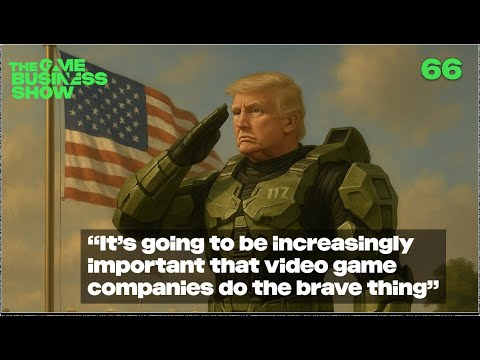
now before we dive into Saudi Arabia, I did think it might be best to bring up the recent videos and images the White House and the Trump administration has been using to promote what they're doing. We've had this image of Donald Trump as Master Chief. We've had Halo and Pokémon used to promote the administration's crackdown on immigration. Um, there's no way in my mind that the PO Microsoft or the Pokémon Company are happy about either of those things. um seeing their brands associated with any political leading leading is not something they would want. But uh the the situation is so divisive. Any stance they take, any response they give is going to come under attack. Pokémon took a very neutral stance to it or simply denying they had anything to do with the video. But that alone got us greeted by fury on social media. Um and of course there's real world consequences too. You know, the US government is very powerful. You don't you know it's it's a nervous uh uh uh time. Um, even I'm worried about saying something too critical, you know, I'm so um uh yeah, it's you I know you
wrote about this, George, on on one of your recent memos. Um I did find um was it the White House response to Jenna's question was about how this is another war the console war is another war that's ended on Trump's watch which I well the reason why I find that funny apart from apart from the fact it's completely nonsense but the reason why I found it funny is this war if it was a war was between two Japanese companies and American companies and the war ending is the Americans surrendering in this if we're going to play out the uh uh the the the nonsense um uh sort of of what if console war being a real war. Um that's the actual narrative. But anyway, um yeah, it's it's it's not it's the
where are the where the get the politics out of games get yeah politics out of games people now. So I want to know
well they're the ones posting this stuff. That's that's the secret to it, right? I mean because so it it's
something that I do explore in the book and and I sort of try to make sense of and
you know the general story of the book and the idea about how political influence has grown out of video games is about the changing nature of video games and about the way that we went from talking about physical products that hey an arcade machine in the corner of a bar a games console with a multiplayer game that you used to gather around it and then obviously software uh splinters off, goes off onto every device on a screen imaginable. And that's great spreads the industry across the world. But how do you connect all of those people who are coming together to play because play as we all know is social, right? The reason why we do it even when we're playing something like a single player game, we're still looking for the water cooler chat. We're looking for the community to join. And so what happens is yeah, games end up snapping together all of these overlapping layers layers of communication. So you have the communication within the game, you have all of the communication around the game, you have the creation of all of
the things like Discord and Twitch, the layers that sit above, and then you have the fact that video games just end up dominating social media discourse cuz that's where players are. And so what this leads to is this ability for ideas, language, aesthetics, culture to essentially emerge in a game community and just multiply and ripple out of it out into the world. And so that's the reason why, you know, you have things like there was a column earlier this year from the American political journalist Ezra Klein who's talking about how it's quite worrying that the Republican party keeps referring to people as non-player characters because the communities who formed within games and many of whom who've now grown up and entered the political debate generally are taking these ideas and taking them out into the world. And so when you look at what's happened there with the White House and when you've looked what's happened there as well in terms of the Department for Homeland Security is like what you have is them essentially co-opting something intended for fun for quite malicious political purposes in
some some senses. I think particularly um the ice post in regards to the flood like it's it's very clear that that is drawing a distinction between immigrants and parasitic alien races which is not a nice thing to be doing. But I think the biggest thing that it tells us is it first of all tells us that actually there is a belief that this iconography has enough resonance especially within the digital debate to shape the way people think about it. And the fact that that image of Trump ends up being lampuned on Saturday Night Live shows you how quickly an idea that starts in the digital space can suddenly wash its way into the mainstream and influence the way we think. But I think it also tells us about who is shaping the decisions behind the scenes. People are looking at things like the GameSpot post and going um sorry the GameStop post, not GameSpot. Let's not get ourselves into a media ferrar here there. and they're looking at the GameStop post and going we are going to take advantage of this and not only are we going to take
advantage of this we're going to draft lines to send to a journalist which promotes our talking points. But that is taking games with a level of seriousness that actually, you know, for frankly all of the things I look out there and go, I don't like. It's really noticeable that actually democracies by comparison have never taken games that seriously. And by co-opting games in this way, especially people within the Trump administration, they're actually able to unlock an audience that has got a remarkable amount of influence within the digital landscape and therefore by extension the world to work in their favor. So I I think it's a in terms of a developing thing, I think it's it's going to be increasingly important that video games companies have to do the brave thing and start saying
we don't want our games used for these purposes because if anyone else was doing it, we would say so. But yes, my light has just managed to go out at this particular moment, so I'm going to go and turn that back on.
Yeah, you're uh
can I Yeah, can I try and feed that line
back in just right at the end just being like
Yeah. So, so yeah, so video games companies are going to have to think much much more carefully about this and I think they're going to have to defend their rights and defend their creative ideas against this kind of usage because it's really clear that it's not going to be stopping and I think if it was anyone else apart from the White House doing it, I can't really imagine that most companies would have genuinely have been happy with that. So you need to make sure you're defending your content and defending your values consistently [clears throat] even when frankly
it's going to be awkward and quite possibly painful.
Yeah. Yeah. Well, I do wonder if there's a line. That's the thing I'm um in the in the in the sound there. I do think though in a positive note, it's probably the most relevant Halo has been quite a long time. Um um well, it's not to move on from the US. It's not just the US doing this. And in fact, at least the US is just using imagery and videos. they're not uh you know buying the one of the biggest video game publishers in the world. We've
spoken about this before uh but I haven't spoken to you George about it and your newsletter on this was excellent. Of course the big business story of the year was the Saudi Arabia public investment fund leading a consortium of investors in buying electronic arts in the $55 billion deal or he's proposing to buy electronic arts. It hasn't gone through yet. Um you've written about it. I've written about it. We know that this is partly about Saudis uh turning to video games to improve its reputation and perception both internally and externally. I do find it notable they're doing that with EA which is not the most popular games company on the planet the um um [clears throat] um but it it's what but it's obviously that's a massive um um move for them. Um EA does EA get them there do you think? Are they are they there now in terms of what they need in order to achieve that goal or some of those goals they've got?
I I mean it's it's always difficult to say and whenever you're forecasting too much you're always at risk of um making somewhat of a fool of yourself. However,
what I'll say is I think it is the piece of the puzzle that was missing from the wider piece of work in terms of what Saudi Arabia is doing economically, what it's doing reputationally, in terms of games and also what it's doing in terms of sports. And so, you know, the thinking there in terms of where my research has taken me. So, the first thing is is that the Saudi video game strategy is deadly serious. It is not something to be chuckled about or laughed at. It's not just throwing money at the wall. You know, you compare it a bit with some of the stuff they've done with sport where for whatever reason a snooker tournament is suddenly popping up in Riad and you're really sort of scratching your head going, is that is that the major soft power asset you're going for? Whereas when you look at the video game side of things, it is major investment driven by a codified national strategy that is authored by the head of state in which everyone is severely seriously invested into it from the bottom of Saudi society up to the top and it's done with the support of
industry executives who are genuinely experienced in what they're doing. And when you look at the way especially that Savvy Games as a publisher had sort of built itself up, the way the PIF had built up holdings in lots and lots of different companies, you could see that Saudi Arabia had this proper economic ecosystem that's really starting to develop, but they were clearly missing publishing expertise. They were missing expertise within console and to some extent PC. Um, and I think one of the big things as well is that they just were never going to be able to create themselves a major player. And so I think when they were working out what they wanted to do, there was definitely a lot of thinking about who they might be able to buy. And I think EA was always going to be likely to be popular with them because obviously huge profitable international company fits the profile of everything that they need economically. But the biggest thing around the sports games is yeah, I mean EA itself, you know, one of one of America's least popular companies if
you're going to go and pull back on some historic polling. But if you look at EA Sports FC, if you look at Madden, and if you look at college football as a sort of the three particular exemplers of this, they are reaching enormous numbers of people, but they're also so deeply plugged into the sport that the players are promoting it, the clubs are promoting it, the leagues are promoting it. It's one of those things where if you're talking about a way to go and multiply your message out, it's massive. And then if you're looking at those leagues as well who've been looking increasingly towards things like esports and going, how do we make sure that we're engaging our audience in every arena possible? Perfect purchase. The problem was ultimately the EA was an American company and for Saudi to buy something as big as that, they needed a door to be open to them because they're almost certainly going to get regulatory scrutiny. And that's the Jared Kushner effect where Kushner's involvement ends up opening the door up for them which is very convenient considering the Saudis invested $2 billion into Kushner's fund
which then invested back into the deal. But ultimately I think that was the thing is that part of the reason why I think it's I would sort of actually use the phrase worrying as well is about how much this deal was made possible by what you know an Apple bound the would end up calling autocracy inc which people who are quite autocratic or are literally autocrats end up doing deals to strengthen their power. So yeah I mean my my thing is almost like I I hate the game more than I hate the player here. You know, I don't think the Saudis have by any extension done anything badly. If anything, I think they've done something very smart and shrewd here. It's just made me a little queasy about how it's all come off.
Yeah. Well, and it's a weird feel that I know there's lots of concerns of Saudi's potential influence on games and how they're going to utilize games. And we've just seen the Assassin's Creed thing that sort of highlights historical elements of Saudi and I guess presents Saudi Arabia in a different way. Um
but is there not a possibility that the influence goes the other way? Because I think about Saudi Arabia. I think about its ambitions. It's trying to find economically to turn into entertainment, turn into sport in order to try and be big around the world. But it knows it must know that it's its its view on the world, its its its rules and regulations it has in its country is not necessarily conducive to success in that way. And so therefore, they're going to there's going to have to be some form of change. Maybe not complete change, but there's some form of change they're going to have to go through, which I think is that a positive? So, I may be reaching for I'm trying to be looking for something.
No, I mean I I I think I think what's really important here is and again part of the reason why the strategy is deadly serious is because Saudi Arabia has had a problem and it's had had a couple of really clear problems. And I think especially if you look back at the early 2010s, the really big problems were Saudi Arabia as a state essentially agreed a deal with its population. We
have found oil. We are so rich that we can provide you with this welfare state that's never ending. And you're going to put up with us and our wahabist theocratic allies because we're ultimately going to give you quite a comfortable life. But put up and shut up. Then by the 2010s things have really started to shift against that deal. You know oil starts to become both less valuable economically because of the change in the climate but also becomes more difficult for them to get access to because their oil fields are increasingly in parts of the country that are so hot it's basically impossible to start tapping it. So that part of their economic deal becomes in terms of the house of SA and its population weakens. Then in terms of wahhabist theiocracy well two big things start countering that. The first is the population of Saudi Arabia is incredibly young. So it's about 70% is under the age of 35. So you have a lot of young people who at the same time as they're sort of coming to age start getting onto
social media and they start seeing things like Saudi Arabia around 2010 is like per capita one of the biggest consumers of YouTube content. So you have this really young population who's watching all of these videos, seeing this fun world around them and going this doesn't seem very fun, right? Our reality does not seem to be particularly great in comparison to our peers and actually our regional peers as well when you have Abu Dhabi, Dubai racing ahead. And so there is a genuine shift there. But the genuine shift is because Muhammad bin Salmon has recognized the best way for the House of Saud to keep control is to change the deal. Is to go, we're no longer going to talk about oil and the welfare state. We're going to talk about oil helping power this fun, comparatively freer, comparatively more liberal society, but at the end of the day, you're still going to shut up when the House of Sound comes calling. You know, that's that's the new deal there. So it it's games being folded into that
deal which I think is one of the areas of discomfort. And then I think in terms of the influence in the other direction I think and this is something else that's emerged from wideratic research around China and around Russia. That was what we hoped was going to happen after the collapse of communism. That's how we hoped it was going to work. But what actually happened after the collapse of communism and as well if we roll forward a couple of decades to the Arab Spring is the autocrats actually went hang on a second what we actually need to do is control soft power we need to control culture we need to make sure that we are on top of these things because that's one of the major things that help contributed down downfall of the Soviet Union was people across the eastern block being able to see what was happening in the west and going you know it turns out that our grim grim lives driving slightly terrible cars and struggling to subsist doesn't look quite as fun as you know 80s television 80s film and all of those things and so I think what's actually happened is a lot of these states have sort of to capture and co-opt culture because they
recognize the power and so what that's had is actually the reverse effect in which and you can see this a bit with China when you know for example Marvel Rivals was banning terms like free Taiwan in the in-game chat is by shifting the kind of the economic and cultural weight towards autocracies, it actually means that they now have more of the ability to influence us. So I I can you know what I can completely see where you're coming from. Like that's that's
I wasn't to be fair I wasn't necessarily thinking that I'm hoping I was just I was just going I'm throwing out could it be all right? [laughter] It's like
yeah um I mean obviously the big news and I think this is more is that uh was not the big news a story that came out in the last week is Saudi Arabia um government has for and the international Olympic committee has mutually agreed to kill their 12 year contract for the esports Olympic games. Now, most there seems to be a breakdown in relations between the Saudis and the IOC, but considering how central Esports has been in this country's um ambitions around what we've just been talking about, it
feels a bit embarrassing. [laughter] I don't I don't It doesn't I don't I don't doesn't seem like a change of strategy necessarily, but um
just a bit of a blow.
I I think I think I think it's a bit of a blow. I think I think it's interesting as well that I mean I' I'd heard that there was going to be some sort of announcement around um the esports Olympics later this year. Like I' I'd heard that a few months ago. So, but my expectation had been well, we're going to finally announce, you know, the full details, the date, how this is going to work. And I think the IOC stepping away now I think actually in the aftermath of the acquisition uh of EA essentially being confirmed you know but I don't think it's great for the wider soft power narrative but equally I think you know having seen a few bits of reporting um from places like the esports advocate is that I think it seems to be as you say breakdown of relationships mostly around the quality of the esports federations who the IOC wanted to work with independently to deliver it and my
feeling would be is that um you know this might go into cold storage for a little bit but I would be incredibly surprised if Riad still didn't pop up as somewhere where the esports Olympic was hosted in the next decade. I think it's a because ultimately it's a place where it's going to be a natural place to host it and because if you look at the wider challenges the Olympics movement there's much much more conversation about how do you host games in places where it's sustainable where there is the infrastructure in place where you don't need to build new stuff and incur massive cost. I think Riad will still be one of those places that will eventually get an esports Olympics uh to it. I just think that yeah, some institutional challenges. I wouldn't be at all surprised about the International Olympic Committee's hesitancy towards esports. It has historically been quite hesitant towards it. I I think you're seeing some of those things bubble back up in this, but it's certainly not what I think the Saudi Arabians would have wanted to see happen.
No. Let's quickly touch on China. Um
because I imagine you touch on them quite a bit in your book. Uh they are not new players in the video game space. Obviously, they're not just investing in games now, but actually one of the sort of trends in games over the last, I don't know, 18 months, maybe two years, has been Tencent in particular, but others, uh, Netis as well, has been scaling back some of these investments. Um, Splash Damage is now independent. Uh, we've had scaling back at Funcom, Sumo, Shark Mob. Um, what do you what tell me what I should be making of that? Well, it's it's it's really interesting about what role is video games playing within both the sort of the Chinese economy, the cultural landscape, and I think what's going on with the population because, you know, there's there's a couple of there's there's actually one great book by by a woman called Anu Bradford which is about the regulatory environment. And they say that, you know, the three main pillars of the Chinese regulatory environment are economic growth. Um, and then it's social control. And then I'm just trying
to think what it was. You know what? I've just Let me try this again. Can I go back from the top?
Yeah, go just
That's it. Cuz I've realized my brain is Sorry, Richard. No, my my Yeah, sorry. My brain is slightly frazzled at the moment.
But yeah, so it's So that's the thing. So I think with when you're looking at China and I think when you're looking at where video games fit into the space, I think you're looking at this kind of tension between economic growth and maintaining control over the population because those I think are the two things that China really wants to be able to do. So they want to be able to demonstrate to much of its population that it is a growing nation where you can be full-blown capitalistic, you can make lots of money, and you can actually live pretty freely. You know, I think one of the things that in in terms of my research with China for the book is speaking to so many people who operate within the market who say, you know, the vast majority of consumers feel really free. You know, the government is actually quite quiet in terms of what
it's doing around censorship and control. And I think when you end up looking at all of that, what you end up really discovering is that China's kind of changed the way that it polices its state. It's much much less about directly imposing fear over the population and instead it's more about increasing friction so that they find it more difficult to access things that might lead to them competing against the state. It's flooding them with information so that it struggles to essentially get to the truth, get to what what's going on underneath. And then there's this like layer of fear that if someone pops up above that kind of net of friction and that flooding that then you can go and target them, you can go and take them on. And so I think in the end what that's meant in terms of the video game space is when you look at what's happened in the market in the past sort of 10-15 years the video games market became so much bigger in China like grew enormously like it went from about half a billion players to you know uh sorry half a billion players half a billion dollars in revenue up towards sort the $25
billion mark by about 2015 and I think the Chinese government suddenly realized oh actually if you look at our rules around PC games mobile games. We've not really kept up with the censorship of that space. And so a lot of the book looks at the extension of that, but the big thing that ends up helping them with that is 10-centent and netis because the way that China has managed to make the government feel like it's less oppressive is to push out a lot of things in terms of managing what content people access, managing how they access content, logging into systems. they've pushed it off onto the tech businesses, onto social media platforms, onto games businesses. And so companies like Tencent and Netis, they have to be serving much much more towards the kind of like the state goals, even if they're not explicitly saying they're doing so just because that's the way China works and that's the way that the government wants to operate to maintain control. So when I look at those businesses stepping back, I look at it in the context of
China's economic growth slowing. I look at it in the context of one of the big pillars of the deal that China has with its population of saying you are going to be able to be wealthy. you are going to see a growing economy supporting an ever greater lifestyle and going hm okay a lot of these businesses pushed their cash abroad during the games licensing freezes and we may have understood that because obviously we were blocking them from releasing games but now we really want them to be investing in China first because we want to be making sure that the population here feels the benefits so I think a bit of that pullback is probably some of the wider games market conditions kicking in like We literally opened up a load of this this podcast talking about those market conditions and that is as true of of China as it is of anywhere else. But I do also think there is that element of essentially looking much much more closer to home rather than internationally because at this moment in time the Chinese government is very much in favor of what
can grow our economy rather than you know what do we need to do to control areas or spaces that we didn't previously control.
George there's so much we could talk about. You should write a book about all this. Um um I think it'd be quite good.
I think it should definitely be worth reading.
Absolutely. I've not even gone to the Russians or the violent extremists yet, Chris. [laughter] So much more to talk about.
Uh well, how about we save that for the the [laughter] uh the next I know that I we did we did touch on, you know, there was like a sentence on Russia. We uh I know that they they've been using imagery as well, haven't they? Like the US have in terms of their um in their promotion. Um was it they was it a Call of Duty one? saw. Um,
yeah. So, yeah, Russia, I mean, you know, again, without going too deeply into it because I know at some point you've got to end this podcast, but I mean, when you when you look at what Russia's done with video games, they they've turned it into one of their major fronts of their digital disinformation war, especially against Ukraine. Um, so, you know, there are propaganda video games that are
developed not just with kind of institutional support from Russia, but definitely cash. You know, I think notionally, I don't think this is actually true, but notionally, um, Vladimir Putin was talking about a $50 billion fund to support the development of video games for Russian narratives. And you've always got to take those kinds of things with a pinch of salt because the best way to describe the Russian information and news environment is that it's completely bonkers. And the extent to which you're ever hearing the truth is very, very questionable. And I kind of explain in the book some of how that's happened, but there's definitely evidence of the Russians funding propaganda video games, not because they think huge amounts of people are going to play them, but because the imagery, the iconography, the story is interesting enough to capture the attention of media across the world, which leads to these uh games multiplying out into the media ecosystem and sort of subtly influencing how you're thinking. Um, but there there's even crazier things like, you know,
there's the the video game streamer who knocks on the door of the Vagna Military Group offices in St. Petersburg, um, and ends up four months later with his arm around if Jenny Pogosian, the guy who was the founder of the Vagna Military Group, but also the founder of the Internet Research Agency, which was credited with being one of the major disruptive forces in the 2016 US presidential election. Um, and then yeah, the book follows the story of this streamer as he ends up in Bikina Hasso playing video games that are then being promoted through the Vagna Media Group's uh official media channels to again try and reach audiences across Africa with its narrative. So yeah, the idea that it's just, you know, a certain number of examerators who now happen to be Trump administration officials promoting this stuff, it it really isn't. There is this wider trend of especially autocratic governments who are taking this seriously because they recognize actually what we do in the industry games have real social cultural community power and if you can tap into
it you've got reach and I think that's important for us to know not in the sense that you know just cuz we need to protect it you need to protect industry from that influence but it's also a power that the industry itself can wield um is and that's sometimes you know when we're you some of us might be running scared some of our people might be running scared from some of these governments there's this element that we have our own power um
maybe no we do we do and I will end on just one sort of note of optimism around that which is to say if games companies push back against some of the tougher things that are happening here you're going to influence the debate in the right direction and there are lots and lots of you know quote unquote democratic organization the world health organization the United Nations environment program NATO who are really starting to take this stuff seriously. And I think, you know, the thing I say across the course of the book, I'm not warning about the dangers of video games. I'm warning about the dangers of not taking video games seriously. And so, I think there is
actually some real opportunity to push back here. But I think it just requires everyone, game developers, community managers, people working across the profession, but also politicians, officials, people who fund stuff across civil society to to help out with this issue. Um, and that's all in the book. So, just get it when it's out next year, I'd say.
What a wonderful point to end on. George, thank you uh for your time. It's been, I want to say, a joy. It has been very informative. Um, [laughter] it's a um, uh, when is the book out again?
So, it is due out in June 2026. So, slightly different days for UK and US. And there's a few more international, uh, release dates to be announced as well.
Okay. Well, I'll look forward to that. Um, thank you, George. Thank you for your time.
Thank you so much. That's it for today's episode of the Game Business Show. If you are watching this on video, you may have noticed that I'm not wearing the same t-shirt as I was wearing 3 seconds ago. That's because I've had to re-record the outro. And the reason why
we're re-recording the outro is a new interview has just dropped in. I'm very excited about it. It's going to happen on Tuesday. Not going to tell you who it is just yet, but do make sure you're back here on Tuesday for that interview. Um, if you subscribe to us on the game.com, you will know about it the moment it happens. If you subscribe to us on YouTube, you'll know about it. If you subscribe to us on Spotify, you'll know about it. Make sure you subscribe to us. That's basically my message there. Um, there's other stuff happening before Tuesday. We have the European charts tomorrow. We've got another interview, another video games exec on the website tomorrow as well. And of course, there's the Game Business Micro on uh Monday for paying subscribers to the game business. That's it for this week's episode, though. Until next time, thank you for tuning in.
Auto-generated captions from YouTube — names and numbers may be misheard.
The global video game industry is currently navigating a period of significant structural and geopolitical transformation. While major technology firms like Amazon are retreating from high-risk, live-service development due to market saturation, established hardware leaders like Nintendo continue to thrive by prioritizing ecosystem stability and backward compatibility. This divergence underscores the volatility of the modern gaming market, where success increasingly depends on long-term user retention rather than the pursuit of expansive, resource-heavy projects.
Beyond commercial shifts, video games have emerged as a critical frontier for political influence and state-led soft power. Political entities are increasingly co-opting gaming aesthetics and iconography to penetrate digital discourse, often without the consent of intellectual property holders. This trend reflects a broader recognition of gaming as a potent cultural vehicle, prompting calls for developers to adopt more proactive stances against the unauthorized use of their brands for partisan agendas.
On a global scale, autocratic regimes are weaponizing the industry to advance geopolitical objectives. Nations such as Saudi Arabia, China, and Russia are leveraging massive economic investments and regulatory pressure to diversify their economies, enforce censorship, and disseminate state-aligned propaganda. By integrating gaming into their soft power strategies, these governments exert influence over global content and digital narratives. As these platforms become central to public life, the industry faces an urgent need to address the ethical implications of state interference and the potential for gaming to be used as a tool for population control and ideological manipulation.

The Game Business · 2026

The Game Business · 2026

The Game Business · 2026

The Game Business · 2026

The Game Business · 2026

The Game Business · 2026

The Game Business · 2026

The Game Business · 2026

The Game Business · 2026

The Game Business · 2026

The Game Business · 2026

The Game Business · 2026
Two & a Half Gamers · 2026

Deconstructor of Fun · 2026
CD Projekt · 2026

CD Projekt · 2026

CD Projekt · 2026

Newzoo · 2026

The Game Business · 2026

The Game Business · 2026
Ubisoft · 2026

The Game Business · 2026

Deconstructor of Fun · 2026

Newzoo · 2026
Comments