Loading the document
1 free read left. Create a free account for unlimited reading + AI research.
Create free accountWhitepaper Northeastern University
1 free read left. Create a free account for unlimited reading + AI research.
Create free accountWhitepaperNortheastern University
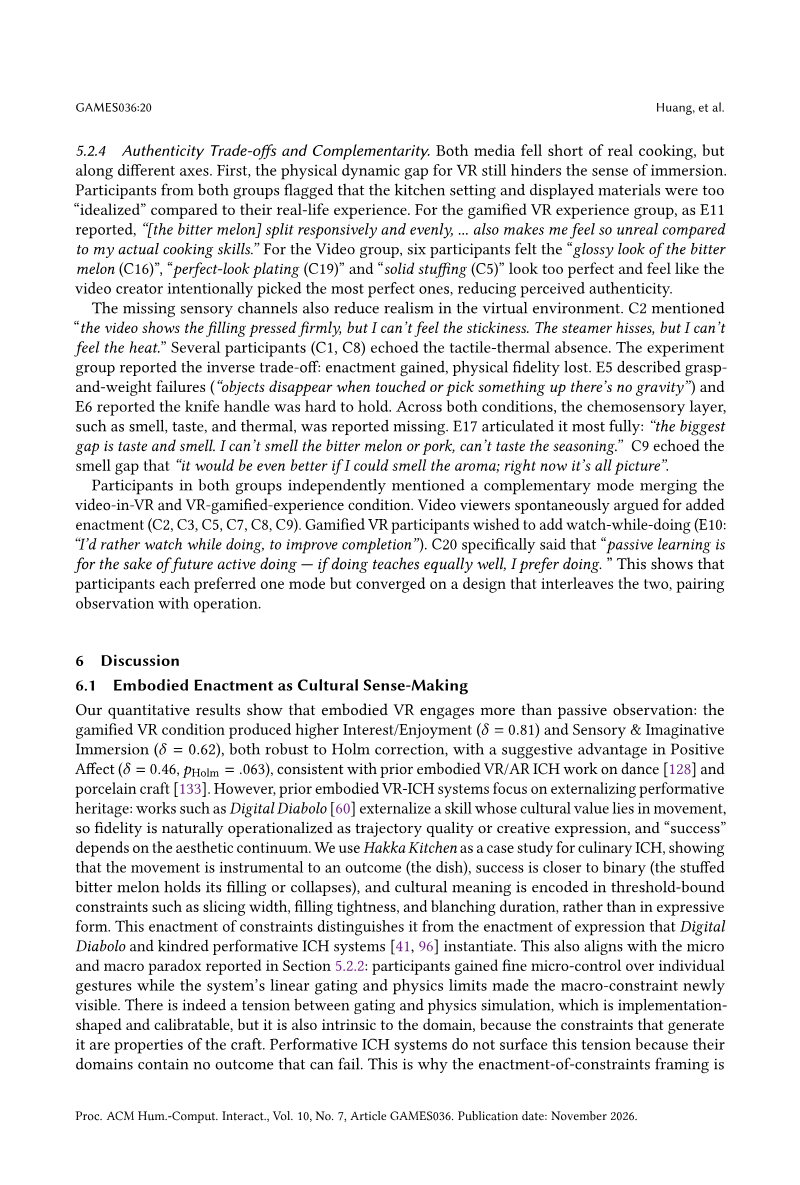
Passive video observation fails to convey the nuanced 'knowing-how' inherent in traditional artisan labor. Immersive VR gameplay fosters deeper kinesthetic empathy for traditional craft.
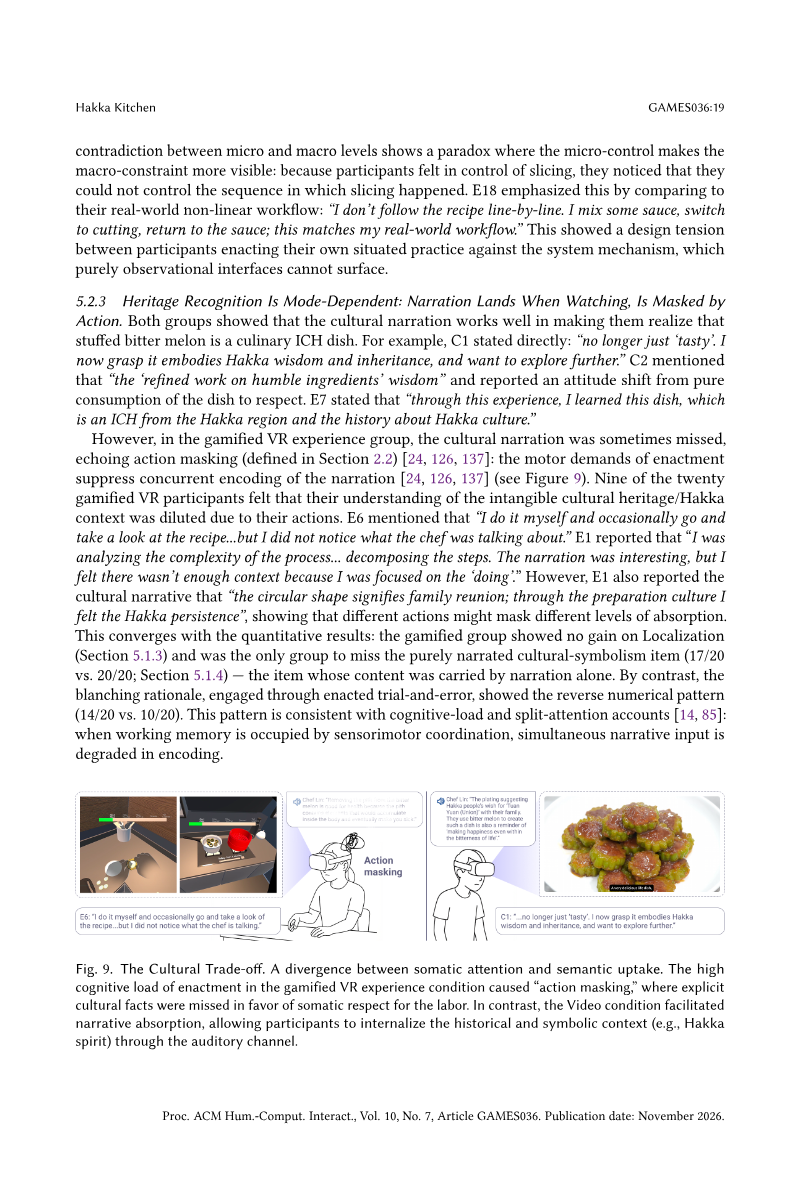
Hakka Kitchen serves as a critical exploration into the efficacy of virtual reality as a medium for preserving intangible culinary heritage. By mapping expert-defined physical constraints—such as precise slicing techniques and ingredient preparation—onto interactive game mechanics, the project demonstrates that embodied enactment fosters a deeper kinesthetic empathy for artisan labor than passive observation. Through a comparative study of 40 participants, the research establishes that while video-based learning is effective for absorbing procedural sequences and narrative context, it fails to convey the nuanced "knowing-how" inherent in traditional craft.
The findings highlight a significant trade-off in immersive heritage education known as action masking. While the high cognitive load required to perform complex physical gestures in virtual reality anchors cultural appreciation through somatic memory, it simultaneously hinders the user's ability to process concurrent narrative information. Consequently, participants who engaged in active gameplay reported higher levels of sensory immersion and cultural awareness, yet they often missed historical details that were more easily absorbed by the passive video-viewing control group. This suggests that the most effective pedagogical models for cultural preservation must strategically interleave active, constraint-based gameplay with periods of lower cognitive demand to ensure both somatic engagement and narrative retention.
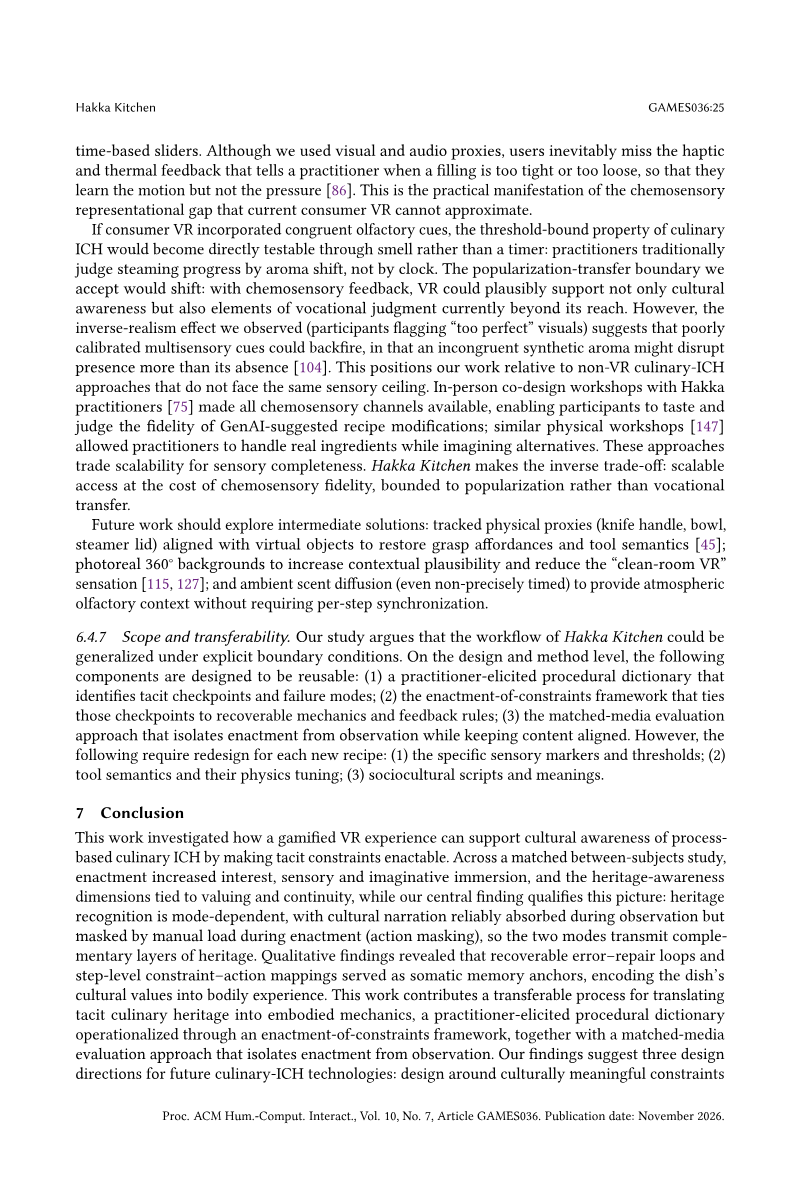
Ultimately, the study concludes that while current consumer virtual reality lacks the chemosensory fidelity required for professional vocational training, it functions as a highly scalable tool for cultural heritage awareness. By utilizing a productive failure structure and controller-free hand tracking, the system successfully converts abstract instructions into felt knowledge. Future design iterations should prioritize the decoupling of manual task load from narrative delivery to balance the benefits of embodied learning with the necessity of historical context, thereby creating a more comprehensive and empathetic understanding of culinary traditions.
Northeastern University · 2026
Northeastern University · 2026
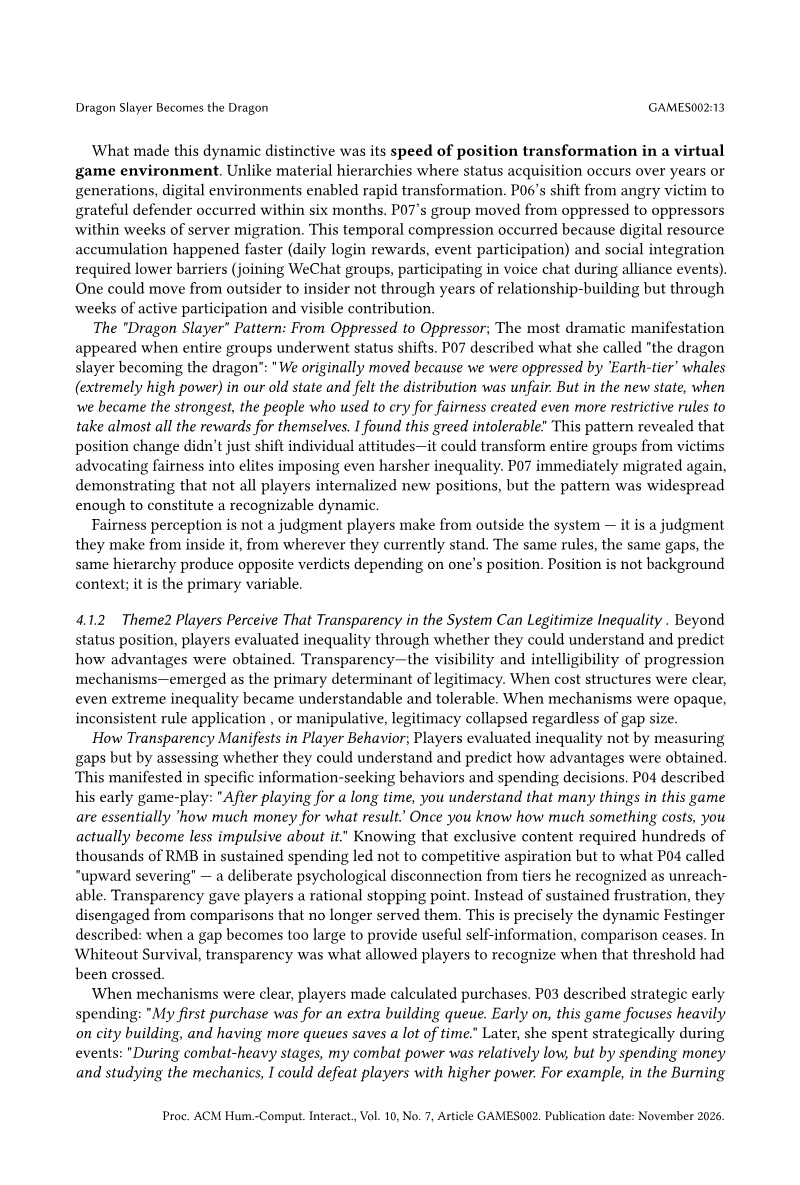
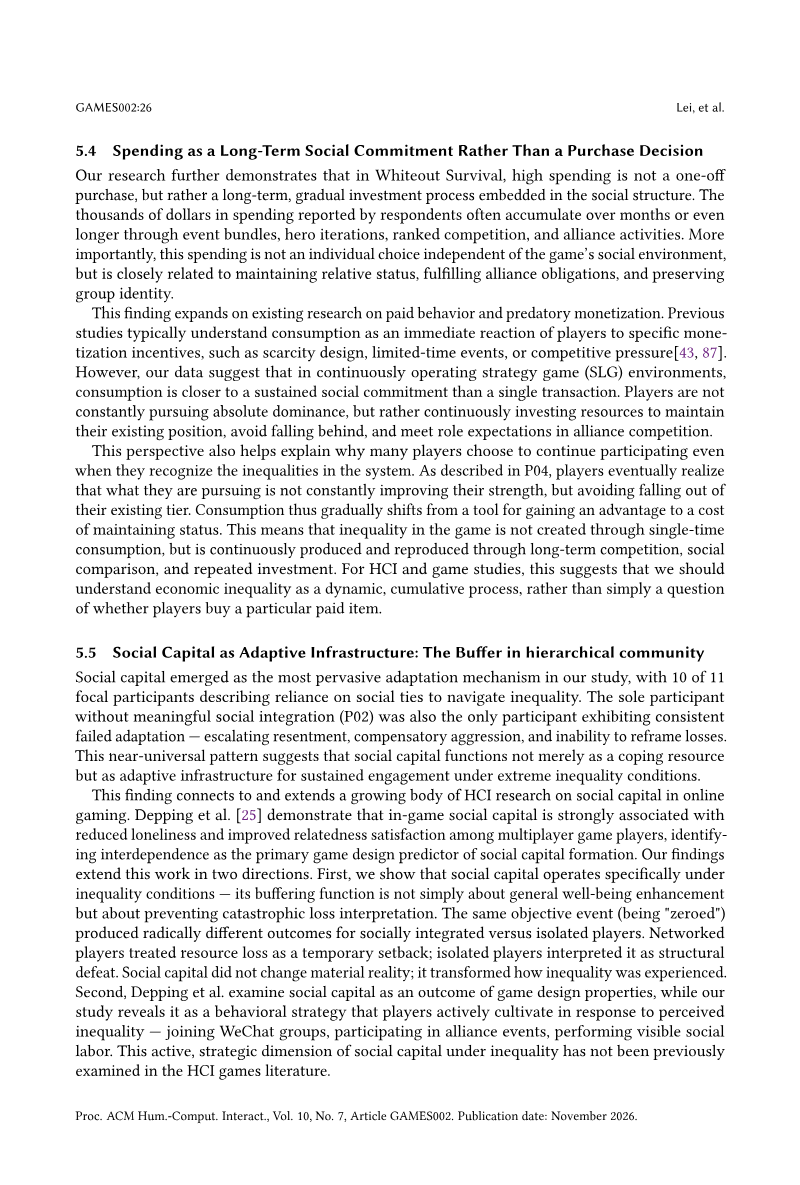
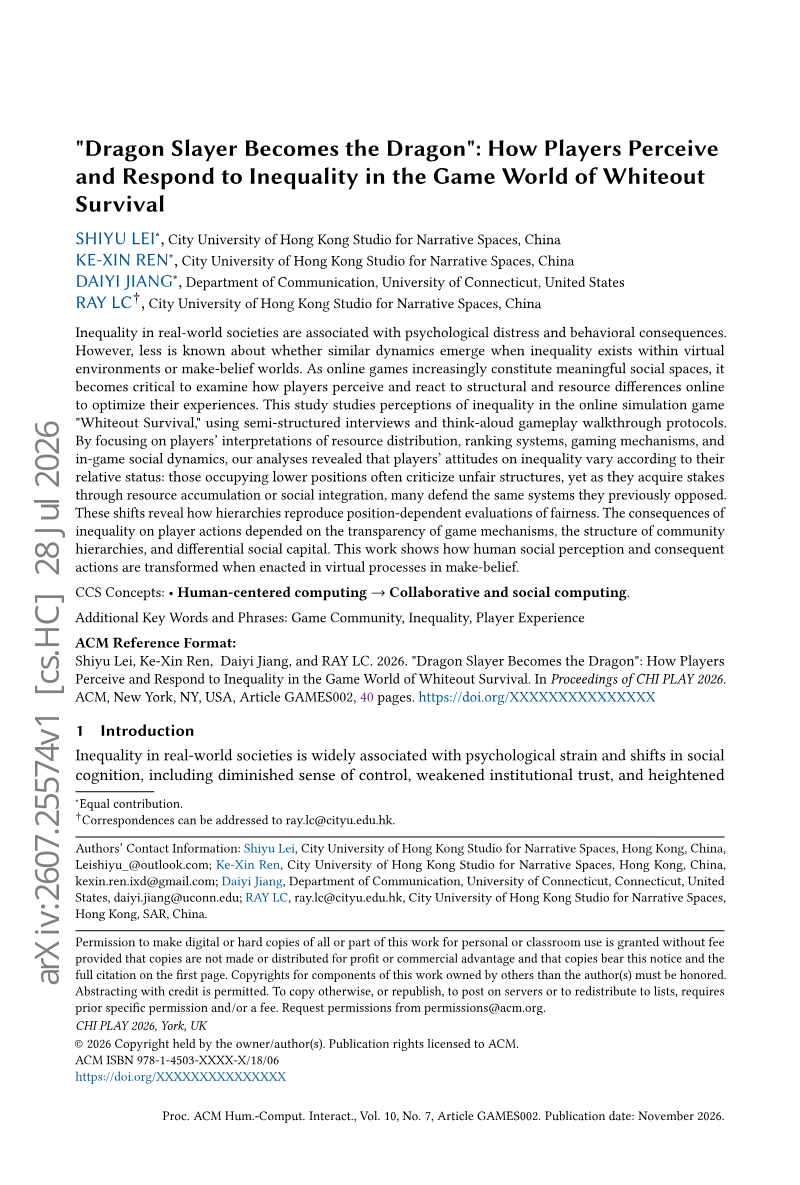
City University of Hong Kong · 2026
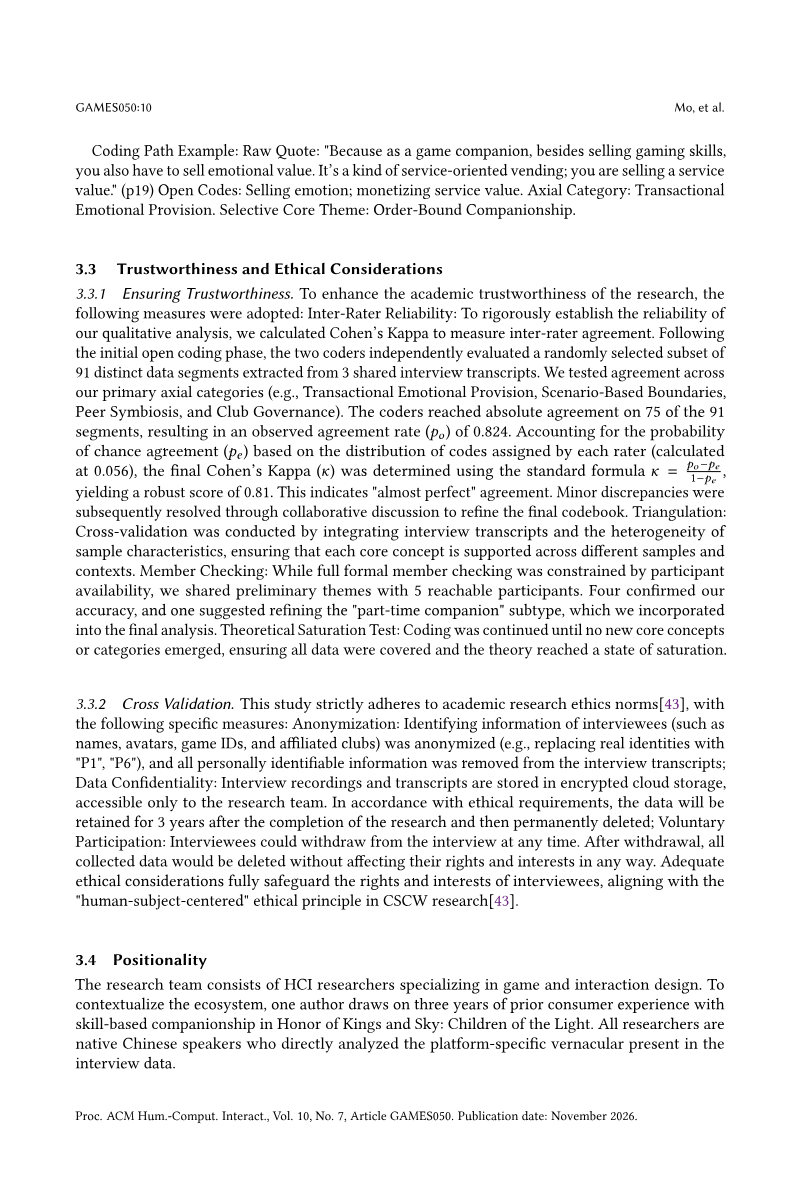
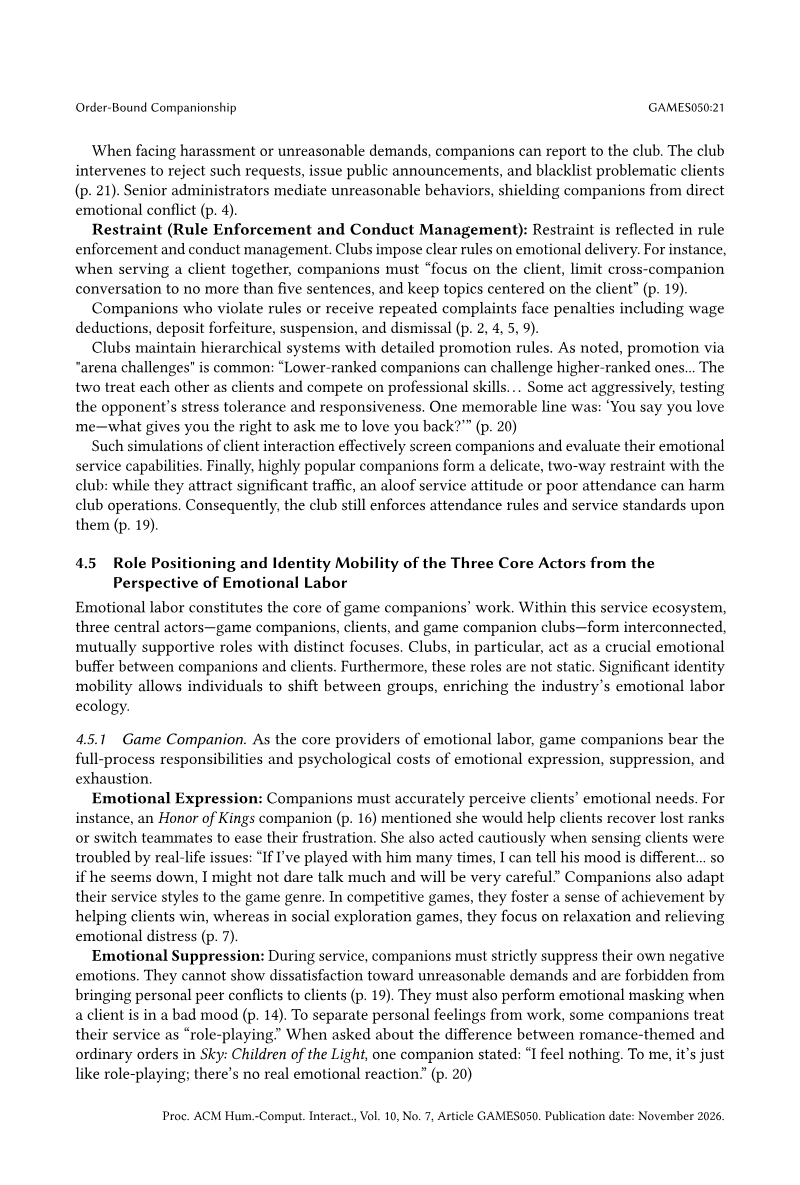
City University of Hong Kong · 2026
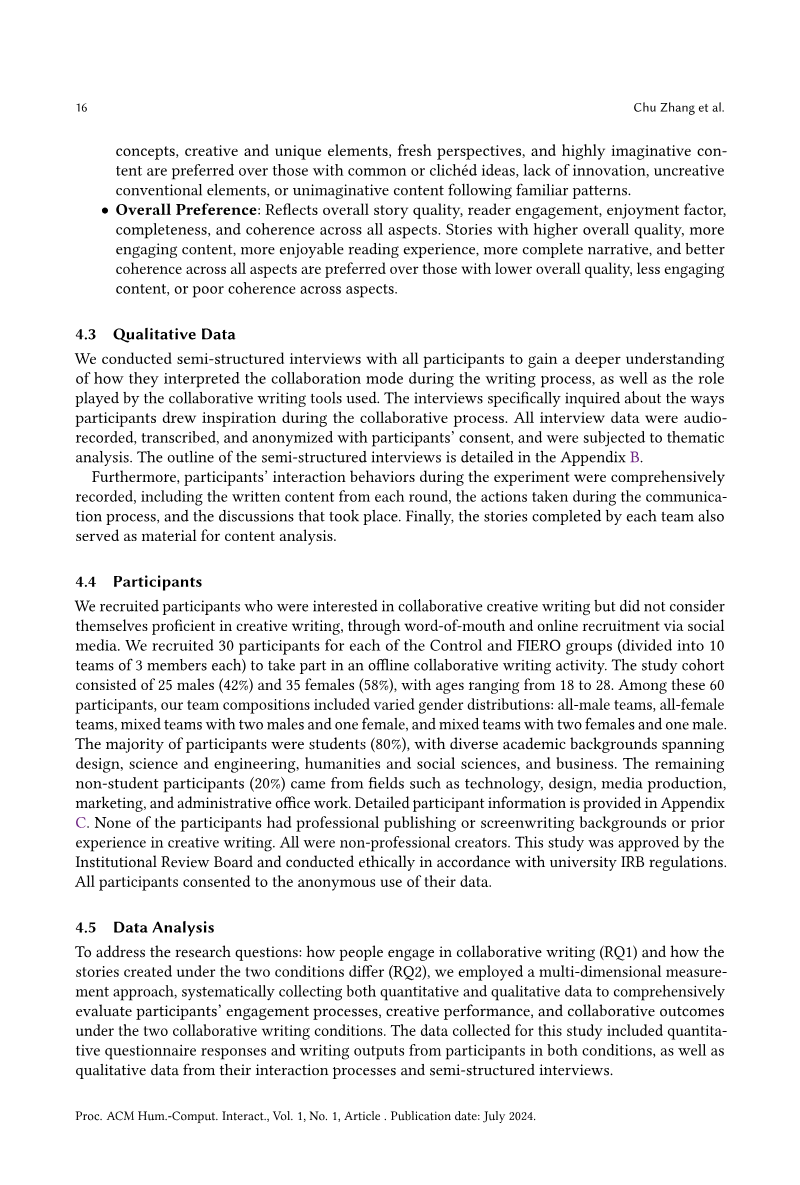
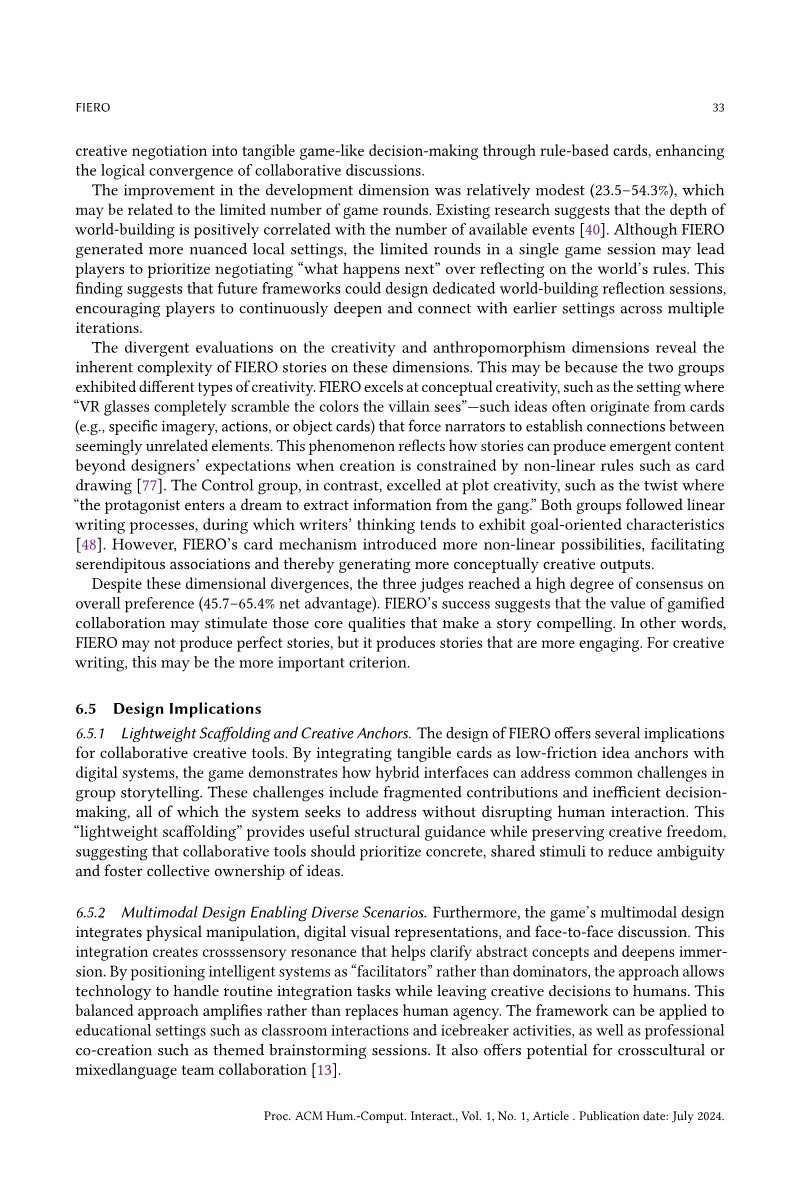
City University of Hong Kong · 2026
University of Luxembourg · 2025
Northeastern University · 2025
Northeastern University · 2025
Northeastern University · 2025
University of Science · 2025
University of Waterloo · 2024
Intelligent Big Data Visualization Lab · 2024
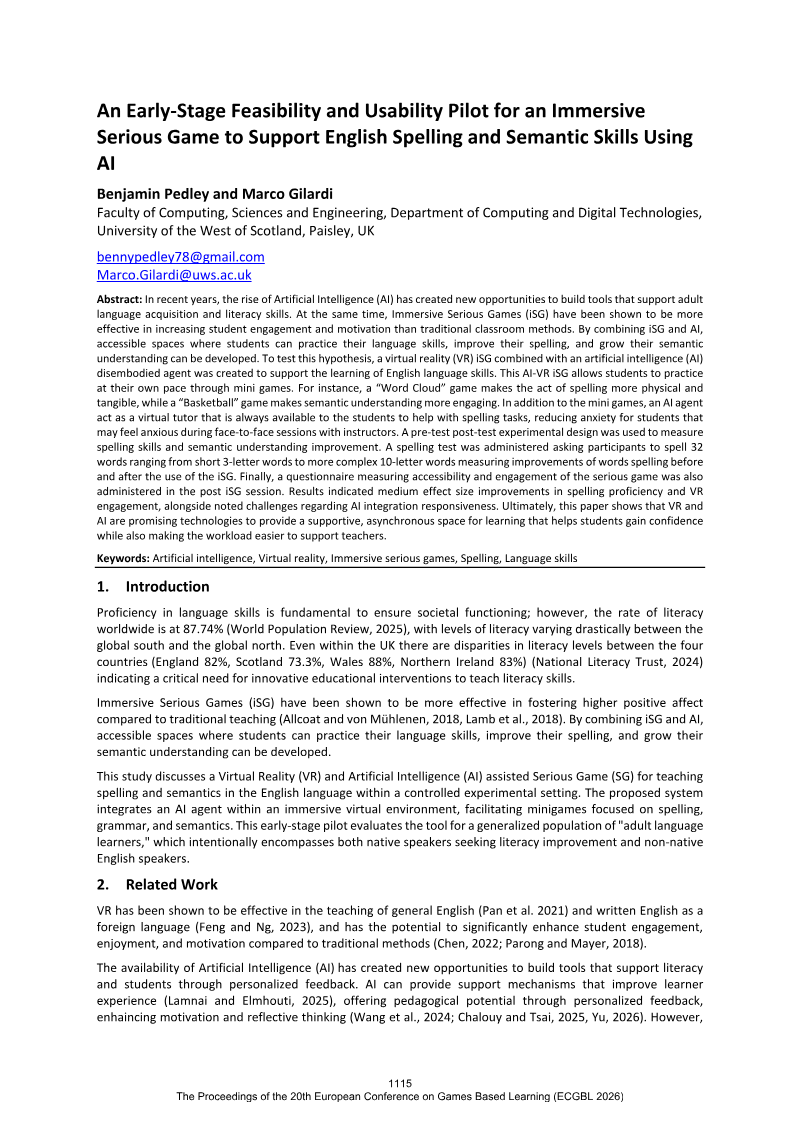
European Conference on Games Based Learning (ECGBL) · 2026



European Conference on Games Based Learning (ECGBL) · 2026
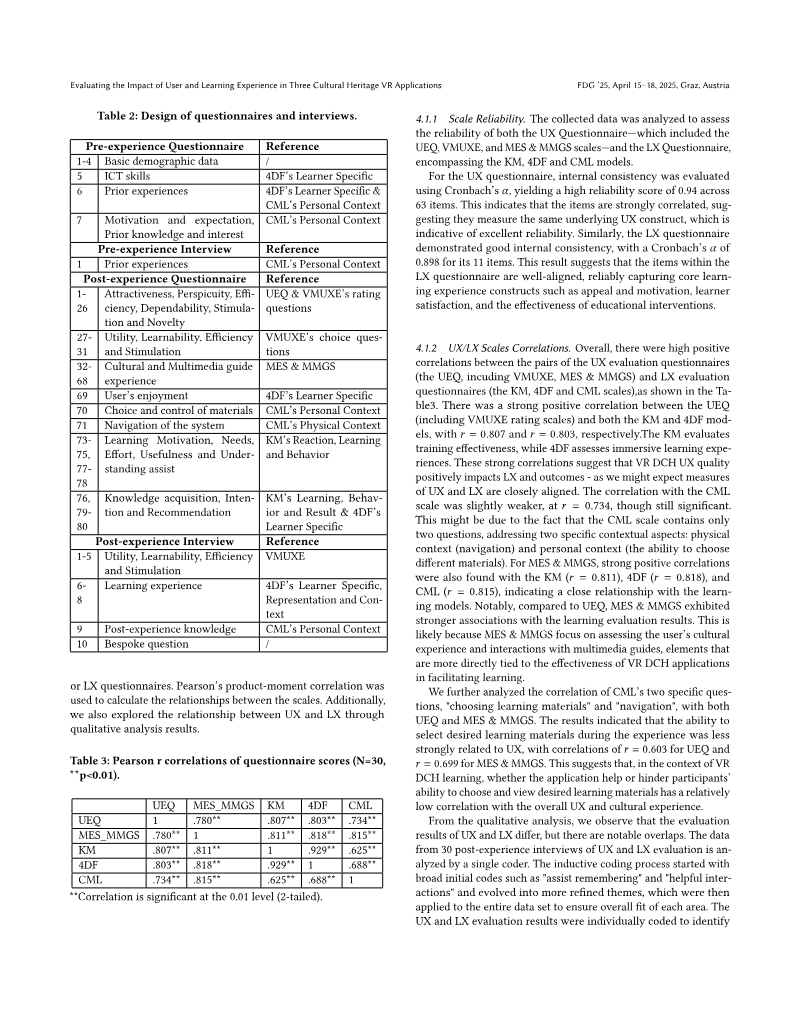
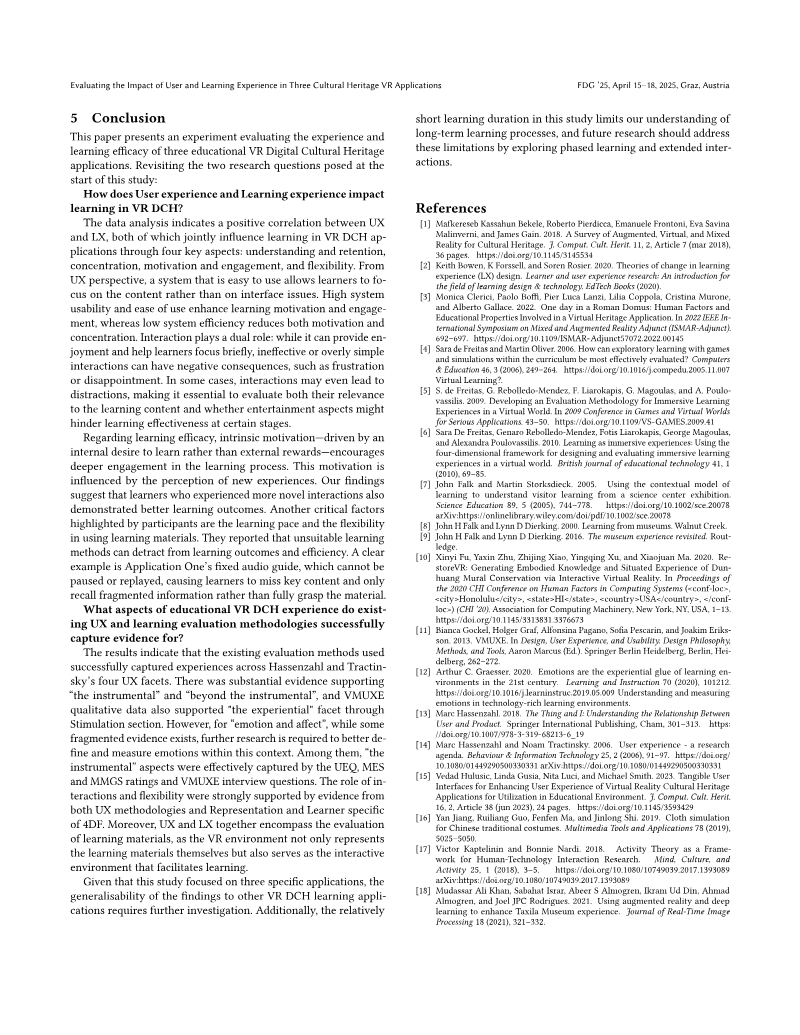
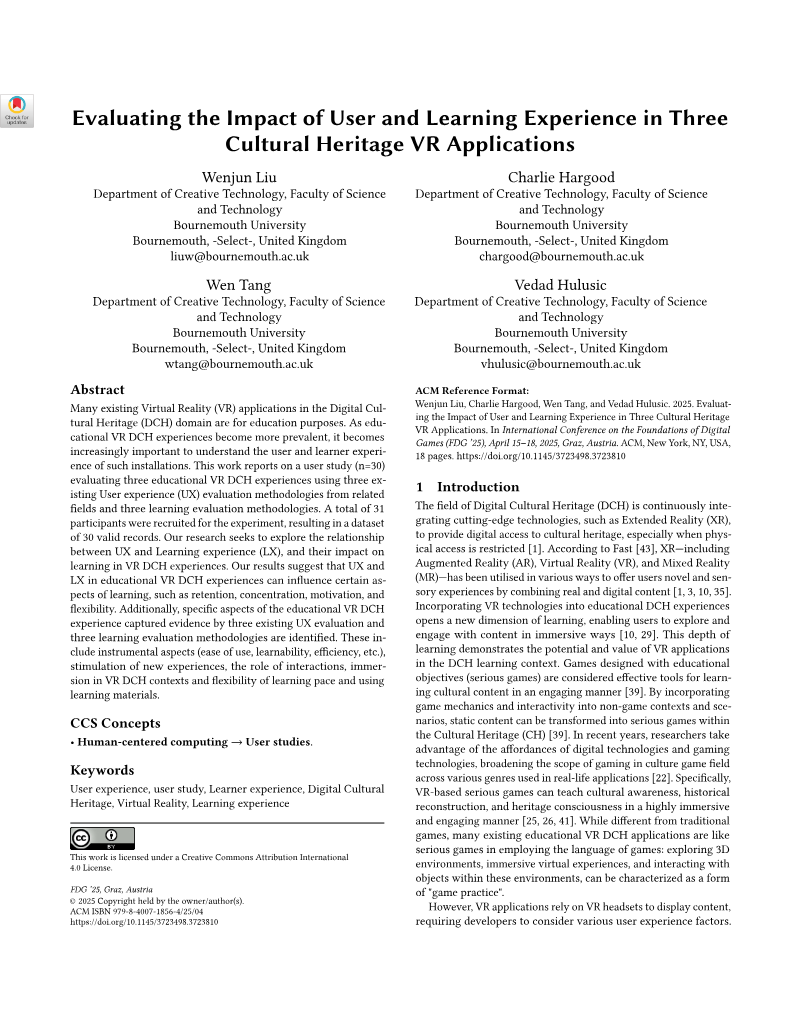
Bournemouth University · 2025