Loading the document
Key insights
4 slides
Worker Protection
Clubs prohibit private contact to mitigate worker harassment and emotional exhaustion.
This enforcement of boundaries by clubs serves as a critical protective measure for workers.
1 / 4
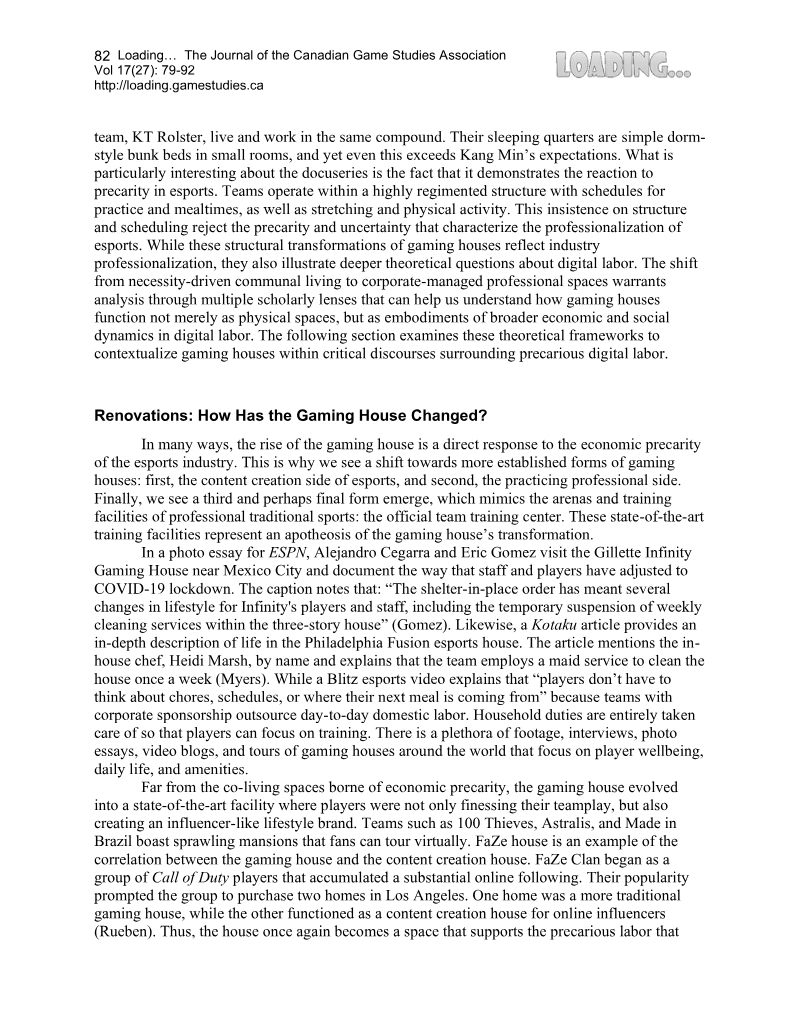
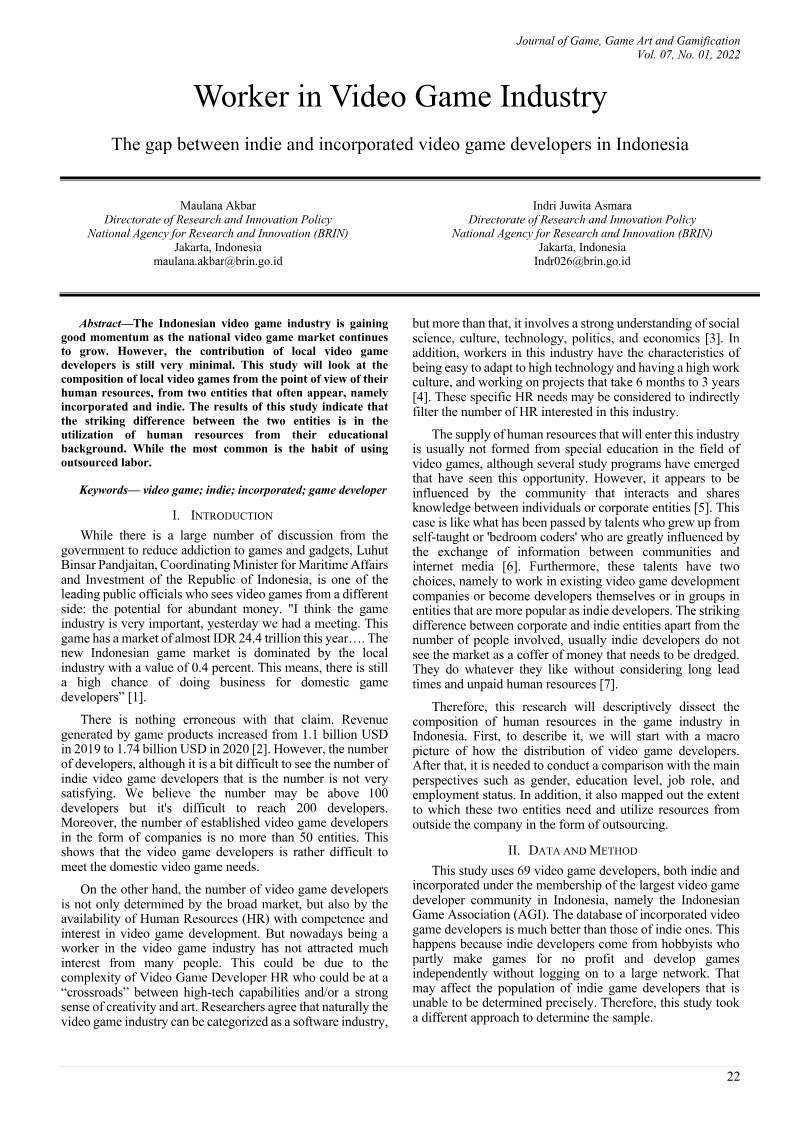
- 01Professional game companionship in China functions as a gig economy sector that merges technical gaming skill with simulated intimacy to meet client demand.See it on page 1
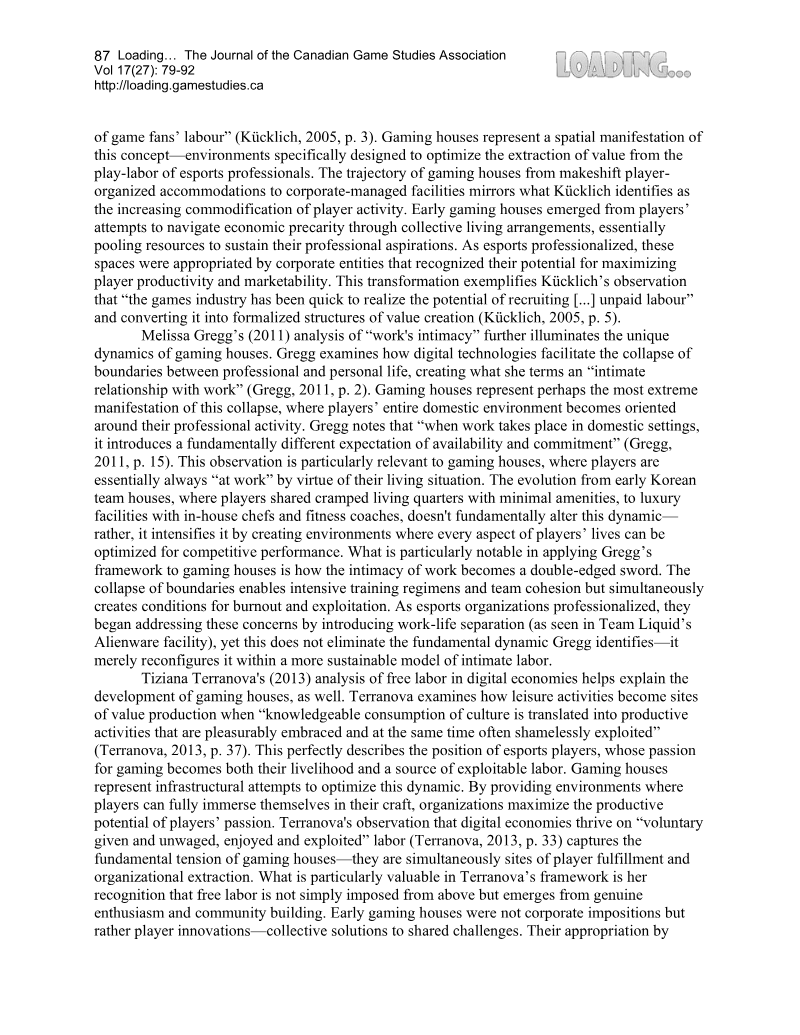
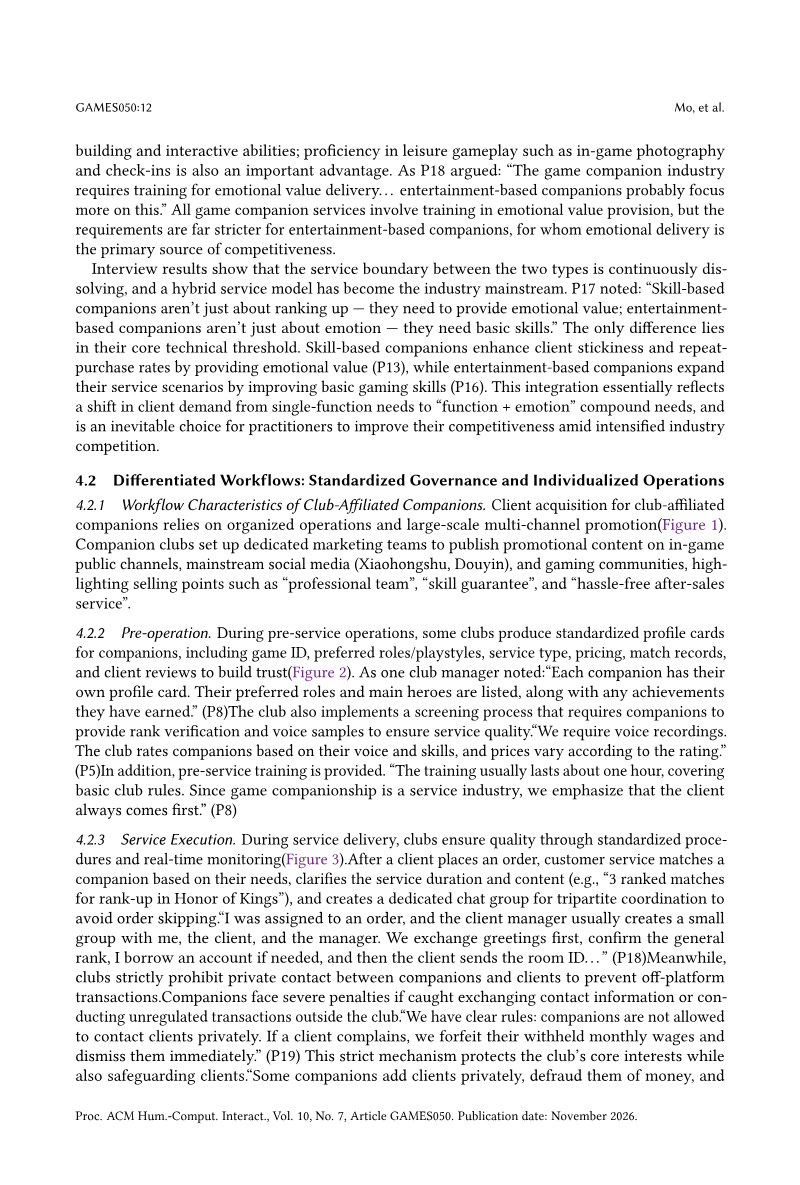
- 02The 'order-bound' model institutionalizes emotional labor by restricting romantic or intimate interactions strictly to the duration of paid sessions.See it on page 23
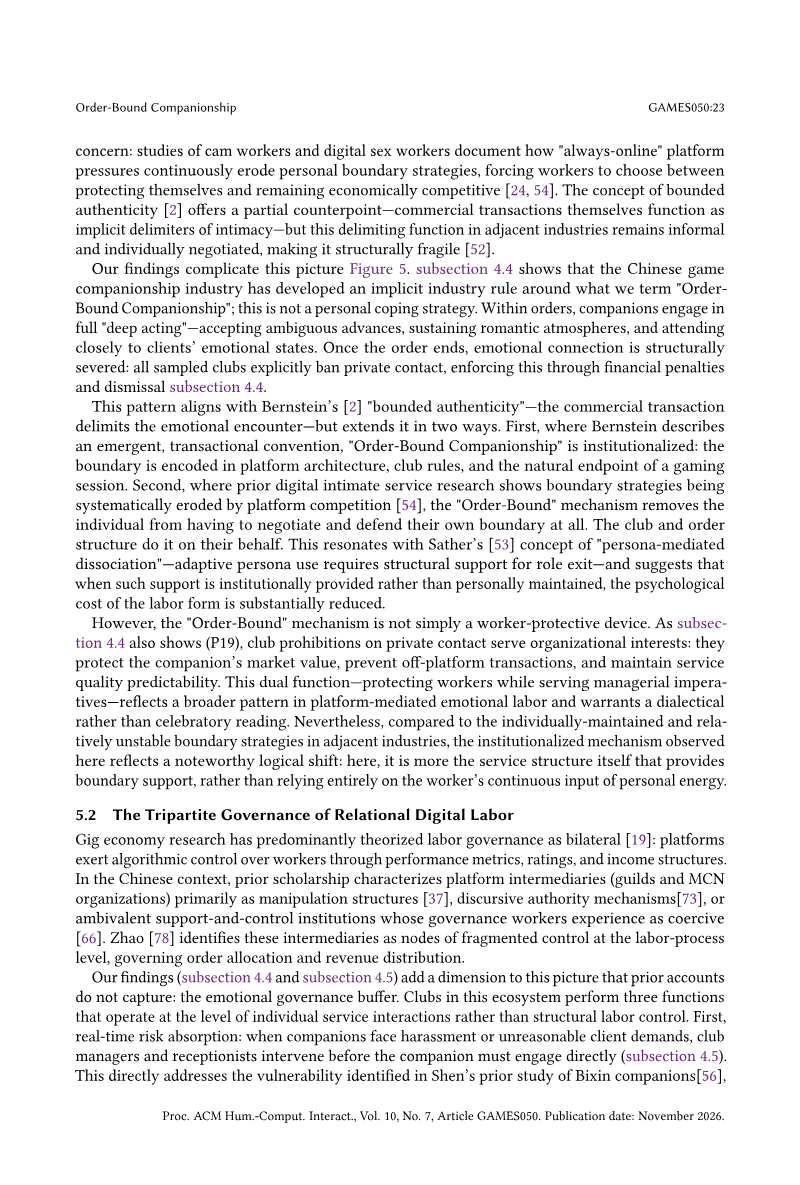
- 03Clubs enforce boundaries by prohibiting private contact between workers and clients, which serves to mitigate worker harassment and emotional exhaustion.See it on page 12
- 04This organizational structure shifts the burden of boundary maintenance away from the individual, providing a level of psychological stability uncommon in other digital service sectors.See it on page 23
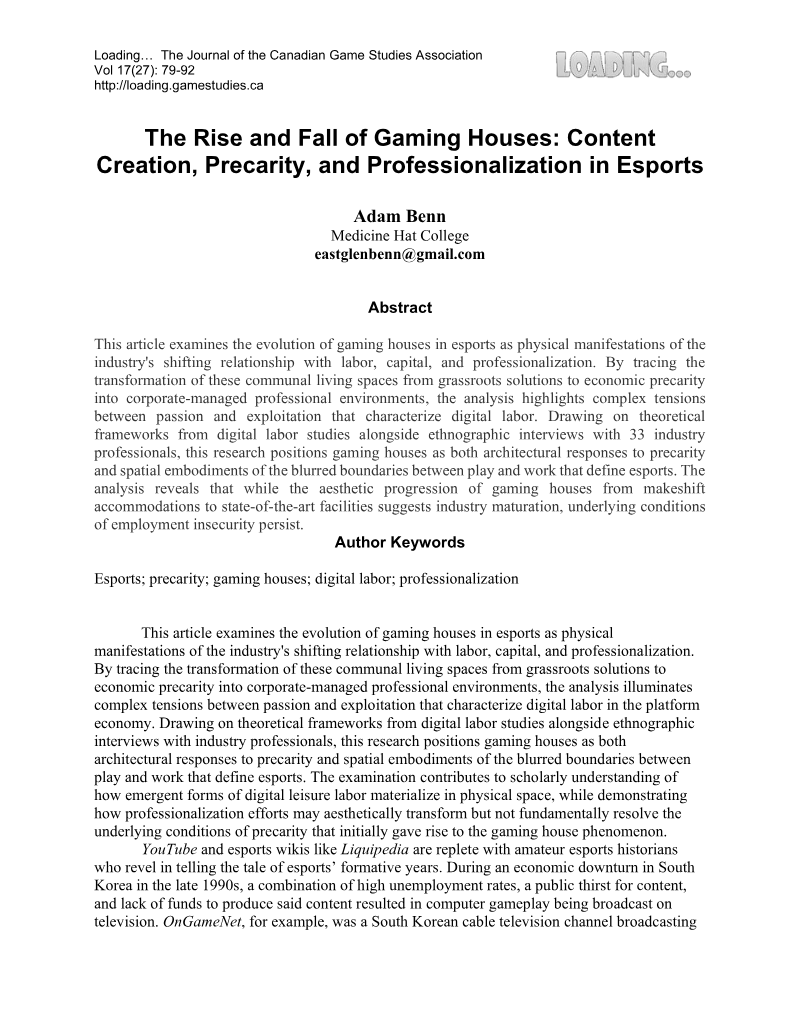
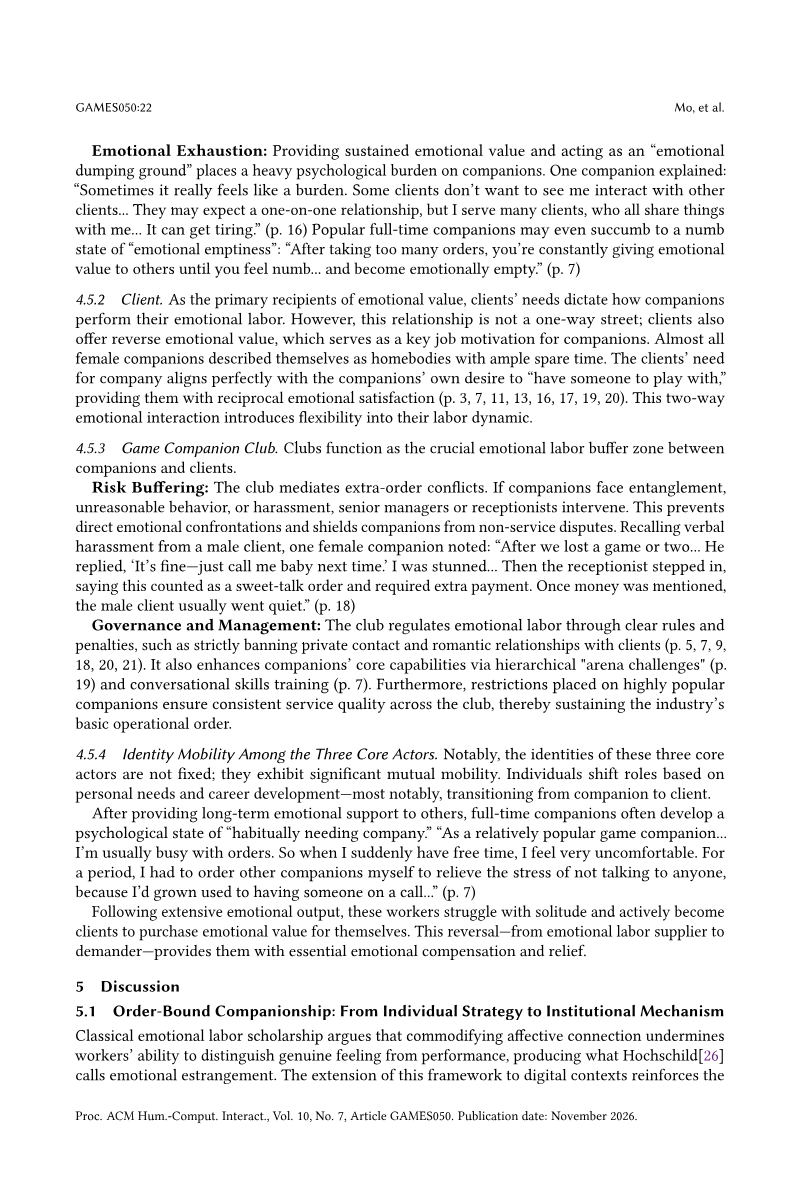
- 05Practitioners face ongoing sustainability challenges due to the tension between transactional service requirements and the desire for authentic social connection.See it on page 22
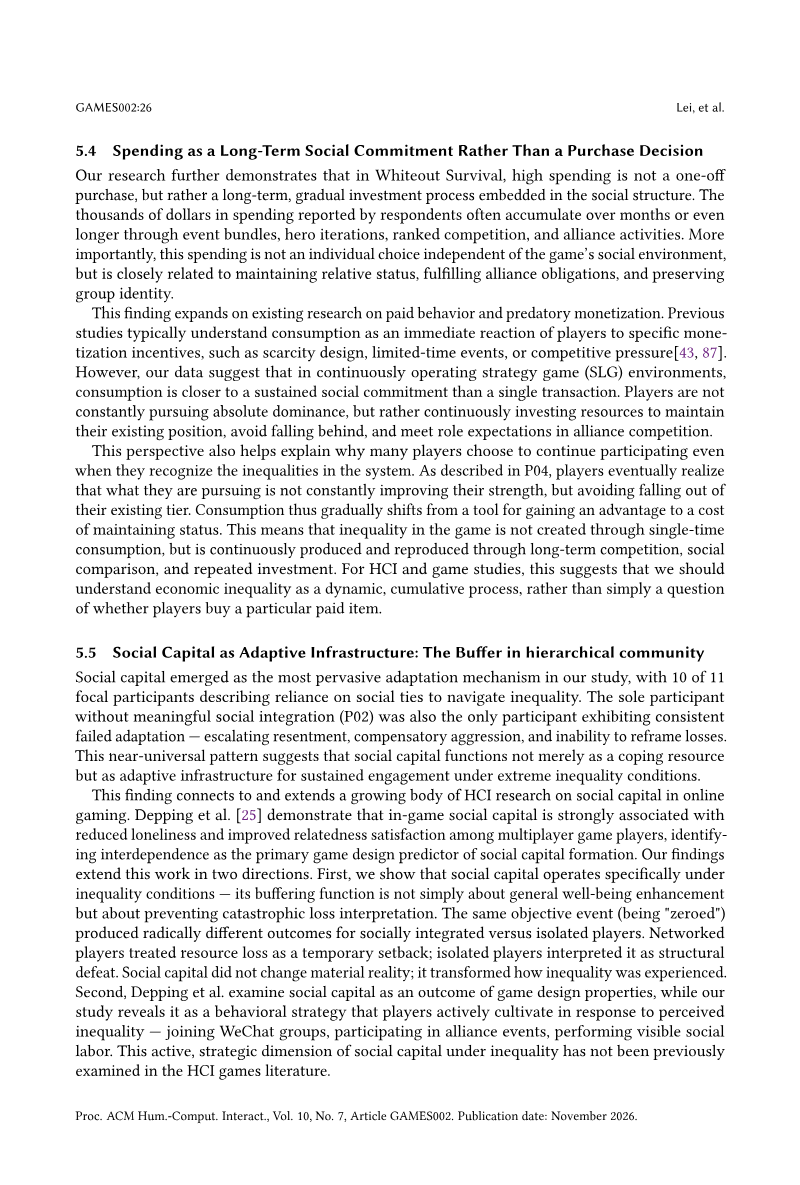
- 06The industry requires formal governance, including human-in-the-loop conflict mediation and incentive structures that explicitly recognize the value of invisible emotional labor.See it on page 27
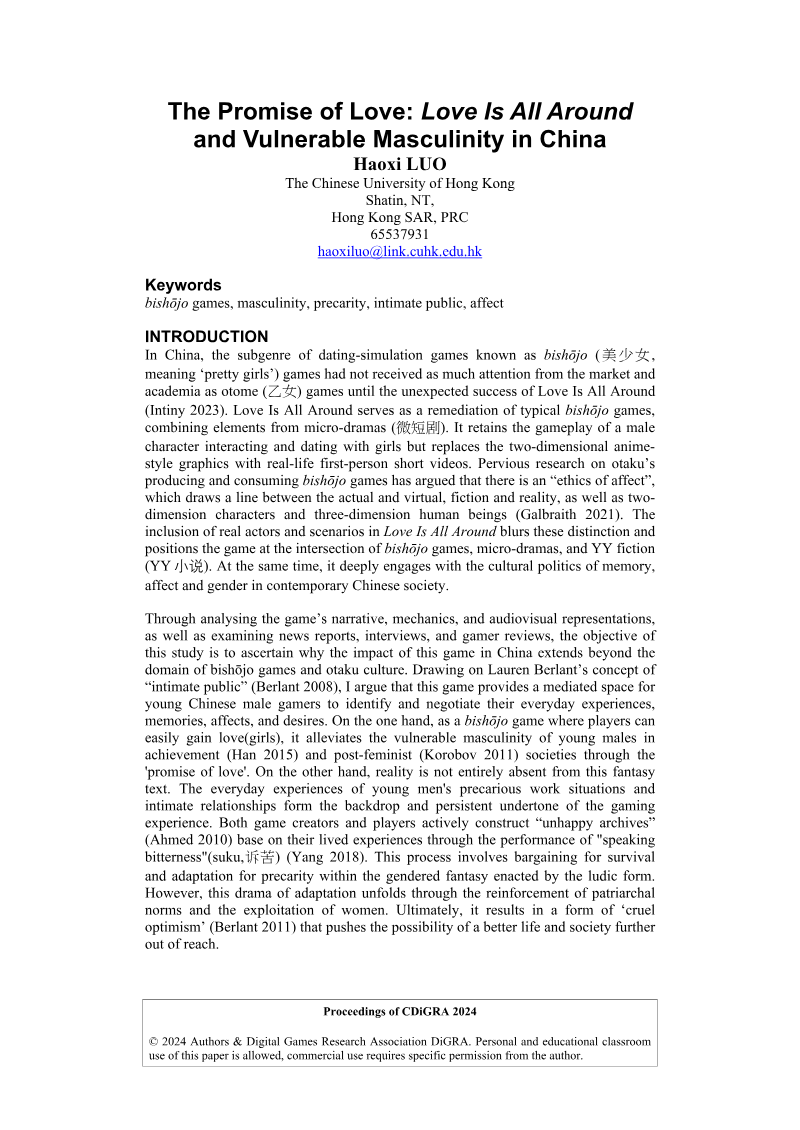
- 07Long-term viability of the companionship ecosystem depends on platform-level protections to reduce the psychological costs inherent in digital relational work.See it on page 27
Ask AI about this report
Summary
Professional game companionship in China represents a burgeoning sector of digital gig work defined by the performance of invisible emotional labor. By integrating technical gaming proficiency with simulated intimacy, workers navigate a complex ecosystem where service is governed by a hybrid model of algorithmic pressure and third-party club management. This industry operates through a system of fragmented control, where platforms, specialized clubs, and individual practitioners negotiate the boundaries of commercialized social interaction to meet diverse client expectations.
The core operational mechanism within this field is order-bound companionship, a strategy that institutionalizes emotional labor by strictly limiting intimate or romantic engagement to the duration of a paid session. This boundary, often enforced by clubs through prohibitions on private contact, serves as a critical protective measure that mitigates emotional exhaustion and harassment for the worker while ensuring service consistency for the client. By shifting the burden of boundary maintenance from the individual to the organizational structure, this model provides a degree of psychological stability that is frequently absent in less regulated digital service sectors.
Despite these protections, the industry faces ongoing challenges regarding the sustainability of such labor. Practitioners must constantly balance the transactional requirements of their roles with the desire for authentic, friend-like connections, all while navigating gendered service expectations. To address these systemic pressures, the industry requires a transition toward more formal governance. Implementing human-in-the-loop conflict mediation, voice-first platform architectures, and multi-dimensional incentive structures that recognize the value of invisible labor would better support workers. Ultimately, formalizing these protections at the platform level is essential to reducing the psychological costs inherent in professional digital relational work and ensuring the long-term viability of the companionship ecosystem.