1 free read left. Create a free account for unlimited reading + AI research.
Create free accountWhitepaper DiGRA
1 free read left. Create a free account for unlimited reading + AI research.
Create free accountWhitepaperDiGRA
Designers balance 'hard' and 'soft' boundaries to manage constraint and freedom.
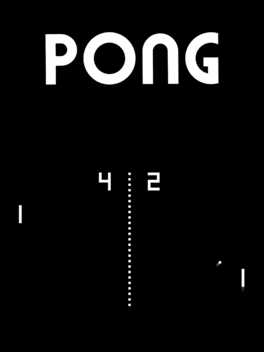
Geoff King and Tanya Krzywinska's "Gamescapes" examines how video game worlds shape players' experience of exploration and virtual presence. The central argument is that restriction is not simply a limitation but a deliberate design tool that governs pleasure, fear, and narrative. Designers balance "hard" and "soft" boundaries to manage the tension between constraint and freedom, and exploration, though often valued for its own sake, is generally weighed against goal-oriented play. The analysis spans a wide range of titles, from fixed-screen arcade games such as Pong and Tetris to expansive online worlds such as EverQuest and open single-player environments such as Morrowind.
A key finding concerns perspective and sensory design as determinants of presence. Isometric and god-view strategy games offer the most distanced experience, third-person games provide a mediated sense of being in the world, and first-person games produce the strongest illusion of presence. Sound design and haptic feedback contribute further, though the authors note that early force feedback, such as the dual-shock controller's crude vibration, remained far from the fidelity of true virtual reality. Even so, games can generate powerful psychological immersion through gameplay alone, independent of sensory realism.
The authors place games in a middle position between virtual reality and conventional screen media. Immersion depends on perceptual factors such as rendering realism, consistency, and player agency, alongside content and user variables including engagement, willingness to suspend disbelief, and social dimensions. A notable conclusion is that exploration scope and presence, though related, are not necessarily linked: the largest explorable worlds do not reliably yield the strongest sense of embodied presence. Inconsistency in how the game world responds to player action is identified as a principal threat to both immersion and presence, making responsiveness a critical design concern.
Each row is a game or company this document names, each column a document, oldest first. A mark means that document names it. Select a row to see those documents.

DiGRA · 2026

DiGRA · 2026



DiGRA · 2026
DiGRA · 2026