Key insights
5 slides
Core concept
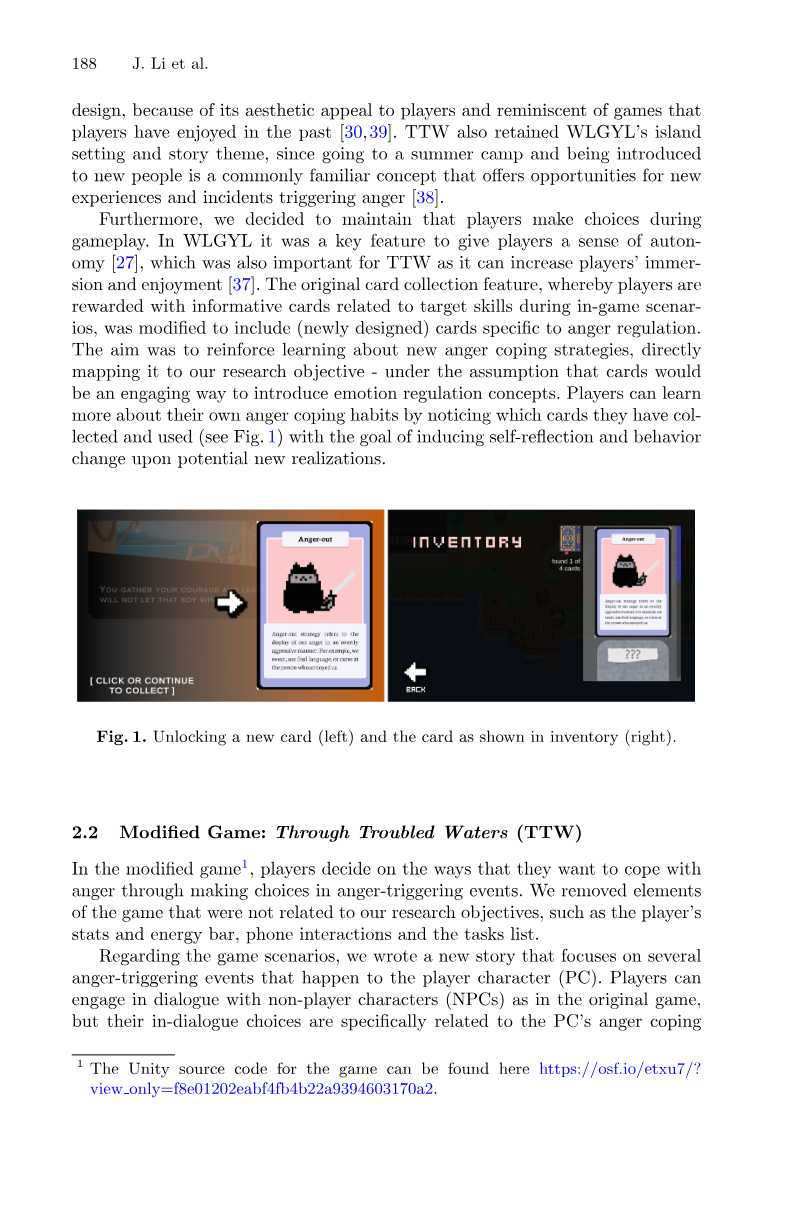
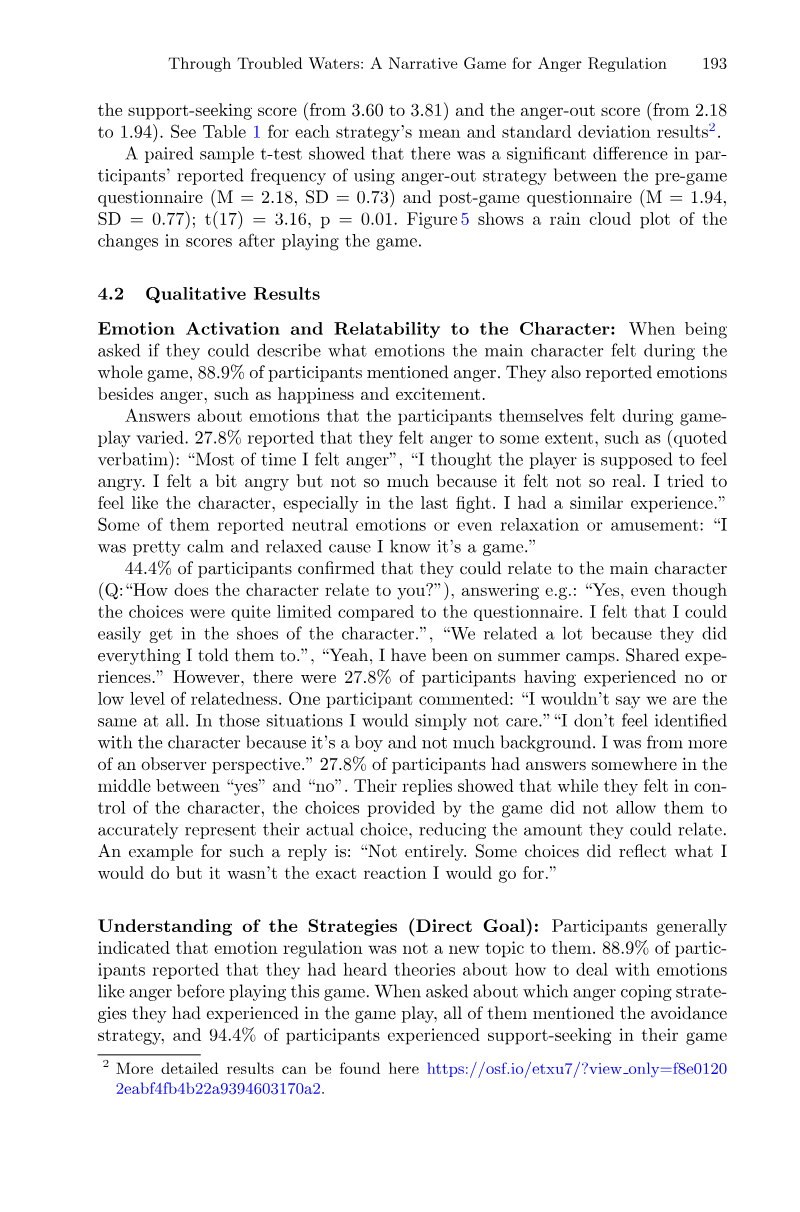
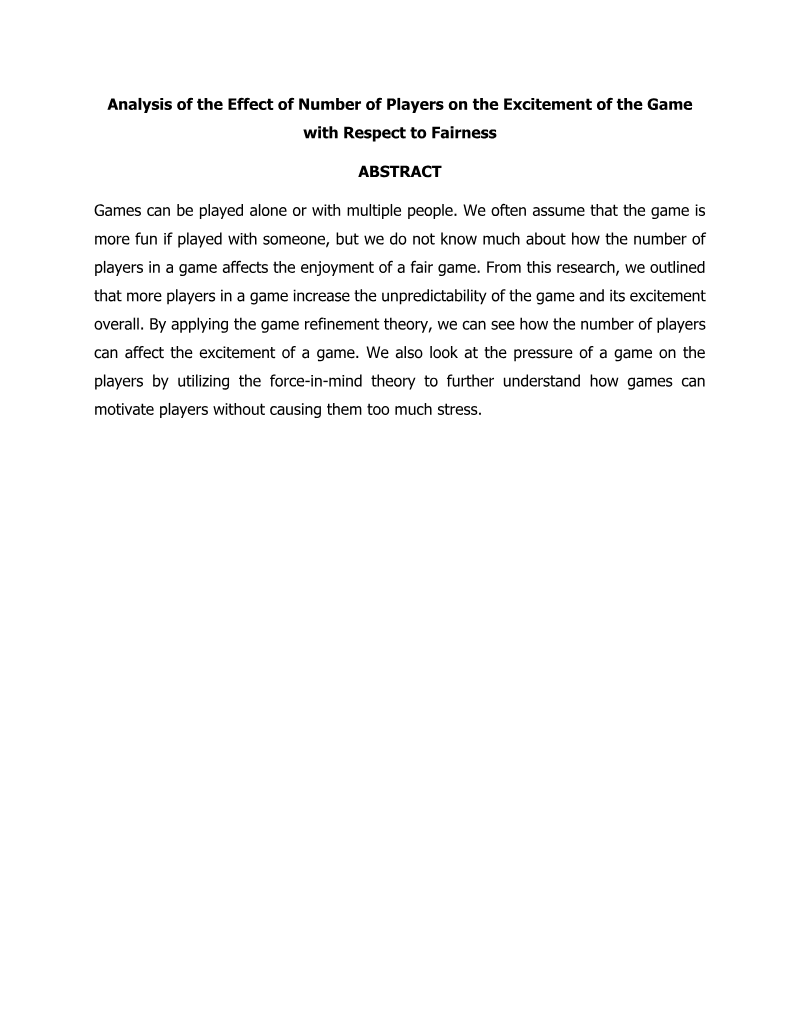
Game information dynamics can be quantified using fluid mechanics principles.
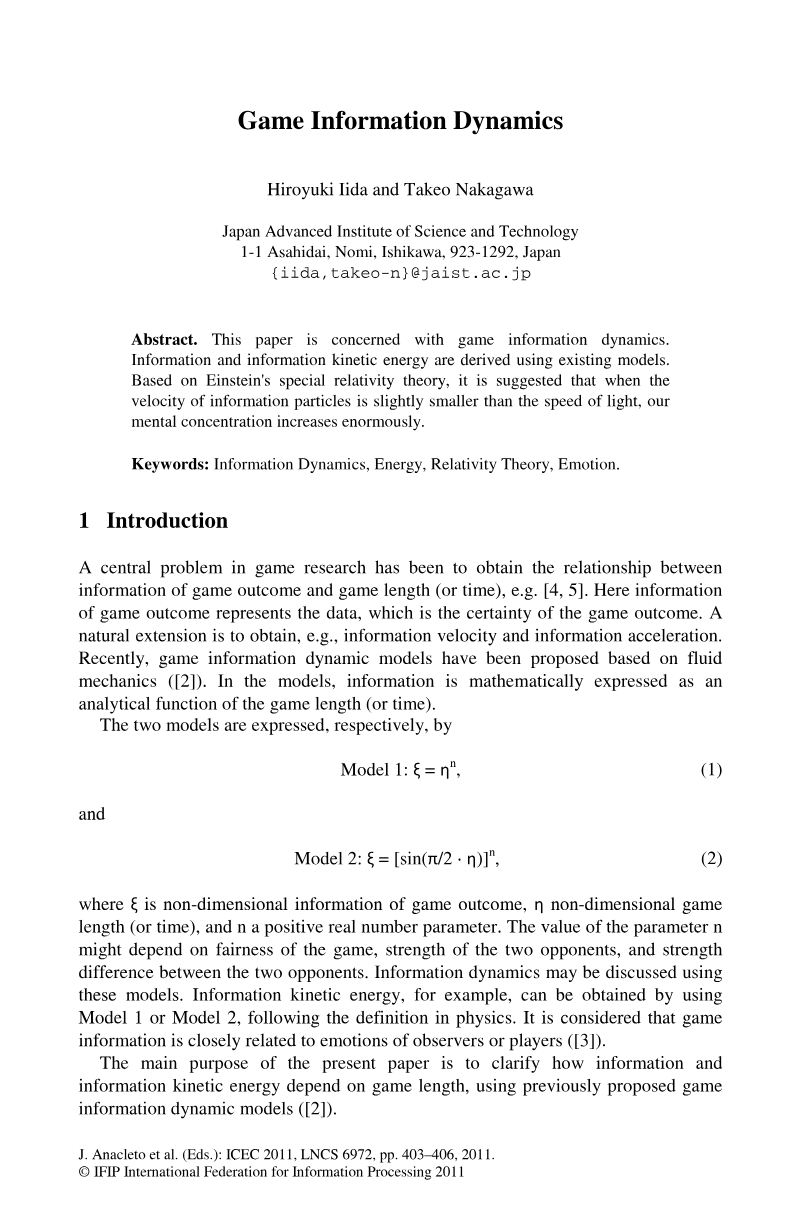
Information is treated as a fluid with measurable momentum and kinetic energy. This approach allows for mathematical modeling of how game outcomes evolve over time.
Think of information flowing like water, with its speed and force changing throughout a game.
1 / 5
- 01Game intensity and peak player performance are fundamentally driven by the velocity of information processing, which dictates a player's capacity for optimal decision-making.See it on page 4
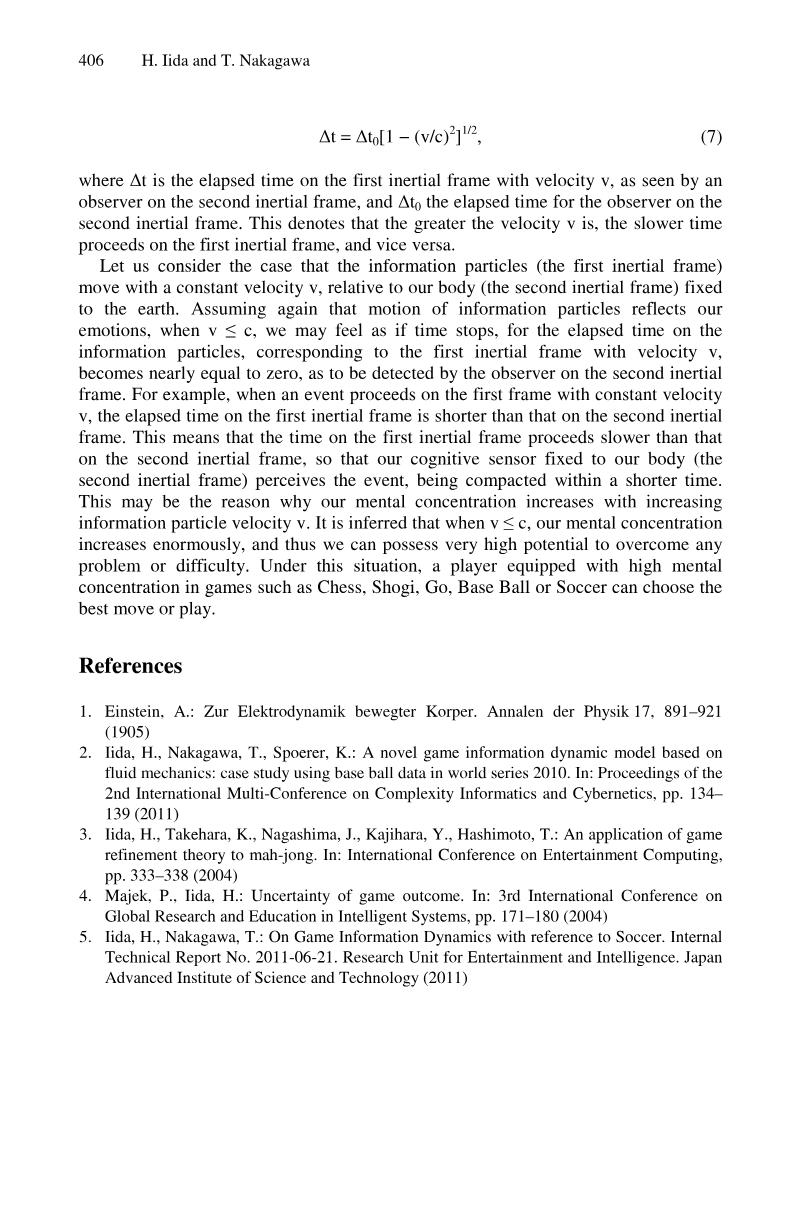
- 02High-velocity information processing induces a temporal dilation effect, where increased cognitive speed causes players to perceive time as slowing down, facilitating better performance in complex environments like Chess or professional sports.See it on page 4
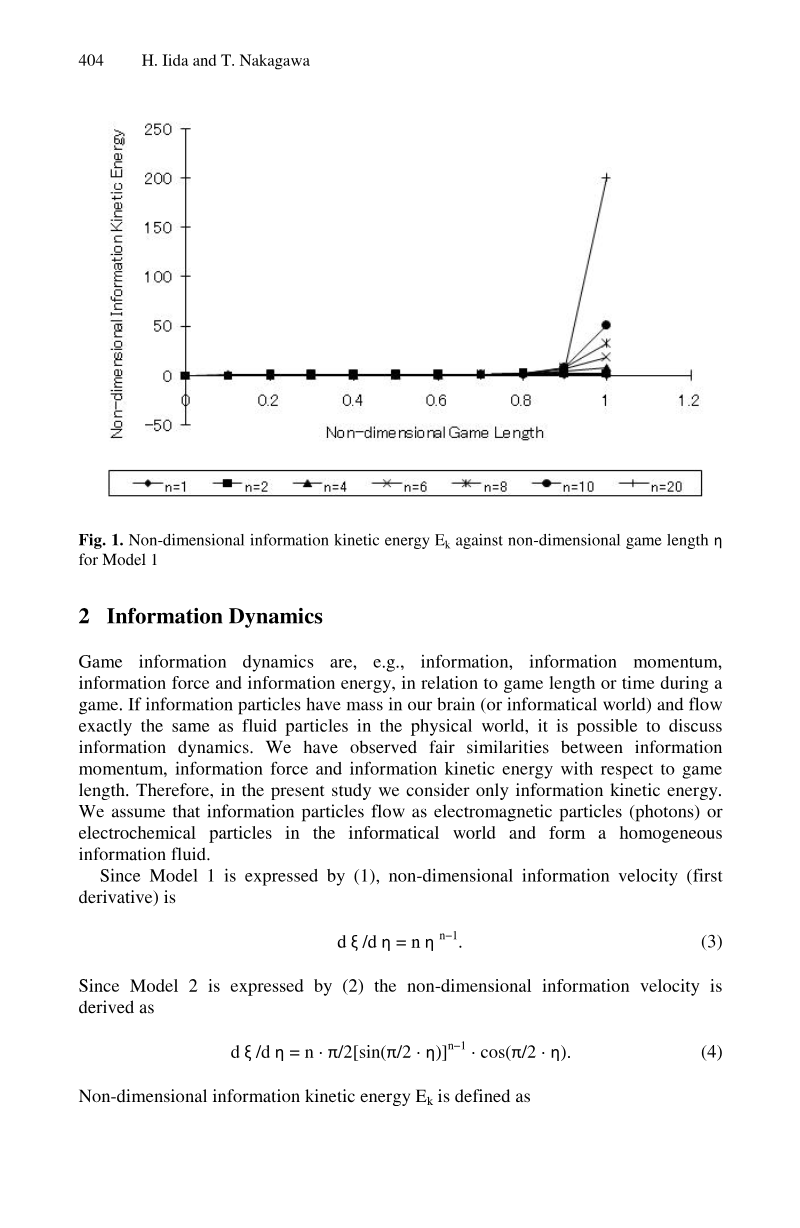
- 03Information kinetic energy in games can be modeled using sinusoidal functions, where a governing parameter value of two or greater creates a peak-and-decline energy profile, while values below two result in a steady energy decrease.See it on page 2
- 04Game information dynamics can be quantified by treating information as a fluid with measurable momentum and kinetic energy, allowing for mathematical modeling of how game outcomes evolve over time.See it on page 1
- 05The fluctuations in information kinetic energy are theorized to be direct indicators of the emotional states and levels of mental engagement experienced by players and observers.See it on page 1
- 06Mathematical frameworks for game progression utilize both power and sinusoidal functions to incorporate variables such as game fairness and the relative strength of competing opponents.See it on page 1
Ask AI about this report
Summary
Game information dynamics explores the relationship between the progression of a game and the resulting information flow, utilizing fluid mechanics to model how game outcomes evolve over time. By treating information as a fluid with measurable momentum and kinetic energy, the analysis establishes mathematical frameworks to quantify how information changes relative to game length. Two primary models are utilized: one based on a power function and another on a sinusoidal function, both of which incorporate a parameter representing variables such as game fairness and the relative strength of opponents.
The findings indicate that information kinetic energy fluctuates significantly depending on the chosen model and the value of the governing parameter. In the sinusoidal model, when the parameter is two or greater, information kinetic energy rises to a peak before declining to zero at the conclusion of the game. Conversely, lower parameter values result in a steady decrease in energy throughout the game. These fluctuations are theorized to correlate directly with the emotional states and mental engagement of players and observers.
Drawing on Einstein’s theory of special relativity, the analysis posits that information particles moving at velocities approaching the speed of light create a temporal dilation effect. When applied to human cognition, this suggests that as the velocity of information processing increases, the perceived passage of time slows down. This heightened state of mental concentration allows players in complex environments—such as Chess, Go, or professional sports—to process information more efficiently and execute optimal decisions. Ultimately, the research suggests that the intensity of a game experience is fundamentally linked to the velocity of information, which dictates the player's capacity for peak performance.