Games and companies in this document
Connections
Each row is a game or company this document names, each column a document, oldest first. A mark means that document names it. Select a row to see those documents.
More from Entertainment Computing
View all
Whitepaper
Conceptualizing Fun as Motivation to Play Video Games
Entertainment Computing · 2026
Whitepaper
Examining the Influence of Target–Distractor Similarity on Difficulty in a Working Memory Game
Entertainment Computing · 2025
Whitepaper
Gamifying Museum Exploration: A Virtual Reality Approach to Enhancing Visitor Engagement
Elsevier · 2025
Whitepaper
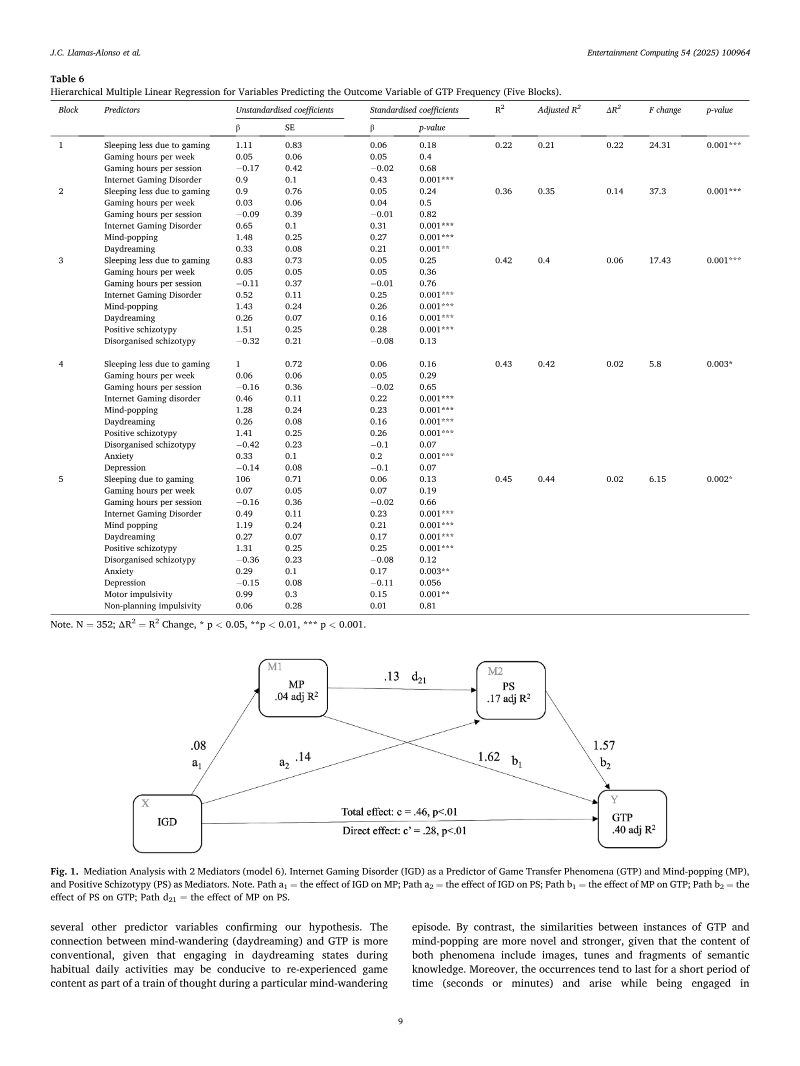
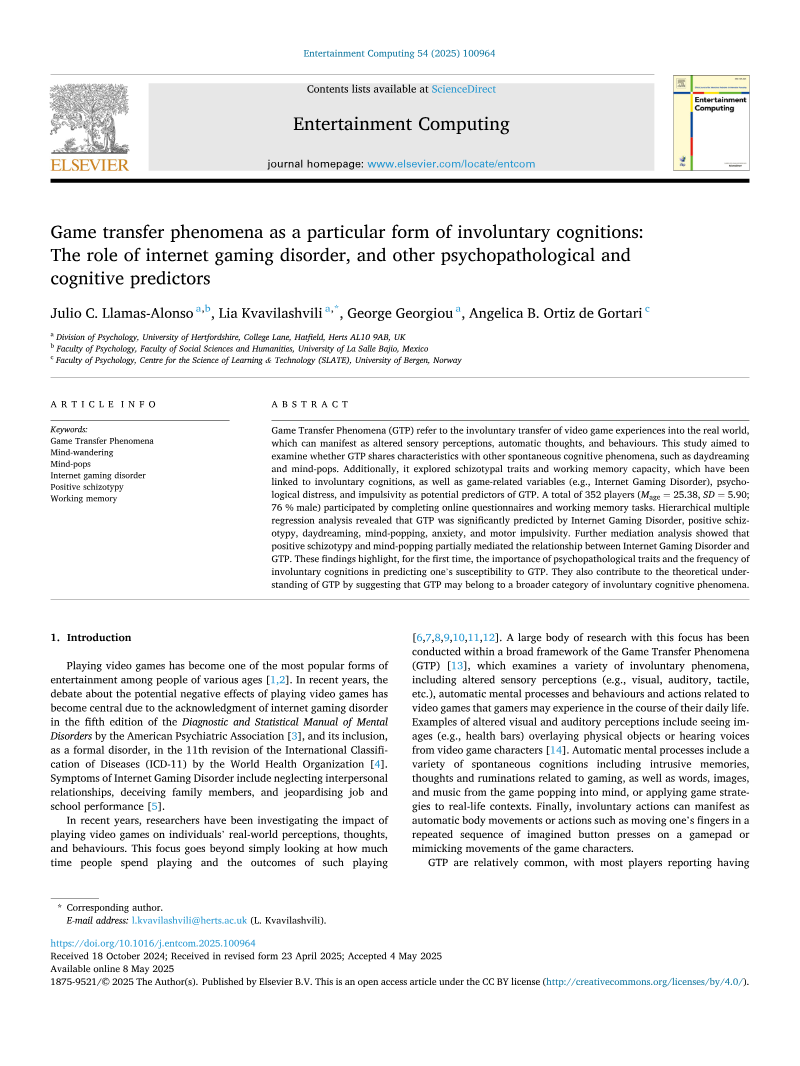
Game Transfer Phenomena as a Particular Form of Involuntary Cognitions: The Role of Internet Gaming Disorder and Other Predictors
Elsevier · 2025
Whitepaper
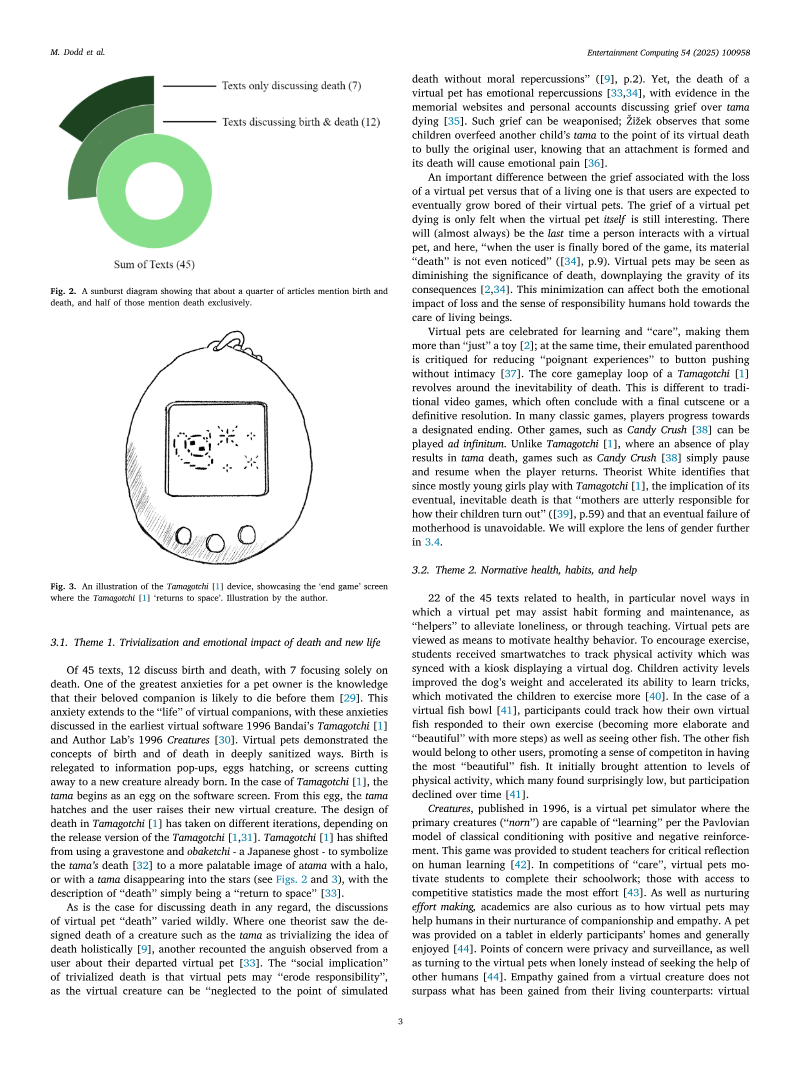
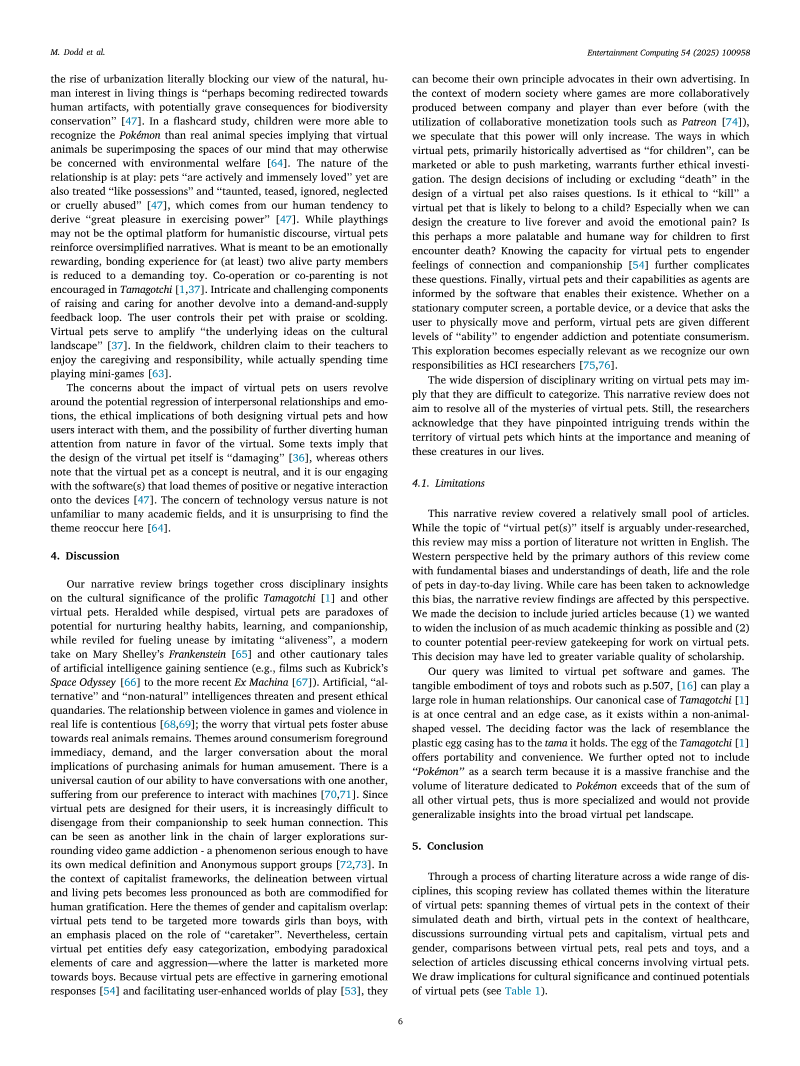
Purr-ogrammed Love: A Narrative Review of Virtual Pets
Elsevier · 2025
Whitepaper
The Revised Model for Initial and Continued Involvement in Fantasy Football
Entertainment Computing · 2024
Article
Interactive Digital Narratives for Mental Resilience: Understanding the Player Experience of Betwixt
Entertainment Computing · 2024
Whitepaper
Eight Types of Video Game Experience
Entertainment Computing · 2024
Whitepaper
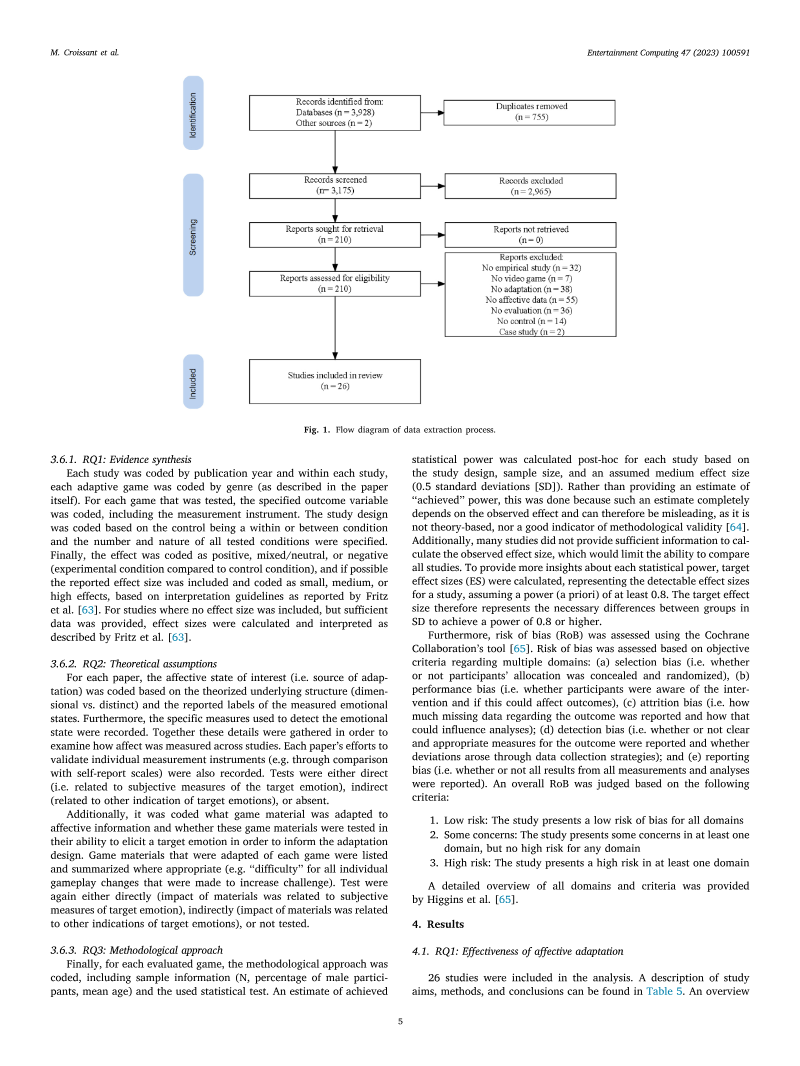
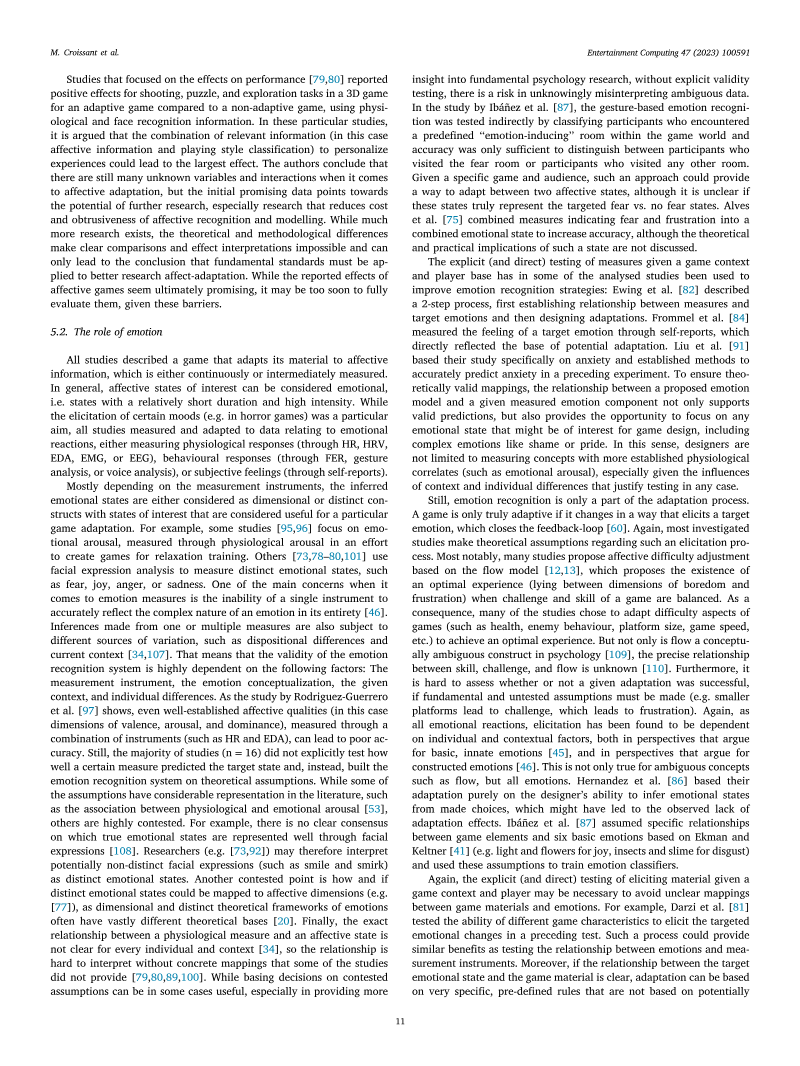
Theories, Methodologies, and Effects of Affect-Adaptive Games: A Systematic Review
Entertainment Computing · 2023
Whitepaper
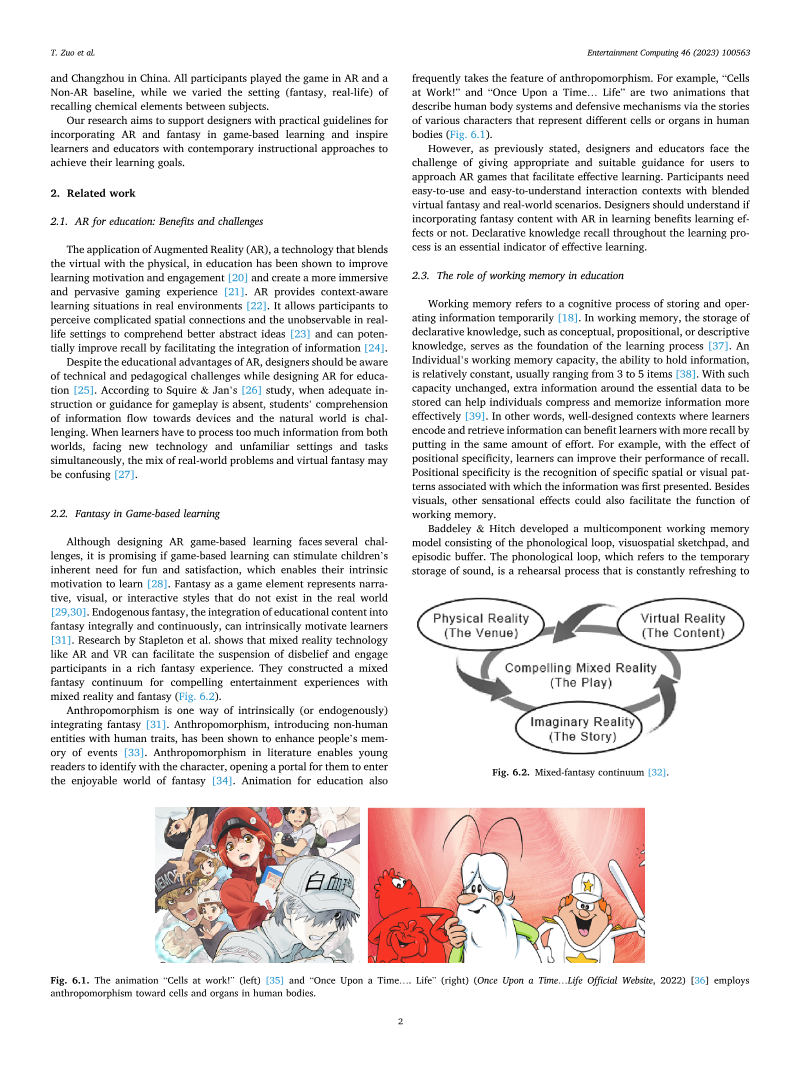
The Effect of Fantasy on Learning and Recall of Declarative Knowledge in AR Game-Based Learning
Entertainment Computing · 2023
Whitepaper
The Mediating Effect of Fantasy on Engagement in an AR Game for Learning
Entertainment Computing · 2022
Whitepaper
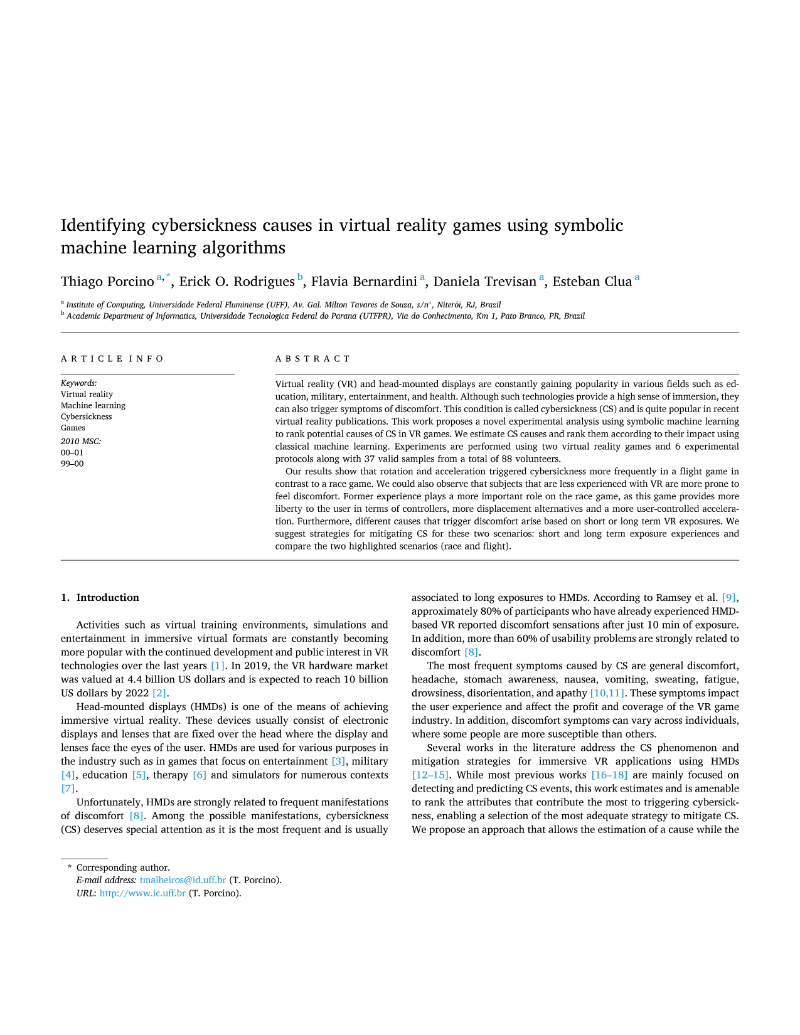
Identifying Cybersickness Causes in Virtual Reality Games Using Symbolic Machine Learning Algorithms
Entertainment Computing · 2021
More on AI
View all


Whitepaper
An Early-Stage Feasibility and Usability Pilot for an Immersive Serious Game to Support English Spelling and Semantic Skills
European Conference on Games Based Learning (ECGBL) · 2026
Whitepaper
Beyond Self-Reports: Predicting Electrodermal Arousal from Gameplay and Physiological Features
Springer · 2026