1 free read left. Create a free account for unlimited reading + AI research.
Create free accountWhitepaper DiGRA
1 free read left. Create a free account for unlimited reading + AI research.
Create free accountWhitepaperDiGRA
In these games, players pursue spiritual immortality through martial and mystical practices. The paper calls the genre rapidly growing.
This paper by Morgan Yu Hao examines the emergence of cultivation games, a rapidly growing Chinese genre in which players pursue spiritual immortality through martial and mystical practices, and traces its lineage from the earlier wuxia tradition. Drawing on Yuk Hui's concept of cosmotechnics, the study argues that cultivation games move beyond wuxia's use of Chinese culture as backdrop by embedding traditional Daoist cosmology, alchemy, and epistemological frameworks into core gameplay. The author positions this shift as a potential fusion of cosmic and moral orders through technical activity, and as a challenge to Western-centric perspectives in game studies.
The wuxia lineage is traced from the 1990s "Three Swords" titles, including Xuan-Yuan Sword, Chinese Paladin, and Jian Xia Qing Yuan, through to later East Asian MMORPGs. The paper cites earlier scholarship claiming wuxia games held more than half of the Chinese market and noting an imbalance in which martial strength (wu) overshadows cultural-philosophical content (xia). Cultivation games are presented as correcting this imbalance by adapting inner and outer alchemy frameworks into progression systems that mirror stages such as qi-refinement, foundation-building, and spirit-transformation.
The methodology is primarily textual analysis of contemporary titles, specifically Immortal Way of Life and Amazing Cultivation Simulator, examining how they incorporate the wuxing (Five Elements) system and feng shui principles. The study is situated within religious and mythological game studies and is framed as a cultural case study rather than a quantitative market survey. Its scope is therefore limited to selected Chinese-developed cultivation titles and to the conceptual relationship between game mechanics and traditional Chinese cosmology.
Each row is a game or company this document names, each column a document, oldest first. A mark means that document names it. Select a row to see those documents.

DiGRA · 2026

DiGRA · 2026



DiGRA · 2026



DiGRA · 2026



DiGRA · 2026



DiGRA · 2026



DiGRA · 2026



DiGRA · 2026

DiGRA · 2026



DiGRA · 2026



DiGRA · 2026

DiGRA · 2026
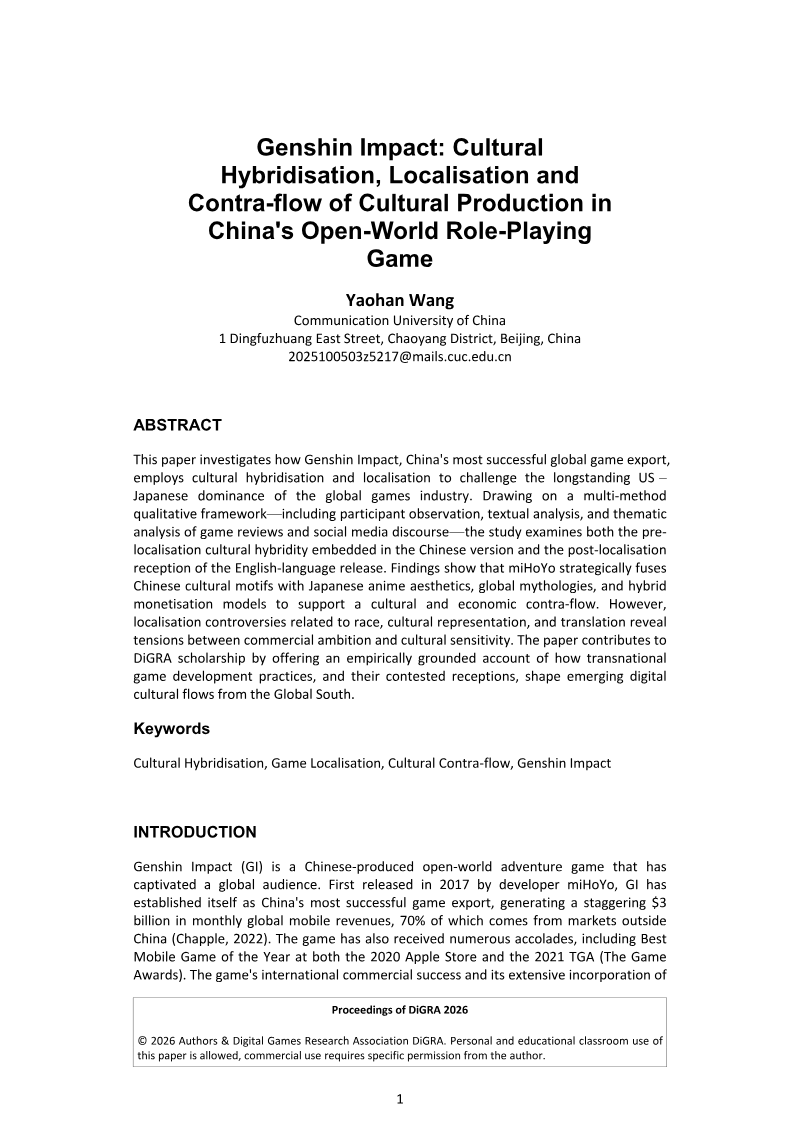
DiGRA · 2026
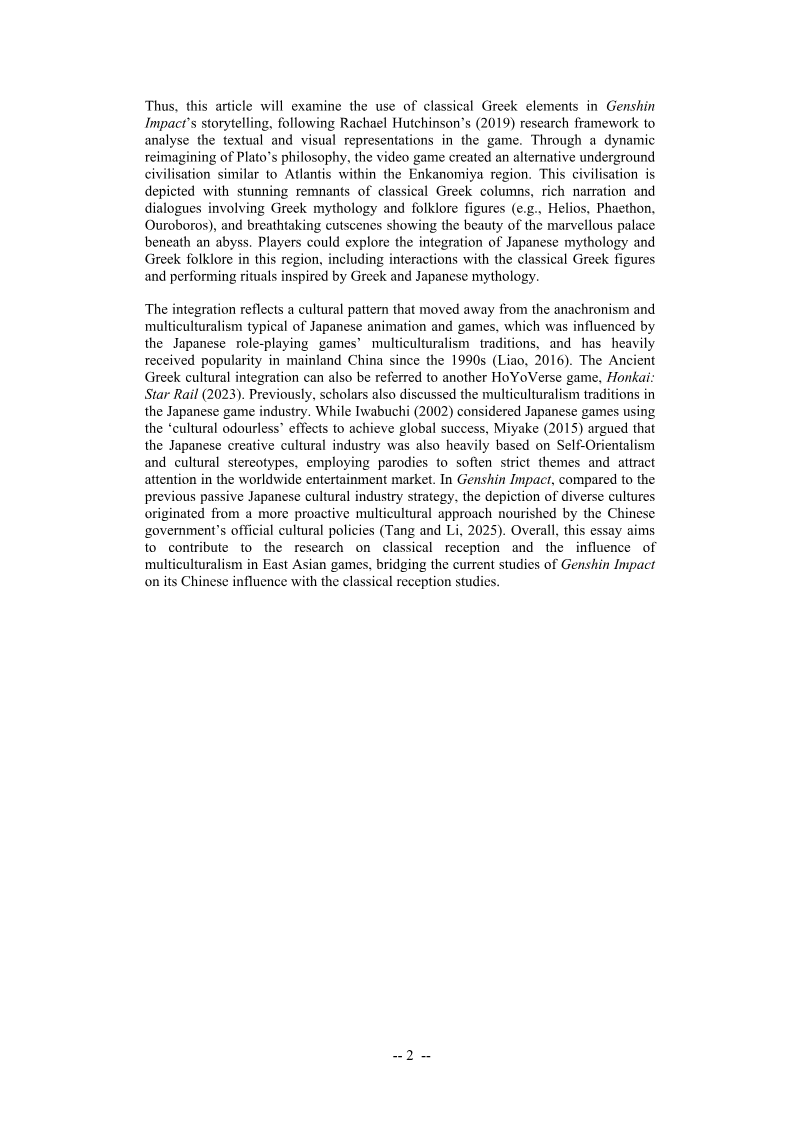
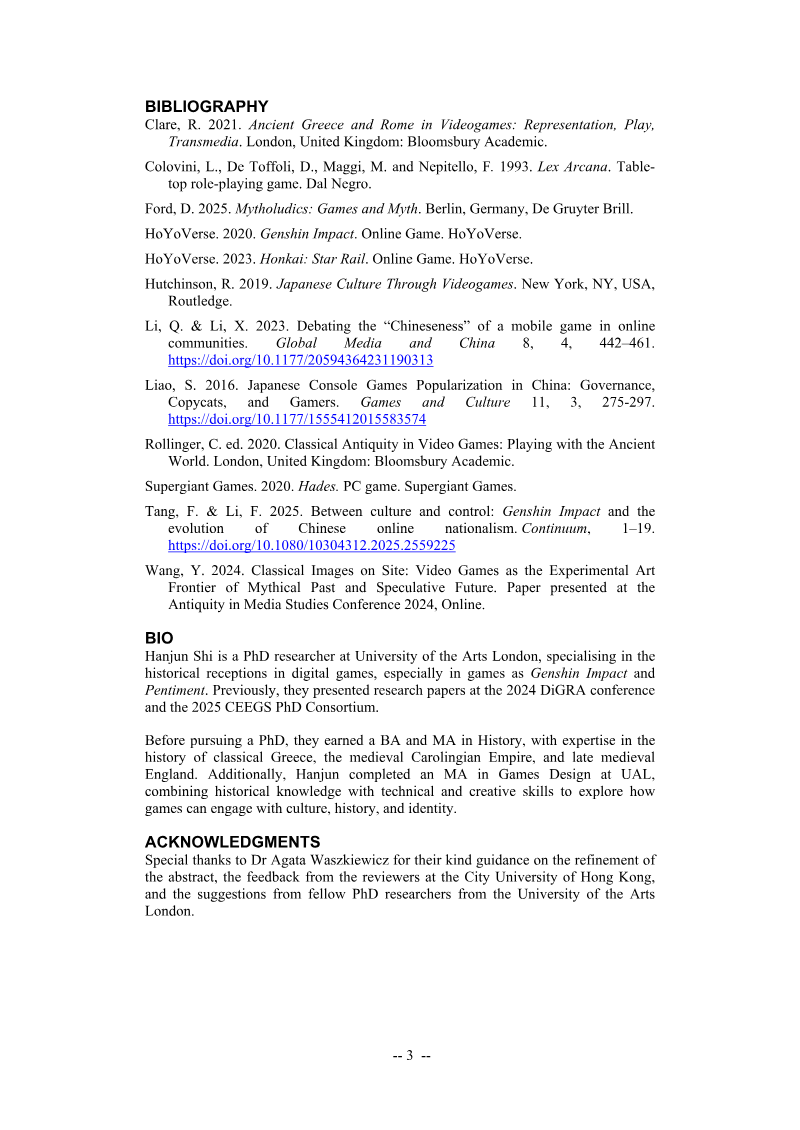
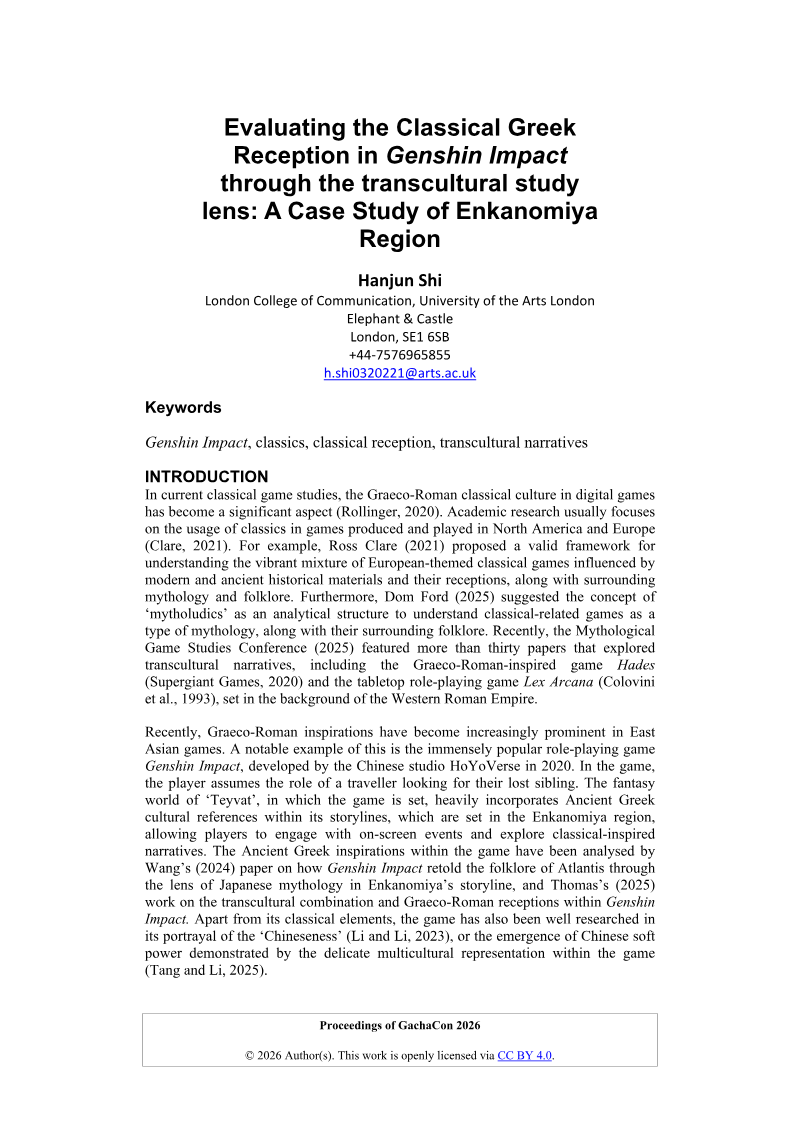
DiGRA · 2026
DiGRA · 2026