1 free read left. Create a free account for unlimited reading + AI research.
Create free accountWhitepaper DiGRA
1 free read left. Create a free account for unlimited reading + AI research.
Create free accountWhitepaperDiGRA
The series is a collaboration between Disney and the Japanese developer Square Enix. The paper treats it as a franchise, not a simple licensed tie-in.
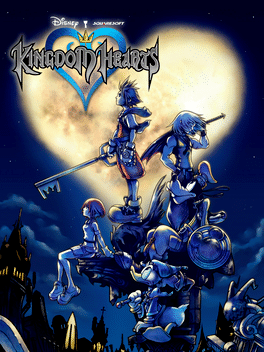
This paper, a DiGRA 2019 conference contribution by Anh-Thu Nguyen of the University of Cologne, argues that the Kingdom Hearts series, a collaboration between Disney and Japanese developer Square Enix, is best understood as a transmedia video game franchise built around its player character Sora. Its central thesis is that Sora's semiotic structure, drawing on Daniel Vella's framework for game characters, reveals how the franchise operates: Sora functions as a tourist who moves through Disney worlds with the "tourist gaze" described by John Urry and Jonas Larsen, turning the game into a literal recreation of the theme park experience. The paper frames this within Henry Jenkins' concepts of convergence culture and evocative spaces.
The analysis rests on a narrative-theoretic and semiotic reading rather than quantitative data, so it offers no survey figures or sample sizes. Its scope is the Kingdom Hearts series broadly, with close attention to the first instalment and reference to Kingdom Hearts III, and the author notes that the series has grown to twelve instalments. Key observations include Sora's costume changes that signal cosplay within Disney worlds, the reproduction of iconic film scenes with Sora either participating or observing, and the series' development of original characters and an elaborate story that allow it to stand as a franchise independent of its Disney source material.
The paper concludes that franchise research on video games deserves more textual, character-centred attention, particularly for products born of transnational corporate collaboration, rather than an exclusive focus on economic ties.
Each row is a game or company this document names, each column a document, oldest first. A mark means that document names it. Select a row to see those documents.

DiGRA · 2026

DiGRA · 2026



DiGRA · 2026
DiGRA · 2025