This study examines how the physical and imaginary spaces of video games have developed from early symbolic representations toward increasingly realistic and detailed worlds. Its central argument is that the earliest games relied on abstract, iconic settings, such as the cosmic backdrops of Spacewar!, Space Invaders, and Asteroids, while later titles progressively reduced dependence on player imagination in favor of elaborate, continuous environments. The analysis treats this shift as tied to technological advancement, with the research framing game spaces as simplified "allegories of space" in the sense described by Espen Aarseth.
The historical trajectory is traced through several key milestones. The flip-screen technique in Adventure and Gravitar, and the introduction of side-scrolling and off-screen virtual space in Defender (1980/1981), mark early steps toward more continuous worlds. The study then follows the 2D golden age of Super Mario Bros. (1985) and Contra (1988), the pseudo-3D era of Wolfenstein and Doom, and the true three-dimensional turn exemplified by Super Mario 64 on the Nintendo 64. It extends the analysis to modern developments, including open-world sandbox games such as the Grand Theft Auto and Souls series, and to titles that blur the boundary between games and film, such as Heavy Rain, Metal Gear Solid 4, and The Last of Us.
The study concludes that this progression has made contemporary games more visually stimulating and cinematic, but comparatively less open to player interpretation and imaginative engagement. Modern games are presented as moving toward the status of an interactive film medium. The research draws on a mix of Polish and English academic scholarship on game space and design, alongside a ludography spanning from Spacewar! in 1962 to Bloodborne in 2015, with all sources consulted in August 2015.
 NintendoCompany · Japan · founded 1889 · 1,648 documents
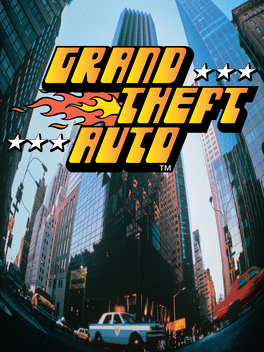 Grand Theft AutoGame · DMA Design · 1997 · 538 documents
 Super Mario Bros.Game · Nintendo R&D4 · 1985 · 87 documents
 Metal GearGame · Konami · 1987 · 53 documents
 Metal Gear SolidGame · Konami Computer Entertainment Japan · 1998 · 47 documents
 WolfensteinGame · Raven Software · 2009 · 26 documents
 BloodborneGame · FromSoftware · 2015 · 25 documents
 Super Mario 64Game · Nintendo Entertainment Analysis & Development · 1996 · 12 documents