1 free read left. Create a free account for unlimited reading + AI research.
Create free accountWhitepaperHomo Ludens
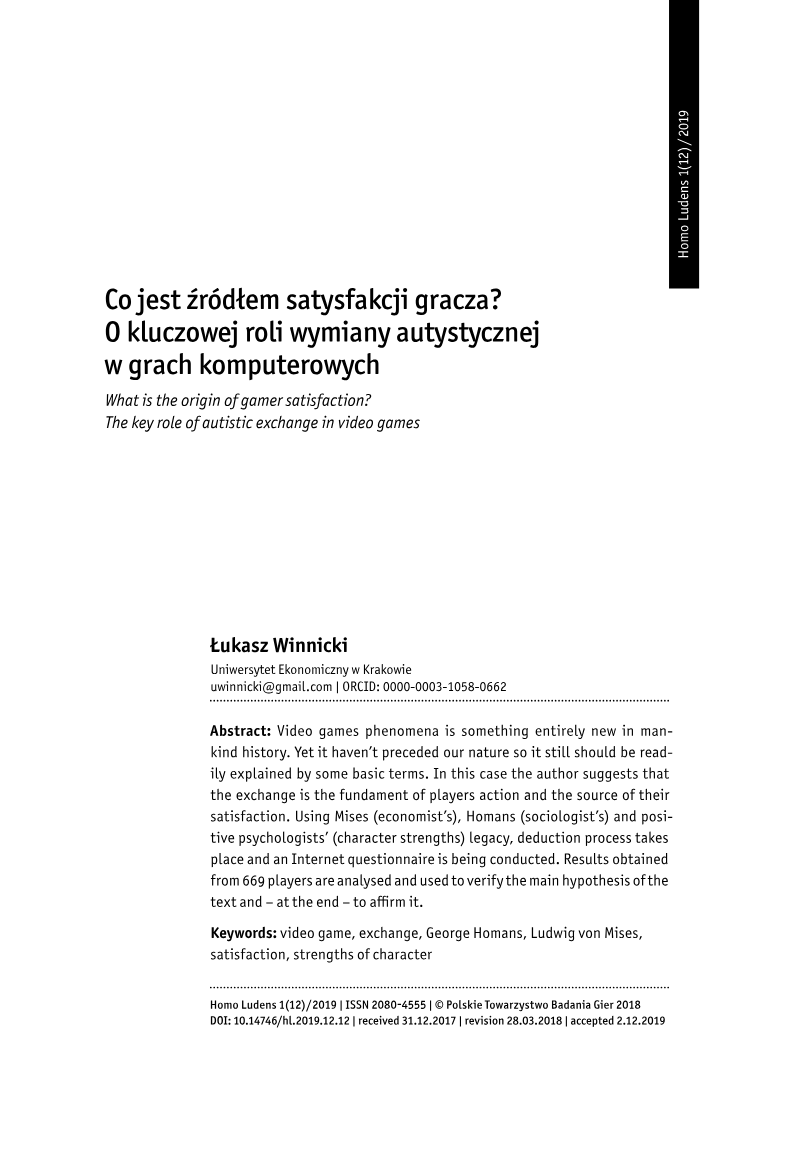
The author argues satisfaction arises from 'autistic exchange,' an exchange of effort or time with the environment rather than with other people.
Łukasz Winnicki's article, published in Homo Ludens in 2019, argues that satisfaction in video games arises from what he terms "autistic exchange," a concept adapted from Ludwig von Mises in which an individual exchanges effort or time with their environment rather than with other people. The author tests this framework against George Homans' sociological exchange propositions, positioning computer games as a domain where social-exchange logic operates without direct interpersonal contact. The central claim is that games provide satisfaction through this indirect form of exchange, which the author treats as a meaningful extension of classic exchange theory.
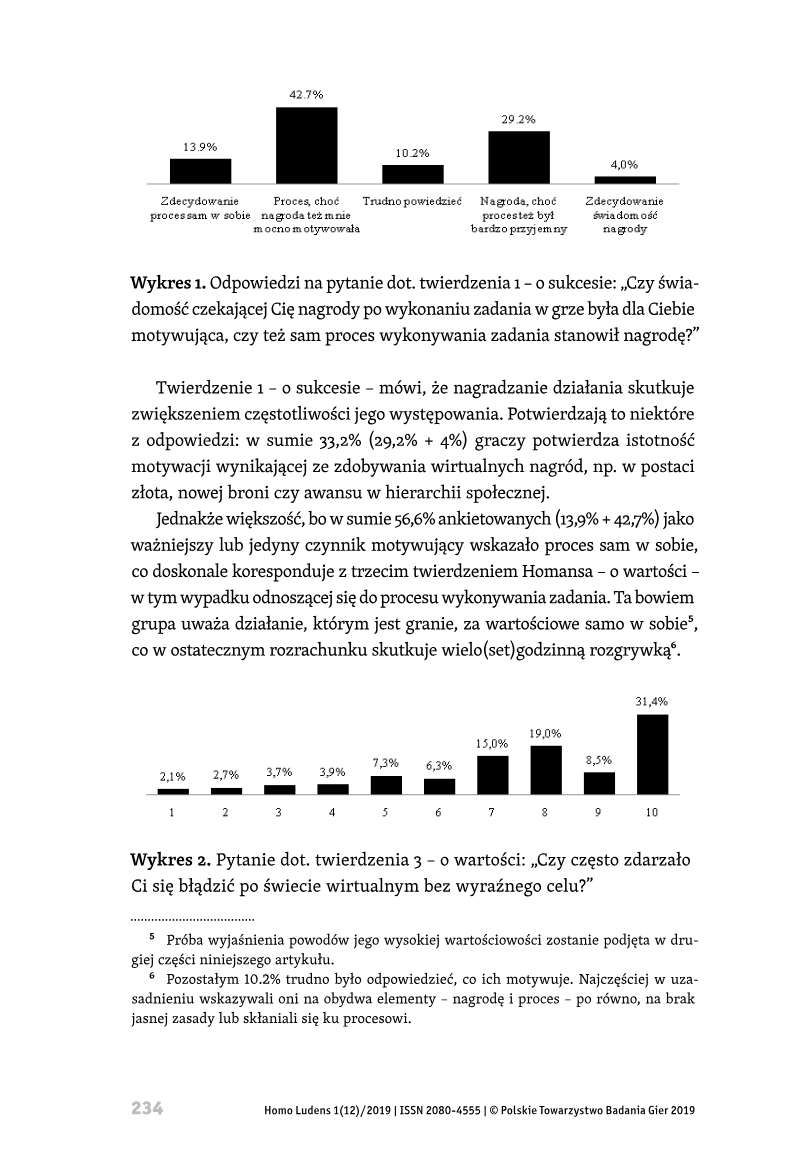
The empirical basis is an online survey of 669 respondents, predominantly young men who play computer role-playing games. Over half (56.6%) said they valued the gameplay process itself as rewarding, while about a third (33.2%) cited reward-driven motivation. Aimless wandering within games was reported as very common, which the author reads as supporting the value and reward propositions. Additional surveys found that roughly 70.7% of players experience anger after in-game setbacks, that this anger often finds aggressive outlets, and that about 66.2% feel better afterward, leading the author to conclude that all five Homans propositions apply to gaming.
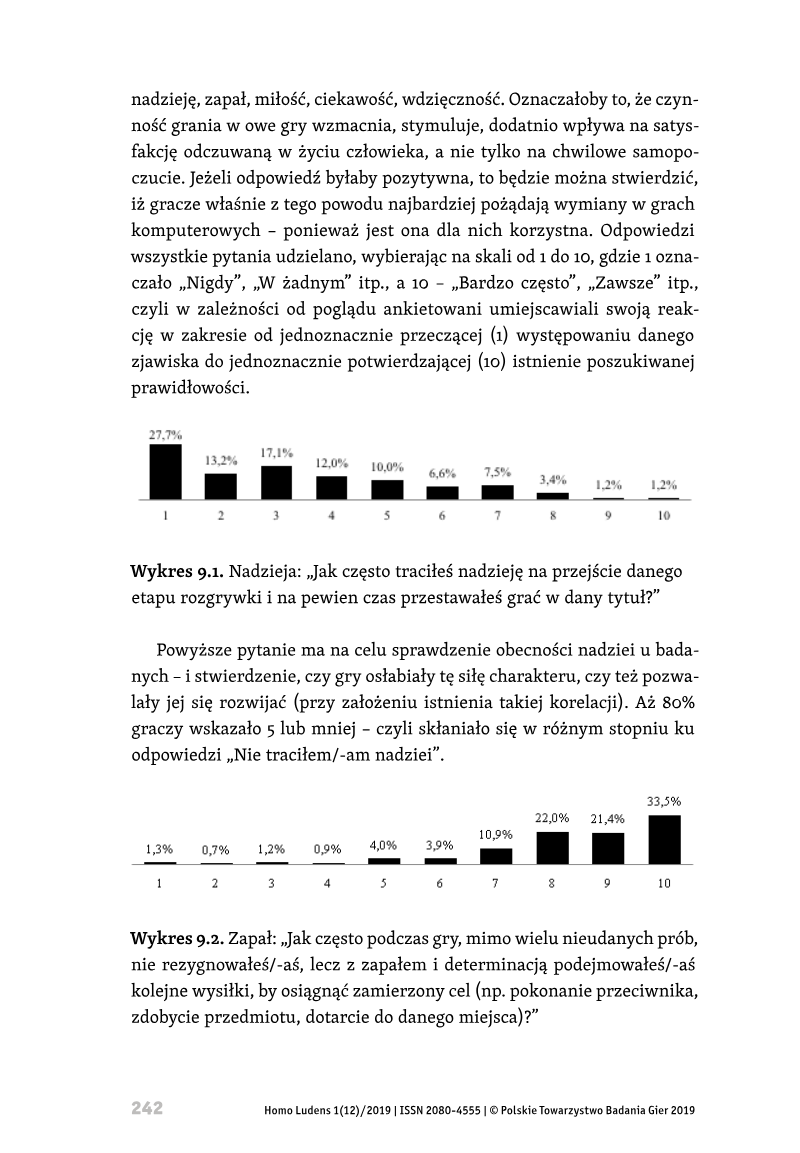
Viewed through a eudaimonic lens, the findings show that perseverance (zapał) is reported more frequently than hope, with about 91.7% of players rating it above 5 on the scale used, while curiosity is the strongest motivator, with roughly 77% rating it 8 or higher. Respondents also favored love-related storylines (70%) and respect from non-player characters (78.8%), linking these features to motivation, immersion, and a sense of being valued. The final ranking of character strengths places curiosity and zeal first, with hope falling to third, gratitude fourth, and love last. Because these results rest on self-reported survey data, the author's conclusions about causal effects on character are necessarily limited, though 87.2% of respondents said gaming had a positive effect on their lives.
Homo Ludens · 2019
Homo Ludens · 2019
Homo Ludens · 2019
Homo Ludens · 2019
Homo Ludens · 2019
Homo Ludens · 2019
Homo Ludens · 2019
Homo Ludens · 2019
Homo Ludens · 2019
Homo Ludens · 2019
Homo Ludens · 2019
Homo Ludens · 2019
Bryter · 2026















Comments