ArticleEsports Charts
Esports Business in H1 2026: Four Structural Shifts Reshaping the Industry
1 pages~17 min full read
The global esports landscape in the first half of 2026 is defined by a fundamental transition toward structural consolidation and institutional maturity. Driven by the aggressive expansion of Saudi-backed entities, the industry is witnessing a centralization of power across game publishing, tournament operations, and critical infrastructure. This shift is fundamentally altering the competitive ecosystem, forcing established tournament organizers to engage in high-stakes competition for calendar dominance, particularly within the Counter-Strike circuit. Simultaneously, game publishers are moving away from rigid league structures in favor of hybrid models that attempt to reconcile the need for financial stability among partner organizations with the necessity of maintaining open, meritocratic pathways for emerging talent.
Beyond corporate consolidation, the industry is experiencing a significant evolution in competitive formats through the formalization of national-team play. Events such as the Esports Nations Cup have demonstrated substantial commercial viability, prompting publishers to integrate these international, country-based competitions into their long-term strategic roadmaps. While the governance of these initiatives remains fragmented across a complex network of public and private stakeholders, the success of national-team formats is establishing a new institutional layer that operates alongside traditional club-based leagues.
These developments reflect a broader maturation of the sector, as stakeholders prioritize sustainable growth and diversified revenue streams. By balancing the influence of sovereign investment with the integration of nationalistic appeal, the industry is attempting to stabilize its commercial foundations. These structural shifts collectively signal a move toward a more rigid, formalized, and globally interconnected esports economy, setting the stage for a period of sustained institutionalization throughout the remainder of the decade.
Esports Charts · 2026
Esports Charts · 2026
Esports Charts · 2026
Esports Charts · 2026

Esports Charts · 2026
Esports Charts · 2026

Esports Charts · 2026

Esports Charts · 2026
Esports Charts · 2026
Esports Charts · 2026
Esports Charts · 2026
Esports Charts · 2026

InvestGame · 2025
Stream Hatchet · 2025
Stream Hatchet · 2024
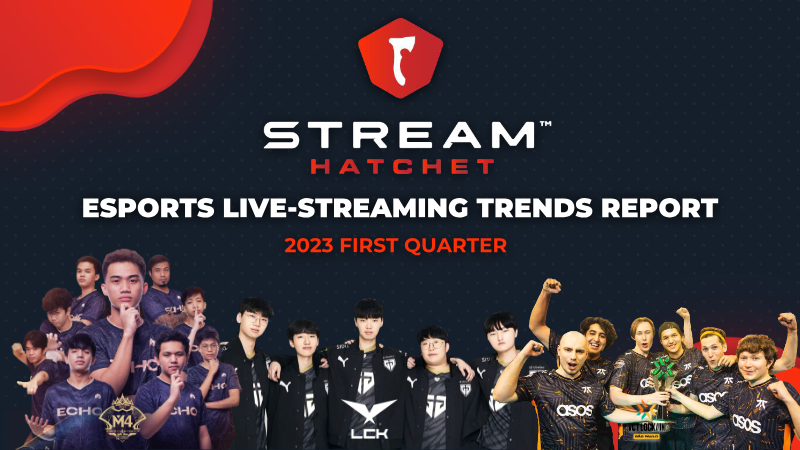
Stream Hatchet · 2023
Stream Hatchet · 2022
Stream Hatchet · 2022
Newzoo · 2022
Newzoo · 2022
Stream Hatchet · 2022

Newzoo · 2022
Newzoo · 2022
Newzoo · 2022