Transcript
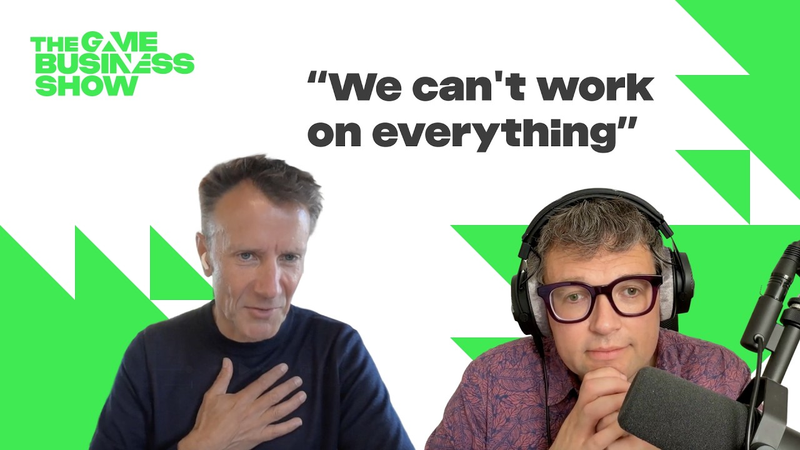
I mean, it's been an absolute humbling experience, so there's a lot of reflection on that since how the industry changed and could we not all predicted this? Internally, it's about getting in front of people, [music] talking more plainly, which we tried. I mean, yeah, to do it at the [music] the best occasions. People need to understand what's going on in the industry and how it impacts us, what we're doing here, what we want to do more of, perhaps what we want to do less of, so people understand some of the logic. So, you know, I I'd hope our trust is improving. Great people in California can make great games, but when your mammoth rate is that much higher than rest of world, you know, you've got to really make sure those skills are at that level of differential.
[music]
Hello and welcome to the Game Business Show. Let's talk about Embracer. The company name has become a byword for the excessive and reckless spending that went on in the video game industry in the 2010s and 2020s. Between 2019 and 2023, it spent billions of dollars buying the likes of Gearbox, Saber Interactive, Plaion or Koch Media as it
was known, Crystal Dynamics, Warhorse and many, many more. But then, well, industry growth stalled and expected $2 billion investment deal fell through and the Embracer house of cards began to tumble. What followed was a series of sales, spin-offs and brutal job cuts. It has sold some of its studios like Gearbox and Saber. It has spun off some of its other businesses as separate public companies, including tabletop game specialist Asmodee and game developer and publisher Coffee Stain. And then there have been the job cuts across the organization, including shutting Saints Row developer Volition and TimeSplitters studio Free Radical Design. It wasn't the only one to go through this, but Embracer has become a cautionary tale for the entire business. Yet, today, Embracer remains a sizable organization with some impressive brands and studios. It owns Middle-Earth Enterprises, Warhorse, 4A Games, Plaion, Aspire, Limited Run, Milestone, THQ Nordic, Crystal Dynamics, Eidos Montreal, Dark Horse Media, absolutely loads. And it operates major IP including Dead Island, Lord of the Rings, Tomb Raider, and Kingdom Come Deliverance.
Now, the man tasked with trying to take this business forward is CEO Phil Rogers. Phil wasn't really involved in that 4-year spending spree, but he has had to oversee what happens next, including some of those brutal cuts. He's a veteran of the industry. He ran Eidos, which became Square Enix Europe for nearly 15 years. Before that, he was a VP at Electronic Arts. Now, last month Embracer announced plans for another spin-off, which will take place in 2027. First, there will be Embracer, which will contain Tripwire, PlayOn, Milestone, THQ Nordic, and be home to IP such as Destroy All Humans, Kingdoms of Amalur, Killing Floor, Desperados, and many more. This group will continue to be largely decentralized, and that all the various companies will operate independently. The new company will be called Fellowship Entertainment. This is the group that Phil Rogers is planning to lead. This is where Middle-Earth, Crystal Dynamics, 4A Games, Red Octane, Warhorse, Eidos Montreal will live. Fellowship will have a centralized strategy that the whole company will push towards and looks after IP such as Kingdom Come Deliverance, Middle-Earth, Dead Island, Tomb Raider, and many more.
It looks more like a traditional games publisher. Now, to learn more about this spin-off, Embracer's recovery efforts, its new approach to running a company, the lessons it's learned, and the return of Tomb Raider, I was able to sit down with CEO Phil Rogers. And here he is. Hello, Phil. Welcome to the show.
Hi, Chris. How are you doing?
So, you've just made this big announcement of this plan to split up Embracer a bit more. How's that going to happen?
I would say it's early stages.
Mhm.
Yeah, I think if we say it's it's always a marathon, not a sprint, right?
Mhm.
We're definitely in that long race, you know, getting our pace, but I think we're a few days in post-announcement. I think generally positive. Different reactions, I mean, internally, of course, people have a lot to think about and digest, but what we're hearing is it's clarity, which is people are welcoming. You know, we're a public company, so we spend a lot of time talking to shareholders and I think they also appreciate the clarity of thought and information, but we did you know, you're very mindful in public
companies. So, you you put out four or three or four documents, I can't remember at the end how many it was, but you post that at 7:00 a.m. on a Wednesday and you expect everyone to be perfect, you know, on it and knowledgeable by, you know, 2 hours later. So, it'll take some time, but we thought it was important just to go out there with our messaging and um and and talk about ourselves. Yeah.
Well, cuz you will be embracing a CEO for now, but I think the plan is you will be the CEO of this new Fellowship Entertainment from next year. Embracer has has had a decentralized structure, it still does, but Fellowship is going to be centralized. Does that mean you're going to be more hands-on with things?
Yeah, I mean, it's it's it's interesting when you start thinking about what decentralized means. Um
Mhm.
You know, cuz when you used to go to a I mean, I I joined Embracer, you know, from from Square Enix, right? We took out a couple of studios in Sweden, and you join this decentralized and you saw what does that mean? I mean, people were involved with things. But obviously today in Embracer if you look at a business like THQ, it's
there's a lot of centralized stuff within THQ. So, you you've had these sort of operative groups, which actually have been very very thoughtful in terms of how they've been structured, but then the umbrella, if you like, is as we used about sort of the decentralized way. So, you know, I can see there's a lot of coordination going on today in the business. And it's it's true to say when we think about then how do we I'm not too fired up, but how do we think about the business going forward and how do we you know, as a way in the entertainment industry, idea was to create more of a sort of smaller group of studios where there's more alignment in terms of games and genres and tech stacks and and whatnot. And IP being a core theme. And I think by its nature then it will be more you know, this is the direction we're all we're all moving like that. Whereas I think so that's the approach for fellowship and whether it's going to be centralized more, but certainly you know, a sense that we've got a
collective way of sort of looking at stuff.
Wouldn't it make sense cuz Team Raider, Lord of the Rings, Kingdom Come: Deliverance, Dead Island, you know, they're very different in their own way, but they're all very core gamer brands, primarily single-player, AAA. It It actually feels a lot like an old school AAA games publisher in some ways.
Yeah.
Not too dissimilar, I guess, to some of the places you've been at in the past. Is that fair?
Yeah, I mean, I think it I mean, it's it's interesting to say it's been in the past. That's not been part of the sort of oh, we need to do this and let's let's do it like this. No, no, but I think I think it's it's trying to find ways to build stuff that hopefully will entertain people and there's no monopoly of wisdom, right? In terms of how people create entertainment today. It's a broad broad spectrum of how people spend their time. It was like, "Hey, well, let's think about core IP. Let's think about the stories we want to tell, how we would tell them, you know, which genres teams specialize in." And until we invent a new genre, then you do think about, you know, where do we have real talent in
action-adventure? Where do we have real talent in open-world sims and RPGs, etc.? And and then you you you start building accordingly. So, I think that's the way we've looked at it supposed to our historic skills, but you know, how how
entertain people?
Yeah. How do we find fun? How do we create fun? That's still the thing that keeps us all very different, right? Finding fun, creating fun is hard.
I was going to ask if there's any risks to centralization. Could the team at Warhorse, for instance, be annoyed that they might they might have the autonomy they had before? I mean, you've got experience with managing different groups like this um as well, but is there risks to what you're trying to do, do you think?
Oh, for sure, there's there's risks in everything and um um you know, I do personally spend a lot of time and I think about it it in fact is it's been it's been a wonderful experience. You know, sort of coming into Embracer and
Mhm.
I go back to the first meeting I was in in in middle of 2024
which was a Kingdom Come: Deliverance 2. You know, I was just like a fly on the wall and we just like trying to lean in a little bit and see how that team was working with the publishing team and then sort of thinking about okay, what's the path forward? How do we solve this? And of course, people do have to combine at the right times to to solve the problems and the challenges that you have every day. It's how do we make sure we got debugged and and the game is really ready to ready to launch and you know, that was a game that we talked a couple of times to sort of get the street date right or something like that, but you know, February the 5th, 2025. I remember it well. It was it's great. So, I think Warhorse know when they're going to be on their own and working, when they're going to work as part of a broader team. Mhm. But I'm very mindful now again, this isn't some sort of macro simulation. We're all going to be working off exactly the same sensor and it's finding a way for all those textures and whatnot, you know, all the different locations to to to still exist. And I think people you know, spending time with the
Warhorse leadership, I think it they do want to know sort of where are we going? You know, what does what are we aiming for? What How do we work together and how do we share? How do we solve problems?
Well, Warhorse announced it would make a Lord of the Rings game at the same time this thing broke, which is a tantalizing prospect. But it felt like that announcement was timed to highlight the potential of of this new organization.
Well, that was it. I mean, it was. It absolutely was. I mean, you know, I don't really know how corporate messaging and games messaging really work hand in hand today or in the future. I mean, what we do know is that today's consumer is online and reading and our employees are online and you know, and then there were some rumors about could it be working on a Middle-earth game. We've seen lots of stuff online about Amazon working in Middle-earth. Our view was just let's let's own this right now. Let's
let's actually just say, right? Let's let's actually say something. And I think the line we talked about in the presentation is there's one thing we could have shared last week that really sort of symbolizes what fellowship could be in the right teams working on the right IP. And that was a great thing to to announce. And the fact there was some online rumors before, you know, for months before, I think we just felt, look, let's just say it.
Yeah, well.
And and it really does symbolize it. And of course then we wanted to also mention that they're also working on a you know, the next installment in King of the Hill comes. So, that was important, too. So, to get that balance.
The whole of this fellowship group seems to be very single-player focused. Is that going to be the space that you're sort of primarily playing in? Is it any thoughts going to be on that into live service? Or is that market just too hostile right now?
Um I I I I'd almost start with a sort of it's going to start with a creative approach is to um what does multiplayer or what does live
service sort of solve and and how does how does that take these IPs forward creatively and and commercially? It's been a an interesting time when you think about a group like this. We we've spent sometimes in sessions thinking about, you know, what's our why? You know, why do we do what we do? And often our why has been around, you know, sort of for the fans. We we recognize these IPs have fans, have expectations. And we're privileged to work on it in that way. So, I think our clearly our core skills are in all single player games. Very rich immersive worlds. I think we'll go on that journey with our fans. Um when they change the shaking foundations that hey, multiplayer and gray or you know, what does service mean? I mean, no no one puts their hands up now and says I want more service games.
No.
But of course people love people love them. And I I remember Square 10 years ago, 15 years ago saying again, this game as a service has got this bad moniker, but you got to do it well. Do you put all the love to spend
you know, the time in the right way?
Some of them have been stung, I think over the years where things haven't gone well, but you know, you talked about we before we press record we talked about IO Interactive. Spawn game and of course they have a sort of service approach to their games even though they're not online multiplayer games.
Absolutely.
It means a lot of things, I think.
And I I remember those meetings, you know, I know when we were thinking about Hitman, you know, how do we have this ever expanding world of Hitman? Ever expanding world of Assassin. And how do you reuse those levels and bring players through constantly? And now I can't remember what the game account is up to, but it's just it's just fantastic. It shows that fantasy.
80 million players or something crazy like that.
So, it just shows you that fantasy, that core fantasy. And I I love Hitman. I love that sort of stealth gameplay. So, that's that can scale like that when you're when you are sort of have this ever expanding world and that that approach. So, you know, games as a service, see I IP as a service. I think there's lots of ways that we can create you know, entry points and and and things and you know, again in our world
today, we believe that IP is important.
Mhm.
That's part of our our working forward.
Kingdom Come: Deliverance to us was a big hit. I I it was fascinating. I think Lars said in his his letter it had more than three times its return on investment. It may have said that wrong. In just over a year, which is fantastic. But I have to imagine what's helped with that is it's made in the Czech Republic, right? I mean, I'm going to assume it's a cheaper to operate there than it is to say California.
I just say for sunshine.
[laughter]
Is this playing a role in terms of where you're looking to invest or indeed divest or whatever it is?
So yes and no. I mean first of all, geographic footprint economic footprint they they vary massively and I think we've seen this in every creative industry. So you know, whether we right now publish man month rates but when you talk to studios like people know what man month rates are and how they vary across the world. But then it has to have talent as well. I think we see
these sweet spots but I do believe and it's it's you know, also before we started you know, your footprint has been in and around Europe and my footprint historically has been much around Europe and I I really feel there's a there is resurgence now of European based development talent. Um so I think again I've always felt this balance in life is important. You know, great people in California can make great games but when your man month rate is that much higher than rest of the world, you know, you've got to really make sure those skills are at that level of differential. Um but for sure building out a massive game like Kingdom Come in in Czech Republic in Prague, you know, you need that talent and the economic factor as well. But still it's a you know, a 5 million gamers it's a sizeable world right being created it's a sizeable business and again I don't know how much the fantasy of Kingdom Come it's a massive fantasy, right? Medieval
sim I mean, you know, that's that's a niche that a lot of people want to scratch so I think it can go a lot bigger still.
And obviously there's a lot of talent in Eastern Europe particularly around that sort of genre. But I was going to ask a little bit about cost control because single player games are getting more expensive. They take years to make and and it's a competitive market. Is there much focus on from your side on bringing those costs down? I know you've spoke a lot about the potential of AI in that area.
Um I think it's a question of how we find fun as we talked about earlier. I I don't think necessarily with more money you find more fun. It's about systems. I mean you know, I remember your interview with Owen and Owen I spent time with at EA and Owen talked a lot about, you know, his reflection on Outriders and once they knew they had those underlying systems in the game, then they sort of felt confident that they could manifest something that that would that people got their hands on it. So you know, I think those systems fundamentally you've got to have nailed
and proven and then when you build on those systems. But I think we all understand that in the industry that building without those systems costs can easy get out of control. And if you don't have those systems and people pick it up and it's as they say fun on the sticks and the I use this thing like, you know, the dopamine really begins to sort of work, but then people will put it down and then you then you have it's trickier, right? But if you have a game that's sticky and people want to play just more just five more minutes, then then you you've got something. So to us it's about finding fun. And I think what we've seen over the last 5-10 years, there's no guarantees that the more money you put in the more fun you're going to have.
Yeah.
Um I think that's our reflection. And we can see that for some of the biggest games we've had. You mentioned Outriders and Outriders definitely clear was not a cheap game to make. Obviously it's not as big as other games of its type and I think we had Patrick and Soland on the show before Owen. He's only got like a two-parter that was. He talked about the fact they know he made a challenge to either we need to make games a lot faster because our competitors in China
are making games faster. So we need to work out how we can do that. We need to rethink everything. And I'd be really fascinated to know how they actually achieved that. They still took seven years to make and there was a restart and everything, but they really put an emphasis on speed, which is what Owen was then sort of praising them about. And AI was part of that, right? Tools and technology and and finding ways to get to that fun bit of making something and and testing it and getting out there was core to their success, really. I know that in a way you've got these sort of studios that end up doing their own things in a way, but is there any amount of encouragement around the exploring that technology?
Yeah, I mean, I think AI is super fascinating for mobile thing to try. I think that, you know, we've always been an industry that has embraced new technologies. And so, we have to as an industry find ways to work with it. You know, we we talk to mean it, but there's plenty of people out there that human authoring, you know, but it's empowering by AI. It it really is that we're we're the pilots, right? AI is the co-pilots, we say.
Mhm.
Um so, I think that top-down tone has been important. But, you know, when you go into studios and you you Mhm. I mean, two, three years ago people didn't want to talk about what they're doing with AI.
Mhm.
Is this compliant or whatnot? Now, our smartest people are really leaning into AI.
Mhm.
Not everywhere, but really are really are trying. They they want to show you what they're piloting, what they're experimenting, where they're pushing. But, there's so much choice out there, so many tools and
Yeah.
some of it will come through, some of it won't, but I think that experimentation, that mindset has been really important. And long may that continue. We need that. We need that within our group and we need that within the industry.
Do you think it could speed up development, bring down costs, which are often the same thing?
I think um I think both of those. I think it always depends on how teams want to utilize AI. And I've heard other people talk this way, with with the phases like pre-production, production,
post-production. You got options, right? I mean, post-production is the one where, okay, you've got your game, now you've got to debug, you've got to localize it, you know, really polish it out, you know. To use the same x-axis of time, but just do it deeper and you know, to to a more polished state, or do you do you quicken it up to to take time out of delivery? Pre-production is a great one. I mean, if you can concept and you know, get to pre-production prototyping quicker, do you do more?
Mhm.
I I've heard someone talk about it, you know, do you take more shots on goal? You know, if you could do 10, you know, sort of prototypes versus historically might have been, you know, the budget for one or two. So, I think we'll have choices here as to, you know, game by game, team by team.
Mhm.
So, I I think it's too early to say, but certainly, I think it's a it's powerful enough. You know, we can see that today in in concepting. I think at our AGM, we get some data points of how we're seeing things that used to take 3 months, we can now do in 3 weeks, and
you know, again, stuff could be quicker, or we could do more of it, right? And make sure
Mhm.
more shots on goal.
You are investing in new things. We covered the Red Octanes, the launch of that, new launch of that, and the Kitaro thing. That's quite exciting.
I I super exciting. I mean, that was something massively under the radar, and it really came out of ideas from from Lee, Lee Kinshaw, who who you met, I know, and interviewed, and it was sort of how how would we do that? And again, that whole fantasy of of playing, you know, guitar, you know, rhythm-based games, and games that you just feel great when you get that rhythm perfect.
Mhm.
Looking at that whole community behind it, and seeing how could we how could we do something there without the without the scale
Mhm.
historically that the businesses have needed, and I was really proud last Vision Game Summit to that pipeline chart to show Red Octane and the studio ensemble, and there's 10 developers.
Yeah.
I don't want to wish my life away, but I
can't wait for, you know, later this year when we we get that out.
Yeah.
You know, it's going to be a going to be a fun one.
Yes.
It's a modern way, I guess, of approaching things, and you and it's very community-driven from the ground up.
Totally. I did enjoy the the story behind that.
Yeah, totally.
It's how it works and things, so.
It's exciting.
I'll move on. I know that obviously you Crystal Dynamics making it, so but how involved are you with Tomb Raider? Is this mostly Amazon's domain now?
You mean us as an organization?
Yeah.
Oh, massively.
Oh, great.
Yeah, massively. Um You know, I mean, Amazon's been a fascinating business to get around. You know, we we structured back in 2022. Checking my car, it's 4 years, right? But but coming into Embracer finding where Amazon or hearing where Amazon wanted to go, you know, in gaming, how they believe in gaming. So, it was it was always a partnership. Really powerful business, Amazon, of course. Like lots of businesses, they
change at times, and you know, so they've changed recently their approach to games, but it's always been a partnership, but it's very much you know, we've both have organizations you know, supporting each other.
Have all those changes had a much of an impact on you as I guess there's some people that have left and things.
Well, it has had a massive change in terms of who we're connecting with, but in some ways it's just shortens some cycles, and it's instituting new people. I think you know, the Luna team you know, Luna to me is an interesting platform potentially for games, right? For gaming. I I do you know, I think about how is this gaming industry going to, you know, ever expand? And streaming is a is a technology that could really offer something. And so, the fact that we're quite separate before, but now it's run really as one group, so we're closer to the the Luna leadership, which has been helpful.
Had a chat with um Todd Howard and oddly Samsung uh at the end of last year about Fallout. And of course, Fallout's big TV show on Amazon. They really lent into
that streaming to sort of try and get hey if you you've all come into this massive TV show now you and of course you there's potentially the same opportunity here with with Tomb Raider I guess cuz obviously there's a TV adaptation coming as well. So I guess that's where that there might be some exciting ways to expand the IP.
Yeah, I mean I I think people you know, if you've always grown up in gaming then it's a very natural thing. You've got very dedicated machinery and I think there always will be that dedication but for a lot of people coming home turning on a TV which is still you know, what you do when you come back and then seeing an option between watch this play that. I mean isn't that isn't that really cool to have that and then if you want to play you just pick up your handset your controller of choice. I mean haptically you could close your eyes and know that is my controller of choice. I know exactly how to play this game. And they're designing games that are really more optimized streaming. I mean not all games will be or should be but some games can be.
And with phone out you can control it with
mobile phone. Everyone's got one of those, right? It sort of brings that everyone. Um you've been here before. You this isn't your first Tomb Raider relaunch. I thought the last one was excellent by the way. I really really thought the darker Tomb Raider era. I really enjoyed that trilogy. Does it feel much different this time?
Yes, it does and in a way the Firstly it's great to hear that comment. I mean it's fun when you work with an IP and you think where are we going to take this? And that was only about the origin story of how you know, Lara became Lara. Um and it became more visceral and grittier as a result. That wasn't the let's do it but there were creative reckonings there. Bond had gone. I mean you know, we were all enjoying Bond. We had seen Batman, you know, we'd seen his origin. That's sort of like okay, what what's the origin story here and it's fun now when you go back to Bond. I mean First Light is the origin it's an origin's play, right? So it's it's great. I think with this Tomb Raider it was shots okay, where do we go next and Catalyst which was you know, big reveal at last year's show
is is a big big B. Um but then it's been fantastic to also weave in, you know, Legacy of Atlantis which is
[clears throat]
a remake, it's a re-look, lots of classic Lara moves there and looks that fans will love. So, can't wait to play it.
Yeah, well, it's a good time if you're a console fan of a certain age cuz obviously this you've got Resident Evil, you know, we talked about James Bond a minute ago, there's Star Wars and there's Tomb Raider and of course the big one is Grand Theft Auto. And I know [clears throat] um I know that that kind of wipes out November for a lot of companies, but I do think it's quite Well, I hope it's going to bring in a bunch of lapsed players. Perhaps people that haven't, you know, played a console for a while. I think hopefully all of these games will benefit from that halo effect of that game. I know not everyone agrees with me on that, but I I I think it could have a positive impact.
What's the argument against it you hear?
Well, that everyone just play GTA.
[laughter]
Where's the it's a But I I don't know. I think it could have a halo effect. You know, if I'm being smart and I'm releasing something and I'm going right,
you know, Black Friday is a week after and I'm I have an old school retail mindset here, but there's opportunities there, opportunities to capitalize on it. You know, I'm of an age where most of my friends I grew up with don't really have consoles anymore. It's not cuz they don't want them, they just got kids and their you know, their life's got taken away from them. But GTA has caught their attention.
Yeah.
And I think if that cultural moment, which I think it will be, can bring in those audiences again, then it's an opportunity for Tomb Raider and as well as new games to Yeah, be that I guess.
Yeah, I mean it's a global cultural beat, right, GTA? I mean it's it's incredible. I mean, seeing the news over the weekend with, you know, the S&P's news and the fact that he bought GTA on the S&P's credit card. I mean, it was just sort of a name check and then even on main websites you see, you know, GTA's So, it's a global phenomenon, right, sort of this has always fascinated me when we started getting into telemetry of games, right? I mean, I grew up playing games in arcade, young.
10 p sort of experiences and whatnot. And then then you look at the data behind games and and then you see I guess since the end of the 2000s, 2008-9, we started getting telemetry out of games, right? How far are people playing? And I was fascinated as a sort of coming to the games, you know, that part of the game, wow, only 20% of people actually completed this game. So, they loved it but they only played most of them only played halfway or something. So, it's interesting from that point of view. And I come back to GTA because GTA is going to be a massive game. And if you I just you're only in the GTA world then that's going to be your world, but a lot of people will will dabble, right? They'll want to play, they'll want to be able to talk about it with their mates how far they got through. They get 10, 15, 20 hours in always with I'm going to come back to it. But the data simply shows people don't. But but again, if they're turning on machinery, if they're booting up, they're looking at dashboards, they're getting discovery and they're enjoying again that moment of playing games. But I think it does grow playability for other titles and
therefore choice.
I'm going to change subject, but Lars mentioned in his opening letter that you're exploring external partnerships with Saints Row, Legacy of Kain, Deus Ex, Red Faction, The Mask, I didn't know that was a thing. Thief, TimeSplitters. Is this a licensing thing or are you looking sort of fund these projects? What's the I know it's early days.
Yeah, it's licensing actually. I mean, part of the um the outlook really for Fellowship in fact, you know, how do we scale going forward was is there a licensing opportunity maybe the right word, wrong word, but actually component of our business. I mean, how do we extend can't work on everything ourselves, right? If you've got this is your studio team and stuff. How can we work with others? So, licensing was all part of that narrative, really. I I do I sort of feel intuitively that licensing for this next 10-year chapter or so sector could be could be interesting. We could find other teams who say, "I've got this idea."
or treatments. I mean, this happens in other entertainment forms, right? You get treatments, and then it becomes is it okay, let's let's work on that basis. So, so I think we we we definitely set it up that we want to put these IPs there a little bit so people know who to contact and and uh we'll build around it, but whether it's remakes, remasters, or as I say, a new treatment or an adaptation in some way. An Unreal Engine to Fortnite spin-off or something It's all we need.
Yeah. Well, the only reason I mention that is um I'm a bit of an old-school TimeSplitters fan.
Okay.
And um you want to license it?
No.
No, I spoke to someone who was talking about, you know, where the the TimeSplitters effort to reboot it and stuff, where it sort of went wrong. And then one of them said to me, "In hindsight, maybe we should have made it a U F game." And uh and I thought that's an interesting thought cuz there was there was a tonal similarity between Fortnite and TimeSplitters. Actually, I use TimeSplitters quite a lot when I talk about that period of industry
excess cuz I love it, and I know it was never huge, right? The series never found They never found the back of that fourth game back in the day, I'm going right back. Um but then Embracer spent a lot of money acquiring the IP, re-launched it through Radical Design, with the game's original development team in there. Uh bringing back some of those things to build a full sequel. As a fan, I was thrilled, but as a business journalist, my alarm was going, "I'm not sure I could follow the logic of this." And this was happening across the industry as well. I mean, I know um it wasn't just Embracer. There was NetEase and Tencent and Microsoft, all sorts of people doing those kind of things. But it sounds to me like you're being more cautious with those IPs and those opportunities this time around.
Well, I think um I mean, the fact that talk so passionately about it and so clearly about it. I mean, this is the resonance now with fans, right? So, we have to sort of size and shape and think, how do we you know, what could we create? What would others create that's true to the IP? But in the same way as, you know, you go back to the Tomb Raider example,
plenty of people before that before Tomb Raider, it's just called Tomb Raider, but to us Tomb Raider 9 launched in 2013 they thought, "Oh, this isn't my Tomb Raider." It was a style change. It was a very different tone. Yeah. But it found an old audience and a new audience. So, I think that's always the balance by piece. How do we take them forward in a way that is respectful and and interesting for any players to come in? Maybe that's the magic with with TimeSplitters.
Yeah.
But again, licensing can just it opens up more conversations. It also opens up that we don't believe we have to make it all ourselves. You know, this [clears throat] is this is very clear, right? We don't just need to only things that we can make. There could be other specialists out there or treatments we say, "You know what? That's genius."
Yeah.
How do we help you do this? That's what we want to convey.
Lars mentioned M&A in his open letter. Is he talking to Embracer there or was that with Fellowship or was it both?
I don't know. Certainly in his letter, it was it was more about again, not these two business segments, the Fellowship side and and
and the Embracer business segment side. It is more leaning into the Embracer side. You know, it's certainly with learnings. I think the sense of you know, funding for sort of any M&A would come through sort of organic cash flows, which is really important to mention.
Mhm.
Um but you know, Embracer on that business segment side has got a lot of businesses that have created good positions. Some of some of them are niche, but very specialized. And again, if M&A can help grow those businesses, then it's on the cards.
Yeah. You'd mentioned some learnings there. So, how it looked differently is it it's a little more funded in the yeah, yeah.
Well, I think you use it when you use your own cash. I mean if you're and again I love this um it's funny when you go through the industry sometimes. I remember early days again but go back to my time with Owen. I mean Owen used to talk a lot about discipline in the business and margin structures and and you know, EA back then used to have a very clear capitalization. So, what's
capitalized and what's expensed. So, your P&L was basically more in line with the cash flows. If you're making profits, you're making you're making cash. We we talked about that last week looking into this new measure of what we call cash EBIT, which in today's speak is sort of okay, let's let's look at things more on a cash basis. So, if it's positive, then we're generating cash and that would give us an opportunity to look at M&A as an option. So, I think that that's important that it comes from our own cash flows. The original Embracer thesis is an interesting one how you create an umbrella for entrepreneurs there's common ownership but you let these people get on with their business but with with some you know, controls and and guidance and and that's you know, that again that's a that thesis but evolved now for 2026. So, tons of learnings.
Yeah, I remember when it was Nordic game and
So, do I.
They they bought those THQ assets for I think less than $5 million which was an incredible song really. Red Faction and Darksiders and Destroy
All Humans at a bargain. I'm pretty sure they made their money back almost instantly.
If I'm honest, that whole Embracer DNA at its best, right? I said the same thing with Lord of the Rings.
Yeah.
When Lars phoned me and said we'd we'd been announced we're buying Middle-earth Enterprises, it was a actually a symbolic moment. I mean this is one of the IP houses and and and businesses that they're incredible to be guardians over stewards of.
You took a leadership role in Embracer sort of after things started to take a downturn after the ship had hit hit the rocks so to speak. You're talking about learning stuff. Is there a sense of regret of that sort of that [snorts] period?
I think you know, it's it's a great question. I remember we got this question at an AGM in 2024, I believe. Again, it's they're all on on the web. They're all stored. And perhaps someone asked, you know, how how do you feel? I didn't put the instant words from Lars was was
incredibly humbled. I mean, it's been an absolute humbling experience. So, you know, there's a lot of reflection on that since how the industry changed and could we not all predicted this and what we think and that all that. So, I think I think it was a very you know, humbling time. Um you know, one thing Lars talked about in his letter last week was you know, obviously about the the head count losses and restructuring that we've gone through and and sort of not doing it, you know, American style in in you know, one fell swoop. But there's a line he had which is you know, that letter, you know, people think chairman's letter was written by someone else's that was written. But he wanted to give every team he could the chance to prove themselves. And that that's the real spirit. So, then that we do have this sometimes over time that we've had to go through a lot of change. But yeah, so I think it's been absolutely humbling experience. It's also where the industry
It's what the industry has gone through. I mean, and this is an industry that it's always been the first to embrace tech, right? Embrace tools, dare to dream, all all these sort of things. It's not been an industry which has sat back and been cautious. Industry has been like this. And then we we go through times and that sort of post pandemic which which have hurt many as we're trying to adapt to new consumer habits, you know, and production etc. So, definitely humbling.
Yeah. I was going to ask by the way before when we're setting this up before the letter came out. I was going to ask a question about what's been learned from those three years. But actually Lance answered all of those in the in his in his letter. Debt can become very dangerous, cost control doesn't get enough respect, decentralization only works if kept allocation because well disciplined focus, don't let costs run away. Is that all the stuff that's very front of mind as you try and chart a path forward? Well, it is it's expressed last week, but I think it's been front of mind for the last three years as we've looked [clears throat] at the business and and
you know, we've had to take some really deep strategic actions at times as a means. Yeah, we've had divestments, so assets to sell, we've had closures. We've had spin-offs. I mean, you know, last week we announced, you know, a spin-off and of course we've had history with the Asmodee, which is a business that we failed as well. Yeah. You know, that copy stain. So, I think all these things, those key sort of aspects have been front of mind. After some time, they become natural operating sense, right? But not not like always there. I mean, again, I I come at the positives of how do we fight for and how do we entertain people? Again, no one's got the the playbook of this is exactly how it works. It has to be like this, otherwise be simple, right?
Yeah.
Um things come through and just delight players and surprise the industry. So, you know, that is the magic and that's what is also front of mind. How do we set up teams you know, to win, to believe?
I'm sort of getting from your answers that yes, cost discipline is important and
you know, AI might help and this that and the other, but it also might not and sometimes you might have to spend a bit more and sometimes you might have to maybe it's different technology. It is about this is about finding that fun.
It is.
And that journey isn't a template for it.
There isn't a template for it.
Yeah.
When I took on the helmet at Idos, you know, in 2008 and thinking about then we had quite a broad portfolio of games and and how do we work out which ones to really sort of back and believe in and I use example here of Batman: Arkham Asylum. I mean plenty of people were telling me there's never been a great Batman game. I mean everyone today goes But actually that was the thing there's never been a great Batman game. It's never going to work. People are like and I remember that it comes up with the stealth game play Hitman that fun of and just you know hiding in plain sight feeling very about that feeling of when you're Batman and you're hiding up in the in the eaves and and you felt
powerful doing nothing. When you look back that was a really simple game. It's a really simple game it's brilliantly executed. The design from Rocksteady was just incredible. And it really delivered on that core promise. And that was a game which you know in terms of size and shape today was was way smaller than many more games and yet it just found that that extra and delivered on it. I think that's an example there of how we've almost that's what we've got to get back to is is really find those sort of footprints of games that people can just go wow that's good. I picked it up I put it down I loved it.
Obviously trust is a big thing, right? And maybe there's three types of trust. There's the trust of your employees, there's the trust of your investors and there's maybe maybe not quite so important but there's trust of the wider industry around this. How do you feel cuz obviously that that trust has been hit over the last three four years. How is that rebuilding that trust going do you think?
Um Look I'm I'm a So I'm putting across modest and balanced here. I think we know we're on a we're on a journey. I think um
Let's take those those different dimensions. I mean internally it's about getting in front of people, talking more plainly which we tried. I mean you have to do it the the the best occasions. I think people need to understand what's going on in the industry then how it impacts us what we're doing here, what do we want to do more of, perhaps what we want to do less of, so people understand some of the logic. So, you know, I'd I'd I'd hope our trust is improving. The industry is is massive, right? I mean, it's it's it's too too large a scale to say if you do a straw poll, 100 people saying what people think about Embracer, but that's that's just what whatever that score is, I want it to be better in a year, 2 years, 5 years. And that's the pragmatism. I mean, lots of companies have been this industry and they've had tougher times and and then they reset, rethink things forward, and and they improve. So, you know, we're we're we're absolutely in that camp, as well. Um I think trust with with gamers is the is
a key thing and and in some ways, you can restore that trust when you deliver things that they enjoy. And um there's nothing like shipping a good or a great game, and you just realize yeah, this industry is really complex, but actually, if you do something right, you know, you can you get back to that sort of core thing of what it feels like again.
I'll ask sort of one last question, um which is I tend to end those questions. I was going to say, where do you hope Embracer will be in 5 years, but seeing as you might not be directly involved in that, where do you hope Fellowship will be in 5 years? Where do Where do you hope to be?
Oh, that's a I mean, in some ways, I'll come back to that Embracer thing. I I'd love to feel I talked about it a little bit last week. I'll say Embracer DNA, but there is a sort of common ownership, right? And I think there are some, you know, great investors and backers of of the Embracer story that Asmodee will have a similar structure in terms of ownership, Coffee Stain, Fellowship will, and and Embracer, and we'll feel some sort of
connected tissue through that.
Mhm.
Um that is part of our sort of history and you know, we feel good about I think Fellowship will be a business that gamers understand and they want to connect with and looking forward to our next release that it'll be a it'll be a mark that people say, "Yeah, these these guys they deliver. I played the last game and it was a lot of fun." That they understand we are really centered around some of the IPs that they want to be around, right? They want to play. They know there's connection with those IPs that we're trying to sort of take them forward in ways to entertain them. Not always the most straightforward ways. I mean, they take some creative risk in places, but that allow us that. Certainly a business which feels is growing in confidence, let's say. And I I I feel that's something we're really trying to get into our stride now, that sort of confidence. Not sort of anywhere close to sort of arrogance or a sense that we we've got this. But I want the business to believe in itself that I think that's where our best work will come from.
Um but 5 years will will have shipped you know, and I look at that pipeline that we shared last week in it was you know, it's a bit like sort of pipeline we used to do tune stuff out. Where are we making war? But some of the unknowns or not unnamed at this stage will be revealed and we want people to go, "That's great." I mean, I think we've had some like 15 million likes on the Warhorse working in Middle-earth over the course of 24-48 hours. So, that's great sort of response from a from the entertainment community from the from the gaming group group to to to news like that. And um you know, I see that pipeline to deliver on that pipeline and added more to that pipeline over the next 5 years. Um and and having turned excitement around that will be a great place for us to be.
Yeah, 5 years in the gaming is quite short actually. It's it's interesting, you know.
All that planning.
I sometimes say 10 years, but 10 years seems too long. The industry will just probably radically change again in that time. And but 5 years is like a development cycle.
You know, where could it get to? Are we
going to see games that are made in 2 years?
I mean, I suspect some again, this is a thing about the size and shape of games cuz I think I know when we started working with Tomb Raider, we sort of called it the Lara Croft series. So, Lara Croft and the Guardian of Light was made with 20 people in about a a year.
Mhm.
And they took creative decisions like, you know, it's going to be hard to get camera Okay, go isometric. That solves the problem. Great. And and we wanted to introduce co-op, you know, introducing co-op into a you know, tens of million dollar development was that'd be risky. But doing it in a way where you could do it in a a 12-month production was let's see.
Phil, I've taken up way too much of your time. Thank you for joining me and good luck with the spin-out and I hope it goes well for you and the teams and indeed Tomb Raider with Crystal Dynamics. Hope that goes well as well.
That's great. Well, thanks for that's for inviting me on.
That's it for today's episode of the Game Business Show. Thank you to Phil for joining us. We will be back, of course, with more news, analysis, insight, and interviews in the days and weeks to come.
If you want to make sure you don't miss an episode, go to the gamebusiness.com, put in your email, and you'll get an alert every single time we put out the new episode. But, until next time, thank you for tuning in.
Auto-generated captions from YouTube — names and numbers may be misheard.



















Comments