Transcript
[music] Welcome to the Navit Gaming Podcast, where it is our mission to explore the business and future of video games. We bring together the industry's brightest builders, investors, and thinkers to keep a pulse on current events, dissect emerging trends and games, share lessons learned, and have a great time. This podcast is also part of Navik's growing ecosystem which ranges from free and premium research to consulting and advisory services. For more information, visit www.navic.co. This episode is brought to you by metal.tv. Built by gamers for gamers and used by over 15 million gamers per month. Metal is the fastest way to clip, save, and share gameplay on PC. Millions of clips get shared every week, turning your game's moments into word of mouth at internet scale. With Discovery being one of the biggest challenges in the games
industry today, Metal is building a platform where publishers, studios, marketers, or anyone looking to reach gamers can find the right players across multiple genres and geographies. For more information, head to metal.tv or check out the link in the show notes. Now, let's jump into the episode.
What's up, everyone? and welcome to the Navic Gaming Podcast. I'm your host, Alex, and this is the interview and insight segment. Today we're going to talk about the end of the life cycle for a games company, M&A, selling the studio, the exit. And the reason we don't talk about it that often is frankly most studios don't get there. We spend a lot of airtime on venture, on seed rounds, on series A, on the funding story, on the venture market because that's the part of the journey most people are actively living. But statistically for studios and entrepreneurs that actually do go the distance, M&A is the most likely end, not an IPO. A generational maybe a generational private company, but most likely a sale to a strategic, to a sponsor, to a media company, to
somebody. And for something so common at the end of the road, founders walk into it with shockingly little practical context on how it actually works. So before I get into the conversation, let me ground us in sort of where we are in the actual cycle. I want to credit Arm and Co.'s Q1 2026 video game market update which I pulled most of my numbers from. 2025 year was actually a record year for gaming M&A about 161 billion in disclosed deal value headlined by the EA take private deal at 55 billion and the Moonton acquisition by Savvy at 6 billion. Private equity actually overtook strategics as the dominant buyer class for the first time in roughly a decade which is interesting. These sponsors accounted for somewhere around 85% of the global gaming M&A value last year. 2026 Q1 alone saw 7.7 billion in deal value across 52 transactions which makes it the most active gaming content M&A quarter since the pandemic boom with mobile leading most of those acquisitions of course uh Moonton Loom just play blue tile and Budge these are just a few examples of
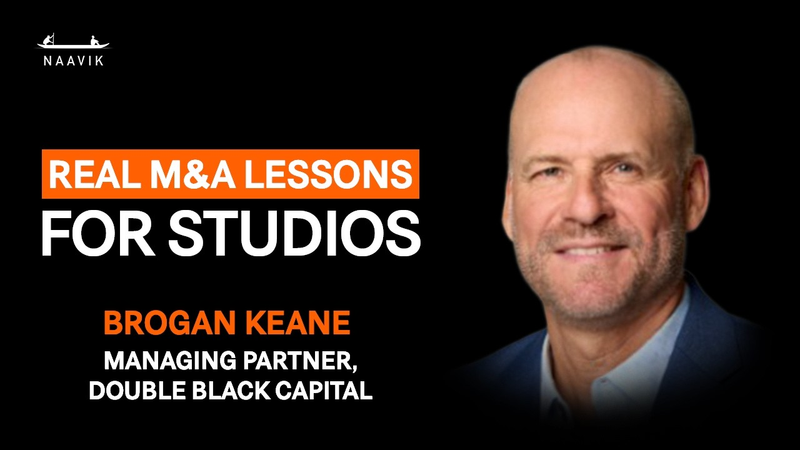
course but today we're going to talk about how that window actually works who's buying what kind of studios do actually get bought how the deal gets done what to do and what not to do and where all of this is kind of going. We'll also talk through some real life deals anonymized, of course, and get the lessons learned there. To help me unpack all of this, I'm bringing on the team at Double Black Capital. DBC is an independent M&A advisory firm focused on gaming. They sit on the sell side and advise studios and founders through the process structure and the negotiation buyers. My guest today is Broen Keane, a managing partner at Double Black. Broen, welcome to the show.
Thank you. Very happy to be here with you, Alex.
Yeah, excited to have you on as well. How are you? I'm doing awesome. Yeah, we're super busy. I think uh as as we just referred to, the market has been picking up significantly after a a doldrum period postcoid and uh so I think it's more of an exciting time for companies to be thinking about M&A and how to optimize exits.
Awesome. Um before we dive in, I
actually just want to ask like where does the name double black capital come from and give me the short kind of version of how do you call it DBC? Is that a term?
Yeah, we Okay. Yeah, we call DBC.
Give me the short version of how DBC um came to be.
Yeah. So, so double black comes from the metaphor, the skiing metaphor.
Okay.
I was I was a rabid skier when I was a kid. And I love the idea of pushing myself as hard as possible on those huge ski runs until I got an accident jumping a cornis on Siberia at Squa Valley, which was a very memorable moment. But it really relates to being elite and how we create our banking unit to be elite in the transactions that we execute. And then also on the content creator side, we work with almost exclusively folks who are the best in class. Almost all of our clients are million plus franchise selling game companies. So it's part of the part of the approach and our approach is twofold. I I think most banks really look at transactional work.
So you're doing a fund raise, a debt raise, or you might be doing an M&A exit. We look at as more of a two-step process. So we think of it as being more we call bank plus at DBC where you're first creating and curating value for a client and then you're transacting at some point down the road. That often could be years. So we'll talk about a couple of the stories later, but some of those are clients we've had for three, four years before they ever transact. But the key is that you can engineer optimal exits I think. But you have to start with the end in mind and you have to have time to do it. So we'll also talk about examples where we had no time. We had matter of weeks to get things done. But ideally you have time to really create value, optimize it and then exit some point down the road.
Okay. And you guys kind of came together because you believe in that thesis and you believe in that for games specifically. And so I think how large is your firm and um when did you guys start the firm? Yeah. So, we're seven bankers. Um, we work together. The founders are Arnold Chung, Andrew Parat,
and then myself. They're more specific finance transactional backgrounds. Work for other big banks and so on. Over time, most of my career I've spent operating game studios, operating, helping operate divisions, working inside gaming, and in some cases outside of gaming in enterprise software, machine learning. So I actually my background is largely gaming but quite a bit of it about 10-15 years is outside gaming and traditional technology enterprise software and so on. So that's relevant because when we bring our expertise to the table people are looking for people who've run companies who understand how P&Ls are built and then how they're expanded and how value is created on top of the P&L. And I think for our clients we're looking at a lot of them are trying to think about hey if I come in hot out of early access on PC how do I get on console? How do we we have a big client base in Asia, maybe specifically China, how do we get how do we get inroads made in China? We help our clients develop those relationships and that's something a bank would not traditionally do. So, it's definitely a two-step we call banking plus, but it's
really kind of an operating perspective on on different game studios.
Cool. All right. Before we dive into our first topic, which is going to be who buys gaming companies and why? Um, just quickly define sellside advisor in gaming for me. What does that actually mean day-to-day? Who is your client? Who is paying you? And like where do you actually sit in the process?
So there are two different sides. They sit on a on opposing kind of spectrums. One is sell side to your point and then buy side. So sell side is is I'm a studio. I've developed a product, a great product, and I ultimately want to exit to either a private equity buyer typically in this market or it might be a strategic buyer like an EA that you already mentioned, a craft and so on. So the buy side would be somebody representing let's say a Craftton buying 11th hour games where we were on the sell side selling 11th hour games to craft.
Perfect.
In that case, they they didn't have a banking representative. they actually manage the the corporate development
group manage the transaction themselves. So sometimes on the buy side it's managed by a corporate development team and then sometimes they either work with another banker buyside banker or um in conjunction with a with or in partnership with a buy side. Usually the sell side is just represented by a single banker and that's most of what we do is sell side working with developers selling them to bigger companies private equity and so on.
Cool. All right. Thank you. Hopefully that gives in case the audience wasn't aware of the of the banking and the and the financial terms for for both of those. Um, okay. So, but actually I know we just talked about the sell side. We're talk with we're going to actually start with the buyer side. Um, and I think this is where the picture has like changed the most. You know, if you went back 10 years ago and looked at the buyer side for any meaningful gaming asset, it was Activision, it was EA, it was Take 2, Tenses, maybe Microsoft and Sony. Um, it was a pretty narrow list of strategic acquirers. And today looking at Q1, you know, I just rambled off that list, but you have Savvy buying Moon Ton, Scopely buying Loom, NCOFT buying Just Play, Mattel 163 going to Mattel,
Mazzara buying blue tile, Havlli, you know, buying Budge. Um, Silverlake obviously taking uh and obviously Pith alongside Silverl taking EA private. Um, so that's a lot of sovereign wealth. It's a lot of private equity is traditional toy companies. um mobile pure plays um and some old school strategics like all in one quarter and which is I think that means that the buyer universe is like fundamentally widened and so I'd love for you to just tell us a little bit about like breaking it down into a couple of archetypes because I think it will help our audience understand who they could be talking to. There's obviously PE the strategic buyer and the third category which is entertainment but not natively not natively gaming. Um, let's I think I want to kind of walk through the PE guys first, but what is a PE firm actually looking for when they buy gaming asset and how does that differ from the underwriting that a strategic does?
So, I'm going to quickly kind of take you back even further. So, originally there was not a lot of PE if any in the gaming space even going back beyond
five, seven years ago.
VCs was an asset class. It's been around a bit little bit longer with the Griffins of the worlds and the Bitcrafts, but really not that much longer. Not 20 15 years ago. It was predominantly strategic acquisitions that were happening in the market. Then we kind of ran into the Griffins and the Big Craft, some of the bigger names that you've you've heard over the years, but that's really a strong 10 to 12 13 year horizon in gaming. We've seen that model not really play out very well through COVID and postcoid in terms of the style the returns just weren't quite venture return or venture bankable. We can talk about that if if we want down the road. PE has really come into play just since co like really the last five or six years has been a strong play and you're right you see strategics ebbing but part of that is there's not as many strategics yeah
you know out because they're being acquired by private equity. The VCs are predominantly from a funding standpoint out of the game and most of them are doing more projectbased lending or funding. So more debt vehicles or hybrid
debt vehicles. There's almost no fundraising being done on a pure equity basis today and that's super unusual right for for the market. private equity has come into the space to fill some of the void of the der of investment that happened postco but they've been no you know poking around the havlli CBC's the blackstones the TPGs have been around but the challenge is figuring out how do I deal with concentration risk or platform risk in many cases because a PE has a different set of incentives and and the way to put it most simply is they can't lose money on an investment right and so we can get into how diligence changes because of that with private equity and it can be incredibly extensive. But it's because the safeguards around managing risk are extreme compared to a strategic and in some cases even a VC who's placing five to 10 bets hoping one or two of them actually land PE private equity everyone has to land more or less in their model. So that's we see in a lot of the
challenges they have to figure out the market how do I what assets can we bank on that are generally very profitable profit forward profit facing that we can be pretty sure the risk is mitigated downstream on a creative product and products creatively we all know are challenging to predict how they're going to perform over time so now what you're seeing is you're seeing a lot more transactions because I think they figured it out
but the challenge was they came in a lot of times from other markets like enterprise So came in from Vista for example and they saw subscription revenue and live ops revenue that look consistent as we've learned over the years they're not always consistent and a lot of them don't land at all in some cases. So how do you manage that risk and create a new infrastructure and a new model that works with that? So I think companies like TPG and Blackstone and have all been figuring that out CBC and getting comfortable with the model where they built it from the ground up. Thinking of the gaming dynamic versus layering an enterprise on top of gaming that didn't work. So that got scrapped.
Now they brought in let's build it from the ground up for how gaming works is a model. And that's why we've seen that click and we've seen a lot more deals getting done.
Okay. I mean that obviously ostensibly makes sense and obviously again we're talking about buying right not investing right so obviously the VCs we're not even going to talk about because they traditionally don't buy companies they traditionally invest in them um and then hope that they go public and get bought by somebody else um so we're trying to focus on the idea that like for PE guys right they're very riskaverse they're not looking for some they they want stable cash flows and I think that's reliable I think fundamentally they're looking for when they're looking at a gaming asset they're thinking hey like is this cash flow reliable or can I build it from the bottoms up perspective of knowing that this these games are launching every two years and they're consistently launching every two years. Is this something that I can expect? Um, and I sort of wanted to kind of compare that to the appetite of a strategic buyer which is like sort of like what they are doing, right? Which is potentially are they buying for IP? Are they buying for team? Are they buying for genre expertise for live service
capabilities or for geog geographic expansion? Um, you know, for example, Craftton and NCOFT and Savvy have in particular been pretty aggressive and active acquirers. Um, do you think that they have a fundamentally different thesis than the PE buyer who you as you as you mentioned is basically looking to for a business that doesn't ever lose money?
Yes, ex private equity to be traditionally very financially focused. So, we call it Ibatab, but just think of it as profit. They're looking for profitable companies. You're looking for a profitable company because you can then lever that profit and you can borrow against it. If you're a $30 million revenue mobile company with no profit, with very little profit, which is 80% of mobile companies in that category right now, it's very difficult to purchase, which is why you're seeing these mega mobile deals, but not mid-market, lower market deals, because very few of them are profitable. So, PE is not going to participate particularly in that set. You see more strategics buying the bigger mobile. So, strategics is a very different set. They'd love you to be profitable in many cases, but nine times
out of 10, a strategic usually from a board initiative is looking for a very specific asset and it's often to fill out a portfolio. So in Craftton's case with with 11th hour games last year, they didn't have a real strong player in ARPGs. 11th hour games creates a monster hit. They come in say, "Hey, we can make a Last Epoch 2 an absolute monster, huge hit." And then the relationship really built worked. They gelled and that deal got done but they were looking to fill that gap, right? And I think a lot of strategies were going to fill spaces. There was a time about 5 years ago when they were looking for capacity and they were looking for great teams and they usually would take those teams and put them on an internal IP. So the challenge in doing those deals was that I'm I'm built a game. It's sold 2 million units which is proven to the to the strategic that it's of great value and it's a really strong team but I want you to go work on PUBG if you were crafting or something else somebody to that respect. So they're generally looking for that. There's been so many layoffs that the
market the market on the labor side is so soft that that kind of concept is gone that thesis of we need to we need to go purchase teams. We've seen that very little. I don't think we've done a transaction the last two years where it was four capacity for team. If you go back to co, so we go back four or five years ago, we were stating as you have multiples of revenue and ibida is typically how companies are being valued. We had what was called an FTE multiple. So full-time employee multiple and I literally would be in meetings and somebody from a major strategic you would know would say, broen, are we looking about 600,000 per employee? And that would come out to let's say 80 million, $100 million. That was a thing back then. that's gone now because the labor market has softened so much and there's so much developer capacity. So, but if you have an IP that's really important. The other component that I've seen a lot of for interest is if we have a revenue gap which a lot of companies have because of the layoffs in 2027 2028
those products to fill are predetermined if you're shipping Madden again. So, you need something new and you need something bankable and so you need a hit. And so though that's why from a standpoint of quality, it's a great market. If you've got a real strong quality IP, new IP, there's going to be plenty of buyers out there.
Okay, cool. And we'll move on to discussing who gets bought in a second. Um, and to the question around, you know, how do you get bought? Is it, you know, IP seemingly obviously not today, not team um given the labor market dynamics, but um there's a third category that I want to talk about before moving on to that, which is entertainment, but that's not natively gaming. Um, you know, Netflix is building a gaming business and Mattel and Hasbro are doing all these really interesting things. Um, some of these companies, they have IP and they have distribution, they have an audience, but they're not native gaming operators. And so, how do they evaluate gaming acquisitions differently? I think these are primarily, this is like the third bigger player right now today.
Yeah, I would say they evaluate it like you could look at a a Sky Dance or
Warner Brothers or Universal. They tend to look at it from a pure transdia lens where gaming is a compliment. It's not the core. And typically nine times out of 10 it might result in in not as strong evaluations over the years we've seen whether it's Warers or whoever come in and out of gaming and predominantly been unsuccessful in that effort. And so they tend to be a little bit more tentative buyers. Like if I were to rank just buyers off the top of my head across the board, strategics are really really ones that you want because if they find an asset that they need and need badly, all bets are off on on price and valuation. Um, private equity is very much limited. They have a model like you're not going to find a private equity company typically paying 20 times profit for a business. It's not their model. It's closer to 10 for a platform. And I think for those non-gaming folks, it's really more inching their way into gaming, making a maybe a big buy like Warers did on on TTG Games many, many
years ago. But you don't see it in a consistent fashion. You see it eb and flow. And I think that partly the political dynamics are very different with the particularly the trans media companies, but you've seen it with Netflix, too. Netflix has gone in and out with different types of strategies and dramatically changed them. They've bought companies and released those same companies within a matter of two or three years. So, um, it's different like those that tier of buyers to us are, you know, some of the most difficult to really get engaged because they just don't feel comfortable with a gaming market like a strategic might. And even private equity, I would say, now has learned the market so well that they feel very comfortable.
Interesting. Okay. All right. So, now we know a little bit about who's buying, right? Um, there's PE, there's gaming strategics, there's nonstrategics, but there sorry, non-gaming but strategics. Um, and the next natural question is of course like what are they buying? And you alluded to some of these things and the core components that help you get bought. But again, for most founders, this is the next realistic step. It's not that easy actually, especially in games. I think a lot of founders, they assume that if they've built something
they're proud of and there's made some money, there's a buyer out for it. But in the reality is that like most of the headline deals are scaled and like very IP rich and mostly mobile businesses. Um, and these are companies that need to hit a certain scale and a certain profile before they actually get bought. So I think like let's spend some time sort of like discussing this. I think in your mind fundamentally what does a studio have to look like to be acquirable? Like what are the actual qualifying criteria like revenue, profitability, growth, team size and IP?
Yeah. And a lot of those things are critical, right? So you have for the most part I think and they're there two key categories. One is like if you think about a services side, so work for higher codeab and then there's the IP side. So those are two big businesses in gaming and and there's been a ton of transactions on the work for hire side. We think of keywords and virtuous as being the granddaddies of of them all there. And then on the IP side, it's everybody's in that game. That's where the PE folks are investing and P is also work investing in work for higher side
as well because it's much more predictable at least theoretically that an IP bet a game launches it may hit it may not as as we know
so those are really two important parts of the business and there are criteria for each one
but on that on the pure IP side I think if you launch a product and that product generally speaking does over a million units now this is kind of depends on your development budget and your team size let's say it's a team You know, it could be anywhere for two people in early access launching a game, a small game. Or it could be a team like Brigata who launched Quarantine Zone who's a client. Smash hit first game they ever built now way over, you know, million, two million units in the p just the past three or four months. Creates a whole new opportunity where people will one identify it and to your I think we may talk about it later, but you're going to get inbounds because people are tracking everything on Steam and seeing how you do. That gets you in the game. I think it in in some cases even maybe half a million units will get you in the game, but a million is definitely going to get you in the game and people are going to
begin calling you or trying to get a hold of you.
So I think that's the key. If you scale out of that, so let's say you become a void and you got a hit on your hands and now you're selling 10, 12, 15 million units. It's different because now when a big company looks at you to buy, you're going to be a bigger ticket price. And so they expect a bigger, more mature management team
than you may have had if that team was built by a couple really, really smart, young engineers, right? And they haven't quite scaled because someone now coming in at a level where you're going to pay, let's say you're paying north of 250 million in any case,
then you're going to be looking for a management team that can scale it to a billion. And very rarely do developers have that team in place, right? So they have to build a team. A lot of times we'll have build that team with them and then take them into market so it feels like they can actually scale to them. So they're looking for scale too. Can that team scale? Can they get another mark? Do they want to be in other markets? They want to do the hard work, right? Or do they want to, you know, take a few million dollars and and and retire or do
something else which is also very common.
So one of the things I see in the smaller games the most is a lot of times developers just get fatigued. They've built the same game. They're seven yearly actives. A lot of times they're not even don't even get to 1.0 and they just want to go do something else
which is also ironically I think some of the best investment opportunities are in gaming. It's kind of at that level
and we'll definitely talk about like that in terms of like deal structure and the earnouts and because I think that's a really like that's a really important point. I think a lot of people by the time they get there given games have such a long R&D cycle like they are there right? They're not like some entrepreneur who found their unicorn 3 years ago and are like WOW IT'S SO BIG NOW. It's like we slogged through this strip development for eight years. We've done it twice. We're actually on the sequel. Um, and we're tired now. So, we'll talk about that in a little bit. But, I think you started mentioning there and creeping into things that are outside the financial profile, right? Like, you know, I'm thinking about pipeline visibility. I'm thinking about how their pipelines are structured. Um, SQL potential, the team retention, um,
the fr the depth of the franchise. Um, I think like how often do you think that a buyer is looking at those sorts of things in addition to any of the other things that we said before like revenue, profitability, growth, like that that magic million unit number that you that you talked about.
Yeah, it's interesting. So, a lot I'll mention the other challenge that a lot of developers including our clients have, which is once you've had a success, it feels like you can have a lot of successes. It feels really easy when you're on top of the world. And what often happens is that people will say, "Okay, that was cool. We did that. let's go do a different game, different IP. We all have they all have ideas for a lot of great games and a lot of times it's outside their core wheelhouse. So you're building a 4x4 core party game now, but you're actually a survival crafting hit.
So huge challenge and what'll typically happen nine times out of 10 when a buyer comes in the developer will believe that that's wow this is going to create more value. We have two IPs, two different areas. But the problem is anybody wants the sure thing and they want to double down and make sure that you maximize
resources in the key core franchise and IP. So they don't value that other hit even if it's a smaller hit.
So if they buy you nine times out of 10 they're just going to close that off and close it down.
So the focus is really on what's your IP and I would tell clients like don't invest in any other IP until you've maxed out everything you think you're capable of doing in the hit that you already have.
Yeah.
Yeah. in that realm like are there genre or platform realities that like we should be honest about I mean obviously mobile is pretty much dominating lately but it wasn't before right like you know Sony and Bungie Microsoft and ABK Xbox and Zamax like is the PC console mid-market like that million dollar unit number like is that just a harder sell today um and like less dealheavy or do you think that like actually like that's a really popular place to be like you're been talking a lot about this million-dollar unit number. Yeah, I think it's a great place to be and and I so I worked be in prior time in my life at at both Sony and Electronic Arts. So AAA massive budget studios even back
then the studios on a relative basis were even bigger on some of the games and the business models if you compare those to the middle market the companies that are doing between a million and 10 million units are nowhere near as you know extravagantly profitable. So you might get down to a 20 25% max profit with an EA kind of studio game. You're 80 you're running we have clients are running 80 80 to 85% net profit margins margins
who are in that wheelhouse of the middle market that we're talking about.
Yeah to kind of a 102 type period like that is to me if I was investing personal personal cash that's where I'd be investing. I think that's the sweet spot and I think people are finding that out. But the challenge is you got to get developers to return your call, right? And they're often small teams. They're busy. They're not necessarily financially or businesss savvy. They they're doing it almost as a hobby and
it turned into a hit, right? And they're not interested in talking to suits, right? They're not they want to talk to people who are like them. So, it's a great opportunity, but it's not an easy one. And you have to invest the time. It's similar to what people say about getting investments from Savvy PIF and Saudi Arabia. You got to invest the time. You got to be there. You got to get there. It just doesn't work any other way. It's the same thing with that independent developer. You got to be in that world and you got to live that world. Very similar UGC and Roblox. You got to live in that world. So Andrew Pra, one of the partners at at the DBC and one of the founders spends a tremendous amount of time and got to know Johnny do big five years ago early before a lot of these these companies hit it and that platform became a viable space to build on. But it's another area where private equity is now looking at it and you would have looked at two years ago like doesn't make any sense for private equity because of the platform risk right and then you've got a very unsophisticated base of users in many cases are kids that are building these amazing games but similar profit margins that's why I think of it 90% net
profit margins it's hard to ignore businesses with that kind of a business model for very long
yeah so the Roblox less of course the Roblox um platform fee of like 70%. But um
true, which makes it even more crazy how profitable these companies are with a 70% flip right on the top. That's what makes it amazing.
Okay, but we've been spending a lot of time talking about like oh like you're you're you're get you get bought because you're desirable and they're like an indie developer and you're reclusive and you've done this hit and like the suits can't reach you. But like what about studios that like which is the probably the majority of them, right? That are not yet profitable and like don't really have a hit on their hands, but they're like doing okay, right? like, you know, like does that change the math? And like, you know, like I guess is kind of like would you would would one of those guys get bought? Let's just say you sold half a million units, but you're not profitable. Like you've got a bigger team, you're sitting somewhere around 50. Um, what is what does that do? Does that sort of like the inverse question of what sort of studio should not be
trying to sell right now? um like where's the market going on like telling them no matter how good of a process their you know their team is and how you know you know decently okay the game is going.
Yeah, that's a good good question. And I I think the what happens is there's a different set of buyers and there are buyers typically with less funding behind them who can't afford to do the bigger avoid deal for example, right? But they can do a half a million or 100 million. There there's certain groups of folks some of the publishers are kind of in that space too where you have publishers that are backed by private equity capital and they're able to go after some of those those smaller bets. And by the way, they're not the big boys aren't, you know, there's no EA there circling around that's going to bid up the pricing. But that because of that, the pricing multiples don't tend to be as high as you're going to see in someone that sold five or 10 million units, right? So in other words, let's say on a revenue basis, you might see a 4x 5x potentially on a big hit game. But on a 250, 350, you're going to see a
smaller multiple. You're going to see maybe a 3x 2x. And 2x is where you get into the realm of kind of code development too between one and a half and two and a halfx. So services businesses. So that's the challenge and that's why I would tell somebody like let's figure out how to get you to million. Right.
Right.
And if you're a co-dev company I'll tell you let's get you profitable and then let's get you to five million because you're going to get an ex you're going to get higher on the multiple scales. Right.
So that's how you maximize value. But there are buyers. They're just they're just different smaller and maybe many of them we wouldn't have heard of. They're not common names.
I see. Interesting. And yeah, that's sort of what you were mentioning before is like to get ready, it takes years to get yourself to like optimize the best outcome. But um you know, in one of our earlier calls, you actually mentioned that deal structure obviously really matters. You know, many headlines I actually find get skewed by announcing some like big buyout, but like half the value is locked behind like an earnout. I think Subnotica is probably the most like recently popular example of like craft and brought unknown worlds for 500 million, but there's like 250 million bonus like locked behind the performance
of the business unit. um and the payouts cap etc etc for the founders. Um so you know TLDDR obviously the the the headline number that's like shown in the news is almost never the number that the founder actually like takes home. And on top of that there's the question that you know many people don't talk about openly but we're we were talking about it earlier which is like what the founder actually wants their life to look like after the close right like the deal structure is obviously the mechanism by which you really determine what their what their life looks like after the close or not. Um, so I want to start with maybe some basics for the audience. I think walk me through the components of a deal that founders like should know cold, right? Like cash at close, things like holdbacks, escros,
um, earnouts, maybe other and then maybe others that you might mention. What do those mean and like what like how should you think about them as a founder?
Okay. Yeah. So we think in terms of TEV, so total enterprise value is that headline price that you see. I'm going to use a a random number, $500 million.
So that's the total value that's perceived by the buyer of that company, let's call it a studio, over a certain period of time. It's either five years, maybe it might be the horizon, the return horizon, and it might be terminal. So it might be over the course of 20 years depending on the product,
but it's over a period of time after close. There's always some risk that after close a product won't perform or I've said look we have a good example is even last epoch it's it exists you can measure it it's it's doing great revenue it's a but last two it doesn't exist yet right and and and the team of dollars building it so how do I project what that's going to do I can get a hint from one but what if it's live services is a different kind of game like so I have to discount the risk on that and that's why I'm not going pay you upfront. I'm going to pay you on a performance basis when it happens. So you look at two components. Upfront cash, which is the pure value of your IP, the revenue you're doing, the team, the staff, all of your assets in a company, oftentimes
get kind of aggregated into what we think of the upfront. The future potential, which hasn't existed yet, we think of in terms of the earnout. And the earnout comes in a couple key forms. One is kind of you can think of it as retentionbased, and then the other is performance-based. So, as a banker, I'm trying to maximize on that backend earnout side the retention component, which means if you going to work, showing up for anywhere between two and five years, you're getting a big chunk of cash because they need you to keep the team there together if you're a leader. So, that's where that component comes from. The other one is performance bases, which is where you see the big headline numbers. So, of a billion dollar deal, often four 350 thou or million of it will end up being in that that performance basis. It's measured in two different ways. And this is an important distinction. It's either measured on a profit basis which we call EBITDA. It's a general proxy for it or revenue and typically it's net revenue. So about four or five years ago almost everything was done in Ebid DA. And we work incredibly hard to make sure that
they're net revenue based. So just think of it as the revenue of your products, you know, less platform fees, right? And maybe some server cost. So so close to re maybe it's 20 30% off of gross revenue. And be and the main reason why you want it that way and not Ebida is because it's much more difficult to manipulate that number. There's few below the line checks.
And that's where people got in a lot of trouble because they were doing Ebida based earnouts and companies were loading on costs that they couldn't control because they didn't own the company anymore.
Absolutely.
Onto their P&L. Right. So making a net revenue deal is probably the most important point.
And the harder you fight for it, the better. And I think almost all the deals we do now in the last couple years have been net revenue based on the earnout side.
Having said that, let's just say the deal is 150 upfront and 150 on the earnout back end. I would advise anybody, it's just better for your mental kind of health and acuity to just assume it's going to be the number up front.
Right. Right.
So if we're going to transact 150 million, you should be comfortable with that being the number forever. And if it's not, then you should think of rescaling, re-engineering kind of your scope of when you want to sell, right? Because you know that's bankable. It's literally going to get wider in your account in three months, right?
Everything else you may be pretty confident about. It may happen, but it may not.
And to your first point, Alex, most of the time in the past gosh, three or four years, it's more likely not to hit than hit that earnout,
right? That was actually one of my questions and you I guess you already answered it but you know I think obviously like you know let's just say you ordered 60% cash at close 40% earnout like how could you be thinking about that mentally and sounds like your answer is you should think about that as being 60% is the free is the full value and the other 40% you ain't getting it um and I guess another thing was like how do you get convinc conviction kind of in the fact that whe whether you're off eB target or of net revenue right like how do you get conviction that the earnout part is actually achievable right and so I think as a founder how do
you pressure test those terms um And like how do you think about like that being aligned with sort of like what you want? I think a lot of buyers obviously want the operators to stay. Um and founders sometimes want to stay but sometimes they really don't. Um and sometimes the buyer wants the whole team but sometimes they only want a few of them. So when you you kind of just gave me a little bit of bit about about that advice, but expound even further sort of like how do you advise founders like on this topic specifically about like staying and going and depending on what they want, how they should try and structure the deals um in terms of cash at like cash at close versus an earnout.
Yeah. So that's definitely an important distinction. So, if you're a a younger founder who's very interested in the growth capital that comes in an acquisition to continue building out your games and not have to worry about the back office stuff, let's say then you're in a different scenario. You might do a three to five year earnout, maybe even longer. A lot of times company, a lot of founders are really happy with the new owners. They leave them alone to predominantly they give them a ton of resource to build their
dream games that they couldn't build before. Those a lot of times you'll see those guys stand five 10 years. So it it really is interesting that way. But then you have others that are in two different categories. They really want to do something else. And to me, I think of roadblocks young and then people who want to retire or they've just been doing it for too long and burn out. It's up to whatever. You know, everybody's different. They have different goals. In which case, you want to minimize that earnout track. And so like one of the deals we did last year, the founders were very interested in retiring. That was part of it. And so the key from a banking standpoint is you want to be very upfront. Like this is what the founders want. that there's a team to to rise up and and really take the reigns and run this thing, but the two founders are out. So, they're no matter who the buyer is, they're going to want that be, okay, out sounds good. How about five years? And then we say, no, how about six months or a year? And you end up
immediately. Yeah.
Yeah. How about tomorrow? How about now? Does now work for you? And it tends, let's say it's two years. In this case, it was two years, which is pretty reasonable. Two years will fly by. And
in some cases, the earnout. So in that case you have a retention component which I love retention because it's butts and seats. If you show up for work you're going to get paid right and then if you do and then the next component is performance but they have a certain period of time where they feel like they can let go even if the other people on the team are fiveyear right at least they're only only obligated for tiers and they have some type of a consulting contract typically after that. So the way that I would do it is maximize upfront cash and again that could be cash and equity depending if the company is publicly traded in some cases even private but you're going to maximize even in that upfront cash because cash is king and then you want to on the earnout you want to try to maximize retention versus performance right so it's something that's more guaranteed that's going to have in that case I'd almost count that as guaranteed it's almost like upfront if you stay here two years I see y
and then the last one is performance and then if you do performance you want it to be net revenue based not even adopters.
Mhm. Okay, cool. All right, so last one on the structure before we talk about like as we mentioned some of the the war
stories and the deals that you guys have worked on. I know there's some that we've particularly prepared that we think are interesting. Um, but founders also often only own a portion of the cap table, but like not the whole thing by the time that they get there um to the sale. How do you advise on like managing the investor expectations and like the all the waterfall conversations in parallel with the buyer negotiation because obviously some of these things are better for the founder or they're better for the investors in the cap table. Um what's what's like kind of like your general like advice for founders and and managing that dynamic?
Yeah, it's interesting because that gets to early in the process if you take on capital and you look at the structure the capital structure in a fundraising deal. So the most important term to understand is pref preference or pref stacks. So preference is whoever puts in money. If it's an institutional investor, it's a little different than an angel because oftentimes an angel will take common stock, right? A common unit if it's an LLC. But if in the case of a professional round, a VC, a strategic, they're pro probably going to
be a conversion to a C corp and they're going to want, you know, preference. So preference basically means if it's, let's say it's a 1x preference, that's a good deal. But it means in an exit they get their money out first and then you share after that in the in the the upside on a prora basis. But in a lot of cases especially in the last few years because it's very difficult to get funding you see preference tax at two three and four.
So if I put in $20 million and I have a 3x preference that means I'm taking out $60 million before you see
that's crazy. People are doing 3x liquidation now.
Yeah. Not as much now in in the last 18 months we thought. So two and a half three was not even
Wow.
So farther from the market. That's crazy. 3x 3x 4x liquidation preference is nuts. Wow. It's okay. Keep going.
Yeah. And here's [laughter] the lure. The [clears throat] lure, Alex, is I'm going to give you the highest valuation of any term sheet by a mile.
So,
you're probably worth 100 million. I'll I'll give you 200 million if you give me 3x. And sometimes founders are lured
into that huge big line number and they don't realize that there's back-end implications which is why we love which is why we do a lot of early stage fundraising even though it's not our business just to make sure and protect the downstream consequences M&A.
So that could be a whole another podcast but it's incredibly important to not make mistakes early on
to make sure that you can maximize that exit downstream.
Okay. All right. Um, this is part of the conversation where we get to learn from some real deals. Um, I think obviously you can't name some of the names. Um, but I want to walk through some examples because I think like the the kind of the patterns matter and there's things to learn. Um, I want to hit on three threads. Um, I think one was around timing. One is stories about leverage and one's kind of about like the long game. So the first one um is that you said you had a story about a studio that was running low on cash um but there's a promising new opportunity in front of it. Um and the instinct I think in that situation was to take that fire sale
immediately. Um and so can you tell me about sort of what happened and what did they actually do instead?
Yeah. Now, what was interesting is uh a a very well-known developer um came to us with with a franchise everybody listening would would probably recognize and know and they had got into a scenario where they had bought multiple franchises because of the success of the original one and got themselves in the cash cash pit real challenge and they came to us with three weeks of runway left and I think 95 developers. So 3 weeks of runway. So we have I think of one client has three years and another one has 10 years like and the one that has three years it's a policy to always have three years of cat cuz it's that's how they sell engineers say you're not going to get laid off. It's pretty awesome. But in this case they had three weeks. So I first thought I was getting punked by somebody. I didn't think it was real. Like someone's
messing with me. And then I thought they're already out of business. They just don't realize it. Right. And I don't know how you don't realize it.
And my third thought was, "All right, we're supposed to be an elite crew here. We're going to go for it. How are we going to save them?"
And so what ended up happening, we said, like, how do you save a big company with a big payroll with three weeks? You you can't do a institutional deal. We can't do any deal with diligence. And so it becomes friends and family. So who do you know? Like your number one mom, dad. Let's talk to mom, dad. This is where we got to. And then it's okay, let's talk to your friends. Let's talk to mom, dad's friends. we end up doing is we we got a call with about 12 of of this founder's parent friends on a call and I got up and pitched the company to them which was tough because I know they have three weeks of runway left because now I'm on the hook for money and I would say the average age was probably early 70s of this group
and there were people on my call there's
probably 12 or 14 people nodding off people were leaving to go to supper just like boom gone from the call and but we knew we had to get it done and in that call is about a 45minute call we end up raising over half a million dollars. So bridge first bridge to actually make a couple payrolls which then gave us time to go bridge again with professional lender
and the bigger challenge was we had to bridge another time. So, three bridges before we got a deal done with a uh more of a growth equity investor and it ended up being a great invest almost a $30 million investment which was crazy but the challenge we had to keep bridging because in this market deals take a lot longer than you think and you need to plan that. So, a typical M&A I I sometimes fundraising is a little quicker but but for M&A it's going to be about six months in these cases now it can be a year almost. every deal is 10 months to a year. So the other thing that that developers and founders need to plan for is a longer cycle.
So we still try to do every deal in four to six months and very few of them come in within 10 to 12. So we end up getting the deal done, save the company. Both products are now back on the rails again and the team couldn't be happier. But the key lesson for me is the more time you have the better. Like normally you're going to come to DVC 6 months, 8 months, a year ahead of time so that we can plan and get you out of that situation as quickly as possible. The deals that we got were decent, but you're not in a position to get a very good deal when you've got a few weeks.
You're up three weeks of runway. Yeah. [laughter]
Yeah. You're seeing any deal you can get. And I think they're pretty happy with where we ended up. But that was kind of the one to me that was like super interesting. And from from DBC's standpoint, we're like, there's no way we can let this franchise die. It's too credible. It's a multi multi-millionit selling franchise, but they just got under their skis by expanding too rapidly, right? Which I think a lot of people get into that that same
challenge.
Very cool. Okay. one I'm we're going to go to our second one, but just because I'm super curious in your elderly um like uh geriatric group of people fundraising bridge round um what vehicle did you use to actually take their money? Did you just like a crow like crowd fund raise it like like what did you like kickstarter it or like what did you actually do?
It was more just a very simple promisory. No, it was more of a direct
flat note. wasn't a safe but more of a promisory that that could convert.
Okay. Interesting.
In some cases there were just people just want to do a straight loan like a short-term 12 month loan and we accommodated that too.
But we were doing any any deal we we needed to do to get that money in the door.
Okay. I see. Fascinating. Okay. Um, so the second one I think there's um a version of this story where basically the studio gets an offer um and a number that's like on paper like fairly reasonable and but it but it wasn't exciting and it but it was reasonable and I think a lot of founders would
would take it. Um but basically I think in this situation you told me they said no and they reran another process later on. So tell me about this scenario and sort of what do we learn from being offered a first number and then saying like hey actually we don't like it. Don't be tempted to take it, roll our sleeves up and do something else.
Yeah. So, this story to me is about the value of an adviser, like a competent adviser, right? So, and this deal is this deal goes back a a couple years. It was a pretty big deal by a really big strategic. And the strategic was already an investor. They were they were on the cap table already. And what was interesting is the the GM and the founders, the three founders of the of the studio wanted to just kind of organically run a process themselves, right? And the challenge with doing that is multiffold, but I'll just mention the few key ones, which is one, when you do that, and they had bids from Microsoft, they had bids from I think 10 cent bid, I think, you know, all the bigs. Google bid on them
like but the problem was they were all a certain number
call it under $und00 million and they were all coming in on different terms
on different times
so how do you manage that
like yeah can't actually run
there's no kind of we couldn't really create a process you couldn't create compression or heat in that deal
and I think doing a deal for call it $100 million would have been great like that's a huge outcome for everybody right
that's not But that's pretty good. Yeah.
No, I would take that all day long.
But what they realized is it's just it was more the process part was too crazy and then people would be waiting and then they'd pull out because it was like they're waiting too long, right? And they So then they eventually came to us. We ran we tightened the process, compressed it, ran it hard process. The company that was a minority investor ended up buying it. they already put in an offer because we compressed so much tension about all the other Microsoft of the world the other big buyers they end up the end value was two times their
original
wow that's huge
so if you wanted to me it's like the value of a a competent bank or what they can't because people often times say it's four or 5% whatever it might end up being like that seems like it is a lot right for people but you can make that value 10x and getting a return like that right so do it on their own
pay a banker a few points and you get $100 million. So for them, they're clearing 95 million more. Like they're going to take that every day. So that was that story of like running a how important running a process is in almost every instance. And I would say that I can't think of an instance in the last six years where someone can argue to me that they ran their own process and got a better deal. You can get a deal for sure, but there it's impossible to maximize your deal if you're trying to do it on your own because you don't know the market. How do you know if it's a good deal?
Right? Because you're not out there every day scouring deals and figuring out how to create heat and compression,
right?
So, okay, that's what I thought was a big lesson on that one is like the value
of really running a a a hardcore process.
Okay, cool. And so then and the third story that we're going to talk about is like that's kind of like not a change in the business, right? But that's a change around the process, right? About how to you said heat and compression, right? Like this is not like nothing like really substantially changed maybe about the way the company was operating, etc. But now we're going to talk about one that is more like that. And so this studio came to you, they said they actually wanted a price, but you were like, you cannot get that. Um, and you work with them for years before they actually went to run their process in market. So what did that engagement look like? Um, and what changed about the business in that time and what role did DBC play in shaping it?
Yeah, it's interesting. So that was a co-development work for higher studio based out of Florida. the GM. This goes back now maybe three, four years when I first met the GM at Dice and he had heard someone had referred him to me and so he chased tracked me literally tracked me down I think and found me. We
sat down and he pitched me the idea of selling his company, his co-development studio. And I said, "Well, tell me tell me about the company. Tell me about the the clients you were great clients, big clients, triple AAA, and the revenue." I can't remember the revenue was called a few million dollars, whatever. And I just told them like, like I appreciate your your, you know, aggressiveness here in trying to engage anyone, a bank or whatever, to help you, but you're too small. and telling him that he was too small drove him insane. And so he wouldn't leave me alone. For like six months, he kept pestering me, pinging me, saying, "We can be big. We can do it. We can be big." And finally, I just said, "This determination is just so off the charts. I have to help. I have to help this team."
Okay?
And so I engaged with them and then we had to work and we said, "But here's what you need to look like. If you're co-development, you don't have enough uh client diversification. You need to triple your revenue. M you so how are you going to do that? Like so we need to build a work plan to scale it out and
over about two and a half years they scaled it and that was triple the revenue and then we sold them I think that was probably now maybe a year and a half maybe even two years ago and they sold they we got them a deal where they had twothirds cash up front. So because we're talking about earnout so twothirds cash up front is pretty good. So you have a third on the earnout and the earnout was pretty short. It was like a couple year earnout. So they were incredibly happy about it. But the key was like we would lay out with them the goal where the goal was and where we're going to have to when we would have to keep moving it
to make sure that you're going to get that exit valuation right if you wanted to exit for let's just make up a number 20 million bucks then you're not doing it today but we can help you figure out what those benchmarks are to get there and we can do that I think with just about any client to really help them get there but the the difference was we had time
like
they was they had a smart whipper snapper very small team but doing pretty good projects early and we could say if that's the the goalpost you want to get there we can create a road map for you
with your board and whoever else your your team your founders to get there and with pretty good confidence feel like you you know if you follow that road map you're going to be able to have a strong exit
okay across all of these three um two two final questions before we kind of talk about the future of of gaming and M&A and close our show but um what is one thread that you'd pull for founders on how timing actually works in the M&A process. And the second is if a founder today is listening and they think that they're like two or three years away from being sale ready, like what should they be doing now?
Yeah, great question. So the key on a process success is momentum. So there's pre-product. So you might actually have a great product that's got million, two million, probably a million, but half a million wish lists for a new game or something, let's say, and you're been working on it for seven years. you want to go do something else or retire or whatever.
So you've got that benchmark in my mind. You have then marketing beats typically.
So there are opportunities that have marketing beats that create wish lists and things like that that are tangental or ancillary to sales and cash but still good because your product isn't launched and I think you want to focus on having those beats. In this case it might be your fundraising versus exiting but in any case you're you're managing the beats. So those are the the marketing beats because there is no finance beat yet. In M&A, you're focused on the finance piece. So, it's incredibly important once you're out fundraising that you don't have a tail off because we're in a very much a risk offmarket, right? So, we were in a risk on market, meaning people were willing to take extraordinary risk during COVID between kind of 2019 and then the first half of 2022. People were money was floating was free. Fed's funds rates were really low. money was, you know, flowing really well and everybody was in the game, right? In that case, it was very different. But in this case, it's very risk awesome. People were looking for very specific assets and they have to be performing well. So, the problem is if you get into
a process and you're like, "Okay, now I'm ready to sell and then you launch a product and it fails or you don't hit your stated numbers because in banking we're casting what we're called pro- fora financials. So, your forwardlooking numbers. If you could run a process in three months, those numbers didn't really come back to haunt you too much because a deal is usually done, right? Maybe on the earnout, but in general on the upfront. Now, if a process is taking nine months to to a year, that proforma is now your real numbers. So, you have to be able to to structure and engineer DLC launches, content drops, skins to keep the audience coming, audience coming back, keep retention going during the process. And the thing I see the weakest um some of the other banks is they're not engineering, they're not managing those beats, the revenue beats. And we had a deal I think the deal that closed early in the year where we had a massive mess, a massive mess. And you know, you're going to get a call from
the other side as soon as they see that because you're sharing all the the data and documents. And it was really difficult to deal. We managed holding the line on the top line TEV and they wanted to drop it by like 40%. And part of the reason why we did that is because we figured out what they thought the terminal value of the business was. So we kind of knew longterm what they thought. It was a short-term issue. But it was a big problem. A lot of companies would have walked away and if it was private equity they would have walked away I think from that deal because it was such a big profit miss. So you want to make sure you hit your numbers I think is absolutely critical in process. And so the buildup to that is the same. Before I go into a process, I want to make sure that I have these cadences of DLC, drops, revenue, new product that it's not going to drop off over the literally, I'd say the next year. You want to keep it, you know, be pretty confident you can build into the year. It's more important than what the volume is, whether it's 200,000 unit sales or or 10 million that it's the fading that makes people in a risk offmarket really nervous and they'll retreat. They'll
retrade which is important term I think for people to understand. A retrade is after an IOI or term sheet. So which is non-binding. They get into diligence or the product tails off and then they come back with a new offer and you're in exclusivity. So you have no leverage anymore, right? So you want to make sure that once you get into exclusivity, which is might maybe a 60 90day period after the IOI that you're rock solid in terms of your performance.
Okay. And the second question which was about the founder listening who thinks they're two or three years away from being sale ready. What should they be doing now?
So I think now you're building the right team. You're building kind you're probably figuring out what you want to focus on on in terms of the the product. You I would say you want to maximize the value of the IP that you're betting on and banking on and not worrying about multiple IPs. In most cases, nine times out of 10, developers are already thinking about those other IPs. And then some of the best will go, that's
distracting. I'm going to pull back to that singular IP and focus and double down on it. So, I would say focus three years out, focus on doing one thing, great. Because purchasers, whether you're especially if you're strategic, you're not buying a company for multiple products. Nine times out of 10, you're buying them for one IP that you believe fits in your portfolio. It's very rare that people are buying developers for their port and how many developers have two or three massive hits, right? It's usually still one. So, you should know that. You should know like the you're not going to get value for that side project. You're not going to get value for something that's, you know, in in prototype pre-production a vision. You will get virtually zero value for that every time. You'll only get value for what's real, right? What's what's what customers and communities are really using and building about. The other thing is everything is communitydriven that to it feels like to us today. So building the community is important. There's value in that and there's value in creating retention dynamics around those those folks once a product is in
market right because they keep coming back. So that's a really valuable thing you can work on three years out but and staying really fiscally disciplined. figure out ways to to build for cheaper whether it's with AI whatever you know it might end up being and but I would say stay hyperfocused on a single IP making it make it a workable
cool all right so we went through a lot of the basics um and we talked a little bit about the market today and sort of like what the guides are for founders but I want to close today's episode by talking a little bit about the future um so obviously I would love to understand some of your predictions for the back half of 2026 and into 2027. You know, you mentioned we're in a riskoff market. Um, do you think that that we'll still be in a riskoff market? Um, you know, does something like EA's deal closing change the dynamic at all? Um, and second, I would love to understand is there an emerging category gaming M&A that you think people aren't paying attention to right now, but should be.
So, I would say I'm quite sanguin about
the kind of future of M&A going into 2027 in terms of the opportunity for developers. the I generally think since COVID the l so so it was interesting in COVID literally I would say like June 30th of 2022 was everybody was buying everything by July 1 all the term sheets were getting pulled that's how dramatic it felt it just fell off and so there's been a we've all seen the restructuring the layoffs the refocusing it it's it's been crazy but I feel like that leveled off over the past 18 months now we're seeing people wanting to build again the issues are again that they don't have a lot of internal capacity to build especially new IP and so they're looking externally that creates a bigger value on externally developed IP and so now the process is how are we going to see that develop and we're seeing more and more activity the activity is just coming from different people so back during the co era we had a heavy embracer you know most of the Swedish publiclix right the MTGs right the EG7s they're all buying buying buying but by the way so was Microsoft and Activision and yeah
everybody was buying take 2 is buying so you're seeing less of the buying from the bigs to take the native US Take 2 and and EA and Activision right now specifically because they're more right now um parsing some of the assets that haven't been performing like some of the ones we saw um from Microsoft and then you've seen that whole Swedish contingent out of the game. But what you did see at one point was a lot of the chi Chinese bigs. So the net eases, the 10 cents were were strongly in the game, but they're not as strongly in the game anymore if if they are, you know, at all. Tencent certainly still active. Net is a little bit less so. But the Korean companies have been incredibly successful. The NCOs and Net Marbles, they almost all been hitting on all cylinders. Craftton, right? Very very strong balance sheet. So they've they've kind of flowed in the market as others have. So there's still healthy pockets in the market. And you have the whole private equity is fully engaged now,
right? We just saw the recent purchase with TPG and that that crew um in with a
with Playstack in publishing. So that now it's like they can use that as a platform to go purchase IP which plays stack doesn't have today right and to truly create I think value in publish you need to have IP own IP and that'll happen because that's the model you build the platform then you create bolt-ons around that. So I think that'll create some activity and excitement in in the market over the next really next two years.
Okay. So you're feeling like very positive about and being being a seller in this market.
Absolutely. Yeah. In fact, we have over the next two quarters, we have a new M&A process that's going to market every two weeks.
So that has to have a market for it, right? It has to be not just a seller side, our side, but it's also got a buy side interest.
Interesting.
So it's there. There aren't a hundred buyers, but the buyers that are that are there today are active.
Awesome. Okay. And the emerging is there an emerging category in gaming M&A that you think people aren't paying attention to that they should be?
The the ones we're seeing a lot more
activity or UGC, UGC development tools, creator tools, using AI specifically. Roblox is hot and Roblox is about to get red hot because people are now comfortable with that platform concentration. They understand that crazy business model where they're 70% off the top being clipped off.
So, and then Minecraft like Mineville is a client. they're um they're just running the course like and and so people don't realize like that's a big business too. So we're seeing excitement
especially around UGC that there's a lot of excitement. So again my favorites are UGC and I just love independent developers that want to be great, want to be elite and they're probably going to find them in early access. Right.
Okay. Interesting.
So those are the two spots.
All right. All right. All right. And then lastly, um if a founder is listening to this and they just got their like very first inbound, um what do you think is the first thing they should do like in the next like week and a half
besides ignore them
or maybeg or maybe it is ignore them.
Yeah, I was going to say nine times out of 10 ignore them.
Okay. Okay. Part of the problem is there are a lot of especially if it's from a financial company, financial sponsor is there you their job is to just ping you and tell you probably they want to buy you and they don't really know who you are, what the company is. So you have to be careful about that because I've seen a lot of and I wasted playing my own time in that scenario where is it a if it's a known name, right? If it's a 10 cent some big name, it's probably never going to hurt you to take a call. But if it's if it's serious in some way and you're like, "This is interesting. and maybe we should test the market, whatever, then I would look at talking to adviserss as well, and there are plenty of great ones.
Awesome. Okay. Um, well, Broen, this is an amazing show. Uh, thank you so much for coming on and teaching us all about um, sort of like this end of life cycle, as particularly as it pertains to game companies and game studios. Um, if there's anybody that wants to reach out to you, how can they reach out to Double Black Capital? Perhaps they're looking for an adviser such as yourself.
Yeah, feel free to connect on LinkedIn. We're on LinkedIn. I'm on LinkedIn specifically Andrew Arnold Joe our whole team we'll find there. Um I'm my personal address is broen doubleblackcap.com. So if people want to shoot me an email and uh I'd be happy to kind of help them guide them on the journey.
Perfect. Awesome. Okay, as everybody friends that's our episode. Um if you have feedback or ideas please hit me up at alexanderavic.co. Um we're always open. And with that um I will see everybody next time. Thank you so much Broen. If you enjoyed today's episode, whether on YouTube or your favorite podcast app, make sure to like, subscribe, comment, or give a five-star review. And if you want to reach out, or provide feedback, shoot us a note [music] at [email protected] or find us on Twitter and LinkedIn. Plus, if you want to learn more about what Navic has to offer, make sure to check out our website, www.navic.co. There you can sign up for the number one games industry newsletter, Navic Digest,
or contact us to learn about our wide-ranging consulting and advisory services. Again, that is www.navic.co. Thanks for listening and we'll catch you in the next episode.
Auto-generated captions from YouTube — names and numbers may be misheard.


















Comments