1 free read left. Create a free account for unlimited reading + AI research.
Create free account
Designing games for maximum monetisation
Key insights
7 takeaways- 01Prioritize long-term retention and social engagement, such as guilds and communication tools, over aggressive, progress-blocking monetization tactics to build a more resilient and profitable player base.
- 02Avoid deceptive pricing and 'pay-to-bypass' mechanics, as these practices erode user trust and negatively impact long-term retention.
- 03Anchor in-game currency and rewards to meaningful progression to ensure players perceive genuine value in their purchases, thereby increasing lifetime value.
- 04Implement opt-in, value-driven rewards like rewarded advertisements and trade mechanics that feel like natural extensions of the core gameplay experience.
- 05Balance diverse spending patterns across global markets to ensure that both high-value spenders and non-paying participants contribute to a healthy, sustainable game economy.
- 06Focus development efforts on mid-game engagement rather than solely optimizing the top of the funnel to increase both active participation and player spending.
- 07Avoid flat-fee, all-you-can-eat subscription models that artificially cap revenue, and instead maintain the flexibility to upsell additional content beyond the initial subscription.
Ask AI about this video
Transcript
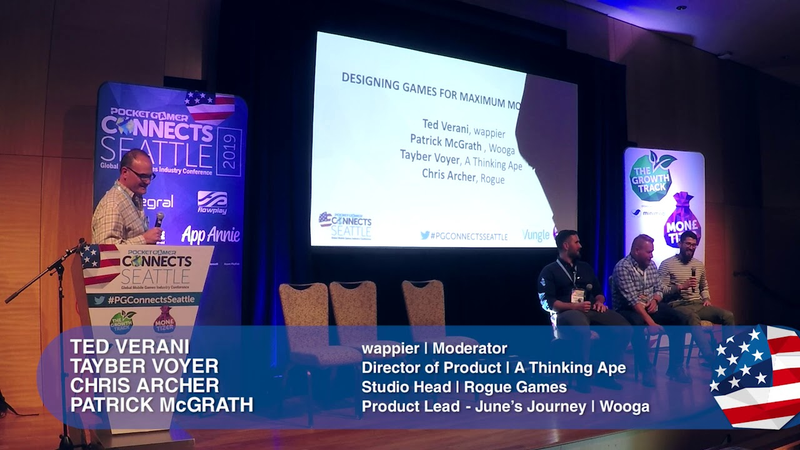
hi my name is Ted Ronnie I am head of business development for WAP here can you are in the designing for mobile games for maximum monetization panel so thank you and we're lucky you have a pretty great group of panelists here you want to introduce yourselves May first or you know I'm Patrick McGrath product lead and I'm Chris Archer I am the studio head at the newest publisher of mobile rogue thanks I'm Tabor Boyer and I'm director of product at thinking ape there we go Ted Ronnie so some response for a business boom for wackier what we do is intelligent revenue management competition what's that we watch you want to help game
developers make more money outside of core gameplay so we start first with understanding player behavior we model that and then we try to influence that behavior by offering loyalty programs to get people to come back more often spend more time in the game or the other half of the Malaysian coin is pricing optimization in order to you know deliver country specific pricing or specific target offers but I'm not here to talk about how to design a loyalty program or even how to you know better tune your prices but rather yeah you want to you need a game before I can even help you you need again that works right and what I mean by works is we need a game that it's fun to play that you're gonna want to download you want to come back to and most important you already want to spend some money in the game probably and at that point we can help you so that's why we're fortunate have a great group of panelists here and what first question I want to ask is because you know to do that's not easy right it takes good deep interesting your player behavior psychology virtual economy tuning and course and user
experience design so but let's think about other people's games first is you know when you think back last year what's a game or maybe a couple of games that you thought that came out that you were blown away by they thought was you know particularly strong in terms of how they approached maybe I am ization or otherwise Asian general so no tabor start with you we can work down sure so the game that surprised me the most both in terms of monetization and design was actually designed home from the crowd start team at clue when you first start playing the game especially as a game designer it doesn't feel like anything that you would expect from a design game and the whole concept of it is tied into like a viral social loop which works really well with the audience that they're trying to target and one of the great things they've done is target and tap into an audience that nobody else was focused on and they've done it really authentically for that audience so you monetize more under the design of trying to make your home the best home and win contests which are
sort of social loops and that's not something that you intuitively think of or I didn't usually thought of as a game designer my first to open the app I thought okay I'm going to be designing my own home and I'm going to show that off and be collecting furniture and that feature is now in the game but it just went in a few months ago and the rest of the game is designed around the social pressure of actually you know building the best room that you showed other people and so kind of turn the whole concept on its head for me when you listen to them that team talk about the game they really emphasize the the lifetime part of the lifetime value which i think is really a refreshing take in that they are focused on giving their player base things to do everyday but not make them feel pressured into spending or even pressured into being on the game all all day long and I think it's kind of the opposite of what you think about when you're trying to target like high lifetime value but for their audience it works really really well and nobody's been able to kind of touch them in that space and I think is just a brilliant strategy I think you know you could probably go deeper and in monetizing some of the you know like super players but like so far I think they're really underrated in what
they've done that's a good one it seems so obvious that yours Chris no no it wasn't actually I what I like premium stuff these days and actually the the game that I was going to talk about was that really surprised me was Pocket City and coming from sort of PC and console that's one of those little games little treasures that you can find that's like built really well from a genre that you don't expect to be able to be transferred on to mobile so they did just a great job on that the other thing is it's kind of out of favor because it's premium and so I wanted to throw in one that was premium that just wasn't what we typically talk about in the freemium a couple of couple come to mind matching to mansion who's taking on some of the the 800-pound gorillas in the industry and I mean they've been working on it for two and a half years but one that just released afk heroes just from a
compulsion loop and high integration of their mechanics it's just for someone who thinks they understand a lot about compulsion loops I still am questioning why I like it so much it's just it's a very simple game and the bread crumbing is is so easy you just kind of follow the little red dot it tells you what you need to tap on next but the way they've integrated all of the essentially session daily weekly all these mechanics gamified the store reinforced the loot box mechanic it's yeah it's just interesting they have a subscription I mean they just like they have everything and so I'm really interested in to see in the future how they personalize this cuz there's a group of us at work playing this and already starting to notice some some differences between us
why matching dimensions just because they took on play rec so just yeah I mean just their event system and really just how through engagement they're able to push monetization and compete because it seems like they'd gone further than from just copying you know - oh sure yeah and then it's not your typical iteration like they innovated and added some components that are just needed in LiveOps that I think play tricks was just over looking cool okay so you know we you guys have all built from design perspective games also led teams into two so you know maybe something a little more tactical of interest to the audience's you know call it the do's and don'ts so like give us that kind of you know I know tips or tactics you know your own kind of personal list of do's and don'ts when you're you know launching kind of starting a new beginning a new game so maybe we can start I'm gonna start Chris you middle and go out I'm gonna be I'm gonna start on the negative I'm gonna say don't don't we have a lot of don't you don't yeah I mean we try everything
but don't do this right don't over value your I ap right we see that wipe over 40 products and I see about half the products that have the IEP set up in a way that over values every single element and we have to kind of chip away chip away chip away what you don't want is people running off right away because they feel like they're getting cheated right so that's a really important thing but as an example I have a game and I'm not going to mention the name of it they did we had a $6.99 deal that was for $1.99 looked like an amazing deal as we took it apart you actually noticed that they'd actually taken out aspects of the $6.99 deal and moved pieces around so the value actually wasn't equal to what they were saying I was so you expected you were getting the $6.99 value for $1.99 but in fact it was more like a two air was more like a $4.99 package or a
399 package and so that's my big don't don't do that okay cuz you're just gonna run them off they're gonna churn right away especially payers right because they're gonna they're smart they're smarter than you think [Music] yeah I would say my don't we're just gonna do some down some dues I would say do over value a retention again that sounds very basic but I think a lot of people over value a monetization versus engagement retention there's many ways you can monetize users but they need to stick around and I think this gets lost a lot I have a lot of friends and and co-workers that have this approach to how do i optimize monetization early in games mid game even different genres but it's always top priority is how do i
monetize them when really in my opinion it should be how do we engage them how do we keep them retained because it's it's longtail and yeah so far especially in the genre I work on junior it had an object game it's a much longer tail and so taking that approach it has benefited us that's for sure and it's specific to make adventure style games like a journey where you just say you're like I mean I'm sure every person here would love to raise retention like I don't think yeah so I think it could approach is to think about how you can create value for your players and not think about how you monetize them but how you create value in your game for the players and then figure out how to get them to pay something for it and ways to do that are going to vary from game to game but there's a lot of things that you can do like making sure that you know people really simple things like can people recover their accounts easily
if they lost them so they have trust in your as a company do they have like long-term value in their in their assets so if they buy something from you and it's not a consumable is it's something that they're going to be able to use later on one way we do this in our games is we have trade mechanics that allow people to trade away items for better items and that gives them a sense of like if I spend something money on something now I'm gonna like retain some that value because I can trade it later so I think if you can find ways to give players that like sense of trust in you as a developer you know we have the advantage of we are some of our games for example have been around for nine or ten years on mobile so we kind of have like a long-established trust with their customer base but that goes a long way for us because they know we're gonna take their best interest at heart so even before you get to pricing is how do you make sure that people actually value the things that you're going to sell them and then you know figuring out ways to that's what I would do and then I don't is don't be afraid to anchor your price is a little bit higher and I don't mean terms of the IEP but thinking about your currency in-game if you
anchor the price of goods in the game fairly high you can then make people feel like they're more valuable when you give them out as rewards and people have a really good way to map that relationship so we might say sell a game for 99 dollars worth of currency when in reality we expect roomy giving them out quite often the value for us is a lot lower the players feel like when they get that item they just got a hundred dollars worth of stuff so it's a good way to make them feel kind of connected to their like a real-world value their thoughts related a yeah I'm just thinking about how that relates to just the fundamental value proposition right like it's make sure they feel the value of whatever you're selling them and yeah it's a that's so fundamental to having a good game and monetizing it I mean it intuitively will we all understand that but definitely have to remind ourselves so you worked around designing games too but it's just a you know Chris we're
talking a little bum the PC you know some things which I'm okay yeah you know but there's on the other PC track out here too so I'm kind of curious maybe some observations you might have in terms of differences of doing a free-to-play design for mobile versus PC Wow let me count the ways you know it's it's if anybody comes into mobile from PC and console and says oh this is just the same right it's they're wrong right it's very different there are some similarities we talked about which were things like you know free-to-play games still have monetization loops and consumption and all of those things but the customer is handled differently the length of the amount of time that we're willing to wait for monetization is different there's very much a pay2win aspect to it right and that's kind of leads into like one of my other don'ts was like don't don't tie monetization or IEP into progress like literally into progress and so things we're seeing things and
it's it sucks because I don't like to play these games and they're fun right inherently fun you actually get to the end of level you can't finish it and they let you buy your way through and skip the level and it's that's counter to what we want we want them to play your game you don't want them to skip play of the game and so if you're finding that they're not getting through that don't just try to make money off of it balance it so that they can get there better give them other opportunities to watch a video or something else to kind of help them on its a trend that I I'm not a big fan of what about you know we're talking about you know we're doing trends too but you know right now the last couple years we've seen you know massive sort of take up with hyper casual games right so the success of in the ketchups and Buddha's know you guys been working with a more IEP oriented games kind of main topic but any you know differences or observations when you're trying to design a game that it's gonna be more add you know driven to you know driving massive organic downloads and you know
more time spinning the game or yeah I mean we rogue is different actually I immediately came in and we had lots of deep conversations about how we advertise or how we monetize people in when we have a few hyper casual games and of course immediately I went let's just slam videos at them and put let's do a let's do it the bar at the bottom and we'll do banner ads and that's just what I assumed was the right thing because that's what I've been trained as a player coming into mobile game development and so and they all said well yes you can do that but that's probably not the best way to do it and so you know more incentivized or incentivize oriented rewards and things things like that is our direction we actually don't serve up full screen ads force full screen ads for example in any of our games it's kind of nice guy will probably don't make as much money on it but but you know people people get deep more deeply deeply engaged in the game and they play longer and then the people
that we're going to monetize and maybe run off are now actually end up being payers so so that's kind of our take is we're trying to go down the path of you know not just forcing everything on players but giving them choices okay well how do you guys know anyone cancer if you know anyone with that that's fine or you know also I'm thinking in terms of when you're a lot of your games are more IEP oriented to and that's your goal but then if you also have pads like when do you turn on ads or do you have any rules in terms of you know how you show ads yeah for us were 80/20 okay um IEP ad obviously um but for us it's so highly integrated it was something that was designed into the game so there's there's basically there's no brained no brainer had that you watch and it essentially helps with progression and rewards so we actually have to introduce that somewhat early just to create that user behavior but as
we're talking earlier the value proposition for that pad it just becomes a no-brainer and this is where we get incredibly high engagement rates into the rest of the game with any of our ad placements so we have three different placements and only one of them is repeatable and the first two at like from a monetary standpoint are probably 50x the the monetization value that we probably get for an ad right like two cents we're giving away a dollar of value but because it's so integrated within the economy and the design of the game it it feels like they're getting a dollar but really it's the the math is there for us to monetize that and have them feel like they're getting it but really it's it's already been kind of priced in okay yeah okay Brenda thanks yeah very similar thoughts the only thing I would add is for us we make sure
that all ads are opt-in know they never interrupt the experience employers have to opt-in and the other thing is we put one of our ads on an appointment of mechanic and we actually saw a boost in retention engagement because people are logging back in to actually get that to get that ad and it kind of gave them like a good reason to log back in so it can actually help your metrics if you make a good experience but again it has to be built into the game from the ground up otherwise if they have a bad experience in your game you might lose them for retention reasons if it's like a pop-up and if your core you know monetization is IEP we just don't want that yeah I worked one company they had a rule and it was after 21 days if you didn't buy IEP blast them or something too but I don't think you guys had anything similar but we but that rogue we have you know over 40 products that we're working on and so there's a breadth of different types of products so we do things very differently but it's case-by-case it really is and we we focus also on sort of rewarded videos mostly but we the the minimum amount of amount of time we wait to even offer ads is that at least one
day the rent we we just we want people to play the game and enjoy it and not you know turn off Wi-Fi and do all the things that you know to try to turn off ads you know we want them to play and get engaged and then we hope to eventually monetize them because they love it I also think offer walls are a little bit underrated to players know that experience and they're willing to do that so it's a good way for people that can't afford to spend money on a game to get a little bit higher rewards it's good to yeah quick question so when you're saying oh one day so it's not based off of progression say I just but I don't know get 5% 10% through the game like what I see an adder is it actually time engaged that's like the basic minimum so I would say the answer to that is different for every single game so some more progression based and some one I was thinking more hyper casual like behind we have games that slam you with ads right away we have like at least a minimum day wait before we start so we can make sense I so you know just
so that they can play it and enjoy it and not worry about having to watch an ad every two minutes okay so we were talking a little about like trans or hyper cash and I get a new trend couple year old you know trend but any other maybe ma ization trends or tactics that you've noticed maybe recently that you kind of that's pretty interesting it's kind of cool with any thoughts for me it's certainly just personalization and I my only worry with personalization is keeping it fair and making sure that there is some self-regulation because you really don't want a some body or country trying to regulate something they don't understand for great example China or Netherlands with loot boxes and Belgian you can throw in there but yeah personalization just getting certain players the things they need or want because I play the game differently than you know tabor or
Ted or Chris like we all have different play styles we have different wants and needs in the same game and it is a good thing to offer that to to that player and have a personalized experience and yeah I just see that as a trend going forward more and more and then also just gamification of stores it's a good question I actually I'm really fond of rentals right or try before you buy it's like a trend that I really like seeing because as a player especially of games that are more mid core and hardcore I'd love to start seeing that more often because I really any games jump out no no not yet and so I'm you know sort of saying it out loud like we should do this more because you see it more in casual and hyper casual games the idea that I can just try something out try skin or you know something light but I'd love to be able to try that new character that has RPG abilities and actually grow them and then lose them as some you know as an
element and then we try them again or continue to rent that that character for video watches or for AI AP or for a smaller amount we actually that's the thing we didn't PC a lot which is we've sold a certain amount of time that you could have with things and then later on you'd want to come back to it and then hose the other thing now I don't know I'll come back I really like narrative games I really think to have like a really interesting value proposition for players and for an entire new audience and the one company I think is doing a really good job combining narrative with idle games is a site games there's Josh right there and they have a game called travel art boys and actually think he worked with Dave role on it a little bit too and they they built this really compelling Idol game narrative game hybrid that is like something I've never seen before that I thought was like so well executed so if you have a chance to check out their Trailer Park Boys game like yeah the combination of those two things is
brilliant shameless plug yeah honestly still work for him last week I was talking someone he kind of tell him what I was doing and it's not free to play it's slimy you know and so how about so any other and what a tactics demonisation tactics me you wish just would go away whenever patrick already kind of mentioned loot boxes know if does that one or not i didn't say i want them to go away no I mean I know I have loot boxes okay don't don't take missions yeah I mean we certainly have like a more of a soft soft loot box system but what I want to go ahead and we were talking amongst ourselves earlier now I'd like I don't want to steal yours but it's just like just this battle past business you can just just give me the subscription
yeah I just I don't have anything I'd specifically point out and say I wish this would go away but what do you don't like about battle paths but well for me personally like I just can't I can't maximize this value so for me it's a like the value proposition is it's idealistic like it's not for me it's not tangible I mean you really have to grind a way to maximize that and I totally get it like it's an engagement based which is good for anyone's kids here addicted to fortnight or many one here yeah but for someone like me that you know just a couple hours a week it's just the value isn't there and if that's the way that the I'm supposed to monetize in the game like because the value is so much greater than buying stuff one-off yeah I
don't know if I'm articulating it the best way you brought it up so I have two problems with battle paths okay so for me the first problem I have with battle passes are it's a really brilliant design if you have a lot of a lot of customers a lot of players and so it works really really really well for for fortnight and but any monetization strategy for for and I would have worked and that kind of brings me to the second problem is that now we all have to do it because all of the new players that are coming up this next generation of players are going to be expecting battle passes and they're gonna be expecting that monetization so it shifted the monetization landscape for every other game going forward and it really is just kind of a subscription and then on the other hand you have Apple and Google who are pushing their own subscription models because they're trying to be more service oriented and battle paths and their subscriptions don't actually like line up so you're caught between like a rock and a hard place trying to like satisfy what these new customers are
gonna want and what the platform's actually want and so I kind of find it like frustrating in that it works it's a fine design but like I'm feel like I'm being forced kind of like adopted and if I get another person sending me one of our designers said this to me we get another person's clash of clans article about bala passes we're just gonna lose it this is another example they put battle passes it's like oh all these 49 players are like recognizer monetization and like they'll play our games and we have so many users it's Kanoa it's a no-brainer it's like when Pokemon go launch and everybody is like oh location-based AR that's just the future and I was like no people who tried to do that for so long Pokemon go was what successful about that game it's the Pokemon so I feel like a little bit like it's one of these trends that is frustrating because it's not that like innovative its but now we all have to do it I feel like that's function K and you know interests will disclosure actually was gonna ask buy gold pass but I guess I won't now you know the cool time what sorry for the for gold for the clash plans gold pass oh yeah yeah yeah yeah we're gonna ask that yeah cuz
there's a trend okay so maybe anybody but - yeah I mean I actually like I actually like I like the trend in mobile subscription trend and mobile because everyone I've run into so far and ever I think people are doing a good job of this the value seems very good right and so if you are playing and you're monetizing already that actually makes a lot of sense I think what we all agree on this panel on is that we don't agree with the kind of socially driven pressure of having to get the battle pass every month whereas they think things like gold paths are actually a little bit more acceptable because you're just getting a great value and it is a way for them to kind of refresh and romana ties and get people re-engaged so I think there's some good there yeah I mean that's what I think it's just such a story for me yeah I mean it's a soft subscription it's just engagement based and yeah play the game I guess longer right yeah for sure but I don't I mean versus the Maples maybe I don't see it in such a dark way I don't think that
it's going to set trends moving forward like now that all the new games are gonna be doing battle pass cuz it's just I mean you pointed it out like it's just not optimal mm-hmm I mean you will see variants of subscriptions though right yeah but we've been doing subscriptions without subscriptions for a long time like it's not even a new concept and so now we're like it's like this whole new thing every battle pass and then apples like we're gonna put subscriptions and if like for tonight had a good subscription model on all the platforms they probably would have just used that I think yeah I was wondering is that any way that maybe is you know can it work for all games because we're the examples right for tonight clash of clans you know it's a pub do you own it - yeah it's like yeah they took it from good but would I guess other games maybe wouldn't really work that a lot but or I mean any competitive game that has like a large audience that they kind of want to monetize the more of their cosmetic things I think it makes sense but for really competitive games I mean we've already been doing that type of subscription for a long time so there's
have to call it Babel Pass now but tapers right I mean you're seeing that trend even in hyper casual and casual you're starting to see games have effectively what is a battle pass I mean the pressure is definitely there I'm sure from from you know heads of companies to say look look at this this way to monetize can we actually work this in and so everything from casual to you'd expect the more make horror and core but you're seeing it all you know across all the products right now okay all right but we keep going deeper and deeper into passes but I think we'll stop it let me also pause here I can ask you to your questions but I would like to at least make sure we have enough opportunity for folks in the audience if you have any questions at all I see it hand right there yep or there's a microphone coming your way but you do see Mikey over you press a voice thank you so with the whole battle pass thing I know like you guys kind of wanna get off of it but wouldn't you want to have
a battle pass just to drive engagement like if you want to because it's almost sometimes like I know I personally bought like a battle pass on an impulse just because I was like you know what this game's kind of fun I bought it and then it's like well now I have it for a month I kind of need to play this game and get the most out of it so yeah while it seems kind of slimy in a way wouldn't you want that to force engagement for longer I mean my worry would be it's like aggregate engagement right so you're kind of forced to maximize it you're forcing players to I forget what the numbers are but within a month put in 250 to 300 hours versus a lot of these other subscriptions that I see that it's coming to the game do this action once per day and then collect your subscription and just do that for 30 days so I mean it really depends on the platform but looking at it the way that fortnight is using it I would worry about at least from a mobile standpoint
like you're gonna burn your players out yeah I don't have a problem with it on the sort of design level it's just more of the like the way the industry moves and the way that people are talking about battle passes is just more frustrating than anything yeah but that's just more of like probably something that says more about me than anything probably no you just don't want to be a huge trend that every yeah I know I think it's a good point which is like you know they that's such a dominant game that has it in there now there's every new players get trained to sort of expect to see that right I'm very good but it definitely fits for specific types of games yeah any other questions in the audience looks like something right there full disclosure I've known Taber for a decade in Canada hey did you notice subscription amounts change when you change the prices in the offer wall a lot are you tracking that separately how do they affect each other I don't know I'll have to look actually I'm not tracking that yeah I don't think
we cannibalized is we haven't seen it cannibalized actually I have to dig deeper I could probably get back to you about it something like that what time I just do you have any good examples that you like of metric movers for retention or engagement you've seen recently I just I mean this is when afk heroes is just full of is tons of mechanics that just loop and I mean you have to yeah daily you know obsession based but really I mean there's the the basics are you make sure that you have some type type of task list challenges whatever make sure those are structured in a way minimum like the easy medium hard complete one within a single session complete the medium within an average day and then have one that that you do
every two to three days the daily login bonus I mean this is every game has this and then also I think for any weekly or long-term kind of compulsion loop and in driver you can use either events or go back to that that's a challenge or task list and have an even bigger prize that that kind of encapsulates into so you have you know complete tasks get points and within a certain threshold you get an even bigger prize so I mean those to me are like really fundamental ones enough you guys have others yeah for me the biggest thing that we see is any kind of group social engagement that you can create especially around chat is probably the most powerful retention builder so you know there's a really great article about actually about fortnight about this about how like the younger
generation is using it as like a second space where they can go and spend time to like talk with their friends and interact and that's something that we've seen in mobile and before on Facebook for a long time is that people like log into a game and the thing that makes them stick around usually as they make friends so if you can like incentivize people to like form social units and like either clans or guilds or clubs and then give them really really good chat tools and really good communication tools and like shared social goals that's gonna amplify your attention by like a massive amount and so yeah if you do chat combined with with grouping yeah someone who worked on PlayStation time it's disappointing that it's taken this long to happen you think you had a question as well how do you see these monetization strategies change Pro region like Western European Chinese Asian audiences because one more effective than the other [Music] I mean certainly I mean you can be far
more aggressive in a pack I think at least yeah almost every genre that I've ever worked in it's just a pack you can be much more aggressive in in Europe I mean that's currently a good portion of our business because we're European we have to be a little softer it's yeah just a softer approach and with us I think personalization for us is a really big thing just giving players what they need because the I mean the consumer knows what the value proposition is they're very mature and and purchase habits at this point like on on mobile and yeah it's just giving their needs filled so I mean that for me that's I think you said a lot there one thing one thing I will highlight is that
different regions have different like spending patterns and very much so when you talk about like LTV ceilings and so we need to design an economy that can actually provide a game plate for all sort of spending patterns and so there's some regions where like the value of a dollar is a lot less than it is here in North America and there's some places where value of a dollar is you know a lot higher kind of thing so you have to be cognizant of that and build if you're doing IP you need to build a really deep economy that can provide for that and give value to like low spending players it's a really good way for them to actually add value to your community as if they on the whole actually contribute to the overall economy and the overall game design and then you know giving those like really really really high spenders like and I mean like there are players that you know will spend hundreds of thousands of dollars on a game and the reason they're doing that is not because your game is predatory it's because $100,000 isn't a lot of money to them and that's how they want to find you know you know happiness so if somebody goes and buys let's say two
Ferraris and they're like some billionaire international billionaire and nobody bats an eye but if they spend half a million dollars on you know a mobile game that's like crazy but for them it's the same sort of like experience so like understanding how different regions will monetize and and creating that economy is like the best thing that you can do and then you know we do some things like around trade where like some like lower tier countries actually get a lot of value by like becoming traders and they find arbitrage within the economy I think it's a really interesting design that most designers are afraid of because they want control over their economy but we kind of lean into it and embrace it and of course there's fraud and stuff like that but it's kind of like a fun game of whack-a-mole but it gives them like if they actually add value to the overall economy because they they are the lubricant that in between trades for other players so yeah it's kind of a roundabout way to answer your question of it was that that work I was gonna write a little bit about actually if you don't mind it's just one of the things that I I notice there's a lot more front-loading particularly in the Korean
market but in the Asian market in general which I suspect is a symptom of the kind of more pay2win mindset is is that still the case that's what I mean I'm seeing that for sure I mean almost every game they're seeing that you know I'm now you're holding it for me I mean I don't have much to say about that except for the fact that you that's what we're seeing so I mean I'm it must be that way yeah definitely and like trying to find ways to work with people from local markets especially when even when you're localizing the game is really important to try to figure out like where do they monetize but we first need to have that that game that's really great yeah yeah yeah and I would say like with in Korean Japan is just so socially accepted that giving someone the ability to to buy the things that their friends already have and so they can go peacock I mean that that's really I had a follow-up on subscription models
of course we got the fortnight you know battle past problem World of Warcraft is having a lot of issues because you know players don't like paying for a subscription when they don't have time to play like you were talking about going a little retro when Sony Online Entertainment realized that people were quitting EverQuest for the same reasons not having the time to play and they decided they were gonna abandon the game it was picked up by daybreak and what daybreak did with their subscription models as they went to the you know gold tier platinum tier the situation but part of what they did to revitalize was along with monthly subscriptions were in-game items that came to you no matter what whether you logged in or not so even if you didn't have time to play you were still accumulating rewards in game and that was what caused the further engagement whenever you got around to playing you had things waiting for you that that added value that wanted you to go do you guys have any idea why no one else is implementing this model
I mean a lot of mobile games will kind of do that inherently with timers and stuff so like if you have like actively logged into the game and you're getting rewards delivered based on you know when all that stuff is completing so we try to build that in those mechanics into it but yeah I mean I think that's a good strategy I think more people should probably think about doing that you mentioned your favorite needle-movers what would you say is the biggest needle not mover it's the biggest flops that you've ever had in terms of trying to raise monetization or engagement or something that you know just doesn't move the needle but for some reason lots of games are doing it I mean I feel that way about walking bonuses actually I feel that we log in bonuses I think that they're kind of like the sort of universally everyone's like put a login bonus and then you'll have better retention but they're just everybody has them and they're just something that you
kind of click through so I always feel like those don't actually raise the metrics even though they seem like they should expected it's not really but yeah I don't have anything that is a not needle mover without going into recent AP tests or headaches I think one thing people do is focus on the top of their funnel too much so I think Andrew Chen has a really good article growth article about how I think he calls it the law of intent and that when somebody first downloads your game there's some subset of users that gonna make it through tutorial they're gonna make it deeply into the game because there's a product market fit that they already understand and are going to enjoy and if you focus a lot on like trying to create more value for like people that first install your game then you have this idea that like oh if we can like make that part of the funnel better that's gonna translate all the way down into our like terminal retention and long-term retention that's
not necessarily true and so you can actually spend a lot of cycles focusing on like early parts of your game when you should be focusing more on like the middle part of it where you're like really convincing those players that they should stick around that had like strong intent in the first place so that's like a common mistake that I've made like you know a hundred times but it just looks so enticing now looks so good exactly other questions so you know guess all yours will mention two subscriptions at one point right so if my obviously the beta nonsense from Apple and you know google study I may have any predictions you know it's a little early but predictions you guys have or thought something yeah I mean a big open end question yeah that really is I mean I was a GDC and I was a little worried like oh man okay this cross-platform stuff like playing console games on mobile went to the booth tried to find out more information
there's not really much so I think at this point can't really I'm not gonna lose sleep over it it's a I think there's it's it's a bit too much height for something that that just playing the demo but it just it didn't really like it's still the the form factor of playing Assassin's Creed on my phone is not really what I'm looking for so I'm I can see the potential for disruption but I don't think that this is something that we need to worry about too much with the caveat just too much in the next couple years yeah I mean I I love any new model that we can add to it right and so if they're adding a subscription model and we can include games you know for ourselves you know from ourselves or products that don't really fit a category or aren't freemium things like that this is another opportunity and it you know we've been saying that premium has been dead for years and years and it in fact isn't
dead it's just been taken over by freemium and so that maybe this is a return to games like that and I actually enjoy those a lot and that's what I played on mobile for years and years yeah I mean I like the the you know fifteen percent versus thirty percent or whatever that subscription difference is that sounds pretty good to me so I mean we already have been doing subscription Mechanics for a long time so like just formalizing that and having the tools to formalize it is great and is a great retention booster so it's a no brainer I think they should have done it years ago but remember that Wireless carries a long time in subscriptions as early games for life oh yeah I was just gonna check in again on that one I think you're right about the subscription stuff they worry I have is which takes me back to when the world world Warcraft guys were doing a talk in 2011 and they were complaining because they had the subscription of 12 million people but they could never build anything new
because it's all-you-can-eat and every time I see anyone talking about subscription you guys are the exception most people I have talked to me about subscription go yeah we're gonna go at $9.99 it's everything you eat and that is death for a game development because essentially we need to make sure that we've always got an ability to upsell if we lose that ability then all of the massive amazing power of us delivering fantastic content with free to play gets thrown down the toilet so whatever you do your Scripture subscription is great but let's make sure we keep some upsell last question before we move on anyone want to volunteer or are we all done we've monetized out I think so on that note Ted thanks very much sure endeavour all right thank you thanks guys [Music]
Summary
Successful mobile game monetization requires a strategic shift away from aggressive, progress-blocking tactics toward a model rooted in long-term player retention and genuine value perception. Sustainable revenue generation is best achieved by prioritizing high-quality gameplay and social engagement, such as guilds and robust communication tools, which foster a dedicated player base. By focusing on mid-game engagement rather than solely optimizing the top of the funnel, developers can build more resilient ecosystems that encourage both spending and active participation.
Designers should avoid deceptive pricing or mechanics that allow players to pay to bypass content, as these practices ultimately erode user trust and retention. Instead, effective economies utilize opt-in, value-driven rewards like rewarded advertisements and trade mechanics that feel like natural extensions of the gameplay experience. When in-game currency and rewards are anchored to meaningful progression, players are more likely to perceive value in their purchases, leading to higher lifetime value without the need for coercive monetization strategies.
The industry is currently navigating a transition toward battle passes and subscription models, though these formats are not universally applicable. While popular in major titles, forcing these structures into ill-suited genres can be counterproductive. Furthermore, subscription models should avoid flat-fee, all-you-can-eat structures, which artificially cap revenue potential. To maximize financial viability, developers must maintain the flexibility to upsell additional content beyond the initial subscription. Ultimately, the most successful games are those that balance diverse spending patterns across global markets, ensuring that both high-value spenders and non-paying participants contribute to a healthy, sustainable game economy.