1 free read left. Create a free account for unlimited reading + AI research.
Create free accountWhitepaper modl.ai
1 free read left. Create a free account for unlimited reading + AI research.
Create free accountWhitepapermodl.ai
Procedural content generation in the gaming industry is evolving through a hybrid approach that integrates machine learning with structural partitioning to create versatile level designs. By combining Variational Autoencoders with Example-Driven Binary Space Partitioning, developers can generate abstract structural sketches that are subsequently populated with domain-specific details. This methodology allows for the synthesis of levels across seven distinct platforming games, enabling the reproduction of established design patterns or the creation of entirely novel environments that deviate from original training data.
The effectiveness of this pipeline relies heavily on the selection of training domains, which dictate the balance between structural integrity and creative novelty. Domains characterized by high proportions of wildcard tiles offer greater flexibility in generation, whereas non-wildcard domains excel at replicating specific stylistic nuances. While current attempts to implement conditional control for cross-domain generation show limited success, the integration of latent space modeling with spatial partitioning provides a robust framework for managing complex level layouts.
Ultimately, this approach demonstrates that procedural generation can be effectively steered by curating input data to meet specific design goals. Although the current reliance on Variational Autoencoders for sketch generation requires further refinement to better approximate individual domain distributions, the hybrid pipeline establishes a viable path for automated level design. By grounding these techniques in established research regarding evolutionary algorithms and generative modeling, the industry can move toward more sophisticated, example-driven tools that reduce manual labor while maintaining high standards for structural coherence in platforming titles.
Northeastern University · 2025
Northeastern University · 2025
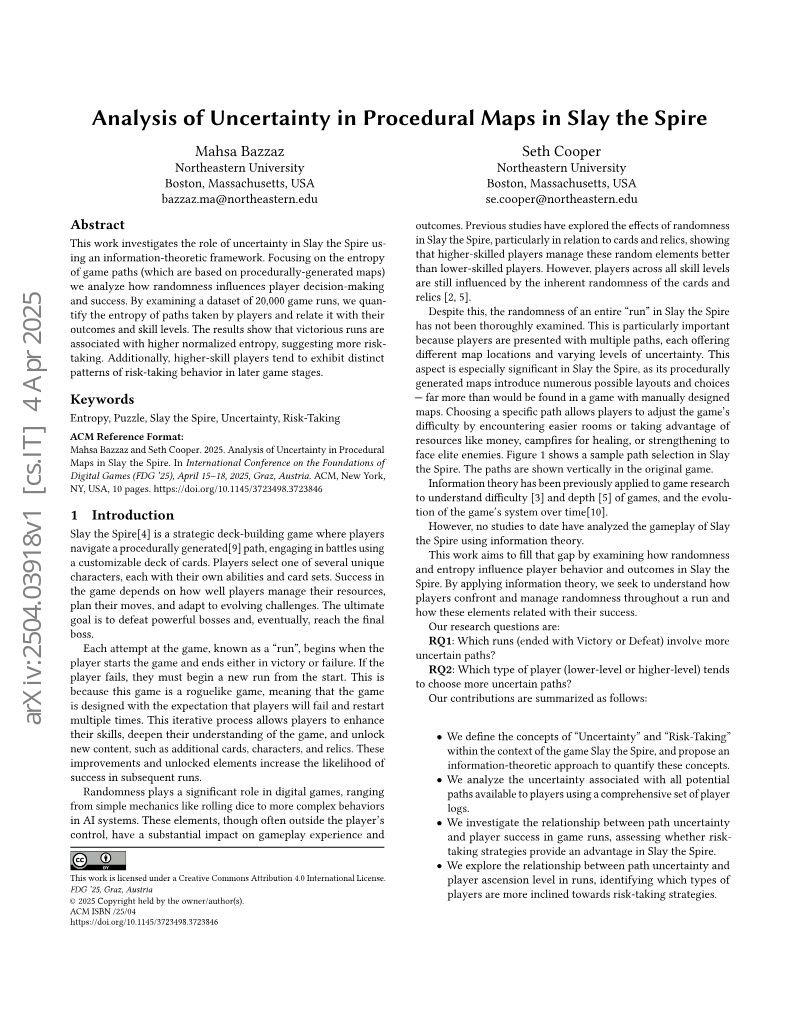
Northeastern University · 2025
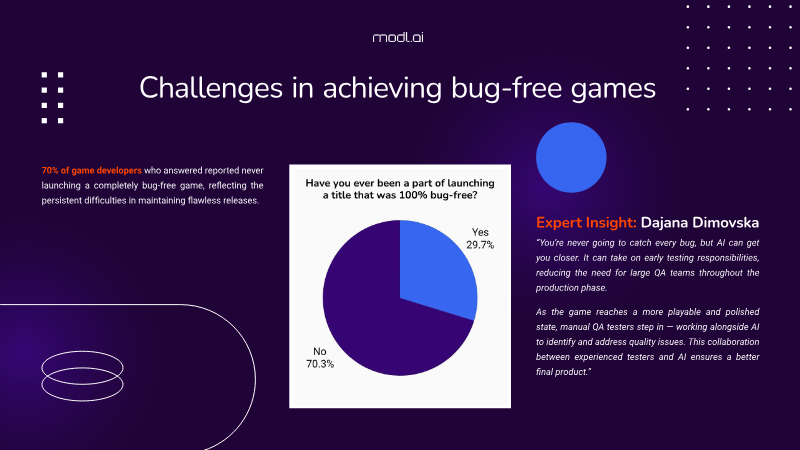

modl.ai · 2025
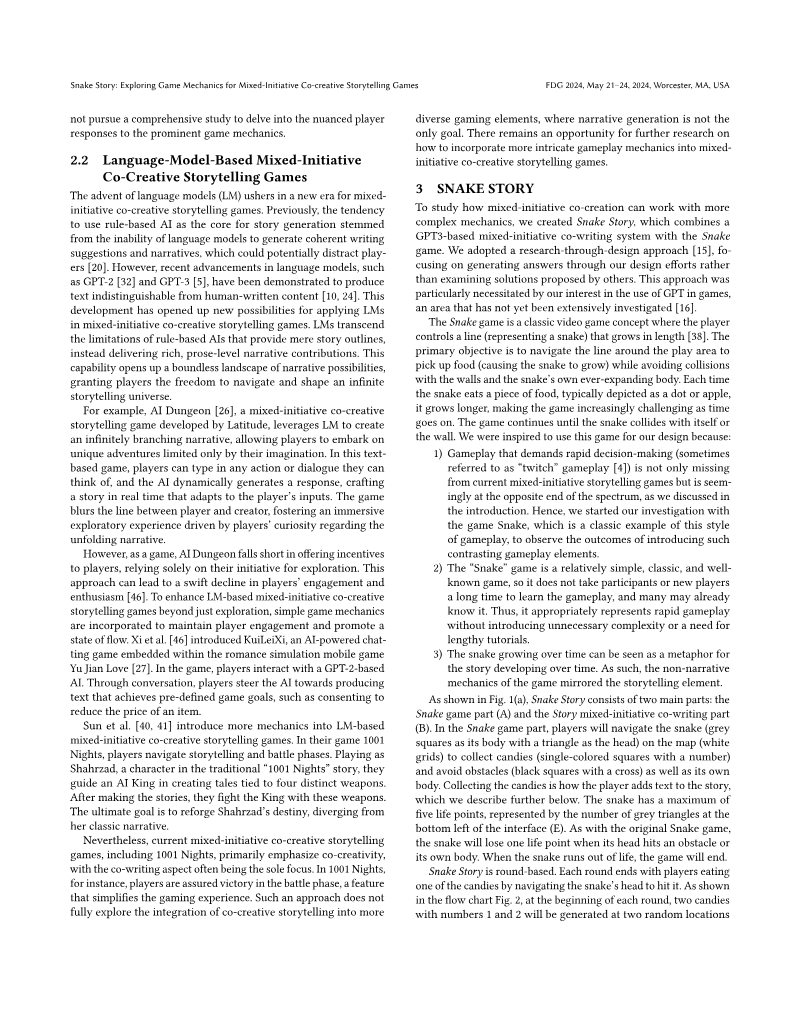
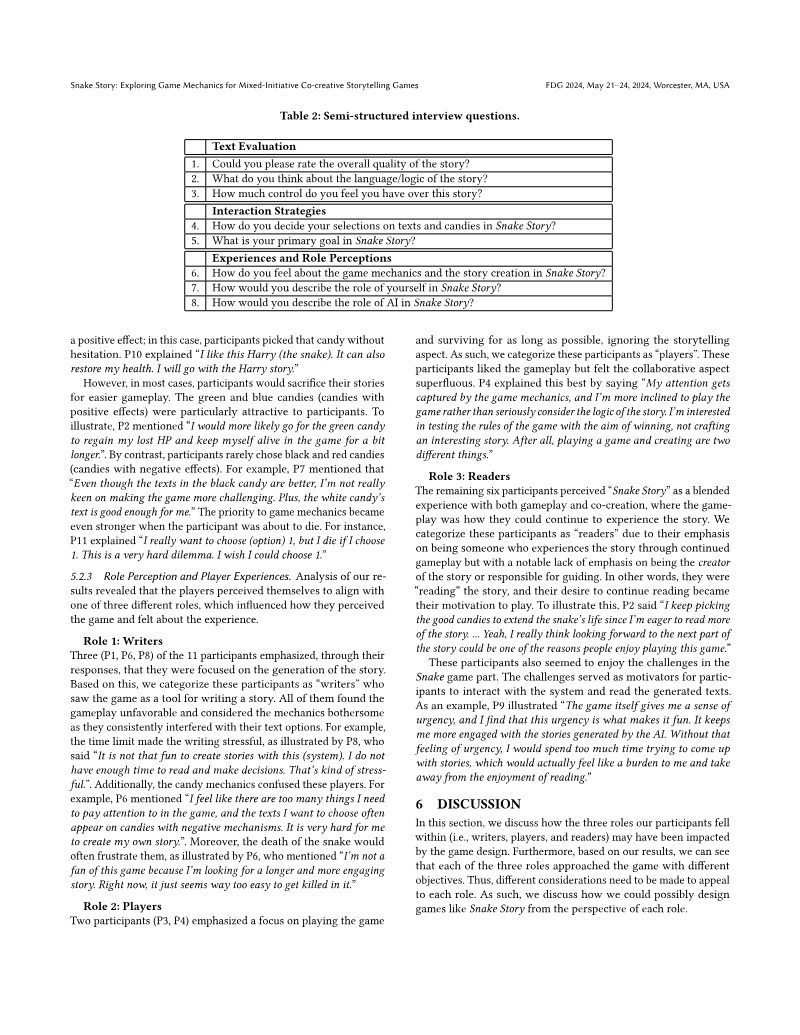
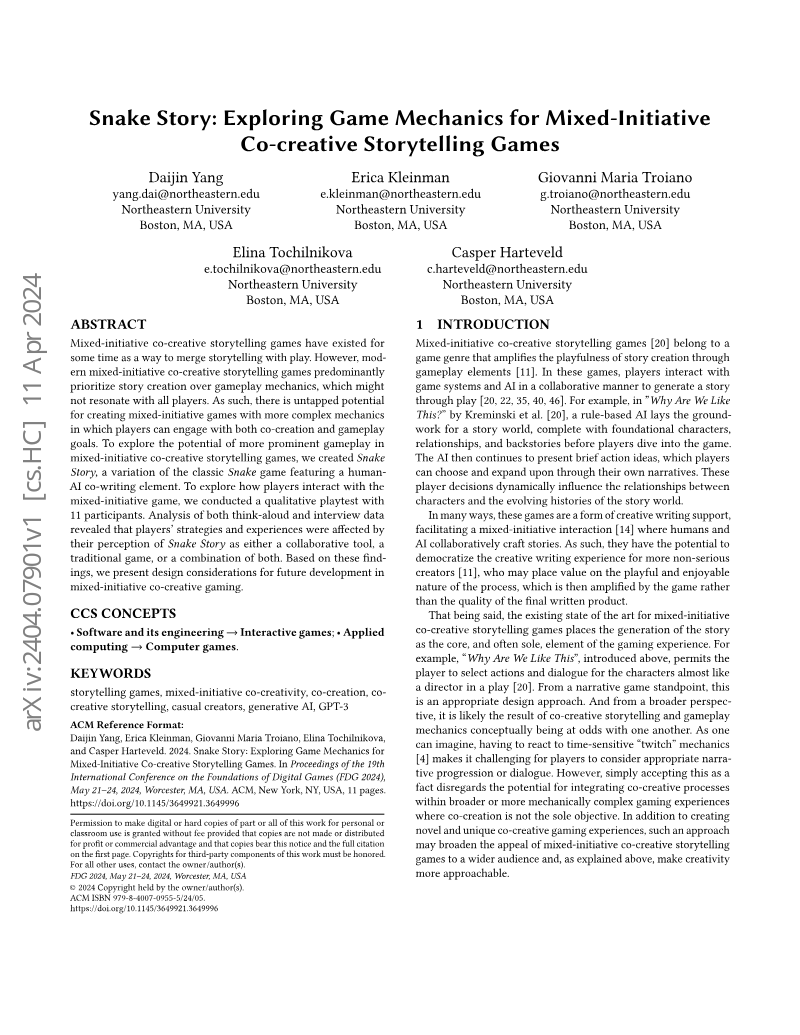
Northeastern University · 2024
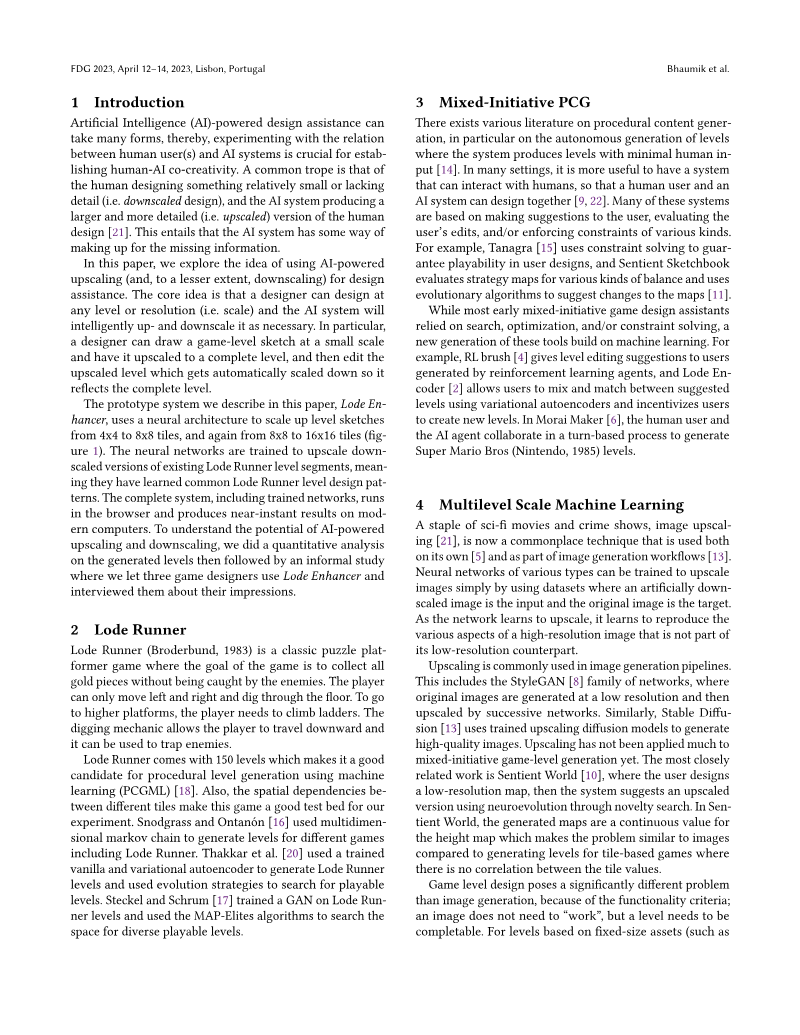
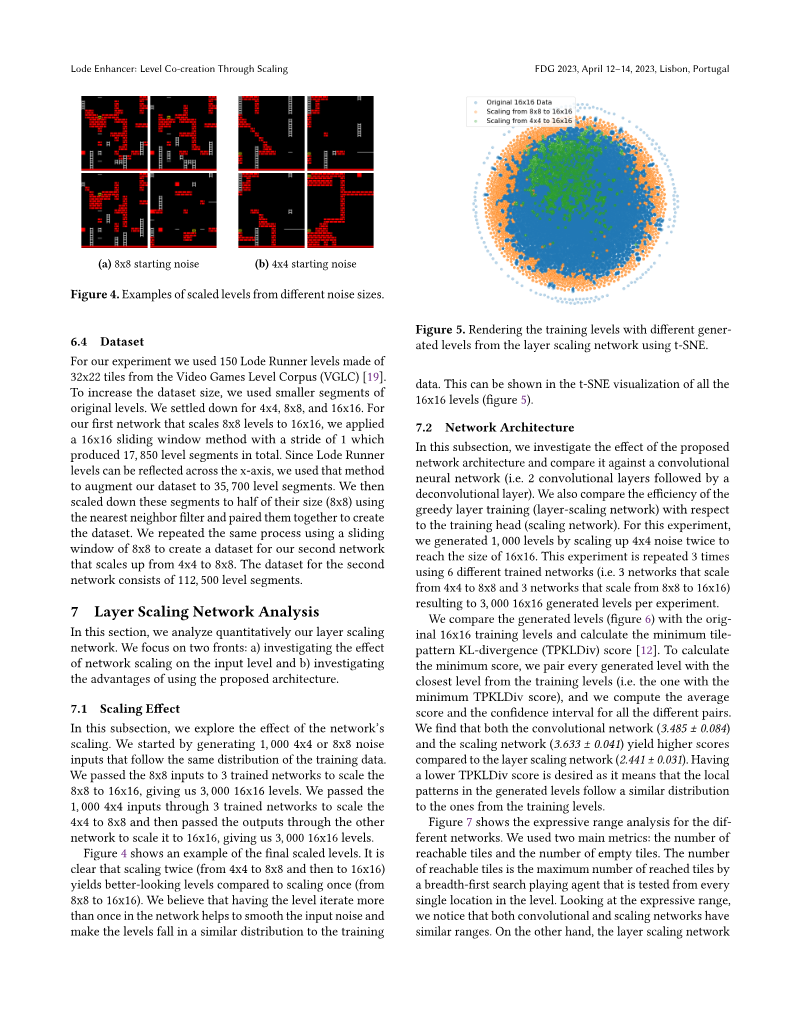
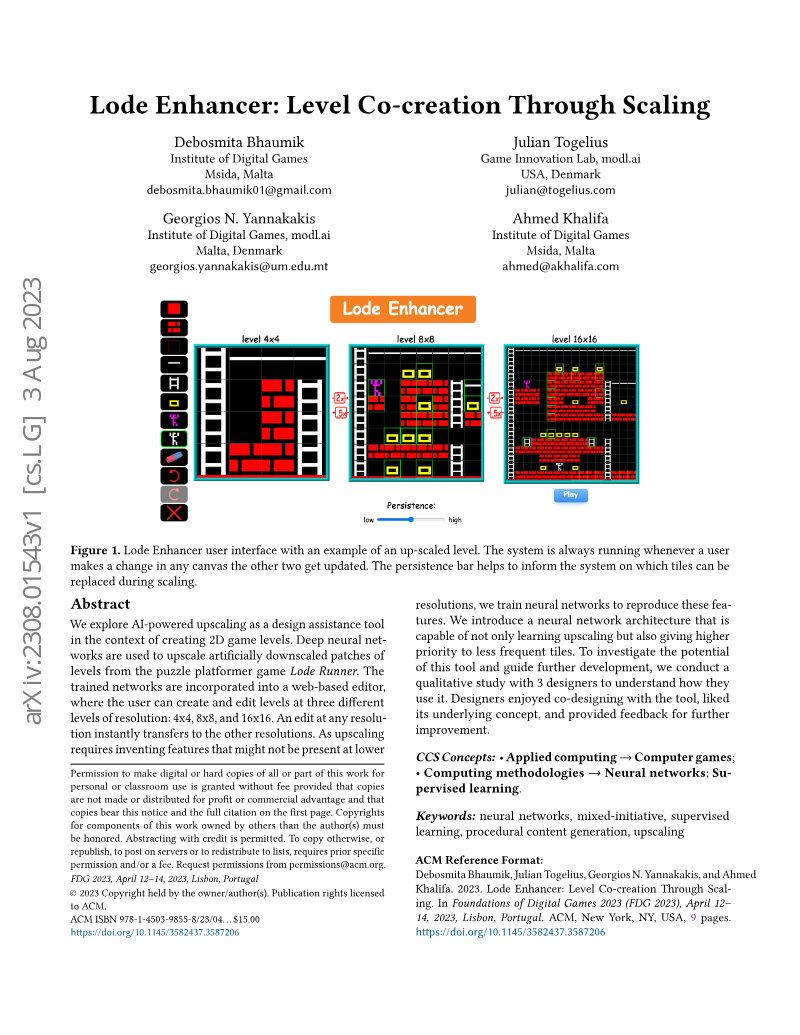
Institute of Digital Games · 2023
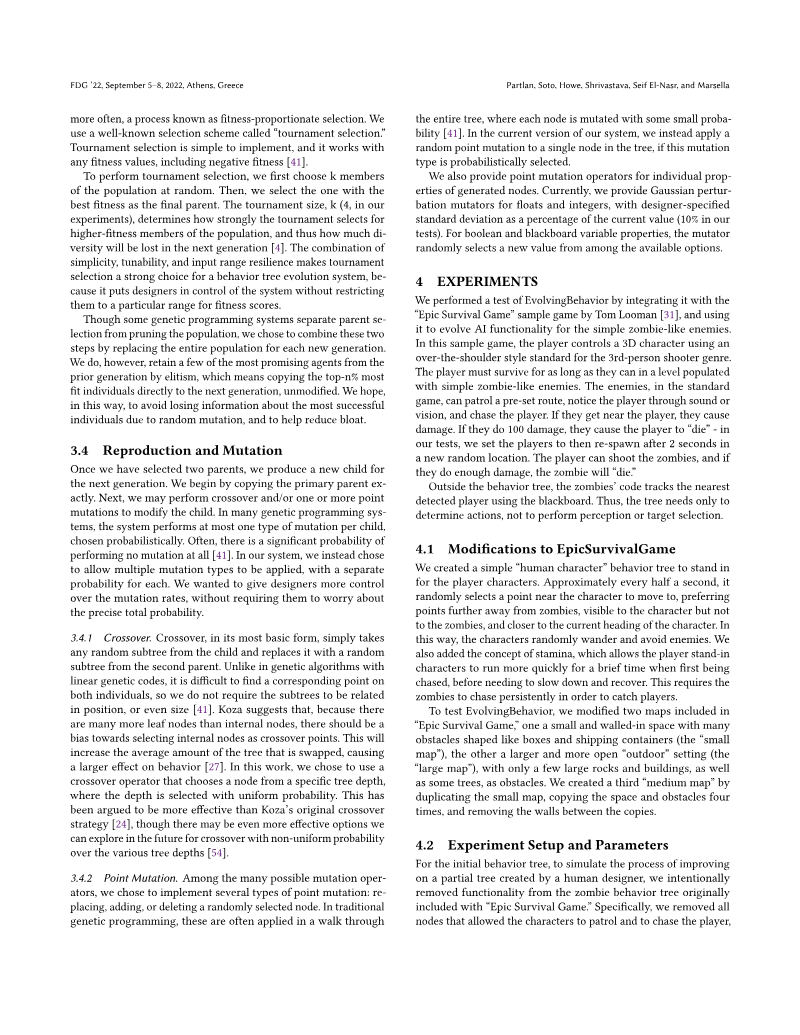
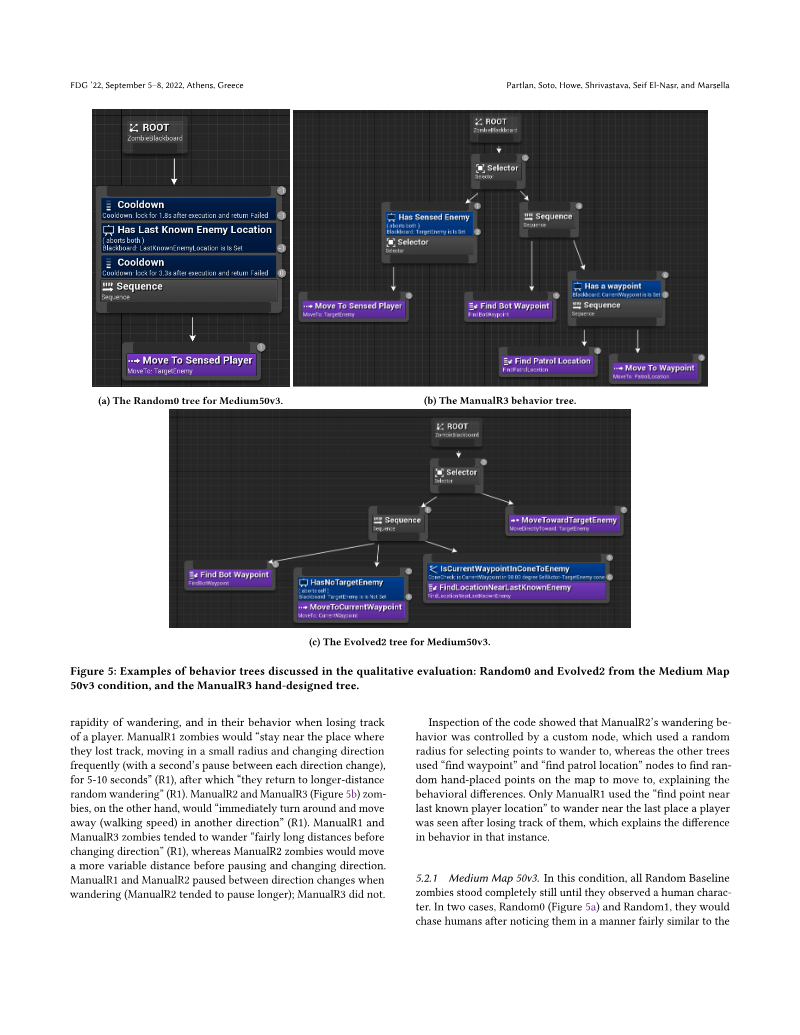
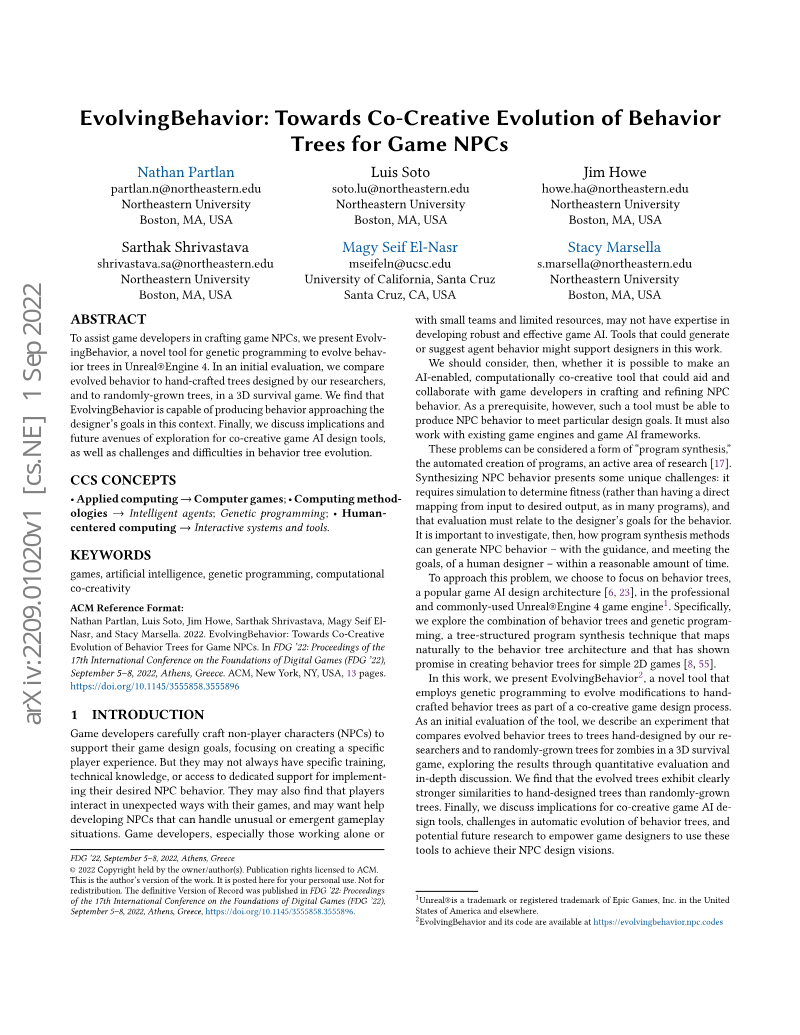
Northeastern University · 2022
Northeastern University · 2021
Northeastern University · 2021
New York University · 2020
modl.ai · 2020
Drexel University · 2020

PocketGamer.biz · 2026