1 free read left. Create a free account for unlimited reading + AI research.
Create free accountWhitepaper DiGRA
1 free read left. Create a free account for unlimited reading + AI research.
Create free accountWhitepaperDiGRA
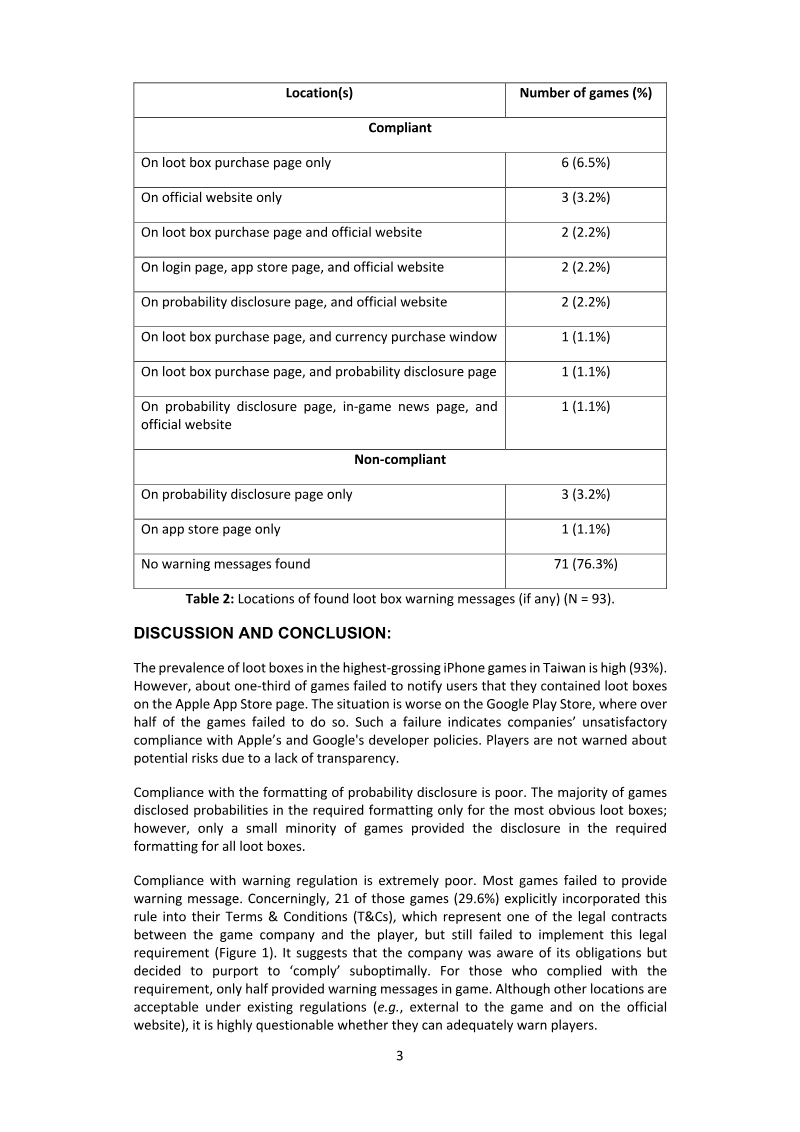
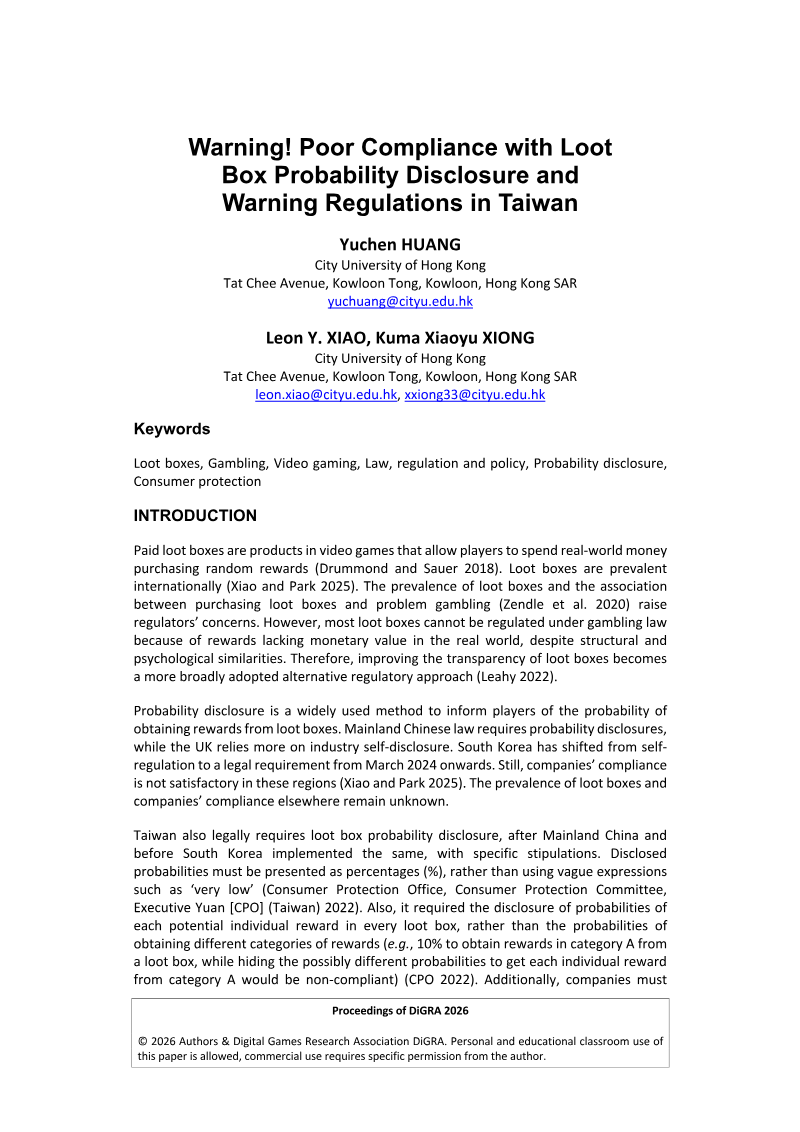
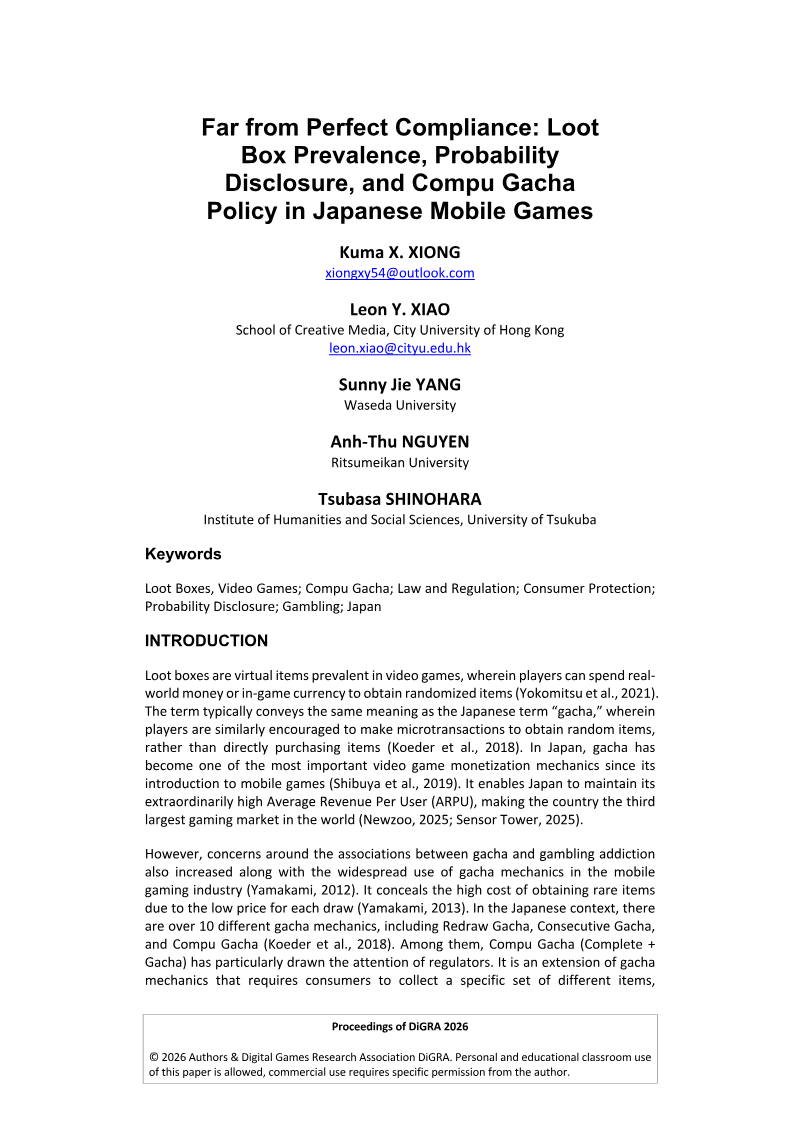
This document examines whether mobile game publishers comply with Taiwan's loot box regulations, which took effect in 2023 and require that drop probabilities be disclosed as percentages and that a standard warning message accompany chance-based products. Its central concern is the gap between legislation and practice: Taiwan became only the second jurisdiction after Mainland China to place such a probability disclosure obligation on an official legislative footing, yet the regulation lacks specific implementation instructions and an official translation, and its warning-message requirement is unusual. The authors frame the study as a test of whether these rules are being followed in practice, with findings intended to inform policy in Taiwan and beyond.
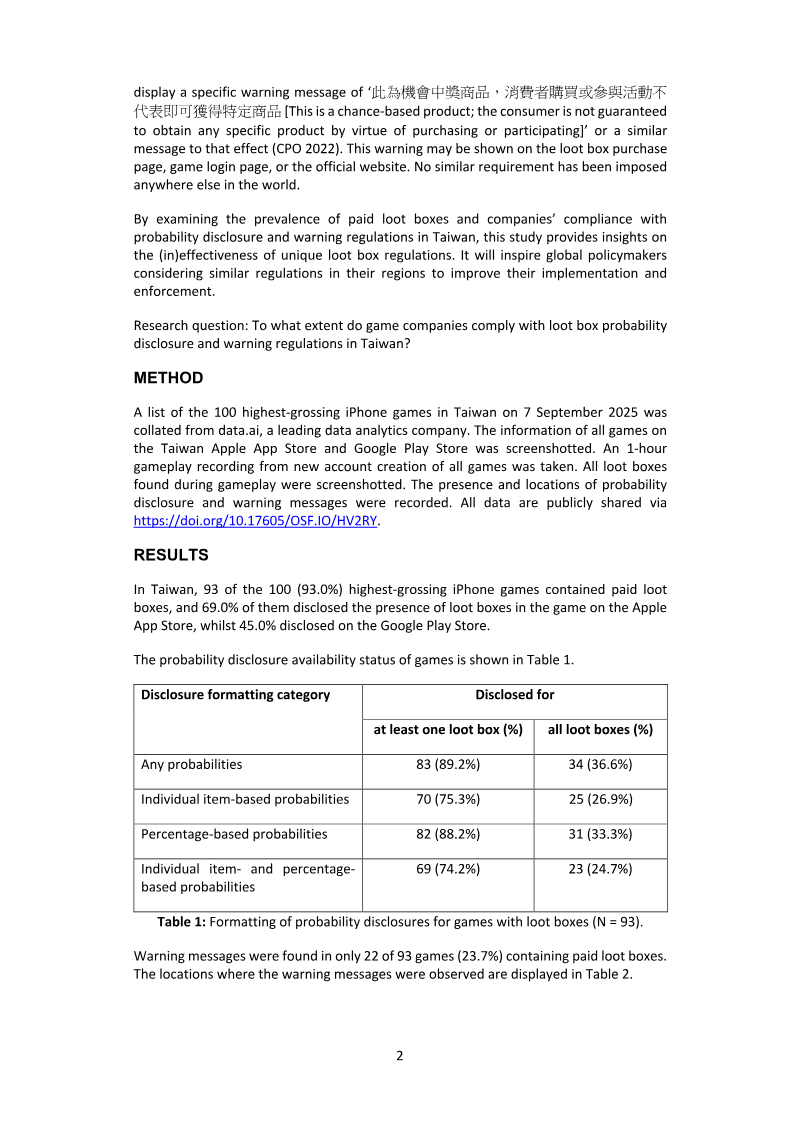
The study is at the proposal or extended-abstract stage, so it reports no completed empirical results. Its planned methodology replicates prior peer-reviewed research on Chinese mobile games. The authors will examine the 100 highest-grossing iPhone games in Taiwan, playing each for up to one hour, to establish the prevalence rate of loot boxes and to assess compliance with both the probability disclosure and warning message requirements. The background material provides context for this effort: loot boxes are widely implemented, particularly on mobile platforms where more than 90 percent of the highest-grossing games in East Asian regions reportedly sell them, and spending on them has been linked to problem gambling symptoms in prior survey research.
The document's prior-research context suggests what the authors anticipate. Earlier work in Mainland China found that although the most popular games disclosed probabilities for their most important loot boxes, those disclosures were often hard to locate, sometimes requiring players to follow multiple hyperlinks before reaching them. The authors therefore treat the existence of a disclosure requirement as distinct from its effective implementation. The Taiwanese study is designed to determine whether that pattern holds under a different regulatory regime, with the regulation's ambiguities and additional warning requirement potentially affecting outcomes.

DiGRA · 2026

DiGRA · 2026



DiGRA · 2026



DiGRA · 2026



DiGRA · 2026



DiGRA · 2026



DiGRA · 2026



DiGRA · 2026

DiGRA · 2026



DiGRA · 2026



DiGRA · 2026

DiGRA · 2026
DiGRA · 2026