Annual Report of the German Games Industry 2024
41 pages~104 min full read
Key insights
6 slides
Key number
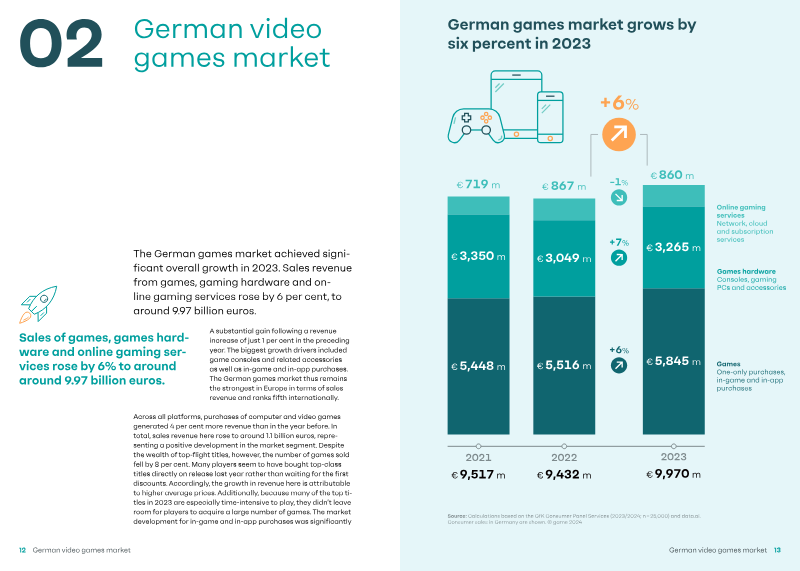
German games revenue reached 9.97 billion euros in 2023.
The industry generated 9.97 billion euros in revenue in 2023. This represented a 6 percent year-over-year increase.
What changed
Company growth slowed despite a 52 percent increase since 2020.
The number of development and publishing companies has grown by 52 percent since 2020. The sector is experiencing a slowdown in new company formations and employment growth.
Page 14 of the report202093
202178
202260
202333
Funding model
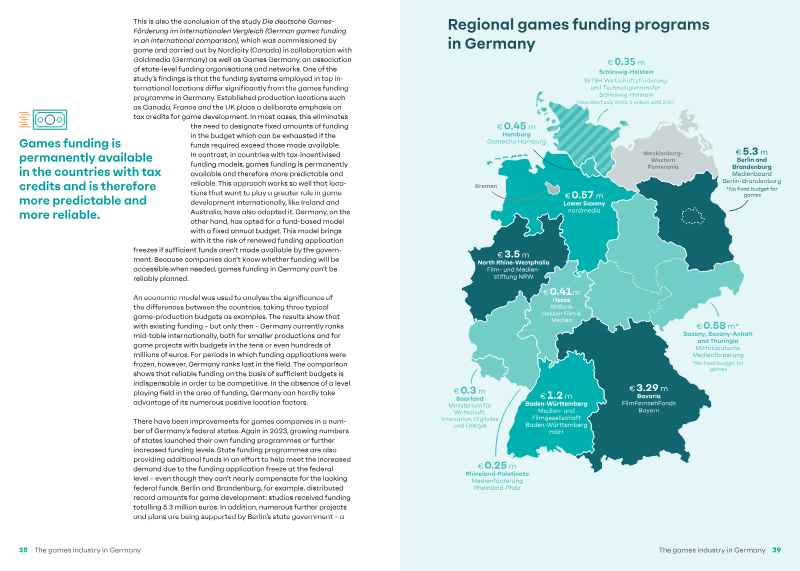
Stakeholders advocate a shift to a hybrid, tax-based funding model.
Industry stakeholders are advocating for a shift from fixed-budget funding to a hybrid, tax-based model. This aims to remain competitive against international rivals.
2024 priorities
Strategic priorities include workforce development and digital infrastructure.
Strategic priorities for 2024 include the cultivation of a specialized workforce. They also include the integration of gaming into educational frameworks and the expansion of digital infrastructure.
Page 22 of the report- 01Workforce developmentCultivation of a specialized workforce
- 02EducationIntegration of gaming into educational frameworks
- 03InfrastructureExpansion of digital infrastructure
Global reach
Germany remains the largest games market in Europe.
Germany remains the largest games market in Europe. Its global influence is bolstered by the international expansion of the gamescom event into markets like Singapore and Brazil.
Responsibility
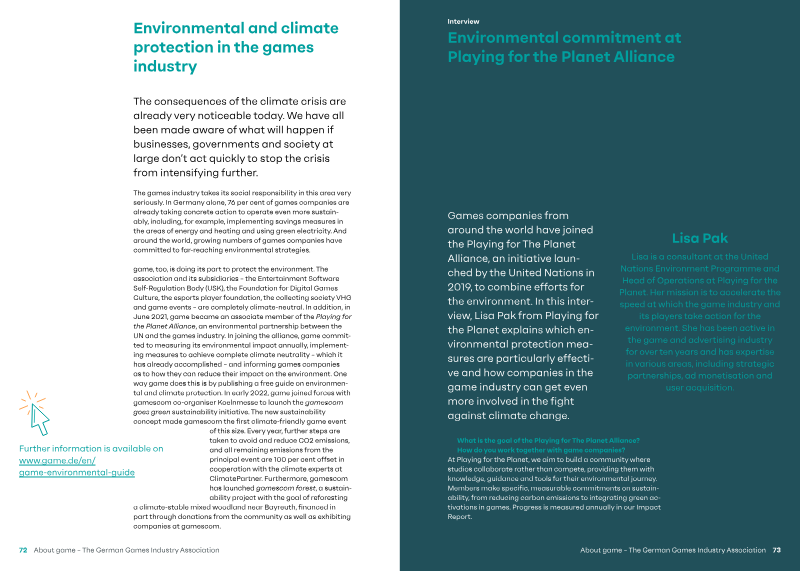
A majority of companies implement sustainability measures.
The industry is prioritizing corporate social responsibility. A majority of companies are implementing sustainability measures like green energy transitions and initiatives to improve diversity and combat toxicity.
1 / 6
Ask AI about this report