1 free read left. Create a free account for unlimited reading + AI research.
Create free accountArticle Board Game Studies Journal
1 free read left. Create a free account for unlimited reading + AI research.
Create free accountArticleBoard Game Studies Journal
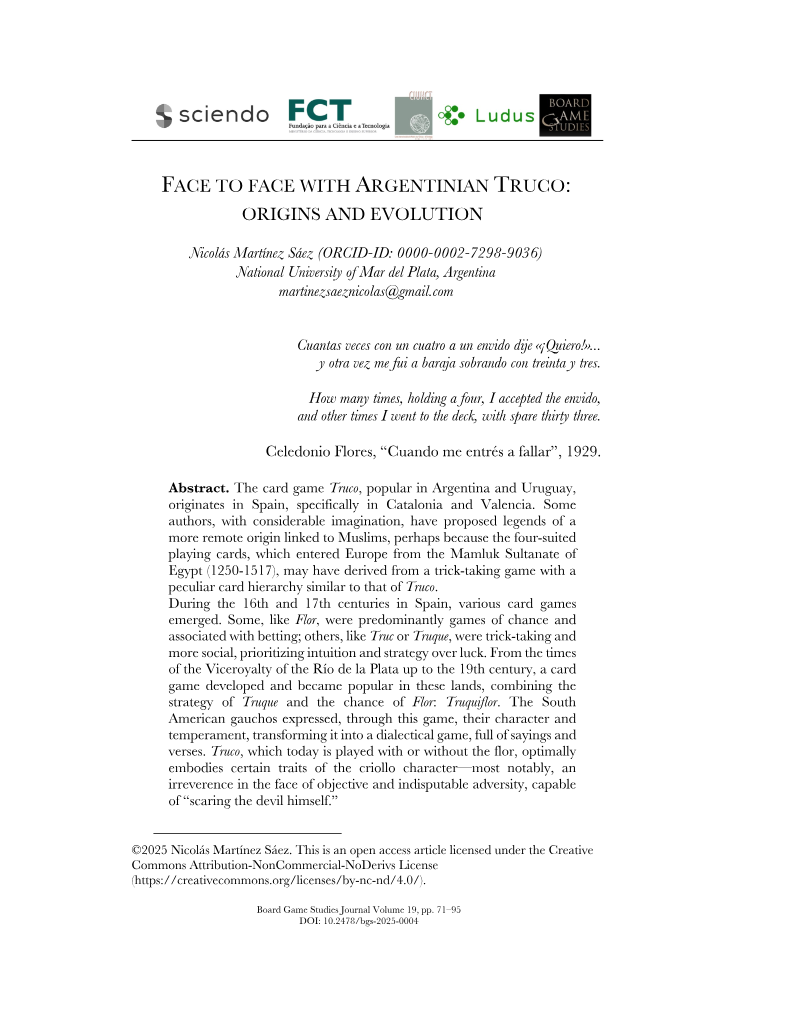
Chernevski's brief note in the Shakhmatny Listok covers the 'Bukharan game' and the 'Persian game with a queen'. Samarkand was then part of Russian Turkestan, now Uzbekistan.
Georgi Markov's article examines a brief 1877 note by A. Chernevski, published in the Shakhmatny Listok, which describes two chess variants played in Samarkand, then part of Russian Turkestan and now in Uzbekistan. The first, the "Bukharan game," is a lightly modified form of shatranj resembling Rumi chess as described by Murray, with a queen that must make an obligatory first move to d3, no castling, and bishops that leap over intervening squares. The second, the "Persian game with a queen," shows features that differ from the 1846 Chess Player's Chronicle account of Persian chess, including an obligatory opening double move of the queen's pawns and a castling procedure requiring three moves that includes a king's knight-like leap. Two recorded games by native players support the second description, and the article reproduces both.
The author argues that Chernevski's information has been largely lost to later scholarship. Murray's influential History of Chess cites Savenkov's 1905 work, which in turn refers to Chernevski, but Murray misread the sources, apparently interpreting the two Samarkand variants as orthochess and shatranj. Markov also identifies a misreading of Savenkov's description of the queen's movement in Tuvan chess, which Murray treated as a discrepancy with the recorded game that the rules do not actually contain. The article additionally catalogues errors in other nineteenth- and twentieth-century accounts, including Tressau, Verney, and Pritchard, many involving the opening moves and the Persian game described by Cox.
Markov concludes that Chernevski's report, though brief, documents otherwise unattested regional variants with long-range queen and bishop movement, and that its importance has been obscured by secondary-source errors. The article provides a comparative table of rules for the two Persian chess accounts and an appendix with full game scores, offering a corrective reassessment of the Central Asian chess record.
Board Game Studies Journal · 2025
Board Game Studies Journal · 2025
Board Game Studies Journal · 2025
Board Game Studies Journal · 2025
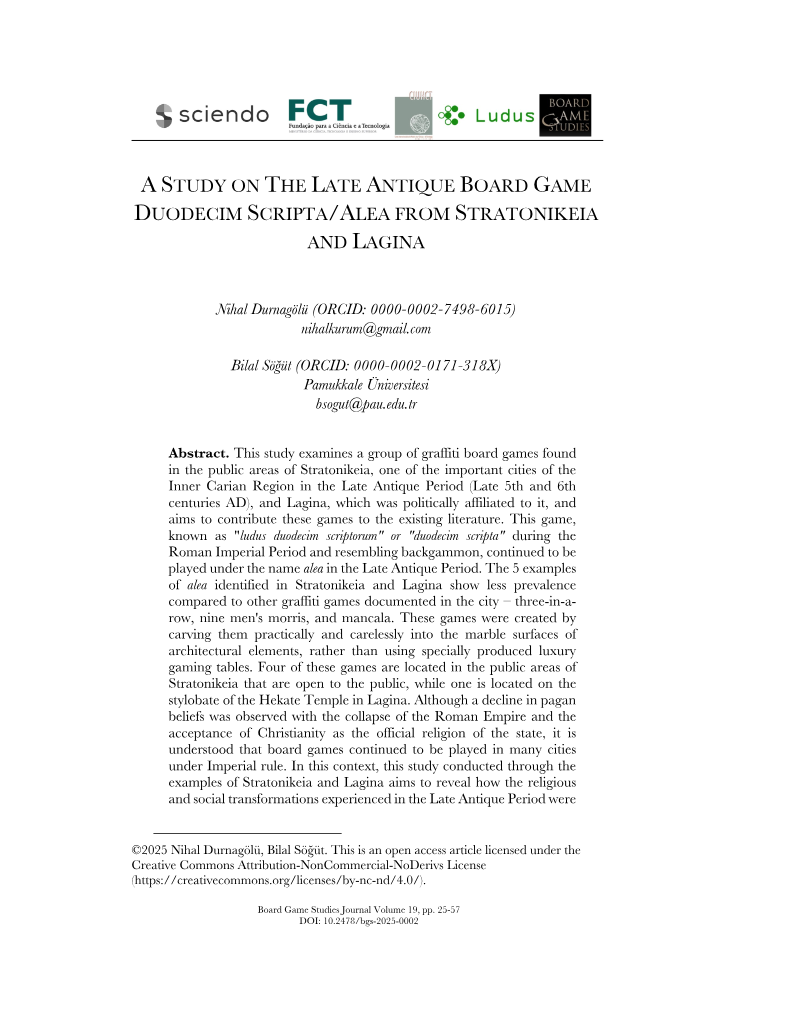
Board Game Studies Journal · 2025
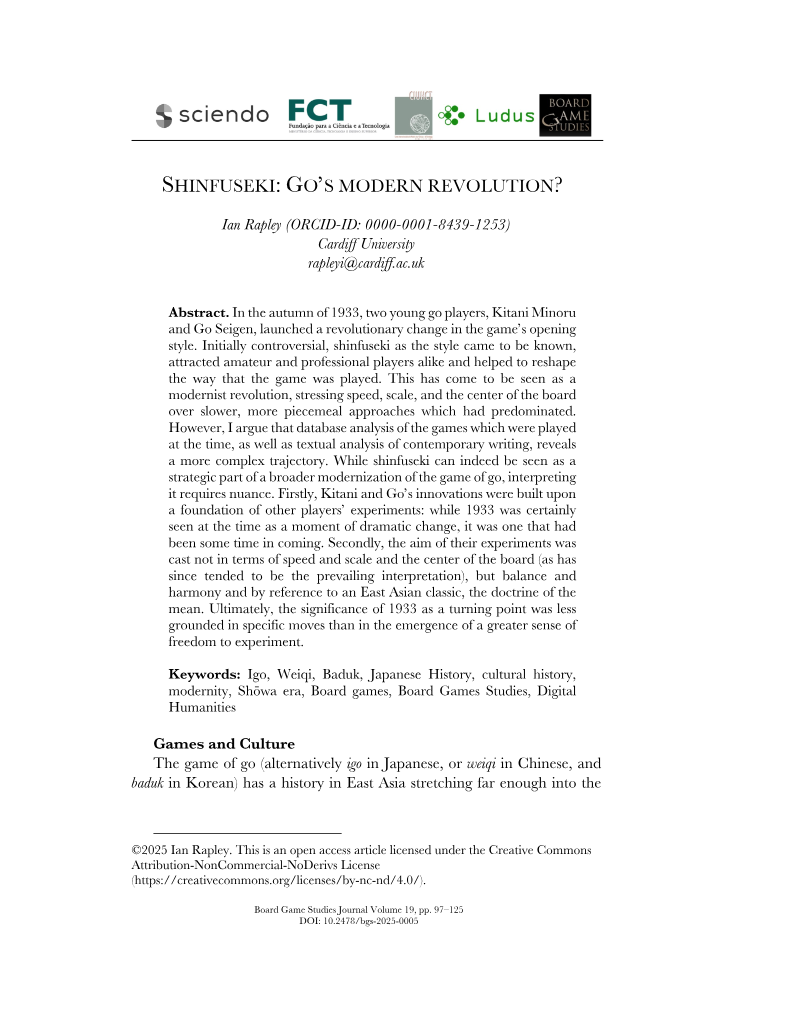
Board Game Studies Journal · 2025
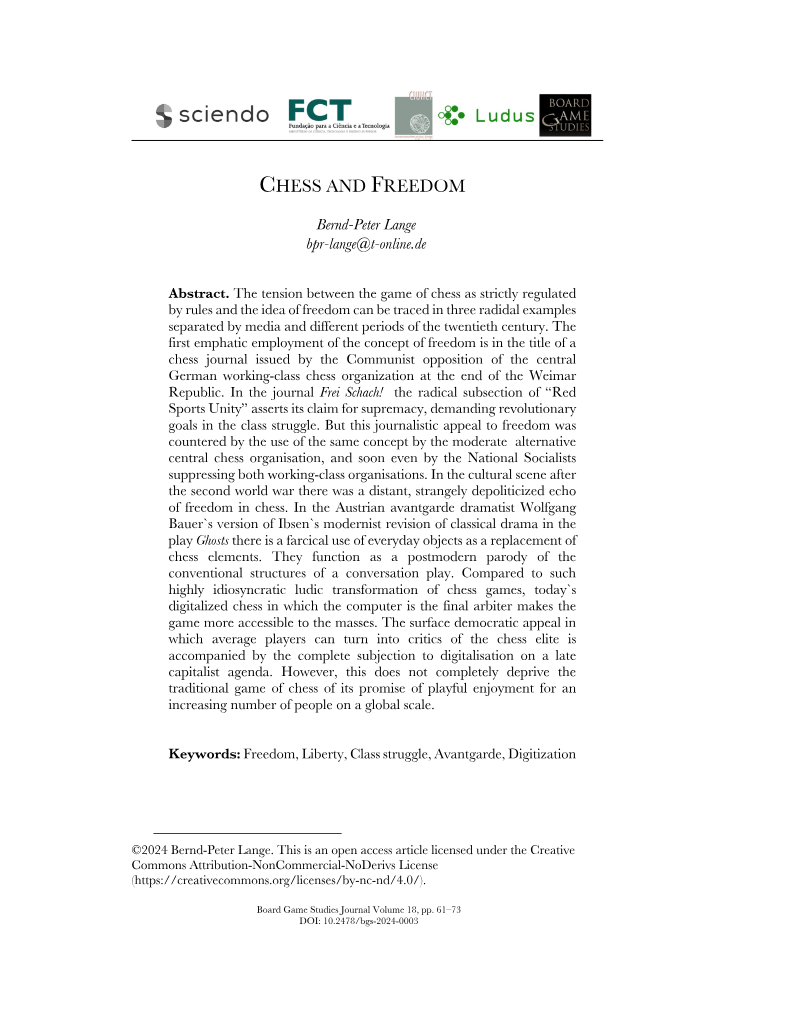
Board Game Studies Journal · 2024
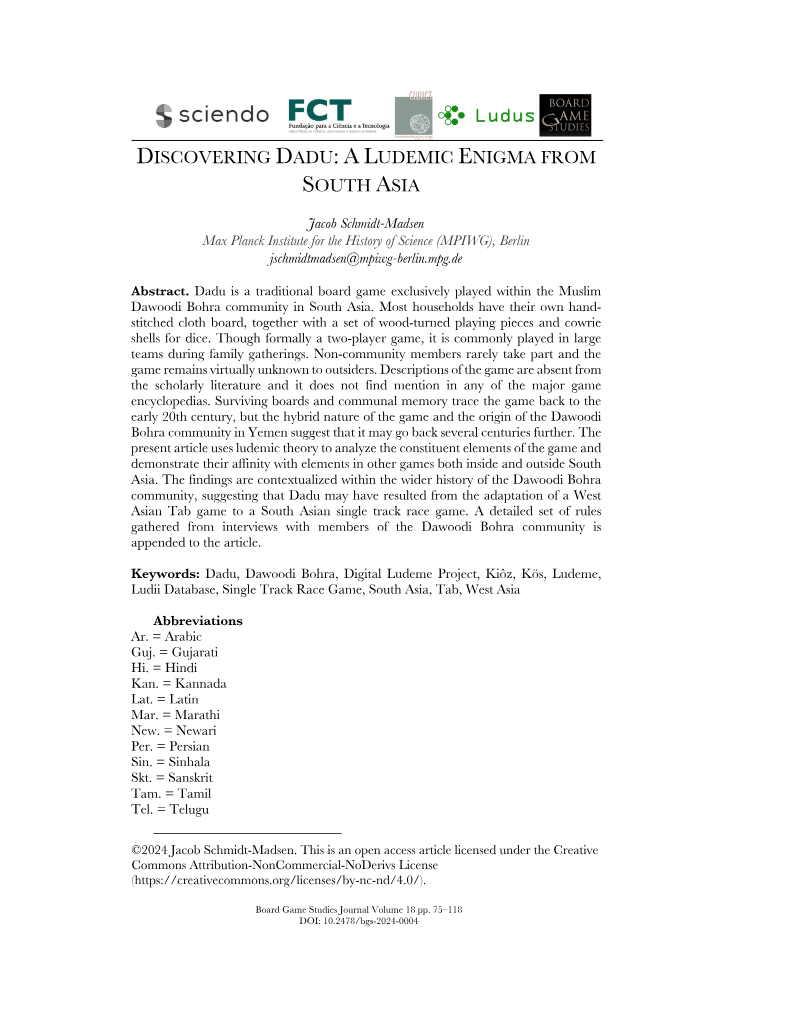
Board Game Studies Journal · 2024
Board Game Studies Journal · 2024
Board Game Studies Journal · 2024
Board Game Studies Journal · 2024
Board Game Studies Journal · 2023
European Conference on Games Based Learning (ECGBL) · 2025