1 free read left. Create a free account for unlimited reading + AI research.
Create free accountWhitepaper DiGRA
1 free read left. Create a free account for unlimited reading + AI research.
Create free accountWhitepaperDiGRA
The paper argues that loot boxes operate through variable-ratio reinforcement and through affective embedding, in which emotional and parasocial attachments distort players' cost-benefit reasoning.
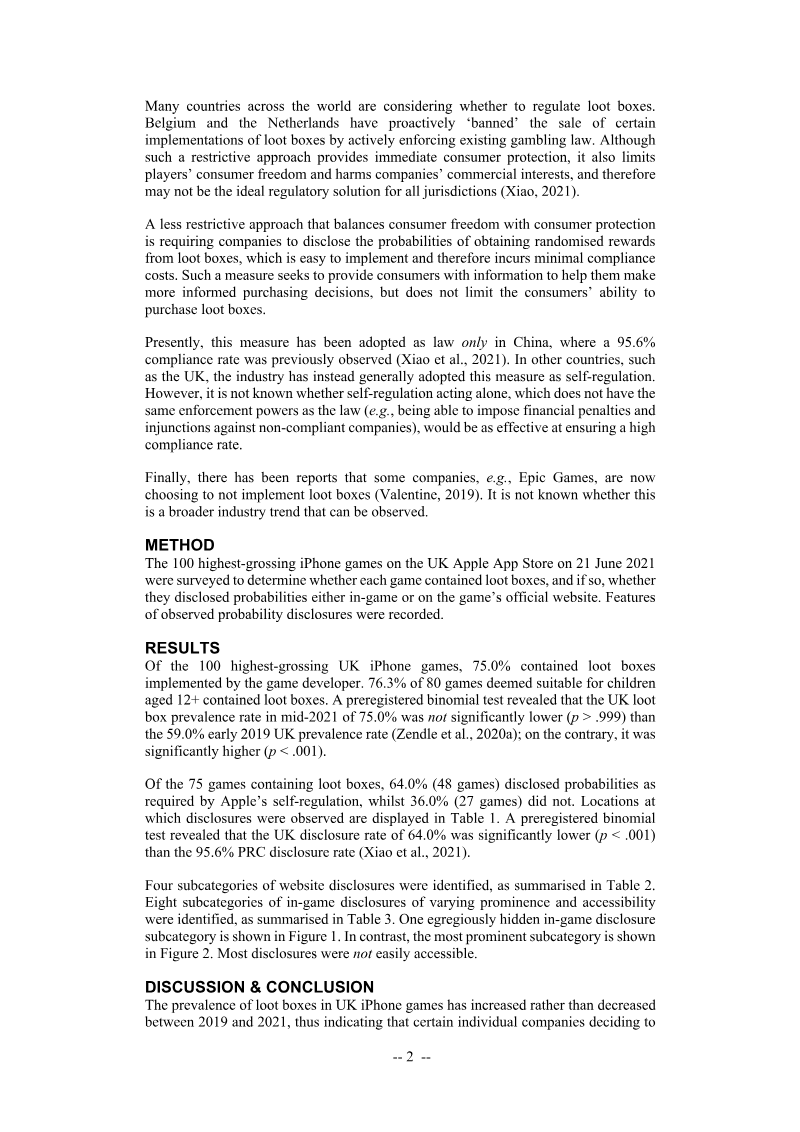
This document outlines a framework for "gacha psychoeducation" aimed at fostering more positive interactions between young people and games containing gacha and loot box mechanics. The central thesis is that these mechanics, prevalent in 77% of the top 100 grossing iPhone games in June 2021, operate on variable-ratio reinforcement schedules similar to slot machines, making younger players particularly vulnerable due to developmental immaturity in probability reasoning and inhibitory control. The document highlights that loot box purchases are associated with elevated odds of problem gambling in adolescents across countries like Australia and Japan, and that "pay-to-win" models exploit psychological vulnerabilities such as fear of missing out, leading to potential financial harm and diminished self-control.
The proposed methodology involves a two-phase approach. Phase 1 delivers psychoeducation to university anime and gaming societies, a low-risk, developmentally mature analogue sample. This phase includes content on the history of gacha, dopamine and reward anticipation, variable-ratio reinforcement, in-game currency value distortion, social comparison, parasocial relationships, and affective embedding, utilizing dramatherapy techniques and Menti quizzes. Pre and post-surveys measure awareness of mechanisms, subjective "ability to stop," beliefs about gacha game fairness, and relational attachment to characters. Phase 2 adapts this content for Child and Adolescent Mental Health Services (CAMHS) patients, co-designed with clinicians to address developmental stages and clinical vulnerabilities.
Initial results from Phase 1, involving university students aged 18-25, indicated that while most students reported control over their gaming and could identify when games were no longer fun, nearly half expressed spending in-game currency immediately, and many associated "wishing" with vulnerable emotions like dread and fear. The session on variable-ratio reinforcement led to an 80% increase in awareness. These findings suggest that self-reported insight may not fully reflect susceptibility to emotional impact, and dramatherapy techniques were particularly useful in developing insight into potentially addictive inclinations. The framework aims to build player insight into these mechanics, reduce gambling and mental-health risks, and encourage healthier gaming relationships, particularly for vulnerable populations.
Each row is a game or company this document names, each column a document, oldest first. A mark means that document names it. Select a row to see those documents.

DiGRA · 2026

DiGRA · 2026



DiGRA · 2026



DiGRA · 2026



DiGRA · 2026



DiGRA · 2026



DiGRA · 2026



DiGRA · 2026



DiGRA · 2026

DiGRA · 2026



DiGRA · 2026



DiGRA · 2026
DiGRA · 2026



DiGRA · 2026
DiGRA · 2026