Key insights
7 slides
The core split
AI in gaming splits the industry into two camps.
Some view AI as a transformative, positive force. Others fear it threatens creative integrity and labor.
Key number
Belief in exponential improvement predicts an individual's stance on AI.
An individual's stance on AI is largely predictive of their belief in the technology's potential for exponential improvement.
Historical context
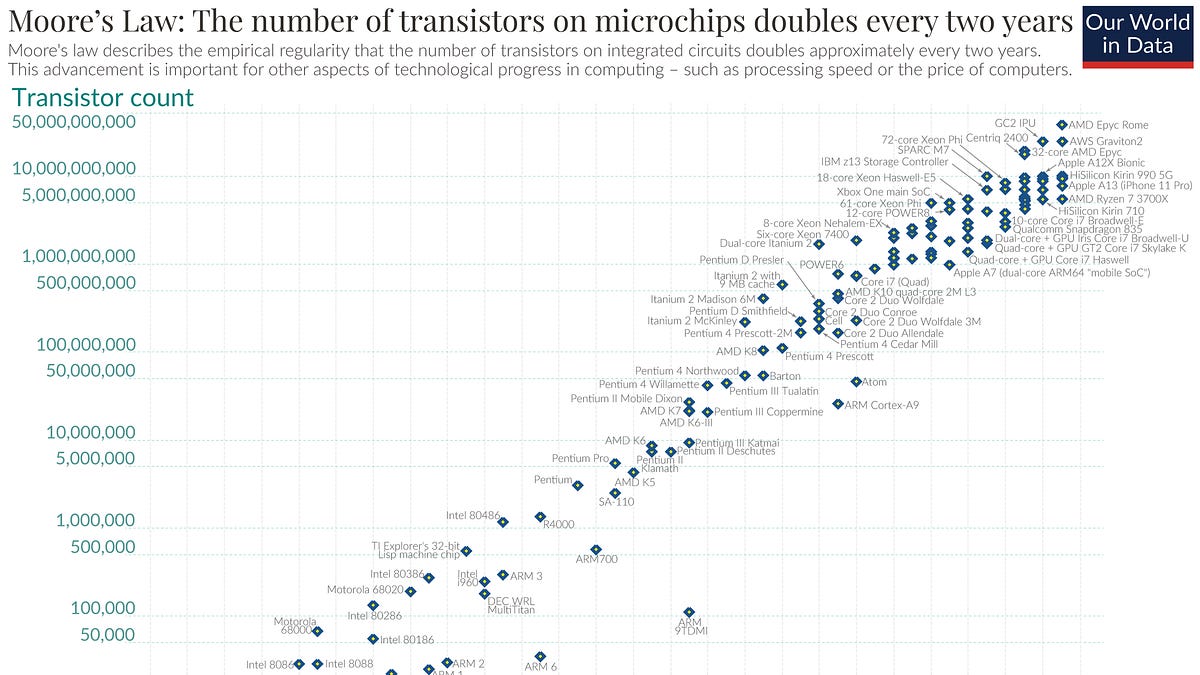
Proponents cite historical precedents of exponential technological progress.
Proponents emphasize historical precedents of exponential technological growth, such as Moore's Law and declining costs of solar and battery technologies.
What changed
Current benchmarks fail to capture emergent AI capabilities.
Current benchmarks often fail to capture emergent capabilities, such as the adaptation of generative video models for complex weather prediction.
The measurement gap
Quantifying AI usefulness or intelligence remains a significant challenge.
While price-performance gains are measurable, quantifying the 'usefulness' or 'intelligence' of AI remains a significant challenge.
Current state
Current AI applications are largely confined to development-side efficiencies.
The industry's current application of AI is largely confined to development-side efficiencies, such as asset generation and coding assistance.
The critical juncture
The industry is approaching a critical juncture for games as art.
The industry is approaching a critical juncture where the distinction between games as commercial commodities and as evolving creative vehicles will be tested.
1 / 7
Ask AI about this report