1 free read left. Create a free account for unlimited reading + AI research.
Create free accountArticle International Journal of Esports
1 free read left. Create a free account for unlimited reading + AI research.
Create free accountArticleInternational Journal of Esports
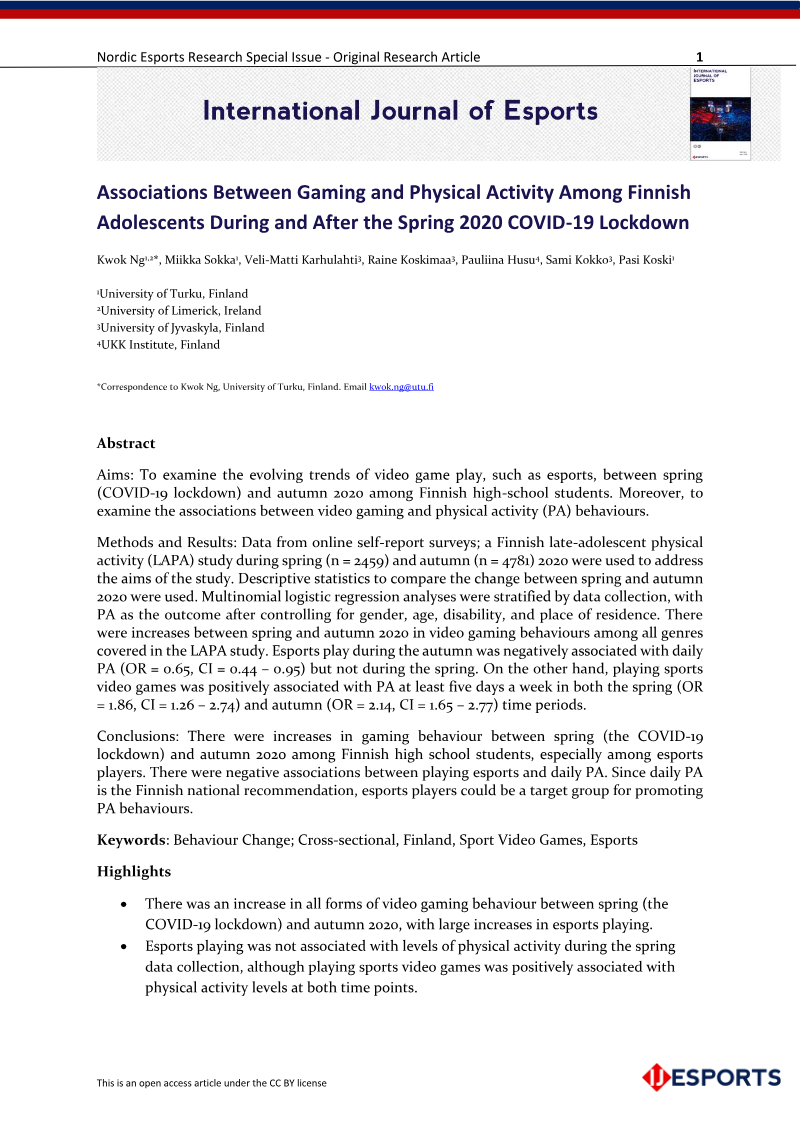
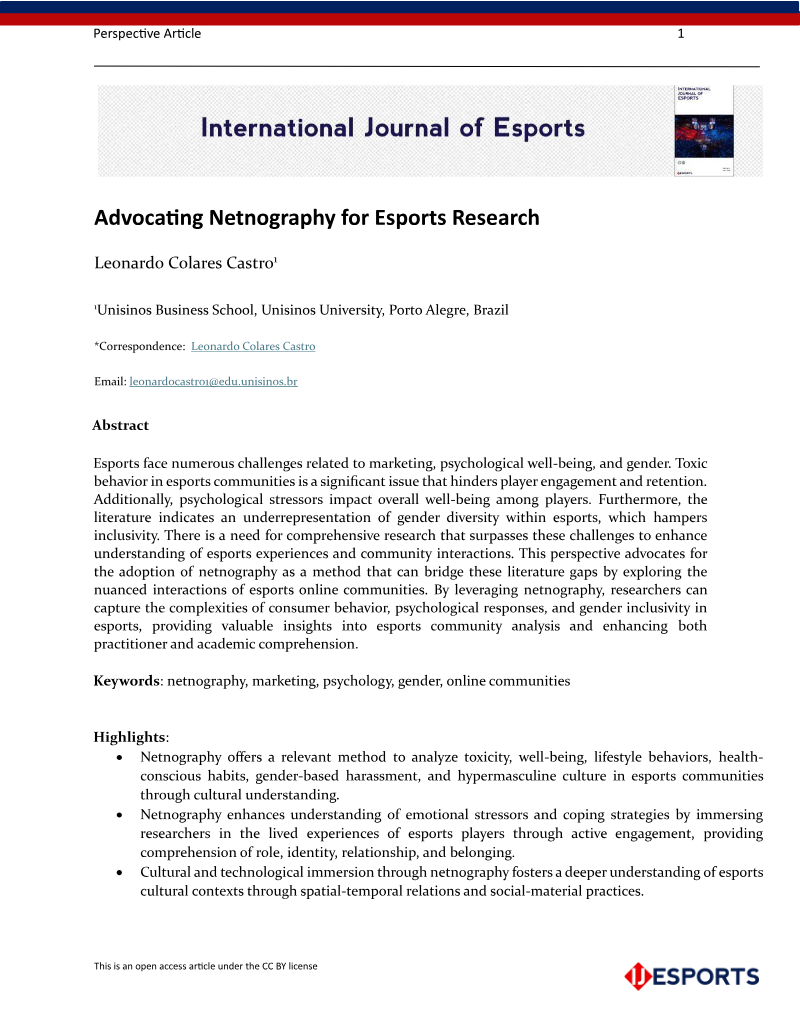
The study asked whether competitive gaming is associated with differences in movement and sedentary behavior. It compared 12 collegiate esports players with 39 non-esports undergraduates at a Midwestern university.
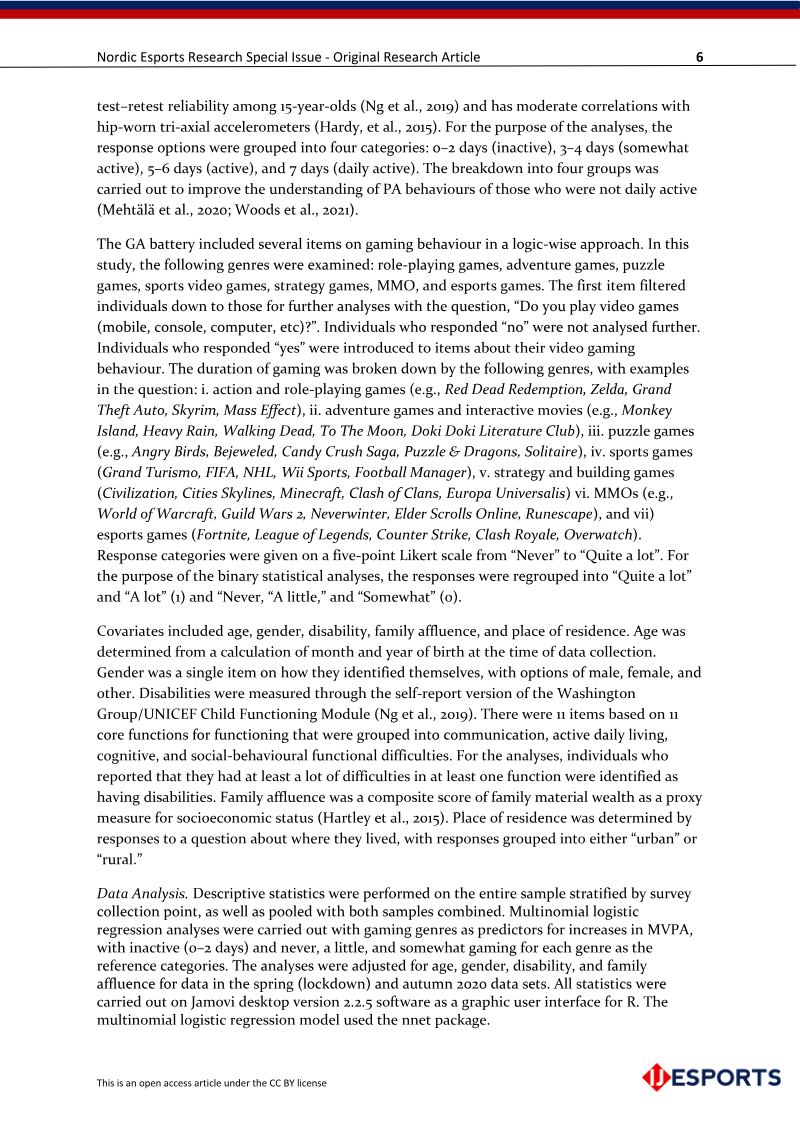
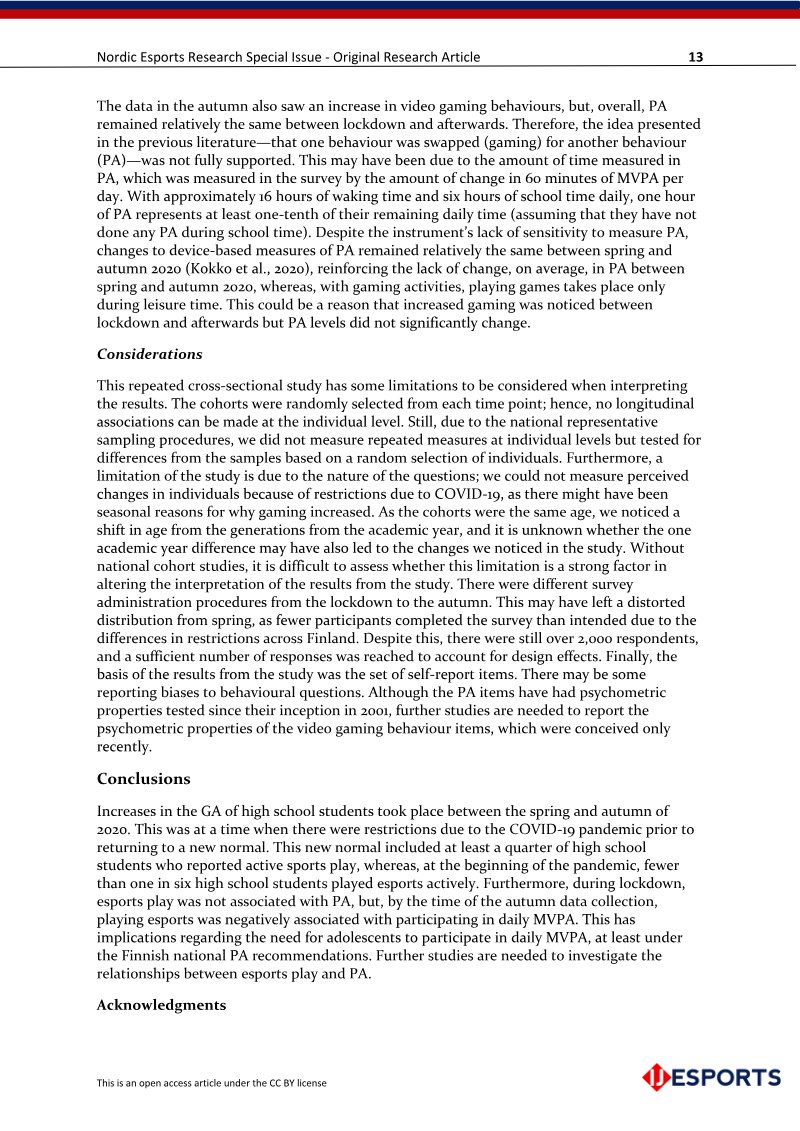
A study comparing self-reported physical activity among 12 collegiate esports players and 39 non-esports undergraduates at a Midwestern university set out to determine whether competitive gaming is associated with differences in movement and sedentary behavior. Physical activity was measured using the International Physical Activity Questionnaire (IPAQ), which captures activity across occupational, transportation, household, leisure-time, and sitting domains over the preceding seven days, with results expressed in metabolic equivalent minutes per week (MET-min/week).
Total physical activity did not differ meaningfully between the two groups, with esports players averaging roughly 5,275 MET-min/week compared with about 5,120 for undergraduates, and no statistically significant difference was found (p = 0.594). The principal finding concerned sedentary behavior: esports players reported significantly more total sitting time, approximately 3,717 versus 2,929 MET-min/week (p = 0.015). Most participants in both groups met World Health Organization and U.S. Department of Health and Human Services recommendations of more than 500 MET-min/week.
The authors attribute the elevated sitting time among esports players to the demands of practice, film study, and competition, and conclude that gaming participation may increase sedentary behavior even when overall activity appears comparable. The small, single-institution sample, uneven gender distribution, and reliance on self-reported data substantially limit generalizability, and the study's conclusions should be interpreted as preliminary.
International Journal of Esports · 2026
International Journal of Esports · 2026
International Journal of Esports · 2026
International Journal of Esports · 2026
International Journal of Esports · 2026
International Journal of Esports · 2025
International Journal of Esports · 2025
International Journal of Esports · 2025
International Journal of Esports · 2025
International Journal of Esports · 2025
International Journal of Esports · 2025
International Journal of Esports · 2025
DiGRA · 2025