1 free read left. Create a free account for unlimited reading + AI research.
Create free accountWhitepaper International Journal of Esports
1 free read left. Create a free account for unlimited reading + AI research.
Create free accountWhitepaperInternational Journal of Esports
Ten college esports players completed fed sessions after a Cliff bar and fasted sessions, while playing Aim Hero or osu!.
A pilot study of ten college esports players examined whether consuming a glucose-rich snack before an hour of esports training would improve gaming performance, mental fatigue, and enjoyment. Participants completed fed sessions (after a Cliff bar, roughly 21 grams of glucose, consumed 60 minutes beforehand) and fasted sessions while playing Aim Hero or osu!, and the authors found that blood glucose was significantly higher in the fed condition across the pre-session, 30-minute, and post-session timepoints. Glucose declined significantly from pre- to post-session in both conditions, indicating that gameplay itself draws down circulating glucose.
Despite these clear metabolic differences, the study found no statistically significant differences between fed and fasted sessions in performance, mental fatigue, or enjoyment. The authors attribute these null results partly to the small sample, the single-hour protocol, and the lower action rates of training platforms relative to professional competition. Several measures showed sizable though non-significant differences, most notably Aim Hero classic accuracy, which was 93.3% in the fed condition compared with 87.8% fasted, a 5.5-point gap that may warrant investigation with larger samples.
The study's scope is narrow: a small cohort of college-level players, two gaming platforms, and a single session length. Its reference base draws on research into glucose and cognitive function, metabolic indicators of mental effort, and the perceptual and reaction-time benefits associated with action video game play, though the reference section contributes no original data. Taken together, the findings suggest that a pre-session glucose boost raises blood glucose without measurably altering in-game outcomes over an hour of training, and they underscore the need for larger, more diverse studies on esports physiology.
International Journal of Esports · 2026
International Journal of Esports · 2026
International Journal of Esports · 2026
International Journal of Esports · 2026
International Journal of Esports · 2026
International Journal of Esports · 2026
International Journal of Esports · 2025
International Journal of Esports · 2025
International Journal of Esports · 2025
International Journal of Esports · 2025
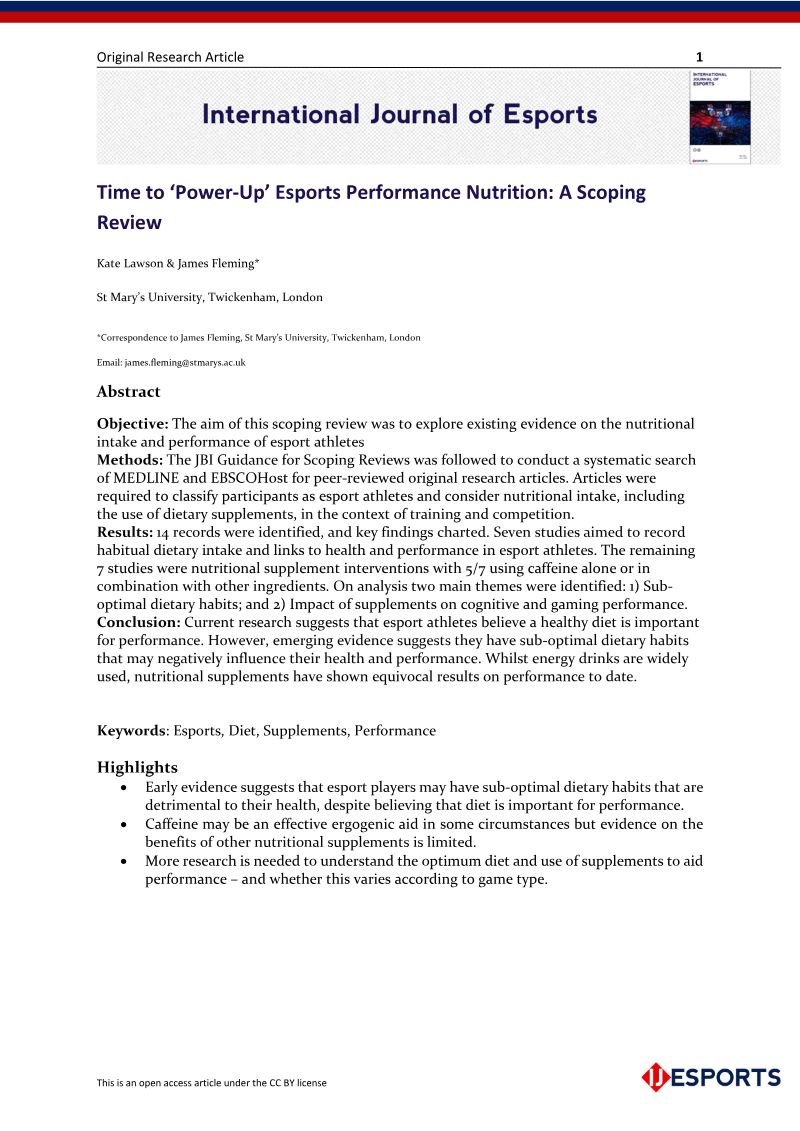
International Journal of Esports · 2025
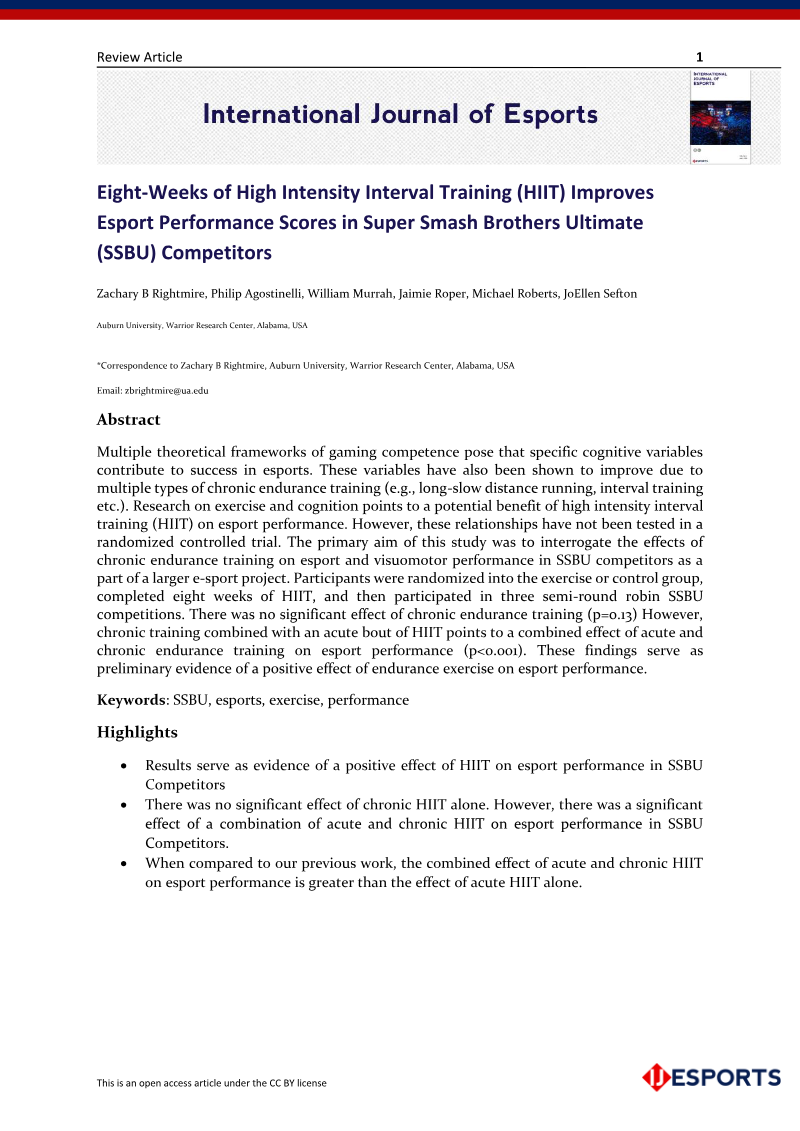
International Journal of Esports · 2025
The Game Business · 2026