1 free read left. Create a free account for unlimited reading + AI research.
Create free accountWhitepaper International Journal of Esports
1 free read left. Create a free account for unlimited reading + AI research.
Create free accountWhitepaperInternational Journal of Esports
Both professional and amateur players reported nervous activation and overconfidence as internal states linked to choking. Stakes and spectator pressure were shared external triggers.
Shared sources. Nervous activation and overconfidence were common internal states, while stakes and spectator pressures were shared external pressures.
This qualitative investigation examines how choking, defined as critical underperformance under pressure, manifests among professional and amateur esports players, with the aim of identifying the antecedents and performance patterns that distinguish the two groups. Drawing on reflexive thematic analysis of surveys and semi-structured interviews with 147 participants aged 18 to 59, the study identifies both shared and population-specific sources of choke. Nervous activation and overconfidence emerged as common internal mental states across both groups, while stakes and spectator pressures were shared external pressures.
Professionals uniquely reported team, stage, reputation, rival, and sexism pressures, whereas amateurs more often cited lack of focus, frustration, underconfidence, social pressure, and distractions. Performance patterns diverged as well: amateurs more frequently experienced mechanical failures, including non-specific underperformance, while professionals more often experienced strategic failures, which were the most common form of choke among them at roughly 80 percent of reported cases. The authors interpret amateurs' underconfidence and frustration as possibly stemming from a lack of tangible validation of their skill, and they suggest that professionals rely on emotion-regulation and avoidance strategies to sustain focus.
Gendered stereotype threat appeared in the professional sample but was absent among amateurs, a notable finding given the amateur sample included 47 women, though the single female professional participant limited the saturation of the sexism theme. The study is restricted to MOBA and FPS genres and to non-generalizable samples with limited gender and regional representation, so its conclusions are interpretive. The authors recommend population-specific interventions tailored to the distinct pressures and failure modes identified for amateurs and professionals.
International Journal of Esports · 2026
International Journal of Esports · 2026
International Journal of Esports · 2026
International Journal of Esports · 2026
International Journal of Esports · 2026
International Journal of Esports · 2026
International Journal of Esports · 2025
International Journal of Esports · 2025
International Journal of Esports · 2025
International Journal of Esports · 2025
International Journal of Esports · 2025
International Journal of Esports · 2025
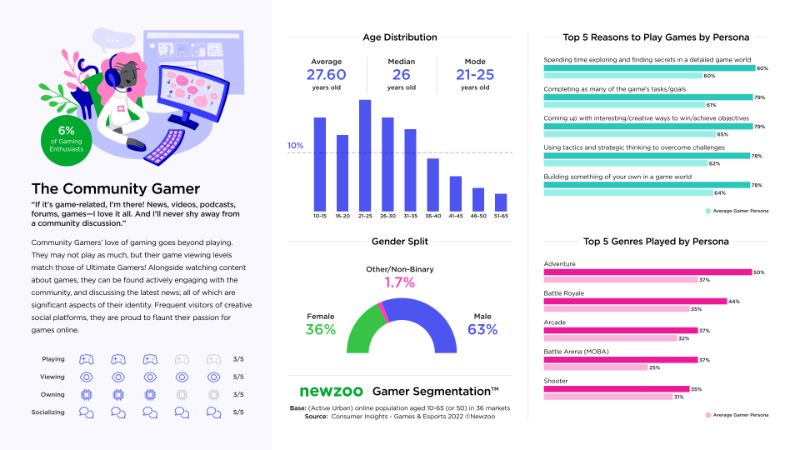
Newzoo · 2022