Loading the document
1 free read left. Create a free account for unlimited reading + AI research.
Create free accountArticle DiGRA
1 free read left. Create a free account for unlimited reading + AI research.
Create free accountArticleDiGRA
Beyond fiction emotions and artefact emotions, the paper argues that gameplay emotions deserve focused study in their own right.
Bernard Perron argues that emotions in story-driven video games extend well beyond the fictional world and the game as artefact, and that the core of the experience lies in gameplay emotions: those arising from the player's actions and the game's reactions to them. Working from cognitive psychology, the paper examines the appraisal and action dimensions of these emotions, drawing heavily on cognitive film theory and then revisiting its conceptual sources to show where games diverge from cinema.
The framework starts with Ed Tan's distinction between fiction emotions, which are empathetic and witness-based, and artefact emotions, which respond to technical artistry and innovation. Examples include Max Payne, Metal Gear Solid 3, Half-Life 2, and Splinter Cell. Perron adds gameplay emotions as a third territory. Drawing on Nico Frijda's appraisal theory, he describes primary appraisal of a situation's relevance to well-being and secondary appraisal of coping options. Torben Grodal's observation that a player's perceived coping potential determines whether a monster provokes fear, despair, or triumphant aggression illustrates the point. Perron also applies appraisal determinants such as motive consistency, expectedness, agency, certainty, and control potential to games. He notes, for instance, that regret is unlikely at the gameplay level because players can redo actions.
The second dimension is action tendency. Film action tendencies are largely virtual, so Tan makes "interest" the central mechanism. In games these tendencies are real. Carroll's erotetic narration, built on questions and answers, becomes "erotetic gameplay," in which the player answers micro-questions and pursues micro-objectives toward a macro-goal, producing mastery pleasures. Perron maps prototypical gameplay emotions to action tendencies: interest, enjoyment, worry, fear, surprise, anger, and frustration, illustrated with Resident Evil 4, ICO, and XIII.
Perron concludes that the mapping is preliminary. He calls for empirical methods, closer study of how fiction and gameplay emotions interact, and attention to moods and emotion episodes over long play sessions, using Greg Smith's mood-cue approach to link mood with emotional immersion.
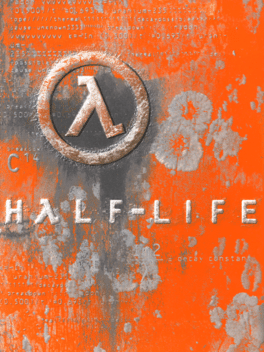 Half-LifeGame · Valve · 1998 · 80 documents
 Max PayneGame · Remedy Entertainment · 2001 · 71 documents
 Metal GearGame · Konami · 1987 · 70 documents
 Metal Gear SolidGame · Konami Computer Entertainment Japan · 1998 · 61 documents
 Half-Life 2Game · Valve · 2004 · 35 documents
Each row is a game or company this document names, each column a document, oldest first. A mark means that document names it. Select a row to see those documents.
DiGRA · 2026
Sungkyunkwan University · 2026
DiGRA · 2026
DiGRA · 2026
DiGRA · 2026
DiGRA · 2025
DiGRA · 2025
DiGRA · 2025
DiGRA · 2023
DiGRA · 2023
DiGRA · 2020
DiGRA · 2017
DiGRA · 2016





























