1 free read left. Create a free account for unlimited reading + AI research.
Create free accountArticle DiGRA
1 free read left. Create a free account for unlimited reading + AI research.
Create free accountArticleDiGRA
"A Typology of Rumble" argues that controller rumble, though ubiquitous in digital games since the late 1990s, has been overlooked in game studies and design literature. Positioning rumble within the broader field of haptic feedback, the study contends that vibrotactile output, well theorized in virtual environments and exergames, remains under-examined as a dimension of play in its own right. Its aim is to build a vocabulary for describing how rumble operates, grounded in close analysis rather than player-response data.
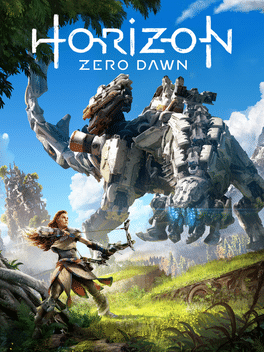
The empirical base consists of nine single-player action and adventure titles released across the PlayStation 1 through PlayStation 4 generations, examined through a close-play "Rumble Log" and extended play sessions. The authors trace the DualShock lineage, noting that Sony's Sixaxis omitted rumble, reportedly in connection with a patent dispute with Immersion Corporation resolved in 2007, and that the DualShock 4's two independently controllable motors enable finer strength modulation. Recurring rumble types identified across the sample include environmental events, responses to taking hits, non-player character actions, and dramatic cutscene effects, alongside notable innovations such as affective rumble in Brothers, age-dependent rumble profiles in Horizon Zero Dawn, and the deliberate absence of rumble on landings in Batman and Spider-Man to convey lightness.
The central contribution is a two-dimensional framework classifying rumble by feedback source (environment, object, interface, or body, the last subdivided into kinaesthetic, physiological, and extrasensory categories) and level of operation (ludic, dramatic, or technical), drawing on semiotic notions of denotation and connotation. The authors stress that these levels are not mutually exclusive: Silent Hill 3's heartbeat rumble simultaneously signals low health and heightens dramatic tension. The typology is offered explicitly as an empirical, vocabulary-building tool, with its convenience sampling of a limited set of PlayStation titles acknowledged as a constraint on generalization.
DiGRA · 2019
Two & a Half Gamers · 2026