1 free read left. Create a free account for unlimited reading + AI research.
Create free accountWhitepaper DiGRA
1 free read left. Create a free account for unlimited reading + AI research.
Create free accountWhitepaperDiGRA
"Towards an Analysis of Virtual Realism" argues that the term "virtual realism" is ambiguous and should be decomposed into distinct senses before it can be meaningfully evaluated. Its central thesis is that the concept breaks into at least five separate theses: immersion, psychological realism, depictive realism, ontological realism, and functional realism. The author contends these are materially different claims, and that immersion, the most common framing in discussions of virtual reality, is a poor fit because it is primarily attentional. It can exist without any realistic content, as in the non-realistic puzzle game Tumble VR, and it can be disrupted by realism, as in Resident Evil 7.
Among these senses, psychological realism receives particular attention. Drawing on the "virtual pit" experiment and reports of spatial presence, the paper suggests this may be the predominant form of realism experienced in VR, and notably it does not depend on graphical fidelity. Depictive realism, traced historically from Brunelleschi and Alberti through Hyman's optics-based defense, concerns whether VR images resemble natural vision. The author argues that VR's binocularity and motion tracking may strengthen this form of realism against Goodman's skepticism. Ontological realism, following Chalmers, treats virtual objects as real digital objects, while functional realism asks whether VR preserves the function of real counterparts, illustrated by a study of ball-catching behavior.
The analysis yields a methodological conclusion: because these senses of realism are largely independent of one another, each requires separate evaluation rather than being collapsed into a single notion of immersive realism. The surrounding literature, spanning presence measurement, embodiment, motion sickness, and the philosophical aesthetics of realism, reflects the paper's broader concern with how presence and realism are defined, measured, and understood both perceptually and aesthetically.
Each row is a game or company this document names, each column a document, oldest first. A mark means that document names it. Select a row to see those documents.
DiGRA · 2019
DiGRA · 2019
DiGRA · 2019
DiGRA · 2019



DiGRA · 2019
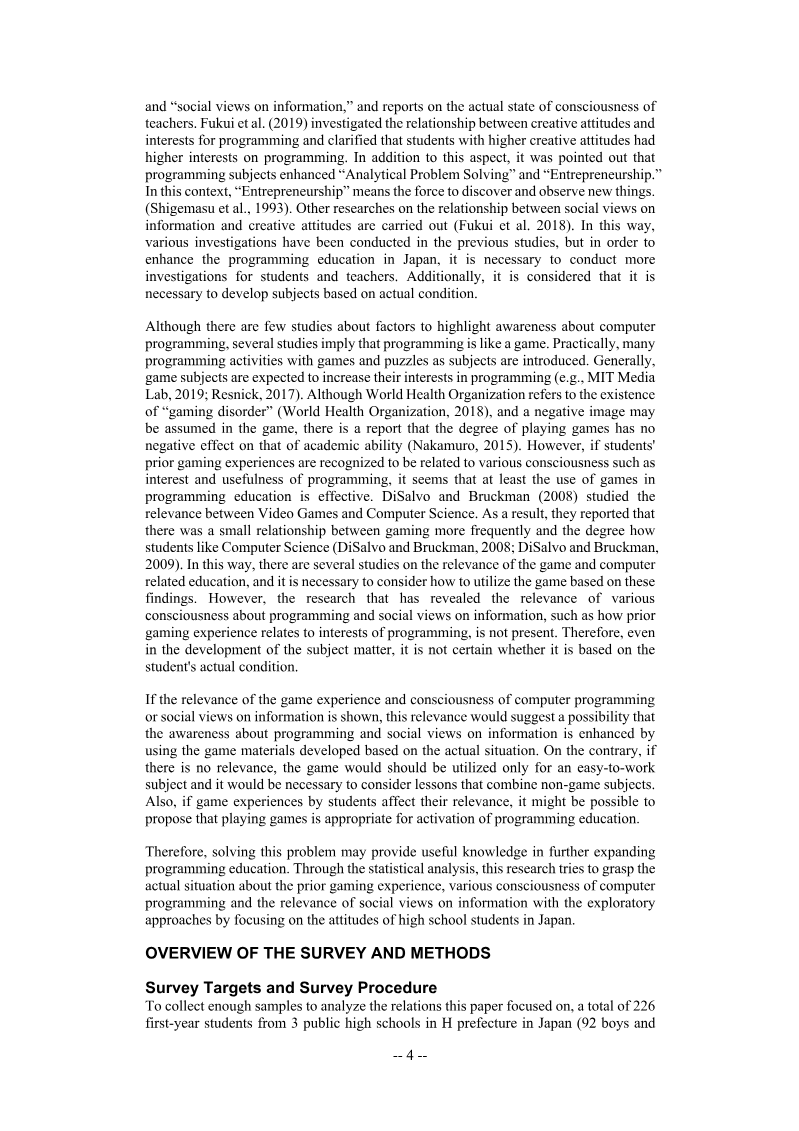
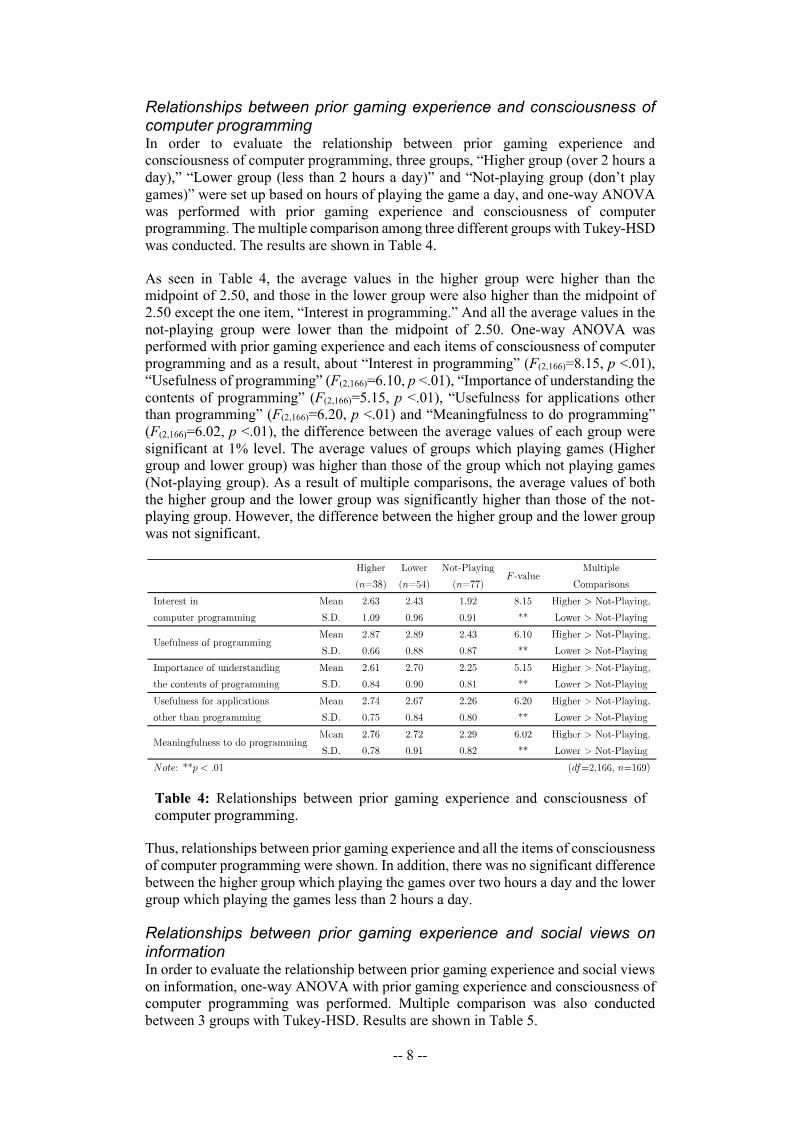
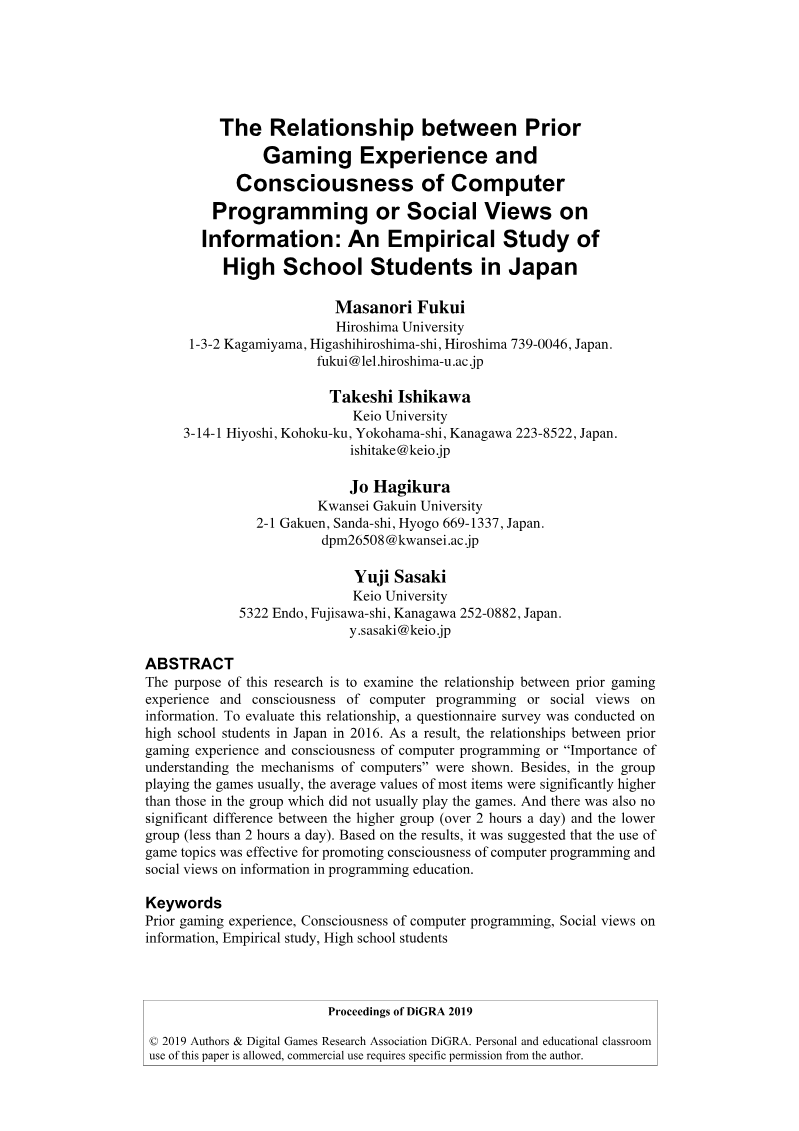
DiGRA · 2019
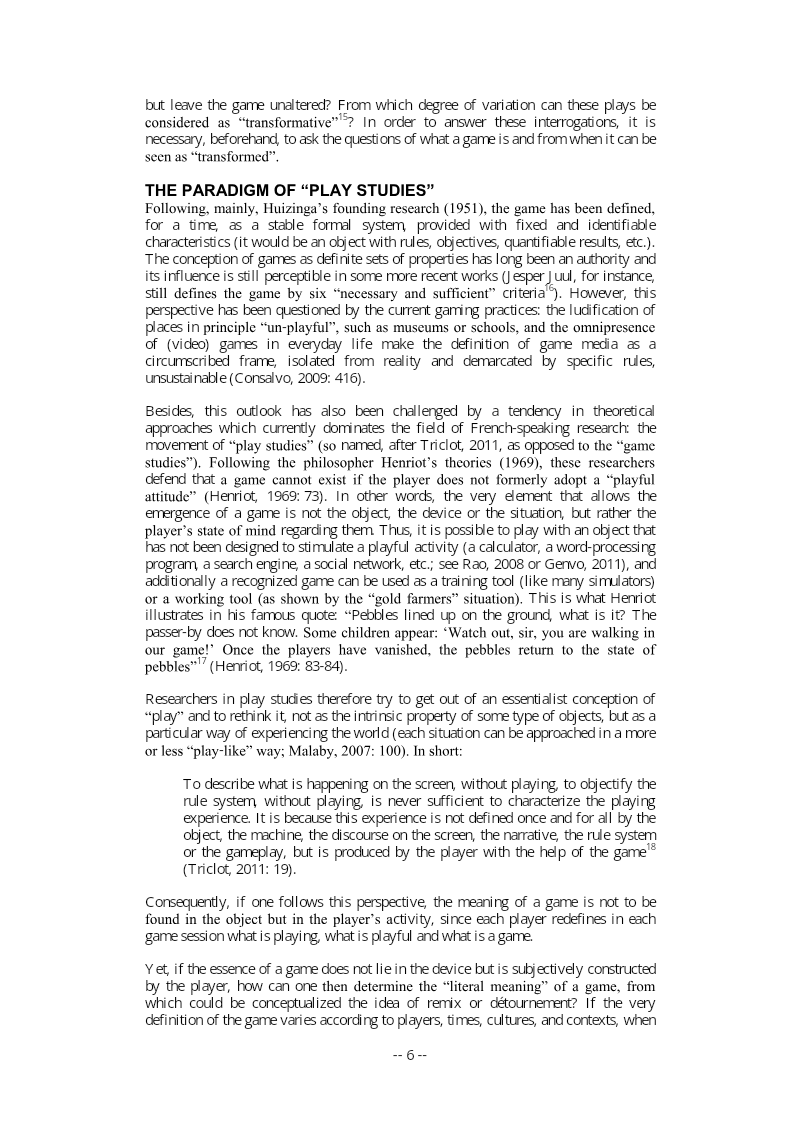
DiGRA · 2019
DiGRA · 2019
DiGRA · 2019
DiGRA · 2019
DiGRA · 2019
DiGRA · 2019
Game Dev Unchained · 2025