1 free read left. Create a free account for unlimited reading + AI research.
Create free accountArticle Matthew Ball
1 free read left. Create a free account for unlimited reading + AI research.
Create free accountArticleMatthew Ball
Apple invested heavily in the Vision Pro over eight years. The company filed over 5,000 patents during its development.
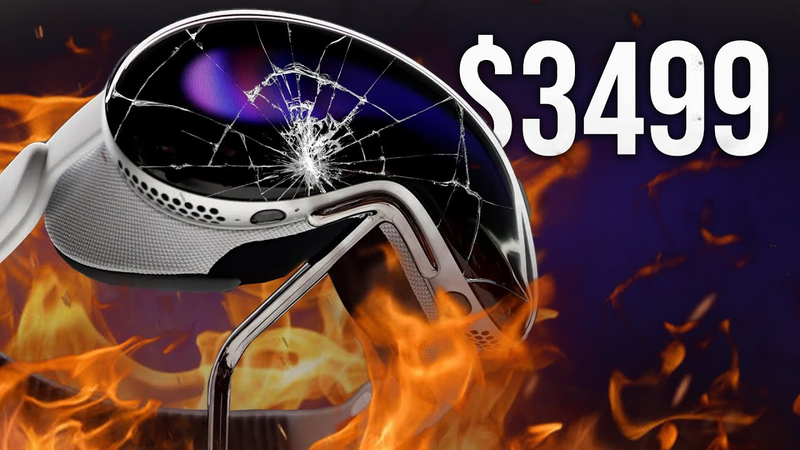
Apple’s Vision Pro serves as a high-end showcase of spatial computing technology rather than a transformative consumer device. Representing the company’s most significant and costly hardware investment since the iPhone, the platform utilizes premium components to push the boundaries of current virtual reality capabilities. However, the device remains constrained by fundamental physical limitations, including excessive weight, thermal management issues, and restricted battery life. These hardware hurdles, combined with a prohibitive price point, relegate the product to a proof-of-concept status that currently lacks a compelling, everyday use case for the average consumer.
While the device has successfully reset industry terminology and influenced competitor expectations, it faces a critical lack of native developer support and a small install base. Unlike previous Apple hardware launches, this entry into the personal computing market is non-essential and currently suffers from low demand and infrequent user engagement. The platform struggles to justify its significant trade-offs in comfort and utility, suggesting that mainstream adoption of head-mounted displays remains a distant goal.
The current trajectory indicates that the Vision Pro will remain a niche product for the foreseeable future, with no major shifts in market penetration expected until at least 2026. Although the technology demonstrates clear utility in specialized professional fields, it has yet to overcome the barriers necessary for broad market integration. Consequently, the device functions primarily as a long-term research and development vehicle, positioning Apple to iterate on spatial computing while the broader industry waits for the hardware to mature beyond its current experimental phase.

Matthew Ball · 2025

Matthew Ball · 2024

Matthew Ball · 2024

Matthew Ball · 2024
Matthew Ball · 2024
Matthew Ball · 2024

Matthew Ball · 2024
Matthew Ball · 2024
Matthew Ball · 2024
Matthew Ball · 2024

Matthew Ball · 2024

Matthew Ball · 2023

Develop:Brighton · 2025