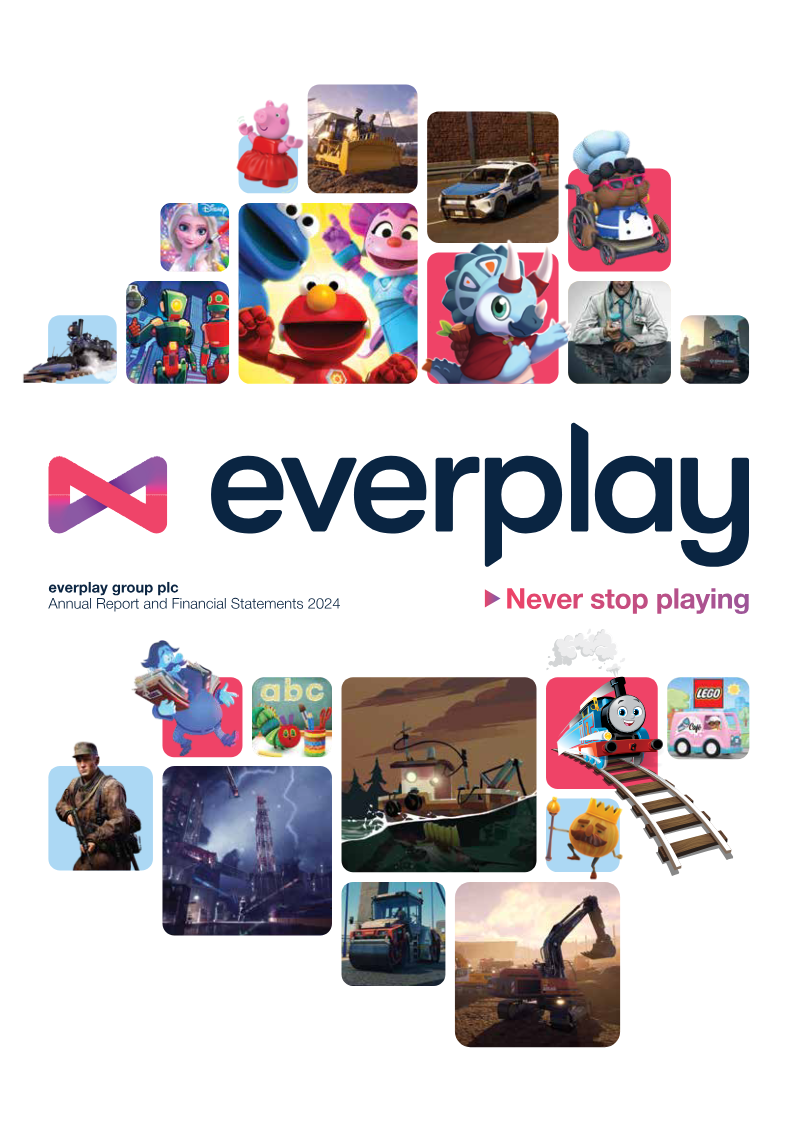
Everplay maintains a zero-tolerance stance toward modern slavery and human trafficking across its global operations and supply chains. As a UK-centered video games developer and publisher, the organization identifies as having a relatively low inherent risk due to the nature of the digital entertainment industry. The operational scope covers the financial year ending December 31, 2025, and encompasses approximately 370 employees working across the United Kingdom, Ireland, Germany, the United States, and Canada. The primary supply chain expenditures involve milestone and royalty payments to third-party development partners, alongside work-for-hire contracts for game development, localization, and quality assurance testing. While the overall risk profile remains low, the organization identifies localization and quality assurance as areas carrying a slightly higher risk. To mitigate these concerns, all new and renewing contracts include mandatory compliance clauses regarding the Modern Slavery Act 2015, granting the company the right to terminate agreements in the event of a breach. Governance is managed through the Audit Committee, which reports to the Board of Directors at least twice annually. Due diligence efforts include a risk-based approach to supplier assessment and the implementation of internal policies such as whistleblowing, anti-bribery, and grievance procedures. Employees and third parties are provided with confidential reporting channels, including an external hotline. The effectiveness of these measures is tracked through an annual risk register assessment, which currently reports zero incidents of modern slavery. Training and awareness initiatives are provided to ensure that employees and stakeholders can identify and report potential risks effectively.
Take-Two Interactive Software establishes a comprehensive framework for maintaining ethical business practices and safeguarding human rights across its global operations as of October 2025. The primary objective is to eliminate modern slavery, forced labor, and human trafficking within the organization and its extensive supply chains. This commitment extends across all major publishing labels, including Rockstar Games, 2K, Private Division, and Zynga, covering the development and distribution of interactive entertainment for console, PC, and mobile platforms. The policy outlines rigorous hiring and employment standards, mandating that all employees be at least 16 years of age and that employment is strictly voluntary. Compensation and benefits are reviewed annually to ensure they meet or exceed legal minimums and market standards. Furthermore, the company enforces a strict non-discrimination policy, ensuring that recruitment and career advancement are based solely on ability and merit rather than protected characteristics. These internal standards are reinforced by a Global Code of Business Conduct and Ethics that applies to all directors, officers, employees, and contractors. To ensure compliance throughout the supply chain, which includes disc replicators, printers, and logistics providers in regions such as North America, Europe, and Japan, the company utilizes a dedicated Supplier Code. This requires third-party partners to represent that they do not utilize child, prison, or slave labor. Oversight is maintained through biennial training for employees and targeted training for consultants. Additionally, the company provides a confidential reporting hotline managed by an independent third party, protecting whistleblowers from retaliation. Key suppliers are also expected to conduct periodic internal or independent audits to verify adherence to labor, health, and safety standards.
The 2019 corporate‑responsibility effort positions Modern Times Group (MTG) as a dedicated gaming and esports holding that integrates environmental, social and governance (ESG) considerations into its core strategy. By framing responsible practice as a source of competitive advantage for millennial and Gen Z audiences, the company seeks to mitigate material risks—discrimination, event security, exploitation of minors, corruption, occupational and mental‑health concerns, irresponsible marketing and gaming addiction—while driving profitability. A comprehensive materiality analysis informed a three‑tier priority pyramid that places health‑and‑well‑being and gender equality at its apex. Nine new group policies, including a Code of Conduct, whistle‑blower, anti‑bribery and data‑protection frameworks, achieved a 94 % employee
The Supplier Code of Conduct for Take-Two Interactive Software, Inc., updated in April 2023, establishes the ethical, legal, and professional standards required of all third-party partners. The primary thesis is that all suppliers, consultants, and vendors must mirror the company’s internal commitment to honesty, integrity, and human rights. This mandate extends globally to any entity providing goods or services, including distribution, marketing, and manufacturing, and requires these partners to ensure compliance among their own subcontractors and employees. The document outlines specific legal requirements across several critical domains. Suppliers must strictly adhere to competition and antitrust laws, anti-bribery and corruption statutes such as the US Foreign Corrupt Practices Act and the UK Bribery Act, and anti-money laundering regulations. Furthermore, the scope includes strict compliance with trade sanctions and export controls, specifically highlighting high-risk regions such as Iran, Cuba, Syria, North Korea, and certain areas of Ukraine. Partners are also prohibited from engaging in insider trading based on non-public information gained through their relationship with the company. Beyond legal compliance, the standards emphasize social responsibility and operational integrity. Key provisions include the prohibition of child or prison labor, the protection of fundamental human rights, and the maintenance of a work environment free from discrimination and harassment. Suppliers are required to maintain accurate financial records, protect intellectual property, and avoid conflicts of interest. To ensure adherence, the company reserves the right to conduct periodic audits and requires immediate notification of any legal investigations or violations. A global reporting infrastructure is provided, featuring a 24-hour ethics hotline available across more than twenty countries, supported by a non-retaliation policy for those reporting grievances in good faith.
The 2018 corporate‑responsibility overview for Modern Times Group (MTG) reflects a year of strategic realignment following the spin‑off of its Nordic Entertainment and Studios businesses into the newly listed Nordic Entertainment Group. The core thesis is that MTG’s renewed focus on esports, gaming and broader digital ventures can be pursued responsibly through four pillars—media responsibility, social impact, business ethics and environmental care—underpinned by materiality analyses for both entities and a suite of stakeholder‑driven priorities such as gender diversity, inclusion, GDPR compliance and the protection of minors. Financially, MTG reported net sales in the range of 15‑20 billion SEK and achieved an 89 % completion rate for mandatory ethics e‑learning. Risk management was strengthened by publishing event‑security guidance adopted by eight of twenty‑one partners, and by prioritising attendee safety at esports tournaments. Social contributions included a $18 k donation to UCSF, multi‑million‑dollar fundraising for Save the Children and the Diabetes Foundation, and the launch of education programmes targeting young gamers. Governance was reinforced through board oversight, external audits and memberships in more than a dozen industry bodies—including the IGDA, Esports Integrity Coalition and MESA—facilitating continuous stakeholder engagement via surveys, focus groups and board‑level dialogues. Environmental reporting showed a total carbon footprint of 25,215 t CO₂e, a 7 % year‑on‑year increase, while energy intensity fell sharply from 66 GJ per employee in 2016 to 40 GJ in 2018. Scope 3 emissions from events are now being captured, and no fines were recorded for direct energy use,
PlayWay S.A. Group achieved exceptional financial growth and market expansion during the 2018 fiscal year, characterized by an 80% year-over-year increase in consolidated revenues to 71.95 million PLN and a nearly 200% surge in net profit. This performance was underpinned by a robust digital distribution strategy, with the Steam platform accounting for 80% of total revenue. Success was largely driven by high-performing titles such as House Flipper, Thief Simulator, and the Car Mechanic Simulator series, which solidified the group's position within the global gaming market. The group maintains a highly liquid financial position, with cash reserves of 69.6 million PLN representing nearly half of total assets and equity covering 93% of liabilities. This capital strength supports a decentralized operational model involving 14 Polish subsidiary studios and a strategy of reinvesting in new development teams, virtual reality technology, and console porting. Ownership remains concentrated, with CEO Krzysztof Kostowski and ACRX Investments Limited each holding a 40.91% stake in the 660,000 PLN share capital. Corporate governance in 2018 was marked by stability in the Management Board and adherence to statutory requirements, though the group noted specific deviations from the Best Practice for GPW Listed Companies regarding meeting broadcasts and formalized internal audit systems. While the group lacks a formal diversity policy, it maintains a functional Audit Committee and utilizes external auditors to ensure financial transparency. Moving forward, the group intends to leverage its early-stage game testing and digital-first approach to sustain its trajectory in the evolving global software market.
PlayWay S.A. maintains a selective approach to the Best Practice for GPW Listed Companies 2021, reporting non-compliance with twenty-one specific principles as of July 2021. The company attributes these deviations primarily to its decentralized business model, which encompasses a capital group of approximately 120 entities. Significant gaps exist in the formalization of environmental, social, and governance strategies, as well as the absence of a documented diversity policy. Currently, the management and supervisory boards do not meet the recommended 30% minority representation threshold, though the company asserts that appointments remain based on qualifications and professional experience. Operational oversight and risk management are handled directly by the Management Board rather than through segregated organizational units or dedicated internal auditors. This centralized structure extends to shareholder engagement, where the company opts against electronic participation or live streaming of General Meetings due to perceived technical costs and limited shareholder demand. Despite these omissions, transparency is maintained through monthly operational summaries, detailed resolution justifications, and a commitment to updating corporate web portals to meet evolving transparency requirements. The company demonstrates full alignment with remuneration standards, emphasizing pay equity and gender equality across its leadership roles. While no formal stock option or incentive programs are currently in place, there is a commitment to link future variable compensation to long-term financial performance and sustainable development goals. Supervisory Board compensation remains fixed and independent of short-term results, ensuring objective oversight. Ultimately, the company balances its rapid growth and complex organizational structure by prioritizing essential transparency and independence standards while deferring more formalized reporting and specialized oversight roles until they are deemed necessary for its scale.