1 free read left. Create a free account for unlimited reading + AI research.
Create free account
11 deadly marketing sins developers should avoid
Key insights
6 takeaways- 01Success requires defining a unique selling proposition and conducting rigorous category research during pre-production to ensure the chosen genre is commercially viable.
- 02Developers should launch on a single platform initially to concentrate resources and maximize the likelihood of securing platform-specific featuring opportunities.
- 03For free-to-play titles, developers must allocate approximately one-third of their total budget to marketing and user acquisition to account for the cash flow lag between initial spend and revenue realization.
- 04Rewarded video ads are a critical revenue driver, capable of accounting for up to one-third of a game's total income while simultaneously boosting player retention and conversion rates.
- 05A soft launch is a mandatory phase for testing core mechanics, refining marketing assets, and gathering the performance data necessary to secure future investment.
- 06Studios should focus on building upon existing institutional knowledge and genre expertise rather than frequently pivoting between different game categories.
Ask AI about this video
Transcript
[Music] good afternoon ladies and gentlemen I would like to start with the biblical story about David and Goliath no it was a Shepperton he joined his three brothers in the war against Philistines and he was very smart boy no one dared to challenge the Giant but David first talked to his fellow soldiers to understand the situation then he observed the Giant and the battle filter decided that in a close combat he wouldn't be able to defeat him so he used his slingshot and basically one shot he killed the Giant today I would like to share with you some tips and tricks how to analyze your combat field how to understand your
competition and how to succeed my name is Peter fedora I'm a founder of at agent we are a mobile marketing department for hire so basically you are helping to gaming startups and mobile teams all things marketing from App Store optimization over analytics user acquisition running soft launches to let's say data analysis we are working for example for polished CI games or about this studio about fun or you as a base to start up trade vice the third thing is about missing a unique selling proposition this isn't any marketing this basically means to have a reason why people should care about your game this means that you have something unique something would make them excited about your product and the sooner you define
this in your development process ideally in the pre-production phase the better for you because this can serve you also as a lighthouse for your game design for making tough decisions and to keep division all the time during the production the second thing is a very definition of target group you will be surprised how many teams my teams have very to definition quality players quite often they say hey but guys 18 to 25 but that's not enough there are some of you who are interested acquisition so you know that once there is a soft launch and your task is to start the first acquisition away you know whom to target you need more details ideally the best is to have someone specific in mind someone you know in person so you can design the game for that person so you can really think hey this feature this game-mode is it fitting my audience is it something
they are excited about is it something they would appreciate and later on once you're approaching the global launch it's much easier to start campaigns and get really good match of your game and their expectations the third thing is no category research just few weeks ago EXO effort presented a way how to use free up any data to analyze the battleground to understand the competition landscape and this means that you should already know pre-production phase when you have the idea to think if you are going the right direction if the category is the right one does my mistake couple years ago that we started doing a trivia game an actual trivia has fantastic downloads really loss of downloads but no one is staying there so once we launched that game we had big downloads but it was a massive fight in terms of monetization you can use our data app any mobile Action Center tower whatever available whatever mobile marketing intelligence
to understand trends leaders how are your competitors communicating so do the math with financials as well as understanding the overall situation and then decide which direction to go and which game you should build the Fortson is missing the free-to-play and premium difference of course you know the difference in business models that's clear but many teams miss the difference in the needs of you know different roles in the team when you are creating premium game it's much more art it's expressing yourself if you are creating free-to-play game it's much more about numbers data changing the game on the goal based on the analytics and the feedback also there are several game genres which suit each model like different let's say adventure game it could be you know very difficult to make a good free-to-play game also if you
want to do premium you should probably look more on what's a Steam desktop platforms where people are willing to pay more rather than Google Play the last thing here is that free-to-play requires more people data analysts use the equation managers you know lots of new roles and completely different mindset and also requires more money to fund the development funding acquisition and for the growth of the business so keep this in mind and make the decision early because friend of mine two years ago he was doing his first game he was originally producer of mafia game so it was clear that he started creating a premium game it was something close to his heart but under the pressure of a publisher he changed the model after the launch from premium to free-to-play and guess what it was a complete disaster because it doesn't work so it has to be really on the very beginning clearly defined and then start to build the core game loop around the mechanics which are
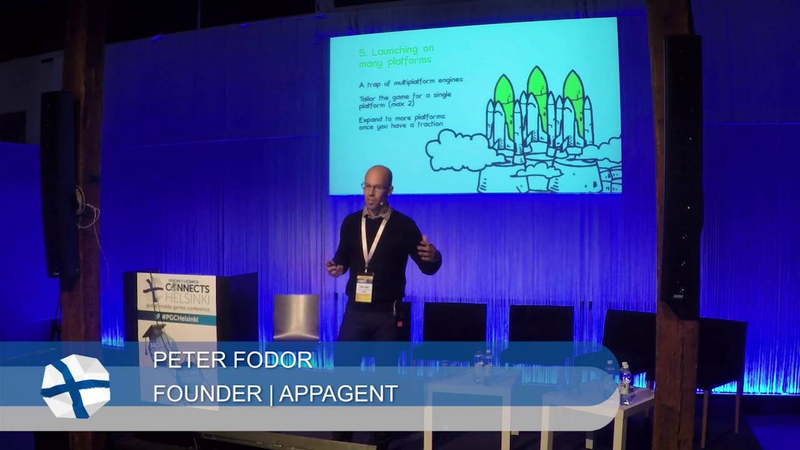
either free-to-play or it's a purely premium game the fifth thing is launching on many platforms I know it's very tempting not to launch on many platforms because using Unreal Engine or unity makes this much easier than in the past but from my experience if you have an iOS version of the game to create a solid Android version takes from four weeks two months and if you're a small team this could be really really a trouble in terms of finance finances in terms of motivation of the team and also you can't say that it will be a success so my tip here is start on one platform use this exclusivity to pitch up or Google that you are starting exclusively on their platform they like it and if the game is attraction then you can go to
other platforms use distraction use that brand recognition and start much easier on another platform without a risk that you will invest another two months into the development the sixth thing is not having a marketing budget this is more for free-to-play where you should allocate about one third of your budget for marketing it's not just about money for the media for his acquisition you should also change your assets in the store try different channels yesterday Karim from Graham Games mentioned that they are investing 50% of their marketing budget into experiments into trying new acquisition sources so it's really really like financially heavy so you should count with this from the very beginning when you are planning your overall budget also keep in mind it's free to paste a long term iterative business so usually it takes much more time to really
get to break even and have a profitable game the next one about financials again forgetting the cash flow it's something what was mentioned two thoughts ago it's I'll give you an example imagine that you acquire a user for $2 so when these are paid for the first in-app purchase let's say starter pack you get 140 net revenue but this happens let's say a week after the install so then you are waiting another days weeks or even months onto the next payment and during that period you are still like investing into that player and waiting for the return of investment and then another thing comes the payment period which is usually 45 days so in total it could take from two to four months until you get your money back to your account so this could be something what can really slow down your growth and not just for small and mid-sized
teams even big studios which are launching that's in more games and a soft launch have quite big troubles to invest this and wait for the money and if you're not aware of this issue then you will hit the wall with empty account and you have to wait for your money and it completely slows you down you are dropping from charts and you know you're not maintaining the momentum the 18 is rejecting mobile ads 96% of your players will never pay you so it's a good idea to get at least some money from them back especially on Google Play and if you do it right if you integrate as a reward videos into the core game loop it could even help you not financially but in terms of revenue or monetization two examples here if you for example if a match free game and
your player runs out of lives you can offer a video for one more try one more life so otherwise the player will leave your game and will be lost if you use this type of motivation you can either get some money that the player will install a new game or he will or she will stay in the game for one more session or even longer it passes the level or if you offer a premium item like strong SWAT to defeat some opponent that player could have the feeling and personal experience what it means to have this premium item so the next time in the same situation it's more likely that your she will buy the item for real money on a sidenote in one of my games which I've published we have driven about 37% from ads so 1/3 of revenues coming only from ads so it's quite decent revenue
stream the ninth thing is mostly for premium indie developers the truth is that mobile media in general has gone through a big change in the last two three years - I have closed or a salt touch circuit is you know begging for money on patreon and it's because people changed their behavior today I believe that few of us are searching games actively I mean reading articles or revenues we just go to the App Store look on the chart or what's you know curated there some tips from Apple and Google or we just stumble upon some game in our new States that's it so don't expect today that you will get some decent downloads when there will be a review on some outlet it's good to have some social proof some portation for app description is also perfect for the pitch to open google if
they read it for example Pocket Gamer mentioned your games you know new clash of clans hit then it will very likely open new doors but basically that's it otherwise don't have bigger expectations next skipping the soft launch another friend of mine was running out of money he was finishing his game for 18 months team of ten really tough situation the investor was pushing him and I begged him to invest one more week into the soft launch just have one retention away acquire few hundreds of users make some initial measurements and see how people react if there are some bugs or errors but under the pressure he launched the game I've secured him featuring Cabaye open Google we've got 1 million downloads in two weeks but financially wise it was a disaster because he hadn't
optimized the game before he was rushing too much and basically he missed the opportunity to get more money and also to better revenues so it slowed him down and softened is not only about testing the game it's also about testing marketing testing who is your real target group was the right messaging which visuals you should use so it's all about learning and optimizing so you are ready on the day one when you are launching and you know what to do another good thing is that today in today's landscape very happy no investor or publisher will offer you a deal without good numbers from soft launch so if you are a small team you are just starting go to the soft launch on your own invest some of your own money because if already invested lots of time into the game get some numbers and then you can pursue it investor or publisher anyone else who can help you with the game
the last sin is not building on foundations I've talked about giants on the beginning and here you should be looking at Giants get inspired by them because look at supercell or King how they leveraged their experience the game mechanics their bacon infrastructure so they basically cloned their games with some interesting twists and they are lowering the risk of you know failing and are speeding up the development process so please don't jump from one game genre to another one trying new things of course trying new things but try to build on your foundation on your experience on what you learned during your previous development stage my goal today was to give you some tips and tricks how to understand the competition the landscape all to
understand yourselves your situation and basically be more prepared for the current battle out there and be more successful so thank you for attention [Music]
Summary
The mobile gaming industry demands a strategic, data-driven approach to marketing and development to overcome the high failure rates inherent in the market. Developers must avoid common pitfalls by prioritizing early-stage market analysis, clear business model definitions, and rigorous testing. Success relies on identifying a unique selling proposition during pre-production, defining a precise target audience, and conducting thorough category research to ensure the chosen genre is commercially viable.
Key operational findings emphasize the necessity of distinguishing between premium and free-to-play models, as each requires fundamentally different team structures, skill sets, and financial strategies. For free-to-play titles, developers must allocate approximately one-third of their budget to marketing and user acquisition, while also accounting for significant cash flow delays between initial user acquisition costs and the realization of revenue. Furthermore, developers are advised to launch on a single platform initially to leverage exclusivity for featuring opportunities, rather than spreading resources thin across multiple operating systems.
Strategic recommendations include the integration of rewarded video ads, which can generate significant revenue—sometimes accounting for up to one-third of total income—while simultaneously improving player retention and conversion rates. The importance of a soft launch cannot be overstated; it serves as a critical phase for testing mechanics, refining marketing assets, and gathering the performance data required to secure future investment. Ultimately, developers should build upon their existing foundations and institutional knowledge rather than constantly pivoting between genres. By treating development as an iterative, data-informed process, studios can mitigate risk, optimize monetization, and maintain the momentum necessary to succeed in a competitive global landscape.
















Comments