Pocket Gems
Company
5 documents in the library are about Pocket Gems, from writers such as PocketGamer.biz and BITKRAFT Ventures. Each has a summary and key insights with the page they come from.
Connections
Each row is a game or company named alongside Pocket Gems, each column a document, oldest first. A mark means that document names it. Select a row to see those documents.
Documents about Pocket Gems



Games Industry Region Report China
China is the world's largest games market and its most difficult to enter, generating $48.7bn in 2024 according to Newzoo (¥325.8bn, or $44.8bn, per the China Audio-Video and Digital Publishing Association), ahead of the United States at $47.6bn.
- The Chinese games market generated $48.7 billion in 2024, accounting for approximately 30% of total global industry revenue.
- Chinese entities now dominate the global landscape, owning or developing 14 of the top 30 highest-grossing games worldwide as of early 2025.
- The market supports a massive player base of over 701 million, with a significant shift occurring as domestic firms expand from mobile dominance into premium triple-A PC and console development.

Finding Games Gold In Tough Times: Ideas, Players & Funding | BITKRAFT Summit 2024
Modern game development demands a strategic synthesis of creative intuition and rigorous, data-informed player feedback.
- Successful game development requires being 'data-informed' rather than 'data-driven,' using intuition to guide creative decisions while using split tests to validate assumptions, noting that roughly 50% of tests often contradict initial intuition.
- Early validation is critical; one studio achieved a 53% retention rate in a 5-month playtest cohort and tracked a K-factor (virality) of 1.3, confirming strong organic growth potential before a full public launch.
- Studios should actively seek to disprove their own hypotheses by testing across diverse demographics—including age, geography, and non-core player segments—to avoid the confirmation bias of hardcore early adopters.
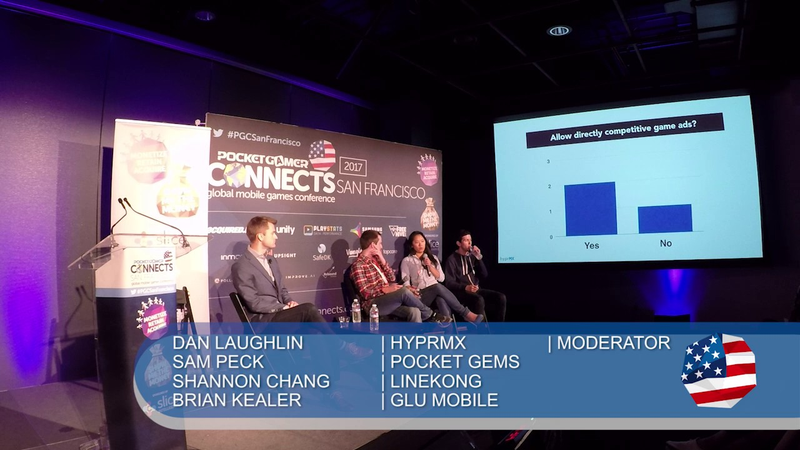
Monetisation masterminds
This discussion features monetization experts from Pocket Gems, Linekong, and Glu Mobile, focusing on the strategic integration of in-app purchases (IAP) and advertising within mobile games.
- Successful mobile monetization requires integrating five to nine ad networks to drive competition and maximize fill rates, despite the technical complexity of managing multiple SDKs.
- Rewarded video ads are now essential for all players, including those who already make in-app purchases, as they increase overall engagement and provide incremental value.
- Developers should move beyond basic payer versus non-payer segmentation by incorporating geographic and behavioral data to optimize both pricing and ad delivery.

King vs Zynga
This analysis examines the financial performance of major mobile gaming companies as of the first quarter of 2015, specifically contrasting the profitability of King and Tencent against the ongoing losses at Zynga.
- As of Q1 2015, King maintains strong profitability with $164 million in profit on $570 million in revenue, while Zynga reports a $47 million loss on $183 million in revenue.
- King is prioritizing shareholder value to combat a stagnant share price, utilizing $303 million in cash reserves for dividends and share buybacks.
- Zynga is undergoing a 18% workforce reduction, cutting 364 employees as it attempts to pivot from a legacy social-gaming model to mobile-centric operations.

Monetizer: Epic Empire
Epic Empire, developed by Pocket Gems, represents a strategic attempt to innovate within the mobile city-building genre by shifting the primary focus from army management to individual character progression.
- Pocket Gems' Epic Empire pivots the mobile city-building genre away from traditional army management by focusing on individual character progression and light RPG mechanics.
- The game utilizes a hard currency system called 'star stones' with seven distinct in-app purchase price points ranging from $1 to $100.
- Hard currency to soft resource conversion is relativistic, meaning the amount of gold received is scaled based on the player's current storehouse capacity.