Naughty Dog
CompanyUnited States
Documents about Naughty Dog
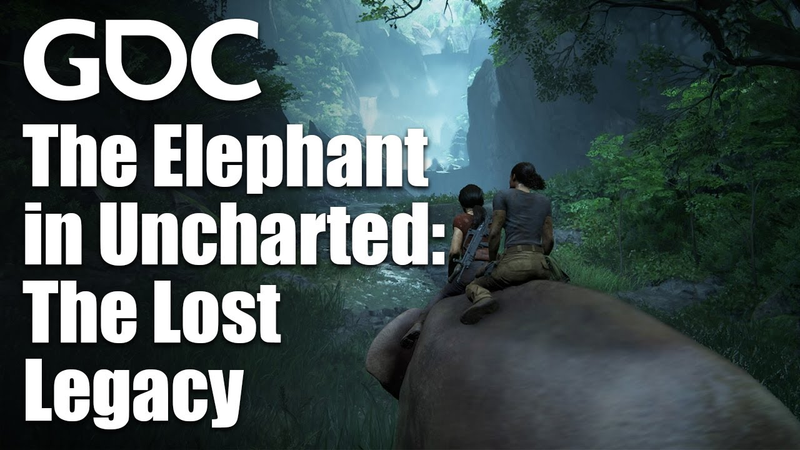
Design vs. Story: How Uncharted: The Lost Legacy Addressed the Elephant in the Room
The development of the elephant-riding sequence in Uncharted: The Lost Legacy serves as a case study in the iterative collaboration between design and narrative teams at Naughty Dog.
- Naughty Dog successfully transformed a static background asset into a core gameplay sequence in 'Uncharted: The Lost Legacy' by responding to playtester feedback requesting interaction with elephants.
- The development team operated under a constrained production timeline of less than one year to deliver a ten-hour game, necessitating a streamlined, cross-departmental workflow.
- To maintain narrative grounding, the team restricted player control to specific splines and replaced standard combat mechanics with subtle interactions like feeding the elephant.
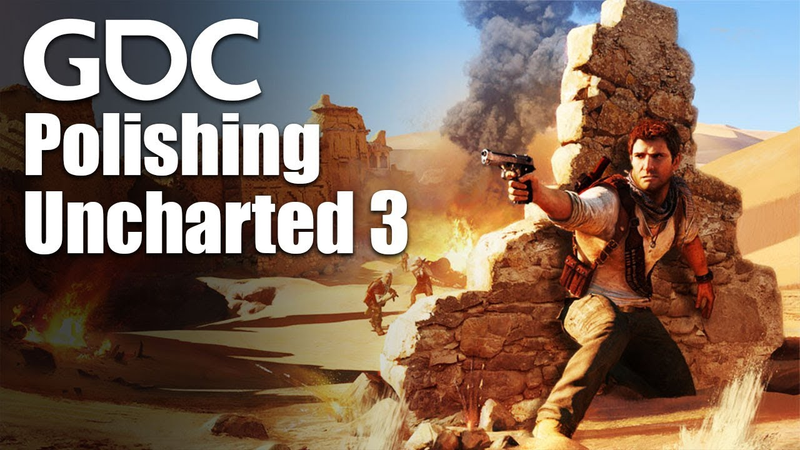
Polishing Uncharted 3
The primary objective of this analysis is to outline the strategies used by Naughty Dog to achieve high-level polish in game development, specifically focusing on the transition from a good product to an exceptional one.
- Naughty Dog allocates 20 to 25 percent of the total development schedule specifically for the alpha and beta polish phases to ensure high-level quality.
- The studio utilizes a rolling deadline system where game sections progress through alpha, beta, and gold stages independently to allow for focused resource allocation.
- Polish is defined as a distinct phase focused on refining presentation and removing imperfections, rather than iterating on core gameplay mechanics which should be finalized earlier.
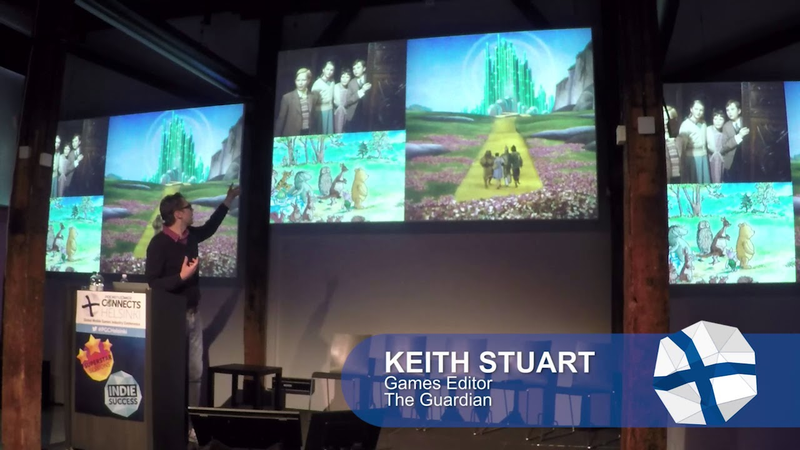
It's not a place, it's a script - Making worlds that mean something
Game industry journalist and author Keith Stuart argues that successful game world-building relies on treating environments as narrative scripts rather than mere backdrops.
- Game environments should be treated as narrative scripts rather than static backdrops, functioning as active characters that reflect the core emotions of the story.
- Developers can deepen player engagement by applying the 'pathetic fallacy,' which involves imbuing landscapes with human emotion to mirror the narrative tone.
- Successful world-building often draws from non-gaming disciplines, such as 18th-century landscape gardening, 1960s urban planning, and the structured exploration paths used in IKEA retail psychology.
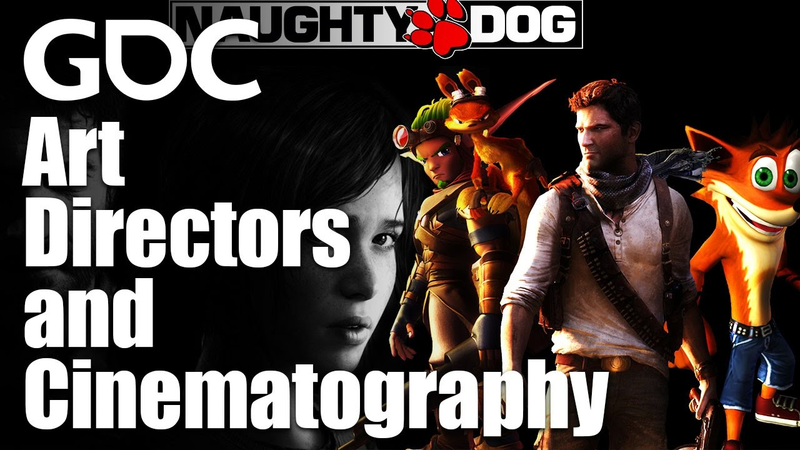
Cinematography for Art Directors
In this 2015 presentation, Naughty Dog’s Robh Ruppel explores the intersection of cinematography and game art, arguing that game developers must move beyond mere technical replication of reality to embrace deliberate, artistic visual storytelling.
- Art directors must treat the game screen as a curated canvas for intentional design rather than a passive recording of 3D space to achieve high-level visual storytelling.
- Game developers should map lighting and color palettes directly to the emotional beats of the script to ensure visual cohesion.
- Cinematographic techniques such as high-contrast lighting, silhouettes, and framing devices are essential tools for isolating characters and guiding player focus.
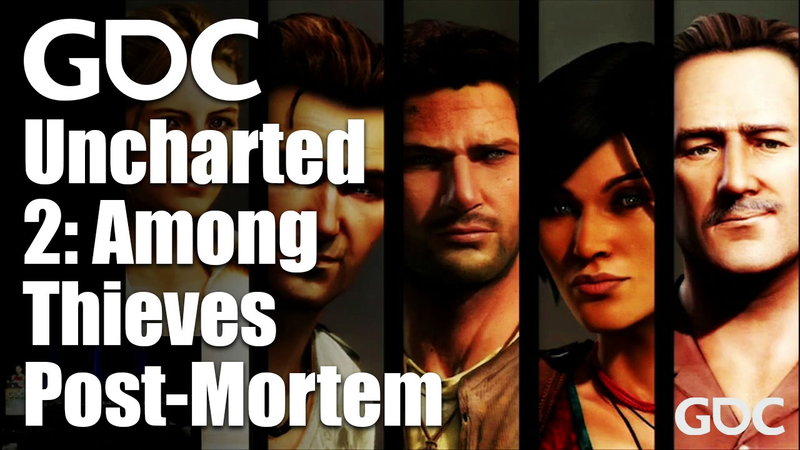
Among Friends - An Uncharted 2: Among Thieves Post-Mortem
The development of Uncharted 2: Among Thieves centered on the ambition to create a playable summer blockbuster, prioritizing character-driven narratives integrated with high-stakes, cinematic set pieces.
- The development of Uncharted 2: Among Thieves relied on a six-month pre-production phase to prototype core innovations like the Dynamic Object Traversal system, which enabled combat on moving platforms.
- Naughty Dog Engine 2.0 leveraged the PlayStation 3's Cell processor to implement advanced graphical features like screen space ambient occlusion and physically correct depth-of-field while maintaining a consistent 30 frames per second.
- The project’s extreme ambition led to a grueling, extended crunch period, prompting the studio to conclude that future development must prioritize disciplined timelines, mandatory time-off policies, and dedicated post-production phases.