GameLab
Company
3 documents in the library are about GameLab, from writers such as DiGRA, Spiel|Formen and Spiel|Formen – Zeitschrift für Play & Game Studies. Each has a summary and key insights with the page they come from.
Connections
Each row is a game or company named alongside GameLab, each column a document, oldest first. A mark means that document names it. Select a row to see those documents.
Documents about GameLab
Defragging the Magic Circle: From Experience Design to Reality Design
"Defragging the Magic Circle: From Experience Design to Reality Design" explores the concept of "Augmented Play" and introduces "Reality Design" as an artistic methodology developed at GameLab Karlsruhe between 2010 and 2012.
- Games are argued to have moved beyond bounded 'magic circle' experiences to actively shape everyday reality, and the report proposes 'Reality Design' as a methodology for working with this shift, developed at GameLab Karlsruhe between 2010 and 2012.
- The empirical basis is two HfG Karlsruhe projects: the augmented-play game and exhibition Paparazzi (January–May 2011), in which 22 students exchanged portraits of one another for an exhibition, and the role-played Reality Design Research Seminars.
- The seminars used contracts, a fictional gender-quota campaign, Joker cards, and a 'Themenspielfeld' board as a feedback tool, and a non-disclosure research agreement was used as a procedural device, generating immersive learning while raising questions about real institutional policy.
Digitale Welten, Analoge Verfahren: Ein Praxiskurs zwischen GameLab und Fotolabor
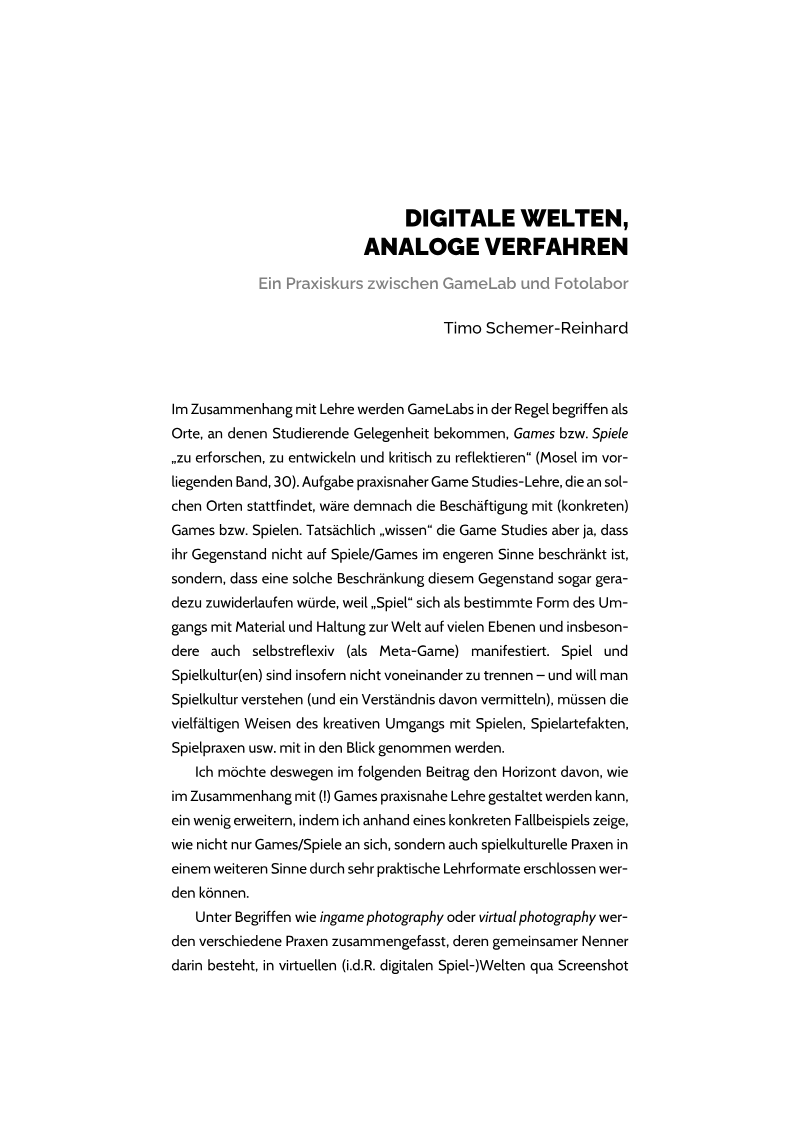
This pedagogical project explores the intersection of digital game culture and historical analog photography, specifically through the practice of virtual photography.
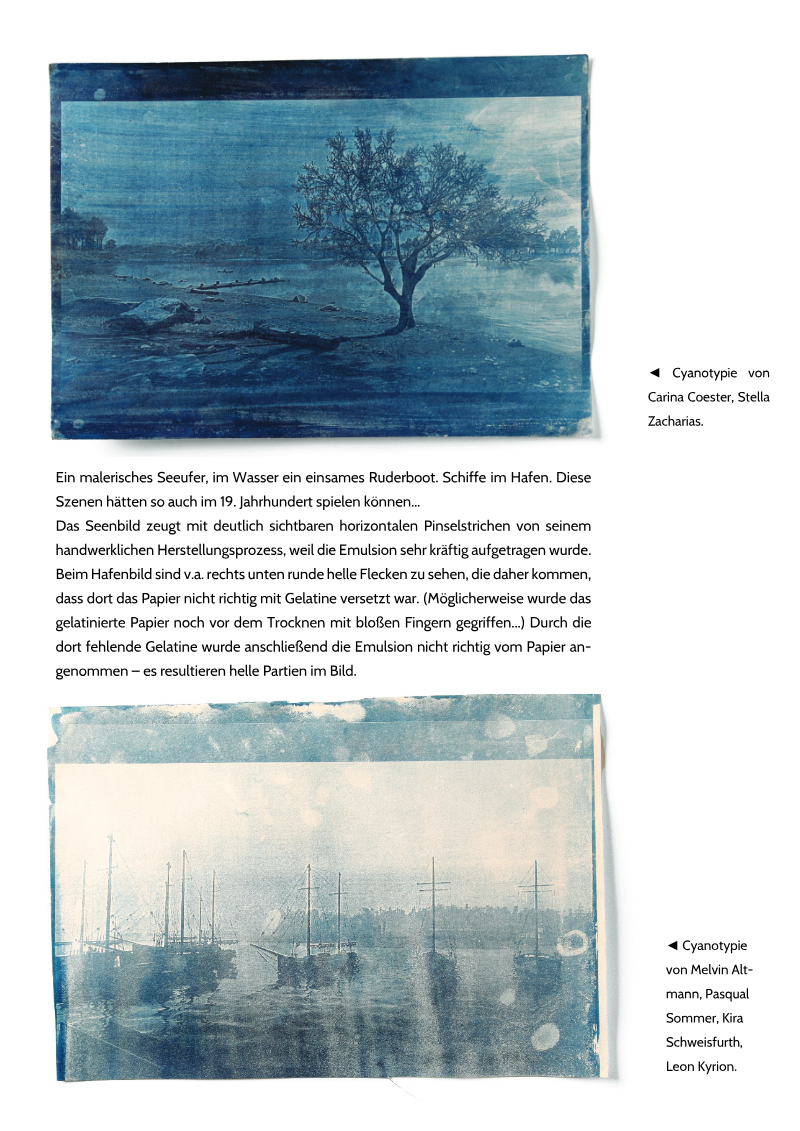
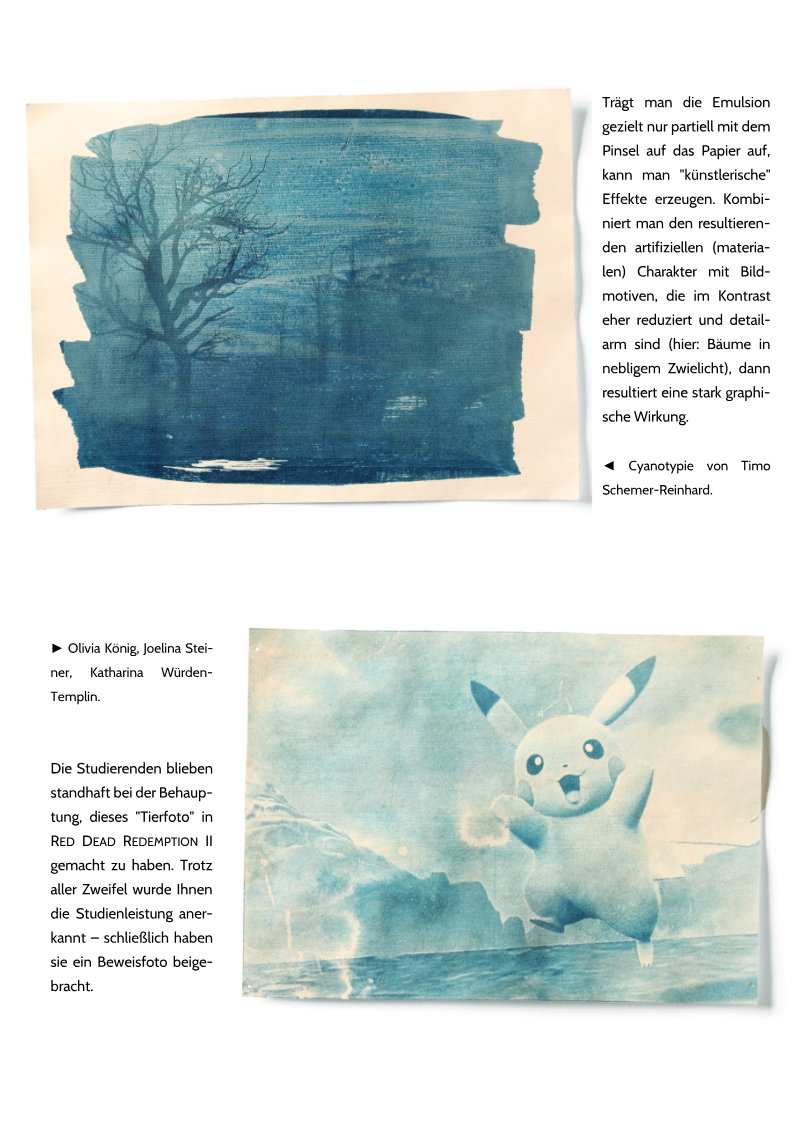
- Combining virtual photography from games like Red Dead Redemption II with the 19th-century cyanotype process creates physical artifacts that bridge digital aesthetics with historical materiality.
- The cyanotype process, developed by John Herschel in 1842, is a non-toxic, iron-based photographic technique that serves as an accessible pedagogical tool for exploring game culture and image production.
- Virtual photography challenges traditional definitions of the medium by creating images independent of real-world referents, yet these images often mimic the technical characteristics of historical photography to achieve perceived authenticity.
Volumetrische Videos zur Datenerhebung: Laborbericht einer spielerischen Annäherung im GameLab
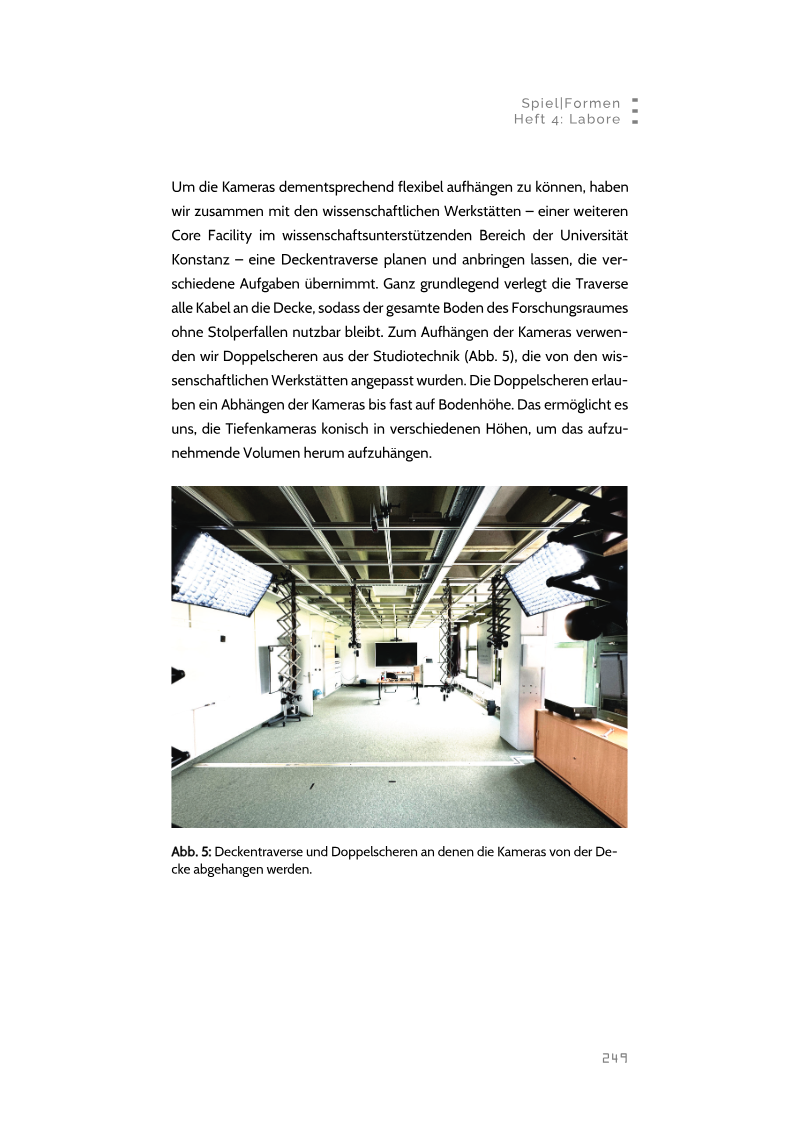
The implementation of a ten-camera Microsoft Azure Kinect DK system at the University of Konstanz’s GameLab serves as a foundational exploration into capturing volumetric video for the MARS-D research project.
- A 10-camera volumetric capture system provides a cost-effective and manageable infrastructure for research projects compared to larger-scale setups.
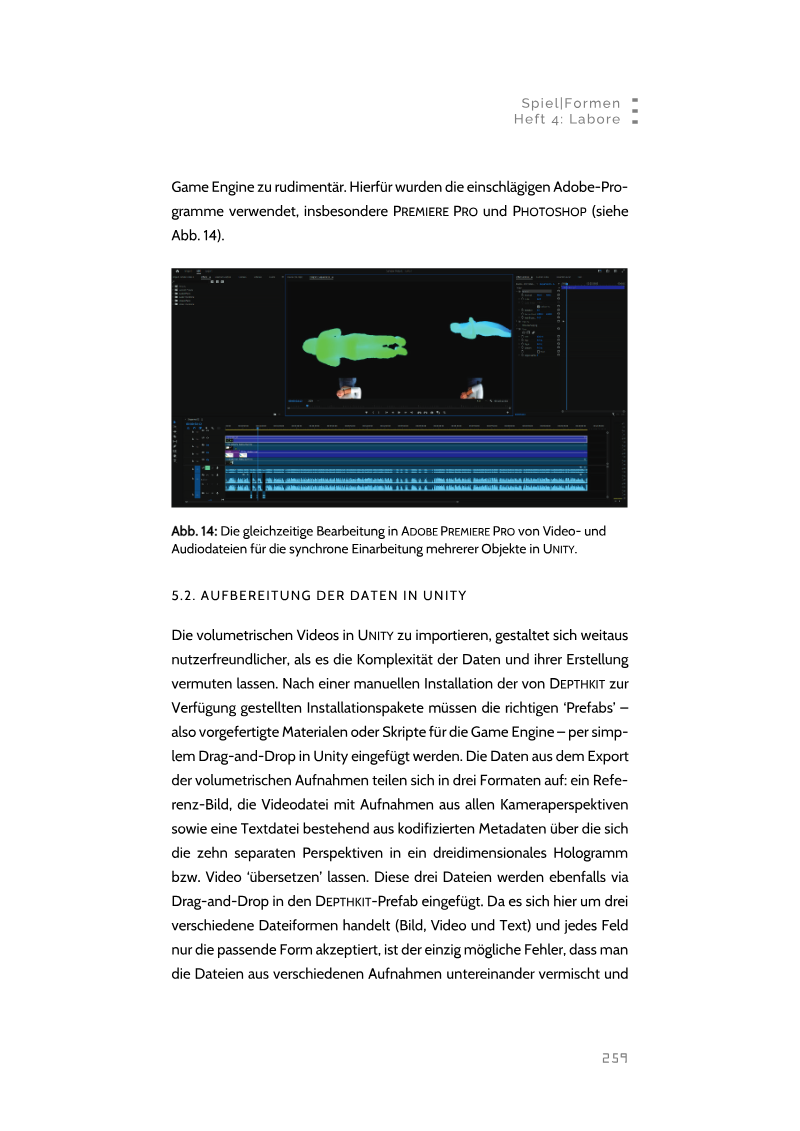
- The Depthkit software is the primary tool for volumetric recording, requiring precise calibration using concentric, expanding circles around the volume center to ensure high-quality data.
- Unity serves as the most accessible and versatile engine for post-production, allowing users to integrate volumetric data into VR environments with the help of community resources and AI-assisted scripting.