Board
Company
Documents about Board
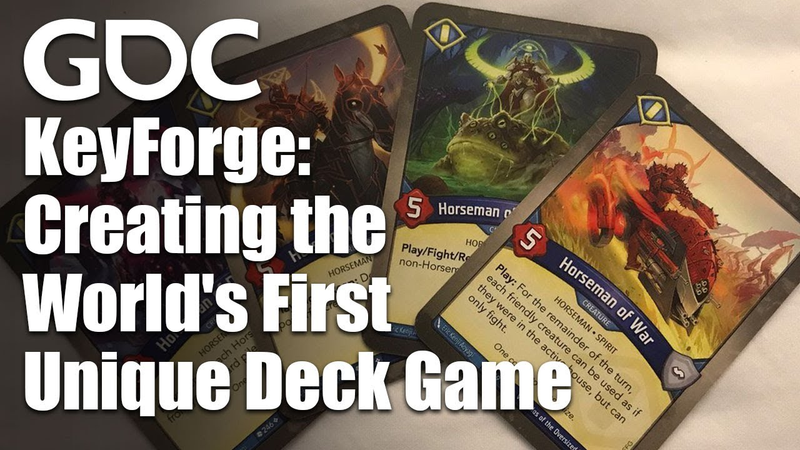
Board Game Design Day: KeyForge: Creating the World's First Unique Deck Game
KeyForge represents a paradigm shift in tabletop gaming by introducing the world’s first unique deck game, where procedural generation ensures that every deck is entirely distinct, non-customizable, and possesses a unique identity.
- KeyForge utilizes a complex algorithm to generate unique 37-card decks, ensuring that the probability of encountering a duplicate deck is statistically negligible until approximately 15 trillion decks are produced.
- Each deck is composed of three distinct houses, an Archon card, and a unique name, with a secondary uniqueness check comparing every generated deck code against the existing database to prevent duplicates.
- The game design prioritizes accessibility with a 10-15 minute learning curve, allowing players to start playing immediately after purchasing a single deck without the need for deck-building or extensive rulebook study.
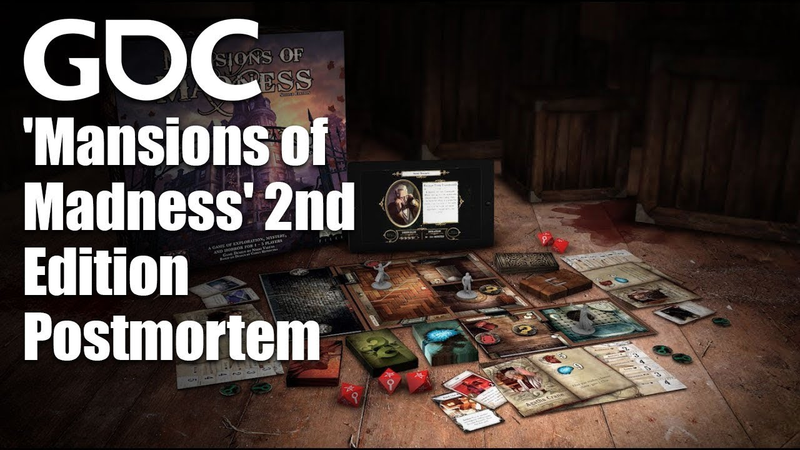
Mansions of Madness 2nd Edition: Postmortem of an App-Integrated Board Game
Mansions of Madness Second Edition serves as a foundational case study for the successful integration of digital applications into tabletop gaming.
- Integrating an app into Mansions of Madness 2nd Edition reduced the game's complexity rating on BoardGameGeek from 3.24 to 2.65, a decrease of over 20%, while simultaneously increasing the content volume by more than 12 times.
- To enable non-programmers on the tabletop design team to build complex game logic, the studio used Playmaker, a visual scripting plugin for Unity that allowed for the creation of encapsulated state machines.
- The development team struggled with significant technical debt and stability issues at launch, with unofficial user polls indicating that certain scenarios crashed on specific platforms up to one-third of the time.
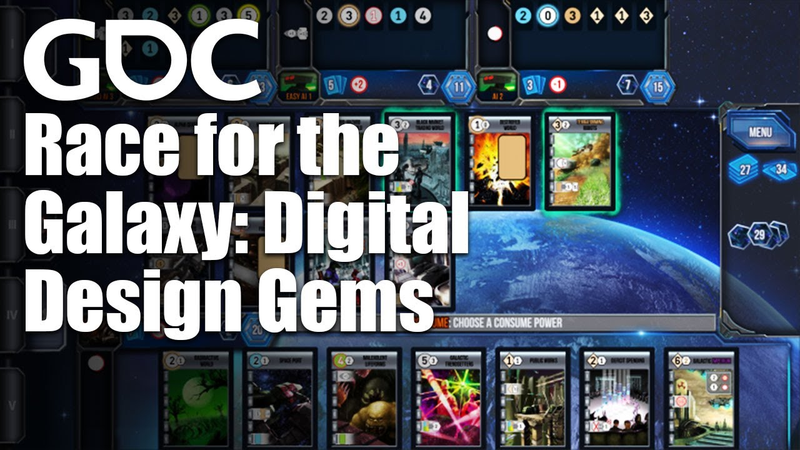
Board Game Design Day: Race for the Galaxy: Digital Design Gems
The successful transition of tabletop experiences into digital environments relies on selecting titles with structured, phase-based mechanics that favor strategic decision-making over physical tactility or social negotiation.
- Digital board game adaptations should prioritize asynchronous gameplay features, such as contextual prompts and automated rule execution, to reduce analysis paralysis and allow players to manage multiple games simultaneously.
- To maintain a vibrant community, developers should display both active and inactive multiplayer games in the lobby to broadcast a high level of activity, even if some games are not joinable.
- Developers should implement a system of 'attention tokens' to triage game events, ensuring that critical moments (like a major move) lock the screen while secondary events (like drawing cards) proceed in the background to maintain both speed and legibility.
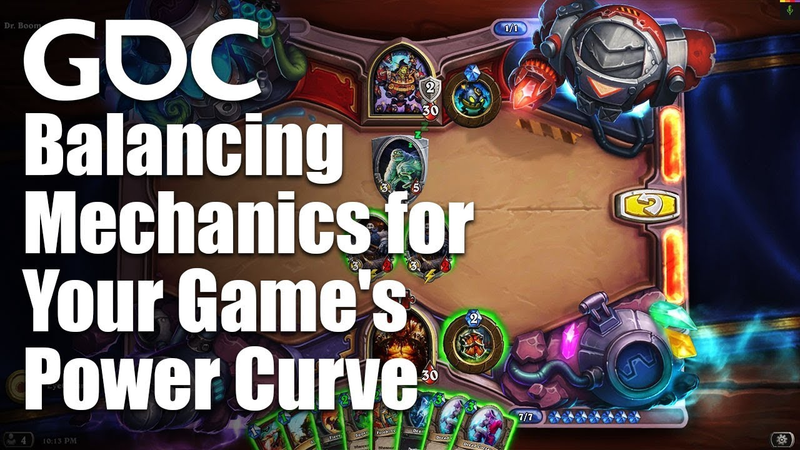
Board Game Design Day: Balancing Mechanics for Your Card Game's Unique Power Curve
Effective card game design relies on the strategic calibration of power curves, which are inherently non-linear due to the trade-offs between card cost, flexibility, and the risk of game termination.
- The power of a card is defined by its ratio of utility to cost, where higher-cost cards must provide significantly greater impact to justify the lack of flexibility and the difficulty of playing them late in a game.
- Games with automatic resource generation, like Hearthstone, require lower power ceilings for high-cost cards because players are guaranteed to reach those mana thresholds, whereas games like Magic: The Gathering must offer massive power payoffs to incentivize players to reach higher costs.
- Granularity in resource systems—such as Magic's ability to use color-specific mana or decimal-like cost adjustments—provides designers with more balancing 'knobs' compared to systems with rigid, chunky cost structures like Pokémon.
Board Game Design Day: Cardboard Interfaces: UX for Board Games
Board game design functions as a form of physical user interface engineering, where the primary objective is to facilitate player interaction with abstract systems.
- Board game usability can be measured using Jakob Nielsen’s five attributes: learnability, memorability, efficiency, accuracy, and satisfaction.
- When designing card layouts, prioritize information placement based on the player's context; for example, Seven Wonders places costs in the top-left for hand-held cards, while Dominion places them in the bottom-left because cards are played on the table.
- To maintain player engagement during scoring phases, designers should avoid slow, manual token-based systems and consider integrated score tracks, provided they align with the game's specific rhythm and frequency of scoring.
Board Game Design Day: White, Brown, and Pink: The Flavors of Tabletop Game Randomness
Game design relies on the strategic application of randomness to balance player agency with unpredictable outcomes.
- Pink noise is the most effective framework for game design because it balances frequent small adjustments with occasional significant events, mirroring natural systems and human perception.
- Input randomness, which presents a randomized state for players to navigate, is superior to output randomness for supporting deep strategic planning.
- Output randomness determines the result of a player’s decision and is best utilized to introduce tactical variance rather than long-term strategy.
The State and Future of Board Games: From Apps to "Legacies"
The board game industry is currently undergoing a period of rapid expansion, marked by a market valuation exceeding $1 billion and the release of over 3,500 titles in 2017.
- The board game industry is experiencing rapid, sustained growth, with over 3,500 new titles being released annually.
- App-integrated board games are an emerging category that utilizes digital components to augment physical play, though they face resistance from players who prefer to avoid screens during tabletop sessions.
- Legacy games, which involve permanent physical alterations to components over a series of sessions, are becoming a permanent design tool rather than a passing trend, appealing to players accustomed to long-form video game campaigns.
OVUS NOVA Is a Board Game Now! - (Turn Based)
The transition of the game Ovus Nova into a turn-based strategy format serves as a case study for evaluating core gameplay mechanics and accessibility.
- The developer rejected the turn-based pivot for Ovus Nova, concluding that the original real-time design better preserves the game's core identity and tension.
- Transitioning to a turn-based format successfully addressed player confusion and visual readability issues but sacrificed the exponential growth mechanics central to the original experience.
- The turn-based prototype utilized a three-action-per-turn system—move, convert to eggs, or detonate—which improved strategic clarity but risked creating predictable, infinite defensive gameplay loops.
Board Game Design Day: Board Game Design and the Psychology of Loss Aversion
Loss aversion serves as a foundational psychological principle in game design, predicated on the observation that the emotional pain of losing an asset is felt approximately twice as intensely as the joy of acquiring an equivalent gain.
- Loss aversion dictates that the emotional impact of losing an asset is approximately twice as intense as the joy derived from gaining an equivalent one, making it a primary driver of player engagement.
- Mechanics that threaten the removal of progress or force resource sacrifice compel players to act irrationally to avoid deficits, creating high-stakes environments that increase emotional investment.
- Designers utilize the endowment effect and endowed progress—providing players with a head start toward a goal—to foster artificial attachments that make the potential loss of progress feel like a significant personal setback.
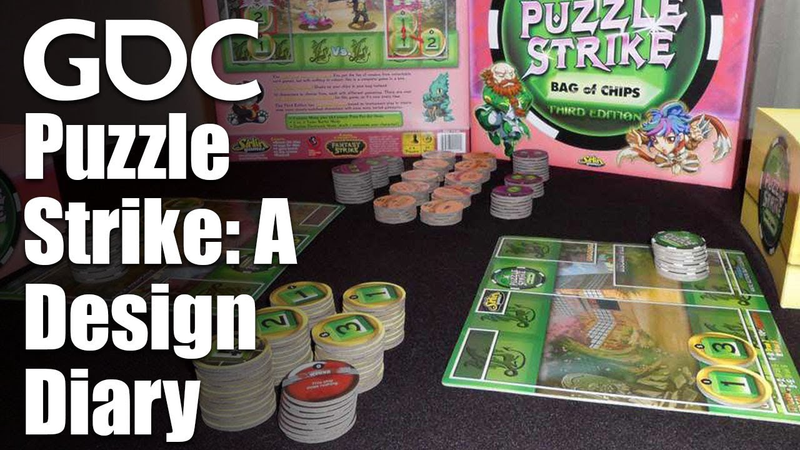
Board Game Design Day: Puzzle Strike: A Design Diary
Puzzle Strike functions as a strategic translation of high-intensity, competitive video game mechanics into a tabletop format.
- Puzzle Strike translates the mechanics of competitive puzzle-fighting games into a tabletop format by prioritizing direct player interaction over the passive, multiplayer solitaire style common in deck-builders.
- The game design utilizes asymmetric character abilities and mechanics inspired by real-time strategy titles like StarCraft to ensure long-term strategic depth and prevent gameplay stagnation.
- Core gameplay revolves around a constant tension between aggressive rushdown tactics and long-term economic development, forcing players to manage risks and resources carefully.
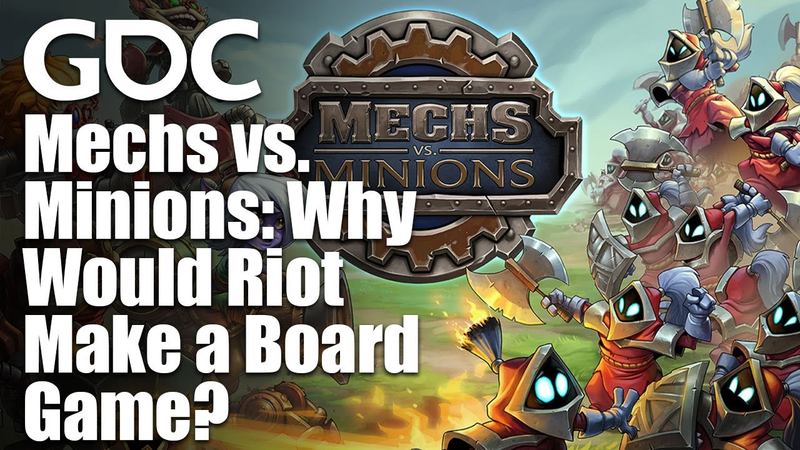
Mechs vs. Minions: Why Would Riot Make a Board Game?
Riot Games ventured into the tabletop market with Mechs vs. Minions to explore creative expression beyond digital platforms, utilizing the intellectual property of League of Legends to foster a unique, cooperative experience.
- Riot Games developed 'Mechs vs. Minions' not as a strategic market acquisition or user retention play, but as a passion project intended to explore their IP in a new medium and create a high-quality experience for their players.
- The project was driven by a small, internal team rather than a large studio mandate, allowing the developers to prioritize product quality over traditional profit margins by reallocating typical marketing budgets into high-end components and game tray design.
- The game design evolved from a competitive programming prototype called 'Weapons of Zombie Destruction' into a cooperative experience, as the team found that cooperative mechanics better suited the team-oriented nature of League of Legends players.
The State & Future of Board Game Design
The board game industry is currently undergoing a period of rapid expansion, characterized by a 10 to 20 percent annual increase in new titles and a increasingly sophisticated player base.
- The board game industry is experiencing rapid growth with a 10 to 20 percent annual increase in new titles, leading to a hyper-competitive market where high-quality design alone no longer guarantees commercial success.
- Designers are increasingly shifting away from self-publishing via crowdfunding toward traditional publishing models to better manage the financial and operational risks of global manufacturing and marketing.
- To remain viable amid low royalty margins, designers must adopt multi-disciplinary, iterative workflows and treat their work with an entrepreneurial mindset rather than focusing solely on creative expression.