Amiga
Company
7 documents in the library are about Amiga, from writers such as DiGRA and Game Developers Conference. Each has a summary and key insights with the page they come from.
Connections
Each row is a game or company named alongside Amiga, each column a document, oldest first. A mark means that document names it. Select a row to see those documents.
Documents about Amiga

Guilty (Un)pleasures: The Reception of Muriel Tramis's Erotic Trilogy in France and the United Kingdom
This paper examines the sharply divergent reception of Muriel Tramis's Erotic Trilogy, comprising Emmanuelle (1989), Geisha (1990), and Fascination (1991), in France and the United Kingdom.
- The paper contrasts the reception of Muriel Tramis's Erotic Trilogy (Emmanuelle 1989, Geisha 1990, Fascination 1991): British publications dismissed the games almost universally, while French magazines elevated at least Fascination to cult status.
- Fascination, one of the early digital games with a Black female protagonist, best illustrates the divide: British journalists mocked its erotic content and plot inconsistencies, whereas French critics praised it, and it still attracts positive attention in contemporary blogs.
- The author attributes British hostility partly to Tramis's role as lead designer across all three games, and notes that none of the cited reviews were written by women.

Preserving and Emulating Australian Made Videogames of the 1990s
This paper reports on a three-year Australian Research Council Linkage Project, "Play It Again," which aims to document, preserve, and make playable a curated selection of 50 Australian-made videogames from the 1990s.
- The 'Play It Again' project is a three-year Australian Research Council Linkage Project by Swinburne University of Technology and RMIT University, with partners ACMI and AARNet, aiming to document, preserve, and make playable 50 Australian-made videogames from the 1990s.
- The project treats 1990s games as a neglected area of screen history that requires active digital preservation, creating disk images from physical media and making them playable via Emulation-as-a-Service Infrastructure (EaaSI) and open-source emulators.
- The selected titles span DOS, Windows 3.11, Windows 98, Amiga, Game Boy, NES, Super Nintendo, and Sega Saturn, distributed on 3.5-inch floppy disks, CD-ROMs, and cartridges that each require specialised digitisation tools.
Port or Conversion? An Ontological Framework for Classifying Game Versions
"Port or Conversion?" argues that the term "game port" is conceptually vague and historically inconsistent, yet indispensable for game analysis and preservation.
- The paper argues that 'game port' is a conceptually vague and historically inconsistent term, yet indispensable for game analysis and preservation, and that existing definitions based on names, platforms, marketing, legality, or literal code transfer fail to yield a stable academic category.
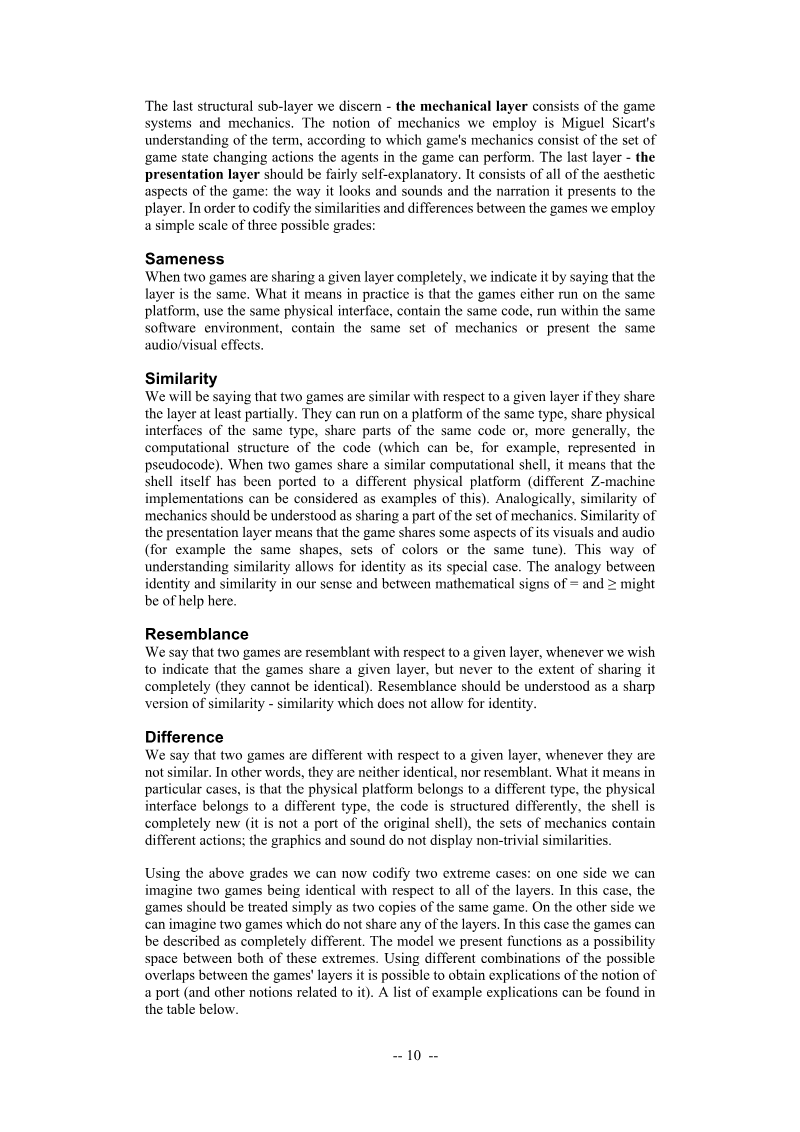
- To fix this, it proposes a Carnapian explication built on a three-layer ontology (physical, structural, and presentation layers) paired with a graded scale of sameness, similarity, resemblance, and difference for classifying game versions by fidelity.
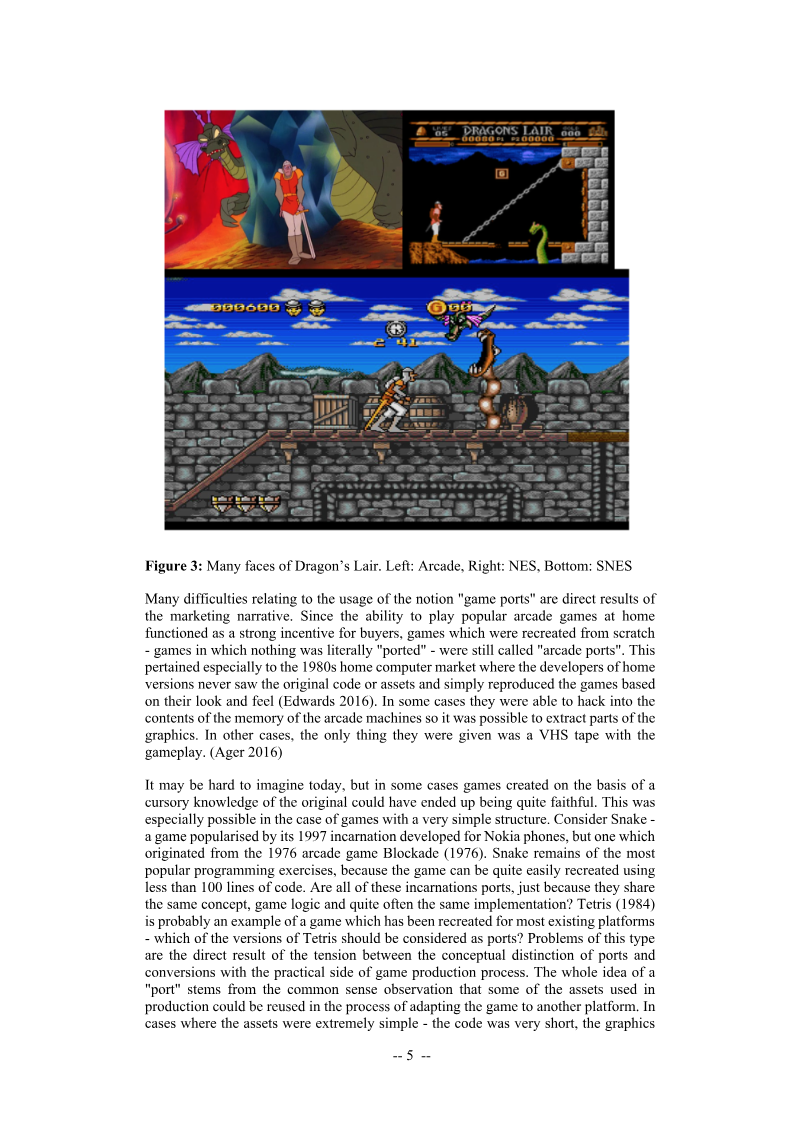
- Case studies such as multiple Pac-Man versions, Thunder Blade's Atari ST and Amiga releases, and Marvel vs. Capcom on PlayStation 1 show the same title can differ dramatically across platforms, with fidelity expectations focused far more on mechanics than on audiovisual presentation.
Classic Game Postmortem - Another World
The development of Another World between 1989 and 1991 represents a landmark shift in game design, characterized by a transition from traditional sprite-based graphics to an entirely polygon-based cinematic experience.
- The development of Another World (1989–1991) achieved a cinematic experience by utilizing a custom, proprietary interpreted language that allowed for real-time iteration and a total file size of just 84KB.
- The game transitioned from traditional sprite-based graphics to an entirely polygon-based engine, enabling high-rhythm narrative flow on Amiga hardware despite severe memory and color palette constraints.
- Development relied on an improvisational, chronological approach rather than rigid design documents, allowing the narrative to evolve through experimentation and discovery.
The Human Machine Art Interface: Arcade Port Aesthetics and Production Practices
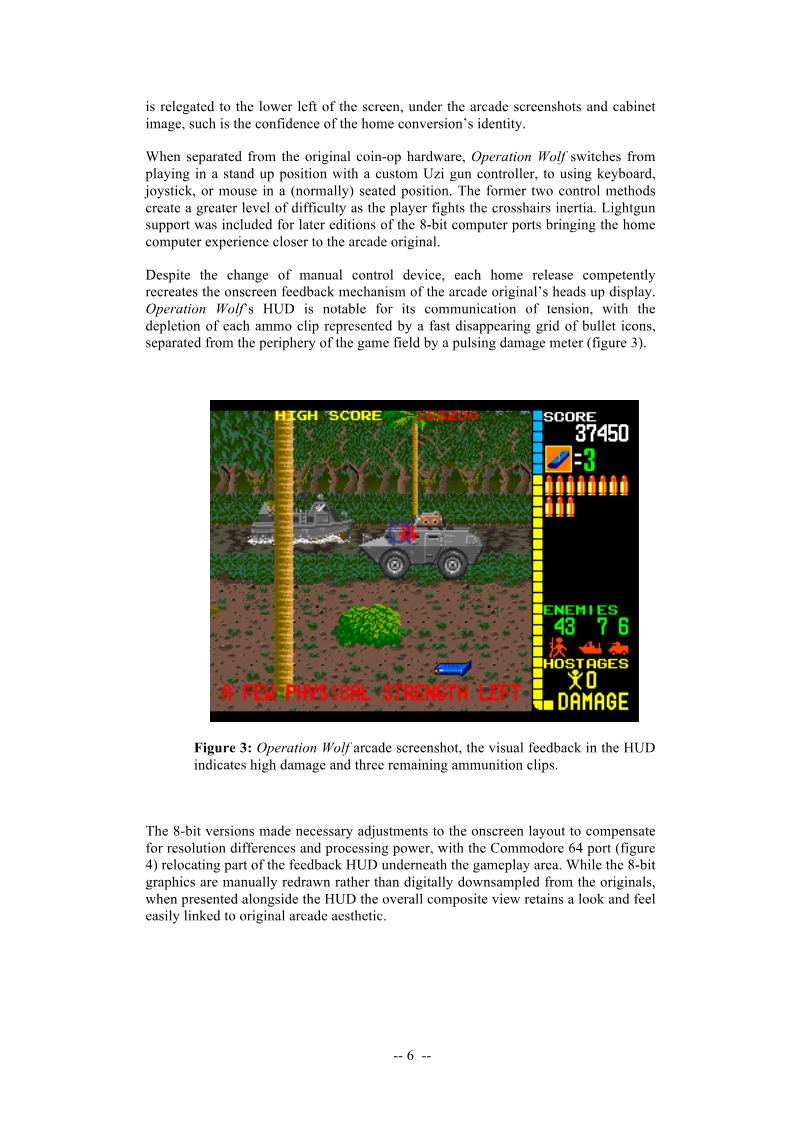
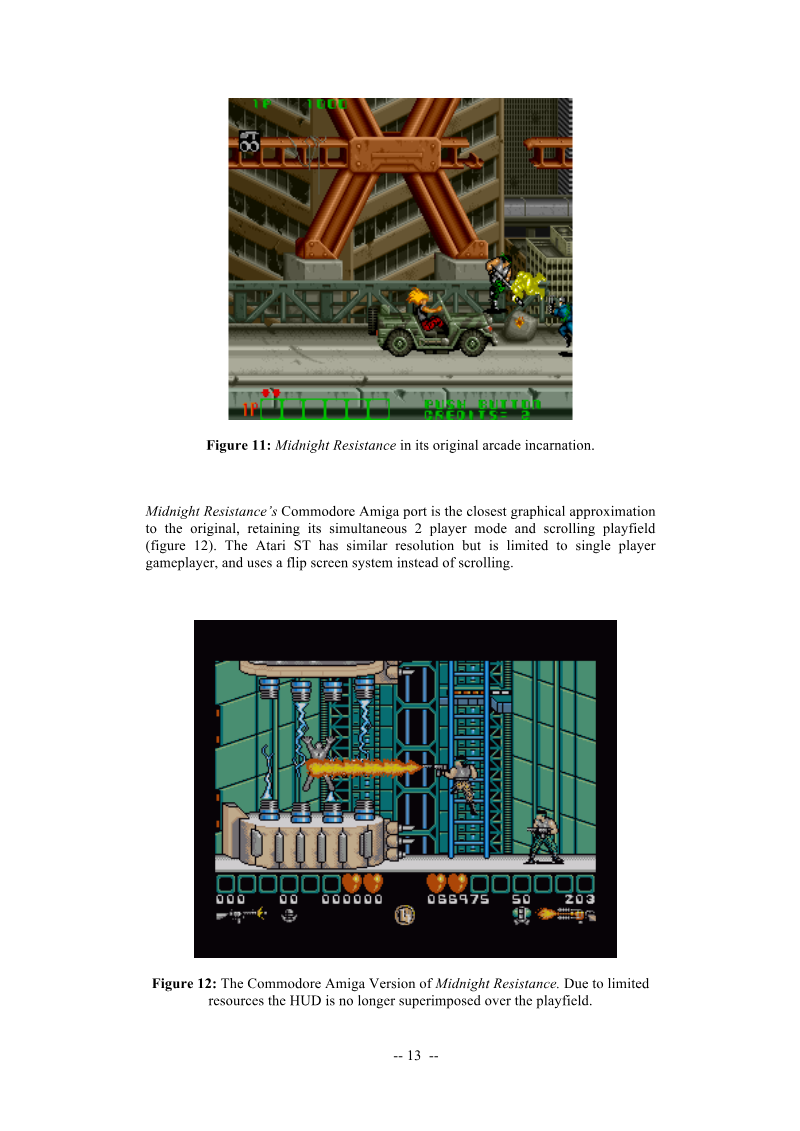
Nolan's 2018 DiGRA paper examines how Japanese arcade games from the 1980s and 1990s were adapted for UK-based home computers, including the ZX Spectrum, Commodore 64, Amiga, and Atari ST. Rather than working from source files, British conversion teams typically reconstructed graphics, music, and gameplay directly from the…
- British conversion teams typically reconstructed arcade graphics, music, and gameplay by capturing video from the cabinets and manually redrawing assets, rather than working from source files, which produced substantial aesthetic departures from the originals.
- The authors argue that these departures were shaped by individual teams' stylistic choices, not by platform constraints alone, reframing the ports as creative adaptations rather than duplications.
- Conversion teams including Arc, Graftgold, Special-FX, Ocean, and Tiertex relied on stippling to simulate extra colours within restricted palettes, custom converter tools to move assets between systems, and one-button joystick control schemes.
Classic Game Postmortem - Populous
The development of Populous represents a pivotal moment in the history of the god game genre, emerging from the unlikely intersection of failed business ventures and technical necessity.
- Populous achieved massive commercial success upon release, accounting for one-third of Electronic Arts' total annual revenue.
- The god game genre was born from a technical pivot when the developers abandoned complex character AI in favor of a mouse-driven terrain manipulation system.
- Despite the game's high sales, the studio faced severe financial instability due to unfavorable royalty structures, illustrating the risks of independent development in the late 1980s.
History of Digital Games in Turkey
This paper, a DiGRA 2005 conference study by Erdal Yılmaz and Kürşat Çağıltay of Middle East Technical University, traces the history of digital games in Turkey and assesses the state of its game development industry.
- Turkish players' habits and play durations parallel global averages, but domestic game development has been extremely limited and poorly documented.
- Digital games reached Turkey in the early 1980s via arcade-style "Atari Salonu" halls, which prompted a 1985 regulatory response requiring local permits.
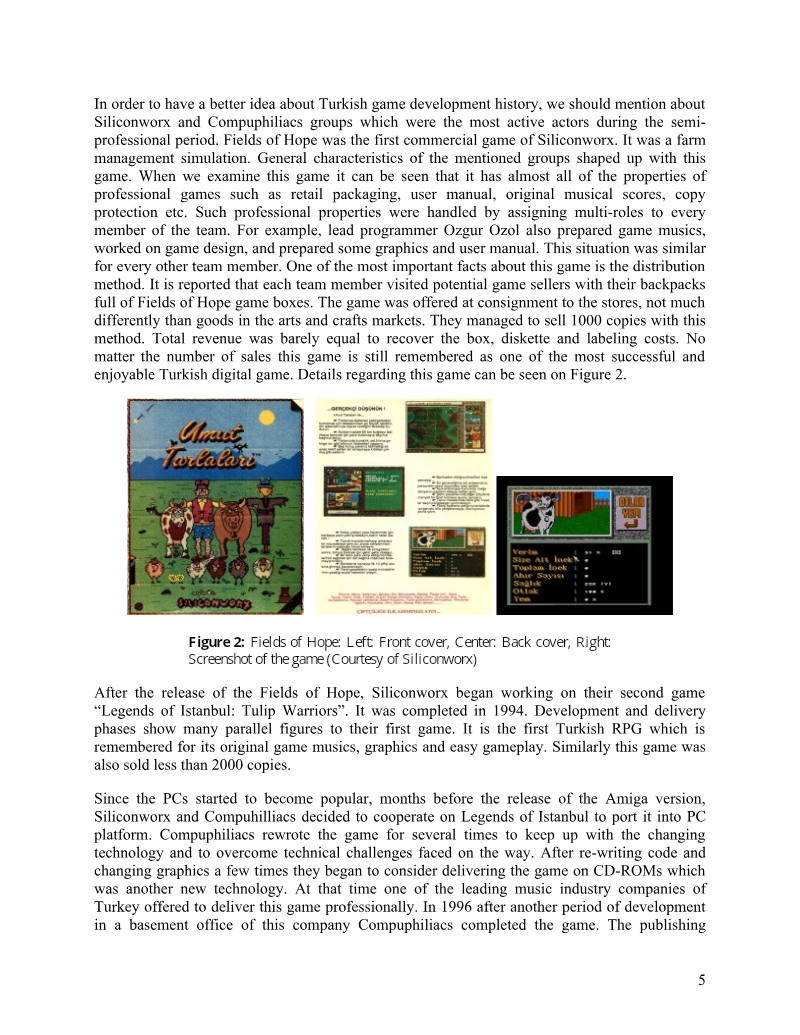
- Turkish home game development passed through three phases: an amateur 1980s period built on the Commodore 64 and magazine-published source code, a semi-professional 1990s period centered on Amiga and PC groups like Siliconworx and Compuphiliacs, and a professional stage from 2000 onward.