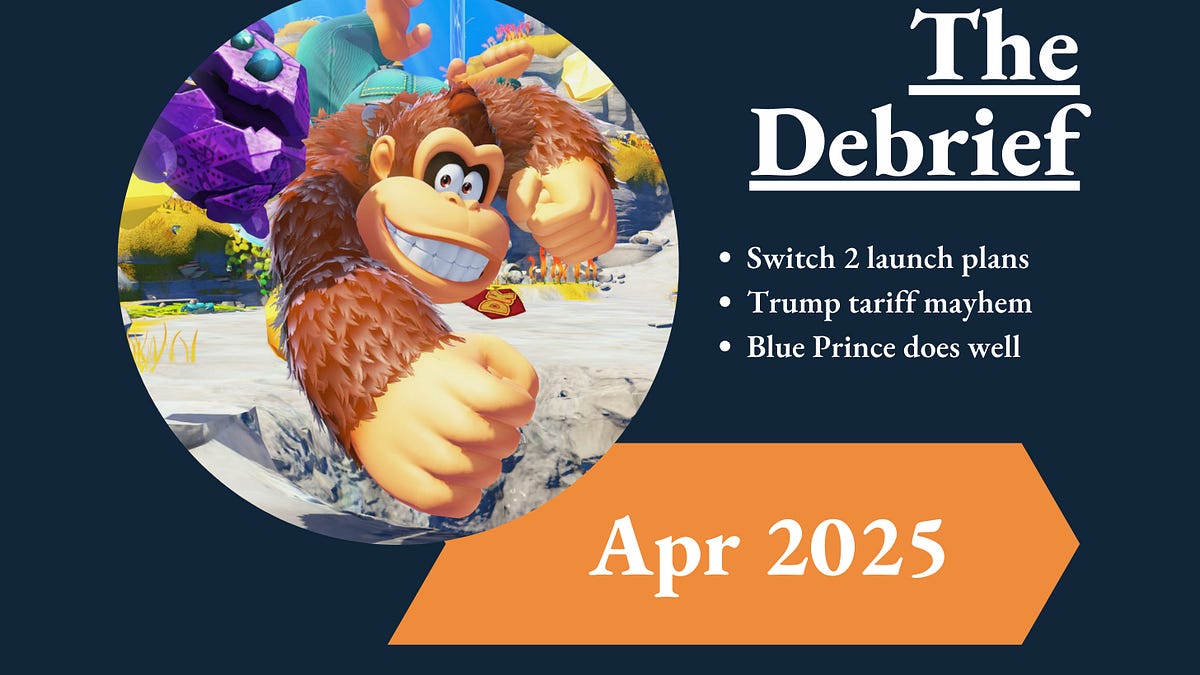
The April 2025 edition of The Debrief serves as a monthly synthesis of critical developments within the global video game industry. The publication aims to provide stakeholders with a concise overview of major hardware announcements, geopolitical shifts affecting trade, and notable commercial successes within the independent game sector.
Key industry developments during this period include the official announcement of the Nintendo Switch 2, covering its pricing, technical specifications, and scheduled release date. Concurrently, the industry faced significant operational challenges stemming from a trade war initiated by the Trump administration, which introduced volatility into international markets. On the creative front, the independent segment saw strong market performance from titles such as The Blue Prince and Clair Obscur: Expedition 33.
The scope of the analysis encompasses global industry trends throughout April 2025. Beyond hardware and trade, the coverage highlights regulatory friction, specifically regarding new European Union mandates concerning in-game currency, and examines unconventional marketing strategies, such as the integration of high-profile celebrity talent into fighting game rosters. The information is curated through a review of weekly industry memos, providing a high-level summary of the most impactful news cycles for professionals monitoring the intersection of gaming, policy, and commerce.
The inclusion of professional footballer Cristiano Ronaldo as a playable character in the fighting game Fatal Fury: City of the Wolves serves as a strategic manifestation of Saudi Arabia’s broader soft power initiatives. Rather than a conventional brand partnership, this collaboration represents the convergence of the nation’s aggressive investment in global sports and its expanding influence within the video game industry. By leveraging Ronaldo’s massive social media reach—exceeding one billion followers—the Saudi state aims to modernize its international image and align with the interests of its predominantly young domestic population, as outlined in the Vision 2030 economic diversification strategy.
The tactical foundation for this integration was established through the Saudi state’s acquisition of the Japanese developer SNK, which began with a minority stake in 2017 and culminated in near-total ownership by 2022. This corporate control, paired with the Public Investment Fund’s heavy involvement in esports—including the acquisition of major tournament organizers like ESL and FaceIt—has allowed the state to create a cohesive ecosystem where sports and digital entertainment overlap. The partnership effectively utilizes Ronaldo as a high-profile ambassador to provide credibility to Saudi-hosted events, such as the Esports World Cup.
While the move has drawn criticism from some industry observers regarding its ties to state-building, the integration appears designed to bypass traditional scrutiny by focusing on mechanical gameplay value and viral social media engagement. By embedding a global icon into a well-regarded fighting game franchise, the strategy successfully targets mainstream audiences who may remain unaware of the underlying geopolitical subtext. This development highlights a sophisticated, long-term approach to cultural influence that leverages the intersection of celebrity, competitive gaming, and state-backed capital to reshape global perceptions of the Kingdom.
A significant conflict has emerged between the European Union’s Consumer Protection Co-operation Network (CPC) and the video game industry following the release of new, non-binding guidelines regarding in-game currencies. Published in March 2025, these principles aim to regulate virtual economies by treating in-game currencies as representations of real-world monetary value. This shift challenges the long-standing industry consensus that such currencies exist within a "closed loop" and possess no external value, potentially subjecting developers to stringent new consumer protection, anti-money laundering, and gambling regulations.
The industry, represented by trade associations such as Video Games Europe and the European Game Developer Federation, has expressed strong opposition, citing a lack of consultation and procedural transparency. Critics argue that the CPC bypassed established legislative processes, including the ongoing development of the Digital Fairness Act, to impose these requirements. Industry experts warn that the guidelines are overly prescriptive, potentially forcing developers to abandon common monetization tactics—such as currency bundles or dynamic pricing—and necessitating costly, large-scale game redesigns to maintain compliance within the European market.
The scope of this dispute encompasses the broader European consumer games market, which is valued at approximately €28 billion and employs over 114,000 people. While the CPC maintains that the principles are necessary to protect vulnerable consumers and ensure pricing transparency, the industry’s resistance suggests a looming legal battle. Because the guidelines are technically non-binding recommendations, the ultimate enforcement will likely fall to national courts, creating a period of significant regulatory uncertainty for developers operating within the European Union.
The global video games industry faced significant operational disruption in April 2025 following the introduction of aggressive, reciprocal trade tariffs by the United States administration. The primary thesis of the analysis is that these protectionist measures, intended to address trade deficits, created immediate market volatility and forced hardware manufacturers to pause sales or delay product launches in North America. The industry, which relies heavily on global supply chains, faced potential cost increases of 40% to 68% for consoles and laptops, prompting companies like Nintendo, Razer, and Framework to adjust their distribution strategies in anticipation of these taxes.
The scope of the impact was international, affecting manufacturing hubs in China, Taiwan, Vietnam, and Cambodia, with reciprocal tariff rates reaching as high as 49% for some nations. The methodology behind these tariffs—a formula based on trade deficits—was widely criticized by economists as regressive and economically damaging. The resulting market instability, characterized by a sell-off of government bonds and a decline in major stock indices, ultimately forced a policy reversal. The administration subsequently granted a 90-day pause on reciprocal tariffs for most nations, though it maintained a 125% tariff on Chinese goods.
While the temporary reprieve stabilized financial markets and allowed hardware companies to resume operations, the industry remains in a state of uncertainty. The persistent 10% baseline tariff on global imports and the looming threat of renewed reciprocal measures in July continue to exert pressure on pricing and supply chain logistics. The analysis concludes that while the immediate crisis has been mitigated, the volatility of the current trade regime necessitates ongoing caution for businesses operating within the North American gaming sector.
The official unveiling of the Nintendo Switch 2 serves as the primary focus of this industry analysis, which evaluates the console’s potential to revitalize a stagnant gaming market. While the hardware introduces iterative improvements—such as a 7.9-inch 1080p display, magnetic Joy-Con 2 controllers, and enhanced 4K docked performance—the device’s success remains contingent on balancing its premium pricing against a robust software library. The console features new social integration through a Discord-like GameChat service and innovative controller functionality that allows the Joy-Con 2 to operate as a mouse, signaling a strategic effort to broaden the platform's appeal to diverse audiences.
The software strategy emphasizes a mix of first-party titles, such as a new 3D Donkey Kong entry and Mario Kart World, alongside significant third-party support from major publishers. The inclusion of high-profile titles like Cyberpunk 2077, Street Fighter 6, and an exclusive From Software project, The Duskbloods, suggests a concerted effort to attract a wider demographic. However, the launch price of $449, or $499 for a bundled version, presents a significant barrier to entry that may challenge initial consumer adoption, particularly given Nintendo’s historical positioning as a family-oriented, accessible brand.
Beyond the hardware launch, the industry landscape is marked by shifting economic pressures. Reports indicate that Discord is exploring an initial public offering, while Nintendo faces potential supply chain complications due to new tariffs on production hubs in Vietnam and Cambodia. Additionally, market data from 2024 highlights a decline in monthly in-game spending among children, with average expenditures falling to €31. These developments underscore a complex environment where hardware innovation must contend with macroeconomic volatility and evolving consumer spending habits.
The video games industry is currently defined by a fierce competition for finite player attention rather than just revenue growth. Market analysis indicates that the industry is experiencing modest, single-digit growth, with the combined PC and console market projected to reach $92.7 billion in revenue by 2027. However, this growth is heavily reliant on a few major titles, such as the anticipated release of Grand Theft Auto VI and the Switch 2, while the broader market remains largely stagnant.
Data reveals a significant concentration of playtime in older titles, particularly on PC, where 67% of playtime is dedicated to games over six years old. In contrast, console ecosystems show slightly higher engagement with new releases. This environment forces developers to compete aggressively for a share of existing player time. To succeed, the industry is advised to adopt three primary strategies: focusing on specific, well-defined audiences rather than broad personas, leveraging intellectual property through user-generated content (UGC) platforms like Roblox and Fortnite, and improving accessibility through cross-platform or cross-projection strategies.
The analysis highlights that while UGC platforms were once viewed as a threat, they can have an additive effect on total playtime within ecosystems like PlayStation. Furthermore, the shift toward "cross-projection"—building light infrastructure to allow progression across select devices—offers a viable path for developers to expand reach without the high costs of full cross-platform optimization. Ultimately, success in the current market requires a disciplined approach to development, where studios align their projects with the specific needs of niche demographics and ensure seamless access to their content.
The 2025 Game Developers Conference (GDC) in San Francisco served as a focal point for assessing the current state of the global video games industry, highlighting significant shifts in policy, economic viability, and development philosophy. The event, which drew thousands of international professionals, provided a platform to examine the intersection of government regulation, corporate austerity, and evolving market demands.
A primary finding involves the potential dissolution of the Serious Games Initiative, the only state-backed institution in the Western world dedicated to using interactive media for public policy. Following a March 2025 executive order aimed at reducing federal bureaucracy, the initiative—housed within the Wilson Center—faces imminent closure. This development raises concerns regarding the future of serious game development in the West and the potential for other nations to gain a strategic advantage in using games for public communication and policy influence.
Furthermore, the conference underscored growing industry skepticism regarding the cost-to-value ratio of large-scale trade events. Attendance appeared lower than in previous years, a trend attributed to widespread industry layoffs—which affected 11% of the global workforce in 2024—and corporate budget tightening. With individual trip costs estimated between $3,000 and $5,000, many firms are reevaluating their participation, potentially shifting future investment toward emerging markets in Southeast Asia, Latin America, and the Middle East.
Finally, the industry is entering a "get to the point" era, characterized by a heightened focus on efficiency. This philosophy applies both to game design, which must increasingly respect limited player attention, and to business operations, where developers are under pressure to deliver concise, high-impact pitches to cautious investors. This shift reflects a broader market environment where, despite the success of major titles, securing funding remains a significant challenge for the majority of developers.
The March 2025 edition of the Video Games Industry Memo serves as an analytical Q&A column designed to provide industry professionals with insights into current market trends and strategic developments. The primary objective is to evaluate the health of specific industry segments, examine the intersection of generative artificial intelligence with gaming, and offer subjective commentary on notable software releases from the first quarter of 2025.
The content focuses on identifying pockets of growth and success within the broader games industry, which has faced significant volatility. A central theme involves the strategic integration of generative AI within the Netflix ecosystem, specifically exploring how the platform is leveraging these technologies to influence its gaming and interactive media initiatives. By addressing these topics, the analysis aims to clarify how major streaming platforms are positioning themselves within the competitive landscape of digital entertainment.
The scope of this analysis is global, covering the early months of 2025. The methodology relies on expert industry commentary and synthesis of current market activities rather than quantitative survey data. As a subscription-based publication, the material is curated for industry stakeholders seeking professional perspectives on emerging business models and creative trends. The analysis concludes that while the industry remains in a state of flux, specific sectors and technological applications—particularly those involving AI integration—are demonstrating resilience and potential for future expansion.
The provided text examines the resilience and strategic evolution of live service games, using The Elder Scrolls Online (TESO) as a primary case study. The central thesis posits that while the live service model faces significant industry skepticism following high-profile failures in 2024, success remains achievable for developers who prioritize sustainable community building, flexible player engagement, and clear, focused design over chasing perfection.
Matt Firor, Studio Director at ZeniMax Online Studios, highlights that TESO’s longevity—marked by a decade of operation and $2 billion in lifetime revenue—stemmed from the team’s ability to pivot development priorities. Specifically, the game underwent a fundamental transformation following the release of Skyrim, shifting from a traditional tab-target MMO structure to an action-oriented experience that better aligned with player expectations. Firor emphasizes that modern live service developers must design for "fickle" audiences by making titles easy to return to, utilizing horizontal progression systems, and focusing on specific, well-executed mechanics rather than attempting to compete with established, content-heavy giants at launch.
The analysis contextualizes these findings within the broader 2025 gaming landscape, noting that the industry is not necessarily in decline but is experiencing a shift in how players allocate their limited time. The text also touches upon significant industry developments, including Scopely’s $3.5 billion acquisition of Niantic’s games division and ongoing regulatory challenges for major platforms like Apple in Brazil. By contrasting the struggles of recent high-profile live service titles with the steady, community-focused growth of TESO, the content offers a cautious but optimistic outlook for developers capable of adapting to evolving player habits and market demands.
The video game industry faces a significant cultural challenge regarding the preservation of its history, which directly impacts its perceived value and long-term influence. While other creative sectors like literature and film benefit from established archival practices and institutional respect, the games industry often treats its own history as disposable. This lack of a centralized strategy for care—compounded by a corporate tendency to prioritize short-term commercial secrecy over historical documentation—reinforces the perception that games are merely transient products rather than culturally significant works.
The National Videogame Museum (NVM) in Sheffield serves as a primary case study for these systemic issues. Despite its mission to curate the industrial and social history of gaming through a collection of over 5,000 objects, the institution faces headwinds ranging from historical operational challenges to a lack of industry cooperation. Developers and publishers frequently obfuscate design processes to maintain the illusion of "fully realized" products, which inadvertently hinders the ability of museums to preserve the messy, developmental detritus essential for telling a complete story of the medium.
Addressing this deficit requires a multi-layered approach involving local, national, and international interventions. The industry must move toward a "distributed" cross-sector alliance that treats preservation as a form of soft power. Recommendations include establishing national flagships similar to Australia’s ACMI, fostering deeper ties between developers and cultural institutions, and implementing international standards for archival access. Without a concerted effort to value and document its past, the industry risks confirming the biases of critics who view games as disposable, ultimately weakening the medium’s standing in the broader cultural conversation.
The UK video games industry currently faces a significant dilemma regarding government proposals on artificial intelligence and copyright law. While the broader creative sector has launched the "Make It Fair" campaign to oppose government plans that would allow AI models to scrape copyrighted content under an "opt-out" framework, the games industry has remained conspicuously silent. The primary thesis is that this silence is not an endorsement of the government’s position, but rather a result of the industry being caught between its creative interests and its deep integration with international technology companies that are heavily invested in generative AI.
The government’s consultation, influenced by the AI Opportunities Action Plan, has been criticized for favoring AI innovation at the expense of rights holders. Industry experts argue that the proposed "opt-out" system creates an unreasonable burden on developers to protect their intellectual property. Furthermore, many within the games sector are skeptical of the current utility of generative AI, noting that it often fails to integrate effectively into production pipelines and lacks the precision required for high-quality game development. Despite these concerns, the industry’s reliance on global parent companies—many of which are actively pursuing AI growth strategies—prevents a unified public stance.
The analysis suggests that while the games industry may not join the public "Make It Fair" campaign, it can still exert influence through private lobbying and by providing technical expertise to policymakers. By demonstrating the limitations of current generative AI and highlighting the viability of private, copyright-respecting models, the sector could help steer government policy toward an "opt-in" framework. Ultimately, the industry must navigate the tension between its role as a creative powerhouse and its entanglement with the global tech giants that currently dominate the AI narrative.
The Winter 2024 financial analysis provides a comprehensive overview of the video game industry’s performance during the final quarter of the year, highlighting a period of significant transition and uneven growth among major market players. The primary thesis suggests that the industry is grappling with the tension between maintaining established business models and adapting to shifting consumer expectations, resulting in a landscape where only select companies achieved strong financial outcomes.
Key findings indicate a stark divergence in performance. Sony emerged as a standout performer, reporting an 18% year-on-year revenue increase to ¥4.41 trillion, driven by the sale of 9.5 million PlayStation 5 consoles and a record-breaking 129 million monthly active users. Conversely, other industry giants faced notable headwinds. Microsoft’s gaming division saw a 7% revenue decline, largely due to a 29% drop in hardware sales, while Nintendo experienced a 31.4% decline in net sales as its current console generation reached the end of its lifecycle. Similarly, Electronic Arts missed bookings forecasts due to lower-than-expected retention for EA Sports FC 25 and the underperformance of Dragon Age: The Veilguard. Ubisoft also struggled, with revenues falling 31.4% amid project delays and poor title performance.
The scope of the analysis covers major global publishers and platform holders, utilizing quarterly financial disclosures and market data to assess the industry's health. Beyond the major players, the analysis notes broader trends, such as the potential acquisition of Niantic’s games business by Savvy Games and ongoing regulatory scrutiny regarding user metrics at companies like Roblox. The findings underscore a challenging environment where success is increasingly dependent on navigating the complexities of live-service sustainability and hardware transitions.