ArticleVideo Games Industry Memo
This Is How You Win the (Play) Time War
27 Mar 20251 page~19 min full read
Key insights
6 slides
Market context
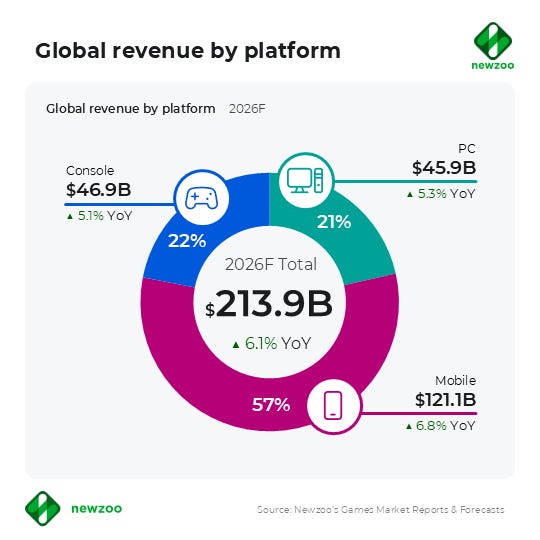
PC and console revenue is projected to reach $92.7 billion by 2027.
The video games industry is experiencing modest, single-digit growth. This growth is heavily reliant on a few major titles.
Attention concentration
67% of PC playtime is dedicated to games over six years old.
Player engagement is heavily concentrated in legacy titles, particularly on PC. Console ecosystems show slightly higher engagement with new releases.
Growth dependency
Market growth depends on Grand Theft Auto VI and the Switch 2.
Growth is heavily reliant on a few major titles. The broader market remains largely stagnant.
Major releases. Market growth is currently dependent on Grand Theft Auto VI and the launch of the Switch 2.
UGC role
UGC platforms can have an additive effect on total playtime.
Platforms like Roblox and Fortnite were once viewed as a threat. They can have an additive effect on total playtime within ecosystems like PlayStation.
Strategy shift
Developers should target specific, well-defined niche audiences rather than broad personas.
The environment forces developers to compete aggressively for a share of existing player time. Success requires aligning projects with specific needs of niche demographics.
Three strategies. The industry is advised to focus on niche audiences, leverage UGC, and improve accessibility.
Cost-effective reach
Cross-projection allows progression across select devices without full cross-platform costs.
This offers a viable path to expand reach without high costs of full cross-platform optimization.
1 / 6
Ask AI about this report