Two & a Half Gamers
Two & a Half Gamers is a YouTube channel covering the mobile games business. It publishes videos on ad monetization, user acquisition, game launches, studio strategies and industry news.
Documents
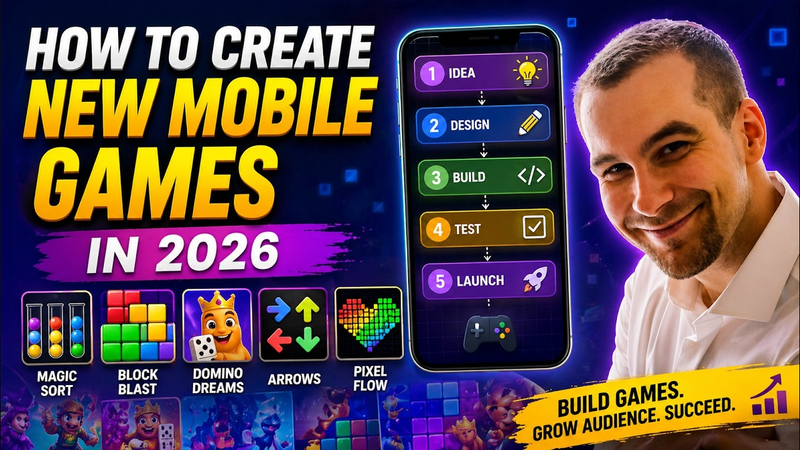
💡 How to create new mobile games 101, 2026 edition 😎
The current mobile puzzle game market favors a methodical, template-driven approach over the invention of original core mechanics.
- Successful studios like Grand Games and Spyke prioritize a template-driven approach by pairing proven, high-download puzzle mechanics with robust metagame engines rather than inventing original core gameplay.
- The strategy focuses on converting ad-driven audiences into IAP players by applying sophisticated level design, blockers, and live-ops to familiar mechanics.
- Developers should iterate on existing cores by approximately 20% to differentiate their product while maintaining the core appeal that already demonstrates high market demand.
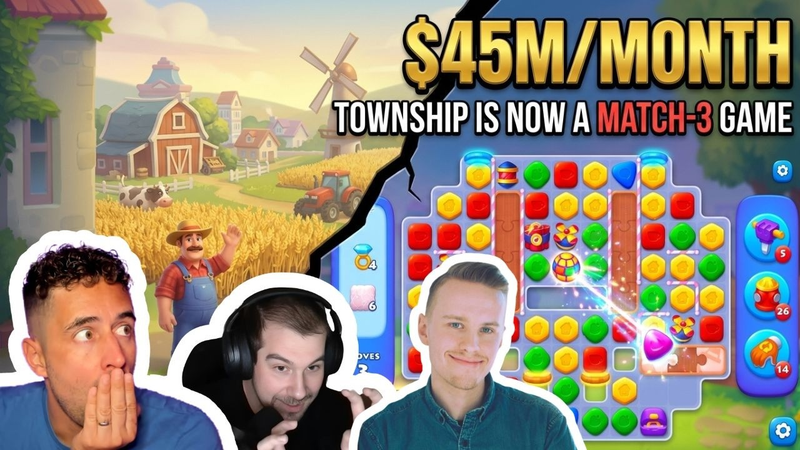
💰🚜 How Playrix turned a 17-Year-Old Tycoon into a $45M/Month UA & Match-3 engine
The longevity and financial success of the mobile title Township demonstrate the effectiveness of evolving legacy tycoon games into sophisticated, multi-core revenue engines.
- Playrix generates $45 million in monthly revenue from Township by evolving the 17-year-old title from a traditional farming simulator into a complex, match-three-driven monetization engine.
- The studio successfully repurposed legacy gameplay loops as onboarding funnels for high-LTV (lifetime value) monetization models, prioritizing energy-driven exploration and merge mechanics over lower-monetizing mini-games.
- To maintain long-term profitability, the studio overhauled the game's economy to tighten currency inflation, ensuring player progression remains strictly tied to the match-three core.
🚨📢 BREAKING NEWS: Microsoft changes Game Pass, Roblox goes over 3K headcount, Ubisoft as usual :/
This analysis covers significant industry shifts and corporate developments occurring in the gaming sector during the second quarter of 2026.
- Microsoft has adjusted its Game Pass strategy by lowering subscription prices and delaying the release of Call of Duty titles until one year after their initial launch.
- Roblox reported a 36% year-over-year revenue increase to nearly $5 billion and expanded its full-time workforce by 24% to over 3,000 employees.
- Ubisoft continues to implement cost-cutting measures, most recently resulting in the cancellation of its life-simulation project, Altera.
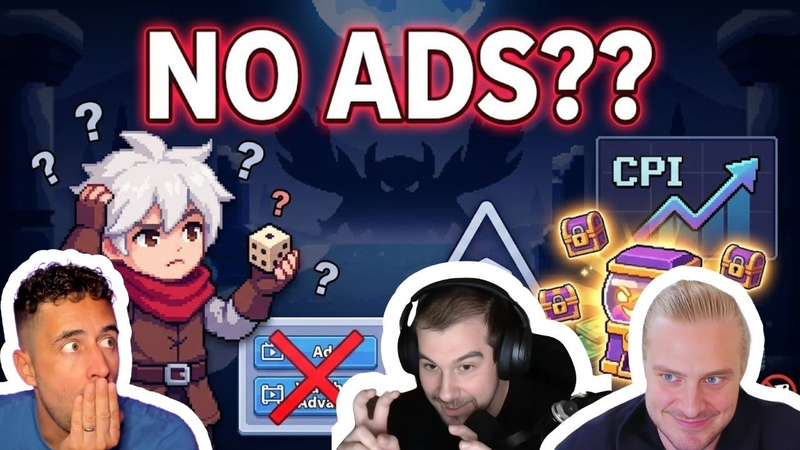
🎲Dicero: Habby’s biggest bet (And biggest risk?)
Habby is undergoing a fundamental strategic transition, moving away from the hypercasual-adjacent success of titles like Survivor.io toward a more complex, midcore model exemplified by its latest release, Dicero.
- Habby is pivoting from hypercasual-adjacent titles like Survivor.io to a midcore model with Dicero, characterized by complex gacha mechanics, tiered evolution, and a slower-paced merging economy.
- The studio has abandoned rewarded advertisements in favor of a direct-to-consumer web store and high-intent monetization, marking a fundamental shift in its revenue strategy.
- Habby is currently facing its lowest revenue and download figures in recent history, casting doubt on whether its new, more complex gameplay can achieve the same market penetration as previous hits.

🕹️ Playable ads are the most underused growth lever right now
Playable ads represent a critical, underutilized growth lever within the mobile gaming and application sectors, serving as a primary driver for high-quality user acquisition.
- Playable ads are currently the most effective, underutilized growth lever for mobile user acquisition, moving beyond gaming into non-gaming app onboarding.
- Success in playable advertising is driven by high-volume creative iteration rather than the pursuit of individual asset perfection.
- Developers are increasingly adopting a 'plus one' strategy, borrowing and iterating on proven mechanics from successful titles like Township and Pizza Ready to lower customer acquisition costs.
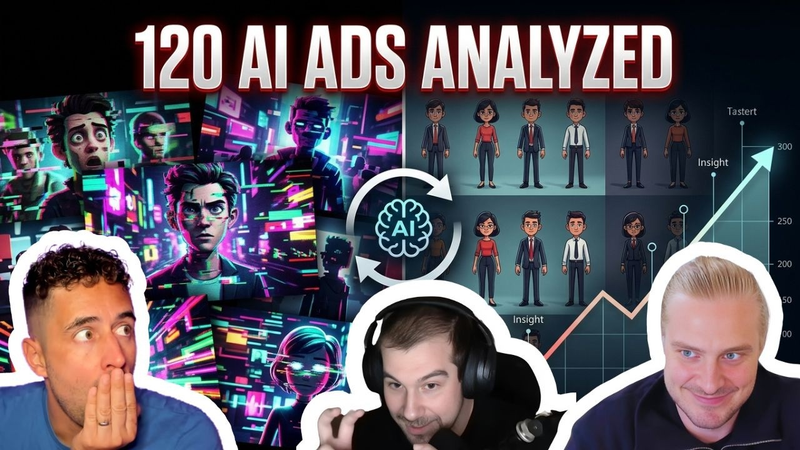
🤖 AI creatives are evolving faster than anyone expected (March 2026 trends)
The integration of artificial intelligence into game development pipelines has fundamentally transformed creative production, enabling studios to scale output to unprecedented levels.
- AI-assisted production pipelines now allow studios to generate over 10,000 asset variations per month, with automation handling up to 70% of creative output.
- The primary strategic challenge in 2026 is balancing high-volume AI asset production with core game mechanics to combat stagnant user acquisition and declining download numbers.
- Studios are shifting away from low-quality content toward high-production-value storytelling, utilizing AI to maintain character consistency and narrative depth across massive creative libraries.

🚨📢 BREAKING NEWS: Chinese domination, M&A boom, Freecash controversy
The mobile gaming industry is currently undergoing significant structural shifts characterized by the dominance of Chinese developers, a resurgence in merger and acquisition activity, and regulatory scrutiny of rewarded user acquisition platforms.
- M&A activity in the mobile gaming sector reached $7.7 billion in Q1 2026, representing a threefold increase compared to the same period in 2025.
- Chinese-developed titles such as Last War, Honor of Kings, Whiteout Survival, and Gossip Harbor are increasingly displacing long-standing market leaders like Candy Crush on global top-grossing charts.
- The removal of the rewarded user acquisition platform Freecash from major app stores has triggered industry-wide scrutiny regarding the future viability of rewarded advertising models.

👾 Creative Trends March 2026: AI hooks, fake ads, and the infinite iteration machine
Mobile game marketing in early 2026 is defined by a strategy of infinite iteration, where developers prioritize the rapid, continuous remixing of proven creative concepts over original gameplay representation.
- Mobile game marketing in early 2026 is dominated by 'infinite iteration,' a strategy that prioritizes the rapid remixing of high-performing creative hooks over accurate gameplay representation.
- Top-grossing titles are increasingly utilizing stylized or misleading advertisements that bear little to no resemblance to the actual game experience to drive initial user engagement.
- The industry relies on a cycle of recycling proven tropes, such as wood-chopping mechanics, surreal animations, and failure-based puzzle loops, to maintain ad performance in a saturated market.
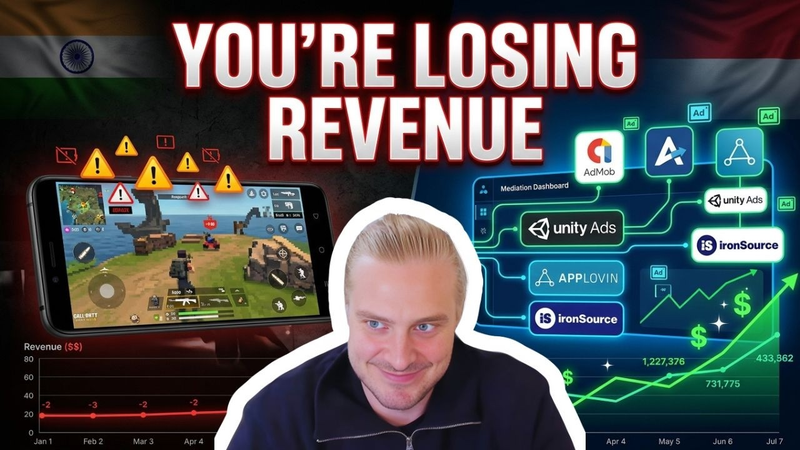
How to maximize ad revenue in Tier 4 geos (+Japan bonus) by Felix Braberg
Maximizing ad revenue in Tier 4 markets, specifically India and Indonesia, requires a specialized approach to mediation stacks that differs significantly from Tier 1 strategies.
- Prioritize technical stability in Tier 4 markets by delaying ad loading until after SDK initialization and restricting ad requests to devices with at least 2GB of RAM to prevent ANR errors and crashes.
- In India, integrate InMobi as both a bidder and waterfall source, and utilize multiple Google Ad Manager (GAM) MCM resell partners to maximize exposure to AdX demand.
- Boost eCPMs in India by segmenting users based on device language and applying higher bid floors to English-language users.
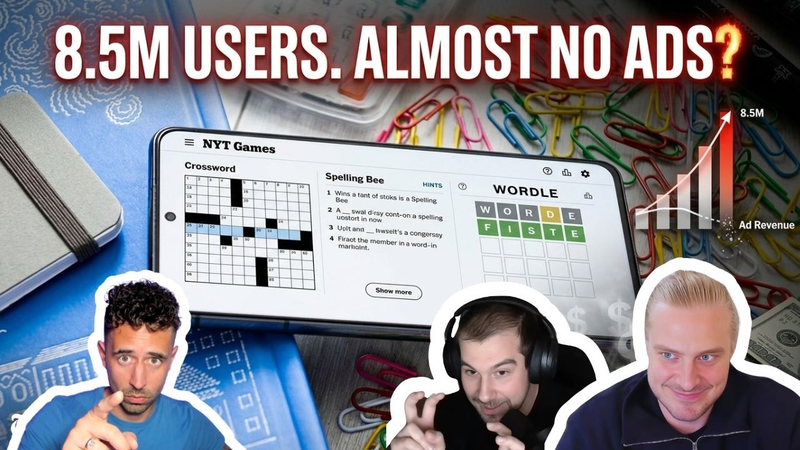
📰 NYT Games Wordle & Crossword: The most PREMIUM audience in gaming
The New York Times Games app represents a unique case study in the mobile gaming industry, functioning as a massive, high-retention ecosystem rather than a traditional revenue-optimized mobile game.
- The New York Times Games app maintains 8.5 million daily active users, positioning it as one of the largest gaming platforms in the U.S. alongside Discord and Roblox.
- The platform prioritizes brand integrity and subscription retention over aggressive monetization, generating approximately $6 million in monthly subscription revenue.
- By eschewing interstitial ads in favor of static banners, the app earns only $15,000 to $20,000 daily, whereas standard industry practices could theoretically increase this to over $400,000 per day.

🚨📢 BREAKING NEWS: Unity kills ironSource, Meta lawsuits, AppLovin moves
The mobile gaming and ad tech sectors are currently undergoing a significant transition characterized by market stabilization, consolidation, and a shift toward operational efficiency.
- The mobile gaming market is stagnating, with in-app purchase revenues plateauing at $20 billion for three consecutive quarters and download volumes hitting multi-year lows as of Q1 2026.
- Unity is restructuring its ad business by sunsetting the ironSource network and divesting its Supersonic publishing arm to prioritize its Unity Vector ad stack, which has achieved 15% sequential growth.
- Meta is moving toward a fully autonomous AI-driven advertising model by 2026 via its Advantage Plus and Andromeda systems, shifting the focus from manual campaign management to creative diversity and first-party data.

Butcher Hero Review: The Next Alien Invasion? Not quite yet!
Butcher Hero, an idle RPG developed by Multicast, currently occupies a precarious position in the mobile gaming market.
- Multicast’s 'Butcher Hero' generates 20,000 to 30,000 daily downloads but suffers from high churn rates due to a repetitive, shallow gameplay loop.
- The title currently generates approximately $5,000 in daily ad revenue, a figure that highlights the limitations of its current design and monetization model.
- There is a significant disconnect between the game's effective marketing creatives and the actual user experience, which lacks the depth and variety of the developer's previous hit, 'Alien Invasion'.