Two & a Half Gamers
Two & a Half Gamers is a YouTube channel covering the mobile games business. It publishes videos on ad monetization, user acquisition, game launches, studio strategies and industry news.
Documents
two & a half gamers session #6 - Supercell rant, why do fake ads work? UA fundamentals Q&A
Supercell’s recent financial performance, characterized by a 45 percent revenue increase to 2.24 billion dollars in 2021, masks underlying structural challenges.
- Supercell reported a 45 percent revenue increase to 2.24 billion dollars in 2021, yet the company faces structural stagnation due to a lack of new global title launches since Brawl Stars.
- Supercell is pivoting toward PC and console markets to modernize monetization and user acquisition strategies that previously prioritized brand purity over aggressive performance marketing.
- The mobile gaming industry is facing significant disruption from privacy changes, specifically the impending phase-out of advertising IDs on Google platforms.
two & a half gamers session #5 - Surprise crypto comments & How to tackle soft launch stages?
The mobile gaming industry relies on a disciplined, three-phased soft launch strategy to ensure long-term viability before global expansion.
- A disciplined soft launch requires three distinct phases: technical validation of data integrity, retention milestone testing (Day 1, Day 7, and Day 30), and monetization validation in tier-one markets like the UK and Germany.
- Statistical significance for soft launch data requires a minimum of 400 to 500 daily installs to accurately determine if lifetime value exceeds customer acquisition costs.
- Long-term mobile game success relies on core gameplay mechanics and live operations rather than blockchain-based speculative financial layers, which often suffer from inflationary pressures that undermine sustainability.
two & a half gamers session #4 - How to soft launch a mobile game Ad monetisation Perspective
The mobile gaming industry is undergoing a period of rapid expansion, with ad spending projected to reach $130 billion by 2025.
- Ad spending in the mobile gaming industry is projected to reach $130 billion by 2025, necessitating sophisticated monetization strategies as Meta’s dominance declines and platforms like TikTok rise.
- Developers should target a baseline of 60% player engagement with at least five ad impressions per daily active user to maximize revenue without increasing friction.
- To protect profit margins, publishers must maintain a competitive ad waterfall and obscure performance rankings from individual networks to prevent revenue leakage.
two & a half gamers session #3 - Is Roblox evil mega corp or money making machine?
Roblox functions as a massive, closed-loop economic ecosystem that leverages its 47.3 million daily active users to maintain a dominant position in the gaming industry.
- Roblox maintains a highly profitable business model by taking a 30% cut of all transactions while retaining 75.5% of total platform revenue, effectively operating as a closed ecosystem with its own internal currency, Robux.
- Roblox bypasses 'store within a store' platform guidelines by classifying its 20 million games as 'experiences,' allowing it to avoid direct competition or restrictive policies from Apple and Google.
- The platform creates significant financial friction for creators by requiring a $5 monthly subscription to withdraw earnings, with a minimum withdrawal threshold of 100,000 Robux ($1,000) and only 17% of total revenue actually exiting the platform to users.

Stash Special: loyalty programs, well-made web shops, frictionless user experience
The gaming industry is undergoing a strategic pivot toward direct-to-consumer web storefronts as developers seek to reclaim autonomy from platform gatekeepers.
- Developers are shifting to direct-to-consumer web storefronts to bypass platform commission structures and mitigate the impact of 'core technology' charges imposed by app store gatekeepers.
- This strategic pivot is driven by evolving regulatory frameworks, specifically the EU’s Digital Markets Act and recent legal rulings in the United States.
- Web-based storefronts are most critical for game titles where annual monetization per user exceeds five dollars, particularly within the strategy and social casino sectors.
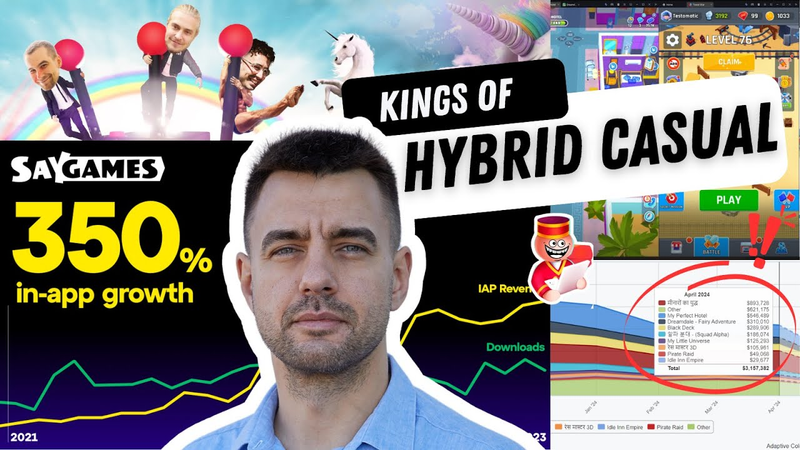
How to grow IAP revenue by 375%? SayGames Special with Anton Volnykh
The transition from hyper-casual to hybrid-casual gaming represents a fundamental shift in operational strategy, prioritizing long-term product sustainability over rapid prototyping.
- SayGames has successfully shifted its business model from a hypercasual focus to hybrid-casual, resulting in a significant increase in In-App Purchase (IAP) revenue across its portfolio.
- The company supports its development teams by providing internal tools, including a proprietary analytics system and SDK, to help them transition from simple ad-based games to more complex hybrid-casual titles.
- Rather than taking over projects, SayGames nurtures internal expertise by guiding teams through the long-term development and scaling process of hybrid-casual games.
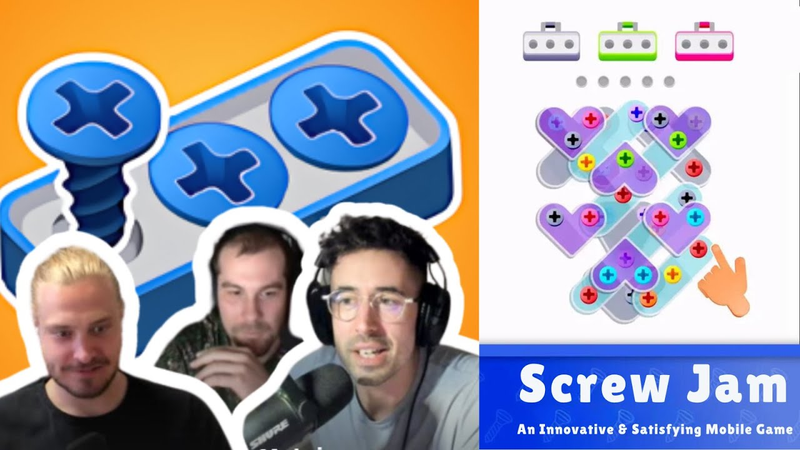
Screw Jam success story: How to reach $250k/day revenue? Innovative & satisfying hybrid casual game
Screw Jam, a hybrid-casual title developed by Quok Games and published by Rollic, has emerged as a benchmark for success in the mobile gaming market, currently generating approximately $250,000 in daily revenue.
- Screw Jam, developed by Quok Games and published by Rollic, generates approximately $250,000 in daily revenue, split between $150,000+ from in-app purchases and $80,000+ from ad monetization.
- The game's monetization strategy relies on a high-value US-based iOS user base, with an active user count of approximately 250,000, of which 210,000 are located in the United States.
- Ad revenue is driven by a mix of rewarded ads (averaging four per session), interstitials (averaging six per session), and persistent banner ads with a 10-second refresh rate.
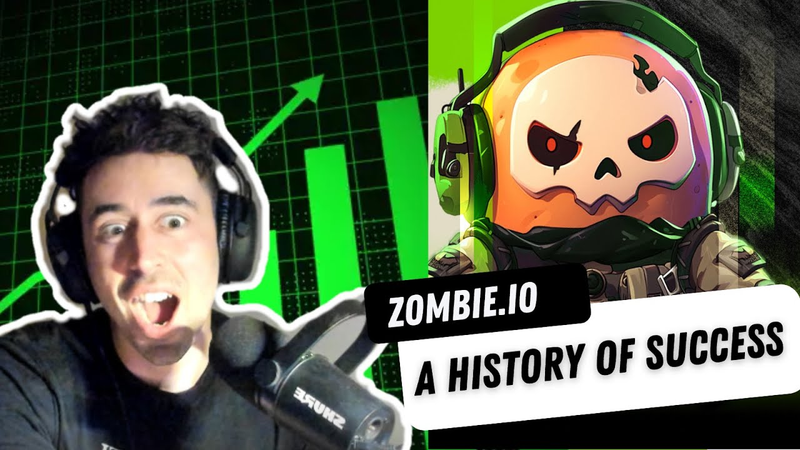
Zombie.io global launch case study: A Midcore game with complex gameplay & wide range of features
Zombie.io represents a significant evolution in the midcore survivor-like mobile genre, blending complex, automated gameplay with a robust gacha-driven economy.
- Zombie.io, developed by the creators of Legend of Mushroom, achieved a successful global launch in April 2024, generating approximately $120,000 in daily IAP revenue with roughly 70,000 daily downloads.
- The game differentiates itself from competitors like Survivor.io by incorporating complex, midcore RPG elements, including hero classes (tank, healer, DPS), pet management, and skill-altering inventory systems.
- The developers utilize an aggressive rewarded ad strategy that integrates 'question mark' triggers throughout the UI to prompt ad views, maintaining an ad impression rate of approximately 65-70%.
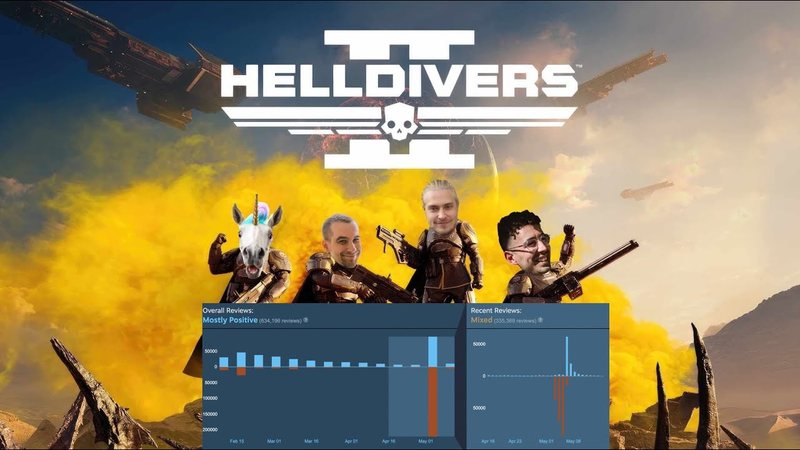
Helldivers 2 Special: Why is it so good? Second Galatic War Begins! New major Order!
Arrowhead Game Studios has achieved significant commercial and critical success with Helldivers 2, a four-player cooperative shooter that synthesizes over a decade of design expertise.
- Helldivers 2 achieved significant commercial success, generating approximately $482 million in gross revenue within its first three months following its February 24, 2024, release.
- The game maintains strong player engagement through a 'Galactic War' system where developers act as game masters, manually driving the narrative and issuing community-wide major orders that influence the game world in real-time.
- Helldivers 2 is positioned as a AA title priced at $39.99, utilizing a monetization model based on monthly 'war bonds' that provide new weapons and gear, which players can either purchase or earn through in-game currency.
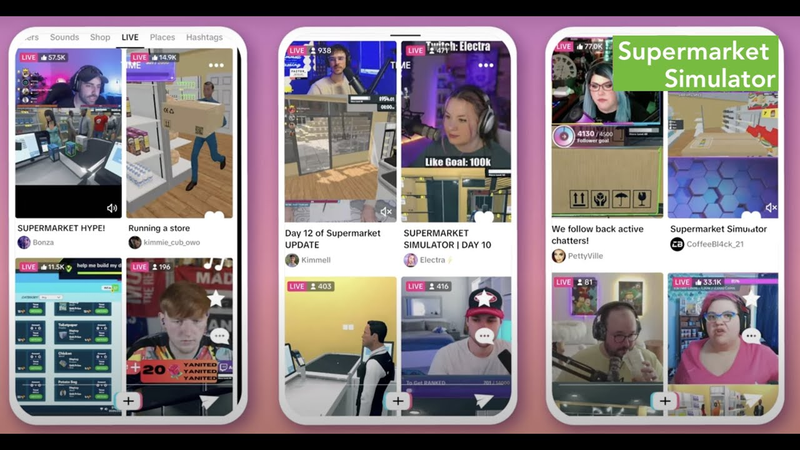
Supermarket Simulator Mobile: Why is it so popular? Start your own Supermarket now! (#109)
Supermarket Manager Simulator, developed by Digital Melody, has emerged as a prominent example of the successful transition of PC-based simulation concepts to the mobile market.
- Digital Melody’s Supermarket Manager Simulator has achieved 1.5 million daily active users and $900,000 in monthly ad revenue by adapting PC simulation concepts for mobile.
- The game is currently under-monetized due to overly generous interstitial cooldowns and a lack of standard industry practices like banner ads in emerging markets such as Brazil and Mexico.
- Analysts estimate that implementing basic optimizations, such as increased ad density and scaling payouts to player progression, could significantly boost current daily revenue figures.

CTV Special: Connected TV Ads examples Unpacked with Arthur from Vibe.co. Ideal customer for CTV?
Connected TV advertising has transitioned from a traditional branding medium into a sophisticated performance-based channel.
- Connected TV (CTV) has evolved into a performance-based channel that uses household IP-based device graphs to link TV impressions to specific mobile installs and revenue events.
- To generate sufficient data for meaningful campaign optimization, a daily budget of $500 to $1,000 is recommended.
- Gaming titles, specifically midcore, hardcore, and social casino, are the primary audience for CTV advertising due to the platform's ability to track return on ad spend (ROAS) through mobile measurement partners.
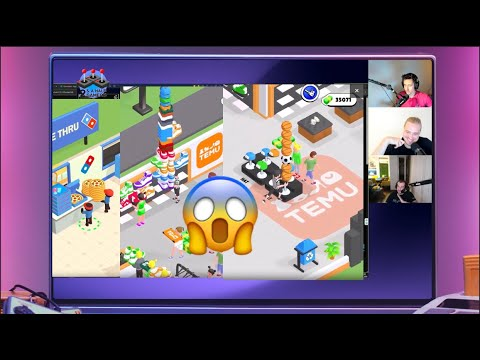
From Hypercasual to Hybridcasual - The Supercent story. Iterative nature & Admon w/ UA in grey zone
The mobile gaming landscape is undergoing a significant transition as studios shift from traditional hypercasual models toward hybridcasual frameworks.
- Supercent utilizes a high-frequency iterative model for hybridcasual games, repeatedly refining core mechanics from successful titles like 'My Perfect Hotel' to launch new revenue-generating products such as 'Pizza Ready', 'Outlet Rush', and 'Snake Clash'.
- Supercent's titles demonstrate a aggressive monetization strategy by integrating interstitials, rewarded videos, and banners from the first minute of gameplay, alongside specific rewarded placements for movement speed, carrying capacity, and equipment upgrades.
- The company has experimented with controversial monetization tactics, such as integrating 'Bright Data' software, which allows the app to use user IP addresses and bandwidth for data scraping, potentially generating significant monthly revenue from a fraction of their millions of users.