
Twitch
Twitch is a livestreaming service for gaming, entertainment, sports, music and other content. It publishes articles aimed at brands, such as one on the business outcomes of advertising in gaming.
Documents
How Gaming Is Delivering Real Business Outcomes for Brands
The presentation demonstrates that gaming has become a strategic channel for brands seeking measurable marketing impact.
- Gaming has transitioned into a performance-marketing channel capable of tracking the full funnel from initial brand awareness to final conversion.
- Overwolf serves as a major advertising hub, reaching over 113 million monthly gamers and ranking as the second-largest U.S. gaming property according to Comscore.
- Global brands including Universal Pictures, P&G, Lancôme, AMD, Monster Energy, Nissan, and KFC are actively utilizing gaming platforms to achieve measurable business outcomes.
Reports about Twitch
563 documents by other writers name Twitch in the title or summary.

How video is impacting the mobile games biz
The mobile gaming industry is undergoing a significant shift as video content becomes a primary driver for both monetization and user acquisition.
- As of late 2014, approximately one-third of all mobile games have integrated video advertising, marking a significant shift away from traditional banner ads.
- Incentivized video models, where players watch ads for in-game rewards, have proven highly effective for monetization, as demonstrated by Crossy Road generating $1 million through Unity’s video advertising system.
- Developers are increasingly shifting user acquisition budgets from traditional performance-based advertising to influencer marketing on YouTube to achieve lower-cost download spikes.
Take-Two Interactive Form 10-Q: Q2 Fiscal Year 2015
Take-Two Interactive’s financial position for the second quarter of fiscal year 2015 reflects a strategic transition toward digital distribution and recurrent consumer spending, even as the company navigates the cyclical nature of major title releases.
- The Grand Theft Auto franchise is a critical revenue driver, accounting for approximately 40% of Take-Two's total net revenue for the six months ended September 30, 2014.
- Digital online channels accounted for 63.9% of total net revenue for the six months ended September 30, 2014, up from 55.7% in the same period the previous year.
- Recurrent consumer spending, including microtransactions, add-on content, and online play, represented 47.9% of net revenue from digital online channels during the first half of fiscal year 2015.

Are we in an M&A bubble, iOS 8 rates plateau and World of Tanks Blitz
The gaming industry experienced a record-breaking third quarter in 2014 regarding mergers and acquisitions, driven by five major deals including Microsoft’s acquisition of Minecraft for $2.5 billion and Amazon’s purchase of Twitch for nearly $1 billion.
- Q3 2014 saw record-breaking M&A activity in the gaming industry, headlined by Microsoft’s $2.5 billion acquisition of Minecraft and Amazon’s nearly $1 billion purchase of Twitch.
- Consolidation is extending beyond major game studios into industry infrastructure, evidenced by RNTS Media’s $190 million acquisition of user-acquisition firm Fyber.
- iOS 8 adoption rates have plateaued and are currently trailing the update speeds observed for iOS 6 and 7, signaling a shift toward increased fragmentation for mobile developers.
Gaming Audience Understanding
The primary purpose of this analysis is to advocate for the integration of deep consumer insights into the game development lifecycle to ensure commercial success and player retention.
- Deep audience understanding is a critical competitive necessity in a saturated market, moving beyond basic demographics to analyze psychographics, emotional drivers, and behavioral patterns.
- Effective player modeling requires a layered approach that integrates demographic data with psychographic factors like values, personality traits, and motivations such as mastery, social connection, or narrative immersion.
- Success in live service gaming relies on continuous feedback loops and longitudinal research to monitor player sentiment, identify churn triggers, and ensure content updates align with evolving community expectations.

Why Web Stores Offer a Better Deal for Your Mobile Game VIPs
The primary purpose of this analysis is to advocate for the adoption of direct-to-consumer (DTC) web stores as a strategic necessity for mobile game publishers.
- 72% of top-grossing mobile games now operate a web store to bypass the 30% revenue cut imposed by Apple and Google.
- Games that integrate web stores realize 25-35% incremental new revenue compared to relying solely on in-app purchases.
- Direct-to-consumer (DTC) web stores allow publishers to retain 95% of their revenue by moving transactions outside of closed app ecosystems.

Live-Streaming Trends Report: Q1 2026
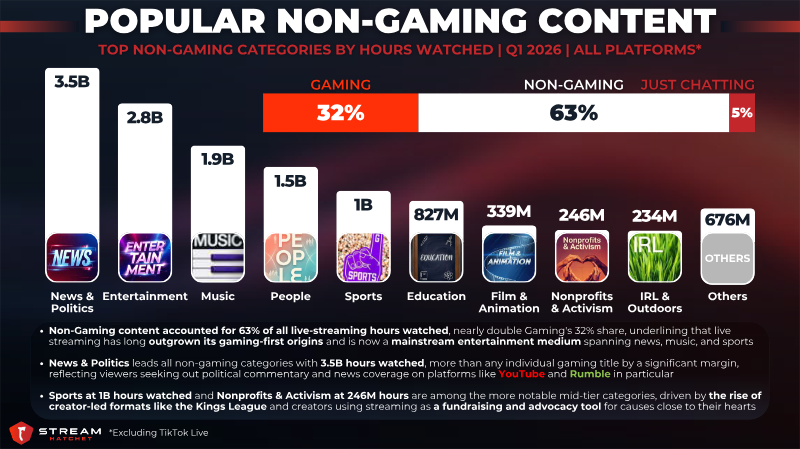
Live-streaming has solidified its position as a primary pillar of global entertainment, reaching a total of 17 billion hours watched during the first quarter of 2026.
- Live-streaming reached 17 billion hours watched in Q1 2026, with TikTok Live accounting for nearly 50% of total volume.
- Non-gaming content now dominates the ecosystem, representing 63% of total viewership with News and Politics as the leading category.
- Gaming engagement is shifting away from traditional esports structures toward mobile-friendly, community-centric, and creator-led events.

U.S. Video Game Industry: Technological Advancements and Privacy Issues
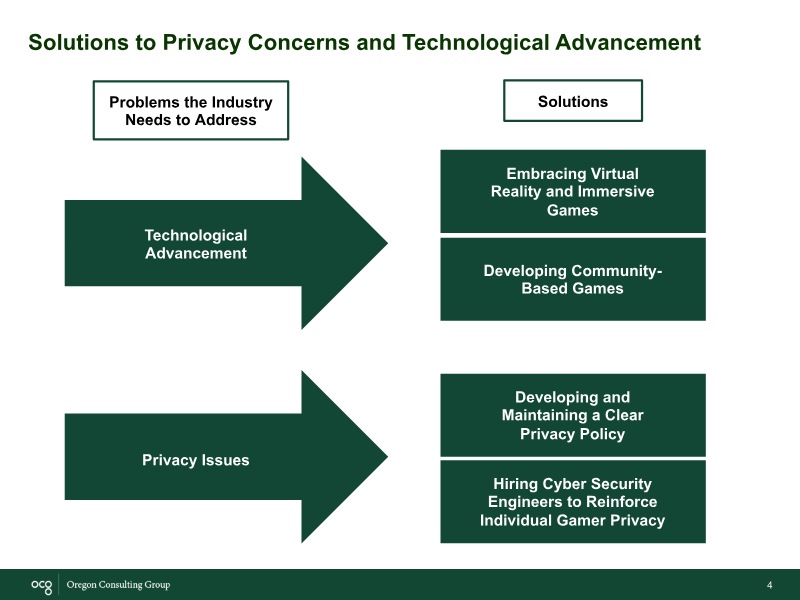
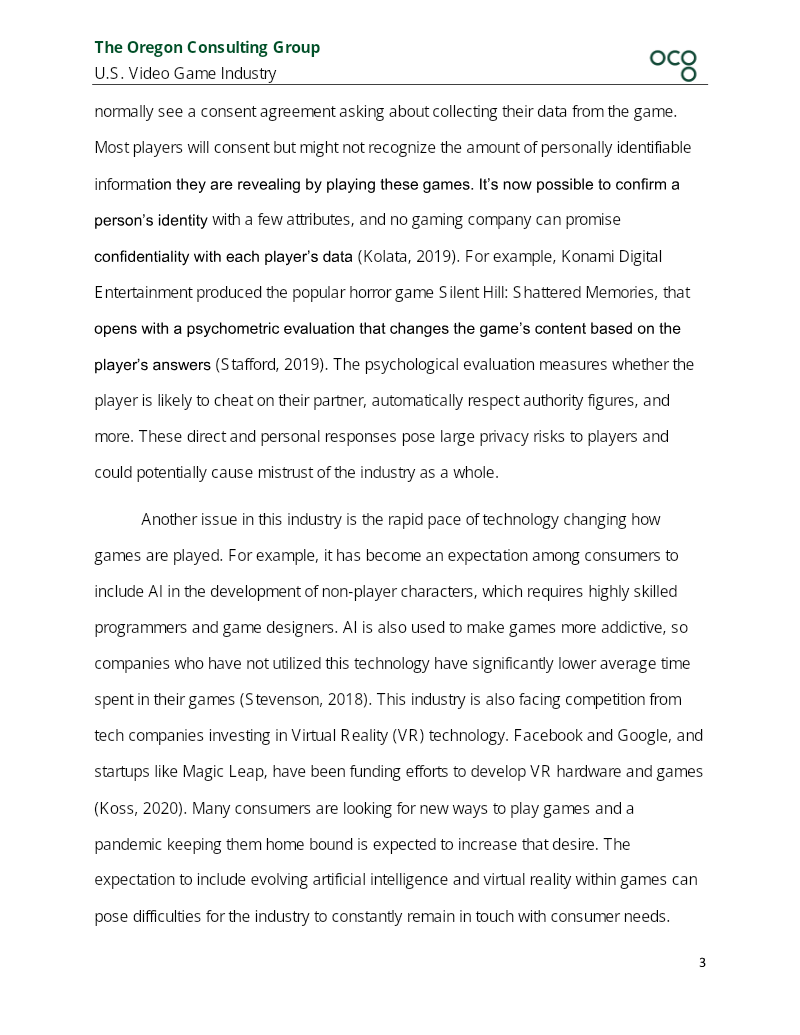
The U.S. video game industry, a significant global economic force, faces a critical juncture defined by rapid technological evolution and escalating privacy vulnerabilities.
- The U.S. video game industry is a $60.4 billion annual revenue sector employing 240,000 people across more than 42,000 businesses.
- Gaming platforms face severe cybersecurity threats, evidenced by 12 billion cyberattacks recorded against gaming websites over a 17-month period.
- Privacy risks are exacerbated by the re-identification of anonymized data and the use of psychometric evaluations, necessitating investments in specialized cybersecurity engineering similar to models used by Microsoft.

The eSports Industry to Date: The Drivers Behind Current and Future Growth
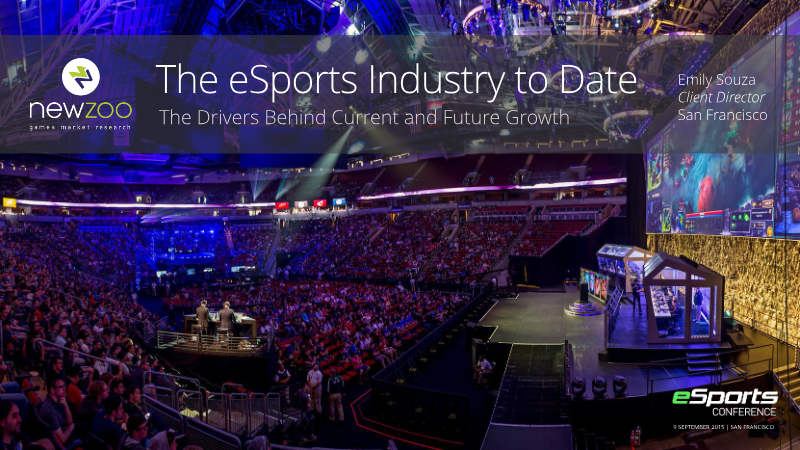
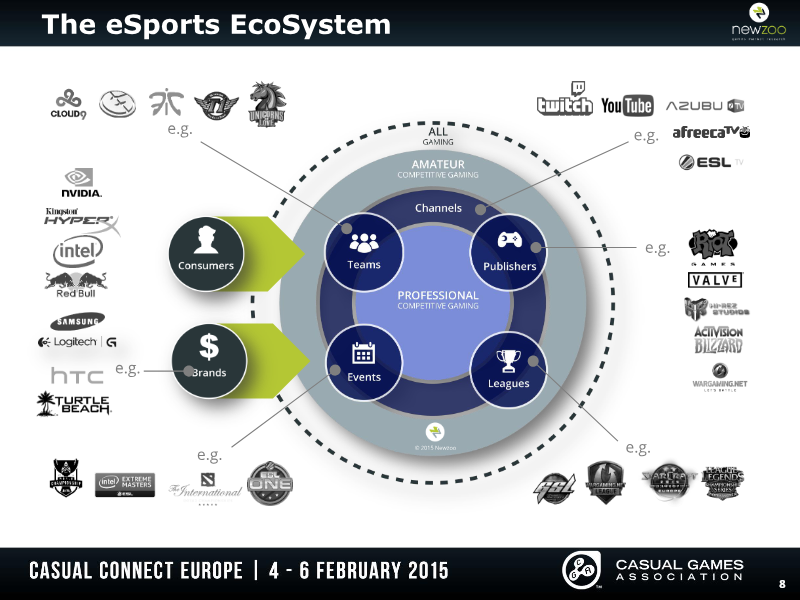
The global esports industry is undergoing a rapid transformation from a niche gaming subculture into a significant, multi-billion dollar economic force.
- The esports industry is on a trajectory to grow from $252 million in 2015 revenue to a $1 billion economy by 2019.
- Industry growth is driven by high engagement on streaming platforms like Twitch and a transition toward mainstream professionalization.
- Significant capital is entering the market, evidenced by a $26 million venture capital investment in Super Evil Megacorp.
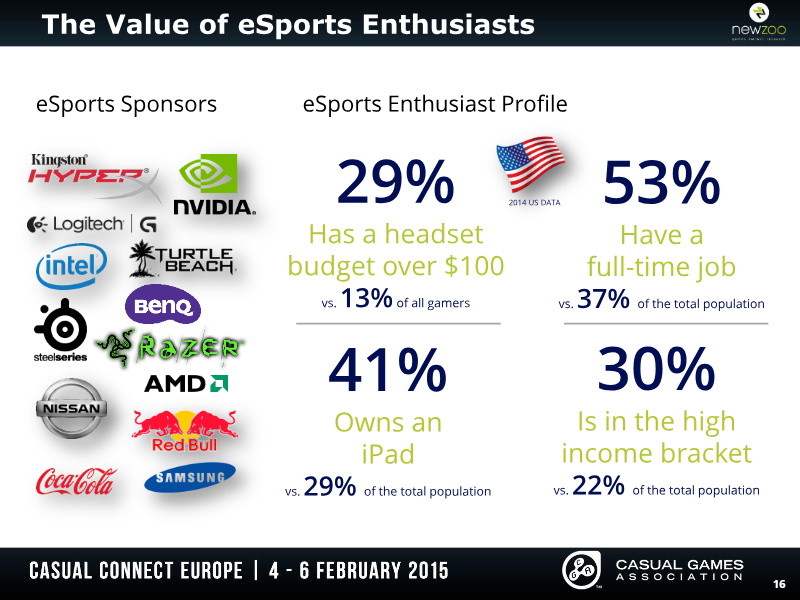

The eSports Economy: Trends, Audience and Revenue Growth Towards 2017
The eSports economy is experiencing rapid expansion, driven by a fundamental shift in how consumers interact with gaming content.
- The eSports enthusiast base is projected to exceed 100 million by 2017, maintaining a 20% compound annual growth rate between 2012 and 2017.
- Approximately 40% of eSports viewers are spectators who do not actively play the games they watch, indicating a shift toward viewing as a standalone entertainment medium.
- Streaming platforms are central to the industry's infrastructure, exemplified by Twitch reaching 100 million unique monthly viewers in 2014.
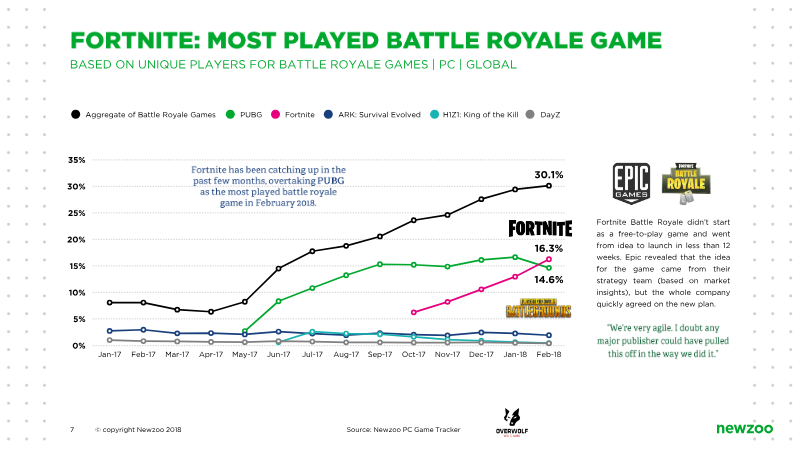
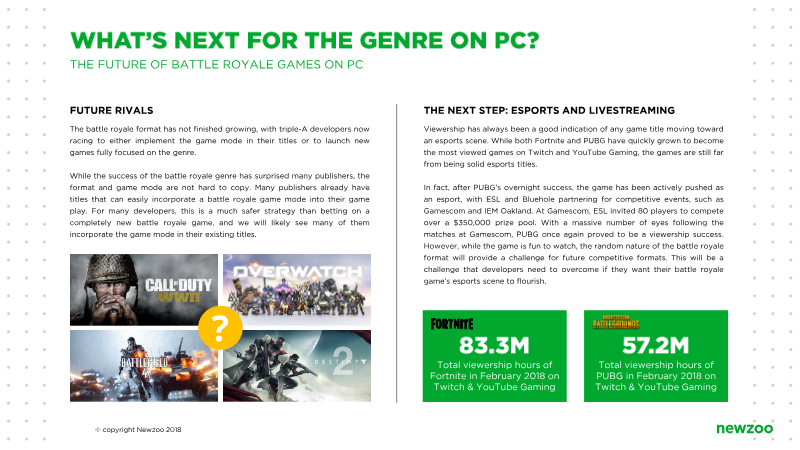

The Rise of Battle Royale: An Overview of the Hottest Game Genre
The battle royale genre has emerged as a dominant force in the global gaming industry, characterized by a unique blend of survival, exploration, and last-man-standing mechanics.
- The battle royale genre has achieved mainstream dominance by distilling survival and shooter mechanics into a highly replayable, spectator-friendly format.
- PUBG and Fortnite serve as the genre's primary anchors, with PUBG maintaining a strong foothold in Asian markets through partnerships with Tencent, while Fortnite captures a broader Western audience via a free-to-play model and cross-platform integration.
- The mobile sector is a primary growth driver, led by publishers like NetEase and Tencent who have successfully launched mobile-optimized versions of major titles to capitalize on mobile-first gaming cultures.
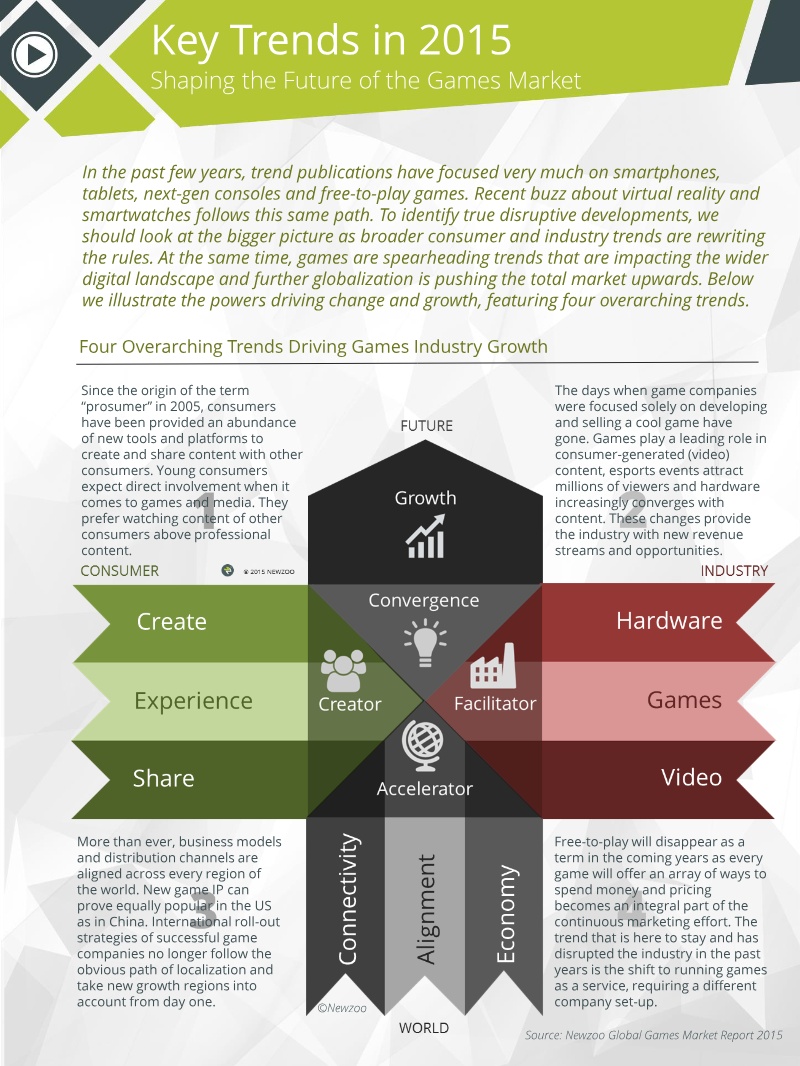
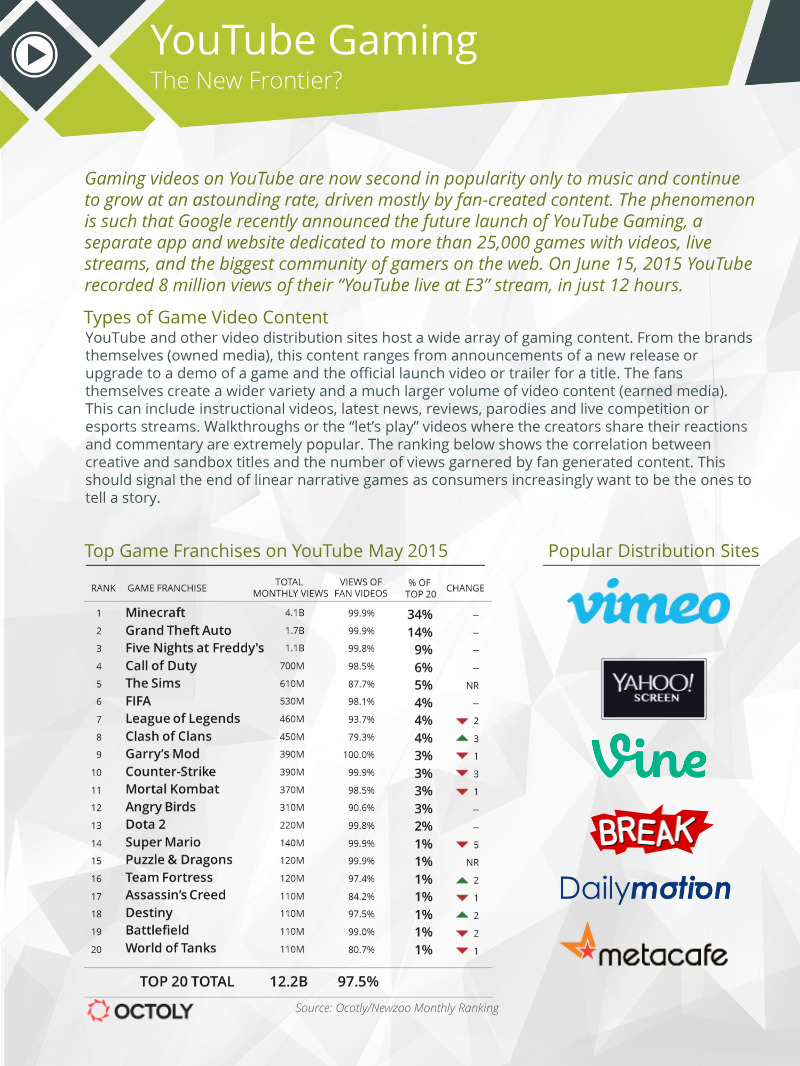

The Consumer as Producer: How Games & Video Converge to Drive Growth
The global games industry is undergoing a fundamental transformation driven by the convergence of gaming, video streaming, and consumer-generated content.
- The gaming industry is shifting from a one-way consumption model to a collaborative ecosystem where players act as 'prosumers' who create, share, and monetize content.
- Global games revenue is projected to reach $113.3 billion by 2018, growing at a compound annual rate of 7.9% from 2014.
- China and the United States will dominate the market, collectively accounting for 50% of global gaming revenues by 2018.
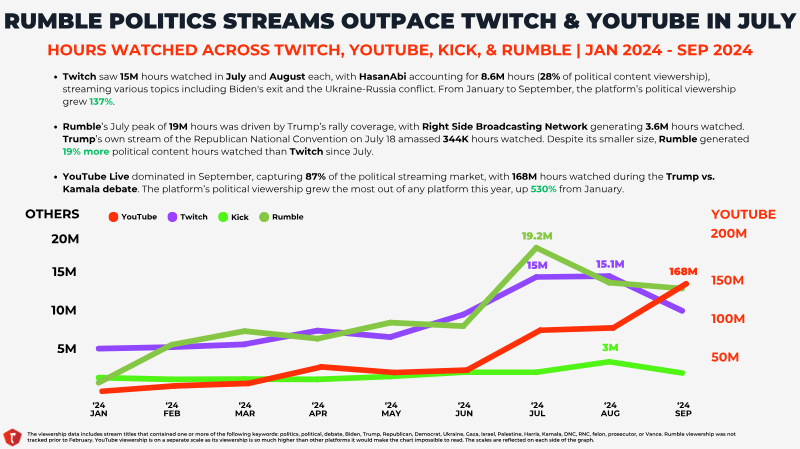
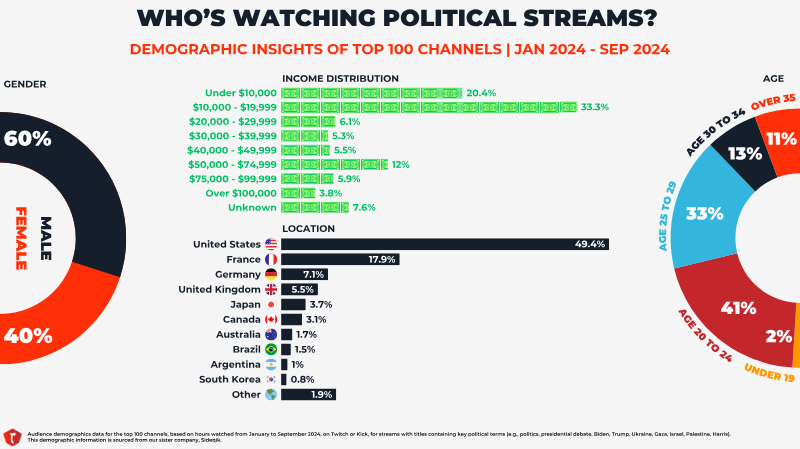
Politics in Live Streaming: 2024
Live streaming has emerged as a critical venue for political discourse, effectively rivaling traditional media in its capacity to engage younger, tech-savvy audiences in real time.
- YouTube Live dominates the political streaming market with an 87% share as of September 2024, having experienced a 530% increase in political viewership since January 2024.
- Political content's share of the total live-streaming market grew significantly in 2024, rising from 0.8% to nearly 3% within the first nine months of the year.
- Approximately 35% of hours watched for streams mentioning U.S. presidential candidates in Q3 2024 originated from compromised YouTube channels exhibiting suspicious behaviors like rapid name changes or post-broadcast deletions.