
The Game Business
Games industry business news and analysis by Christopher Dring (ex-GamesIndustry.biz).
Documents
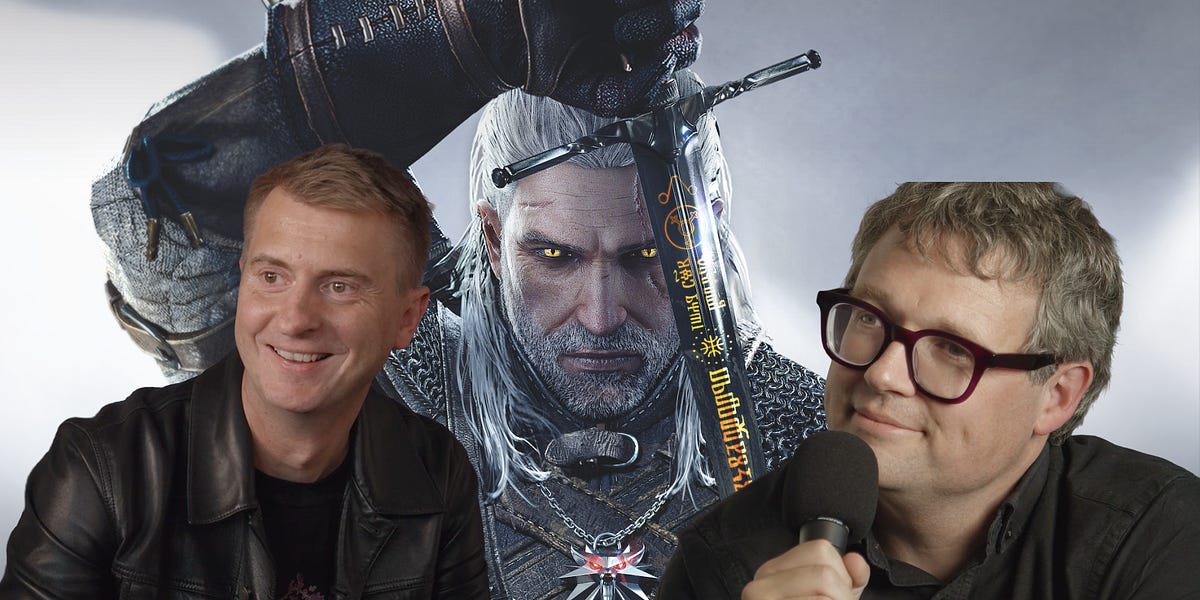
CD Projekt Red: If You Want a Cost-driven Development, You Cannot Make The Witcher 4
CD Projekt Red is undergoing a significant strategic shift, moving from a single-project development model to a multi-project pipeline.
- CD Projekt Red is shifting from a single-project model to developing three major titles simultaneously—The Witcher 4 (due 2028), a Cyberpunk sequel, and a new IP called Project Hadar—to increase output without compromising quality.
- CEO Michał Nowakowski explicitly rejects cost-driven development, stating that the high-quality standards required for titles like The Witcher 4 are incompatible with a strategy focused primarily on minimizing production costs.
- The studio is targeting significant sales growth, noting that while The Witcher 3 has reached 65 million units and Cyberpunk 2077 has hit 40 million, there is still substantial room to reach the higher sales volumes seen by competitors like GTA V.

CD Projekt Red: If you want a cost-driven development, you cannot make The Witcher 4
CD Projekt Red is undergoing a fundamental structural evolution to support the simultaneous development of multiple high-end titles, including the next installment in The Witcher franchise, a sequel to Cyberpunk, and the original intellectual property Project Hadar.
- CD Projekt Red has rejected cost-driven development models, asserting that premium, narrative-heavy games like the next Witcher title require prioritizing creative quality over rapid release cycles.
- The studio is transitioning to a multi-project development strategy, simultaneously working on the next Witcher installment, a Cyberpunk sequel, and a new IP titled Project Hadar.
- To improve operational efficiency and support simultaneous development, the studio has abandoned its proprietary engine in favor of Unreal Engine 5.

Assassin’s Creed creator Patrice Désilets: “I have two or three games left”
The independent development landscape is currently undergoing a significant shift as veteran creators move away from the constraints of large-scale publishing toward self-determined, iterative production models.
- Patrice Désilets, creator of Assassin’s Creed, is shifting toward a self-determined production model at his 70-person studio, Panache, to maintain creative autonomy over projects like 1666: Amsterdam.
- Désilets estimates he has only two or three major titles left in his career, signaling a move toward high-impact, iterative development rather than large-scale corporate output.
- Independent developers are increasingly rejecting the volatile live-service model in favor of sustainable, player-focused projects that prioritize long-term viability over aggressive monetization.

Assassin’s Creed Creator Patrice Désilets: “I Have Two or Three Games Left”
This industry update, recorded during Gamescom 2026, focuses on the evolving strategies of independent developers and major studios as they navigate shifting market conditions.
- Patrice Désilets, creator of Assassin’s Creed, has launched his studio Panache’s first self-published title, 1666: Amsterdam, into Early Access with plans to expand the IP into multiple future titles.
- CD Projekt joint-CEO Michał Nowakowski confirmed that The Witcher 4 is scheduled for a 2028 release and will include a physical box with collectible items, despite potential industry-wide shifts away from physical discs.
- Raccoon Logic has pivoted its development strategy toward faster release cycles and Early Access models, citing the difficulty of monetizing games effectively through subscription services like Xbox Game Pass.

Unity CEO: The Cost of Building a Game Is Coming Down Markedly
Unity CEO Matthew Bromberg offers an optimistic outlook on the future of the video game industry, asserting that the cost of game development is decreasing significantly.
- Unity CEO Matthew Bromberg states that the cost of game development is decreasing significantly, lowering the barrier to entry for independent studios that previously required massive resources and multi-year funding.
- Western game studios are advised to move away from long, isolated development cycles in favor of shorter, iterative processes that integrate player feedback early to maintain relevance.
- Unity has achieved its best financial quarter to date following a leadership transition in 2024 and the cancellation of controversial runtime fee policies that previously damaged client trust.
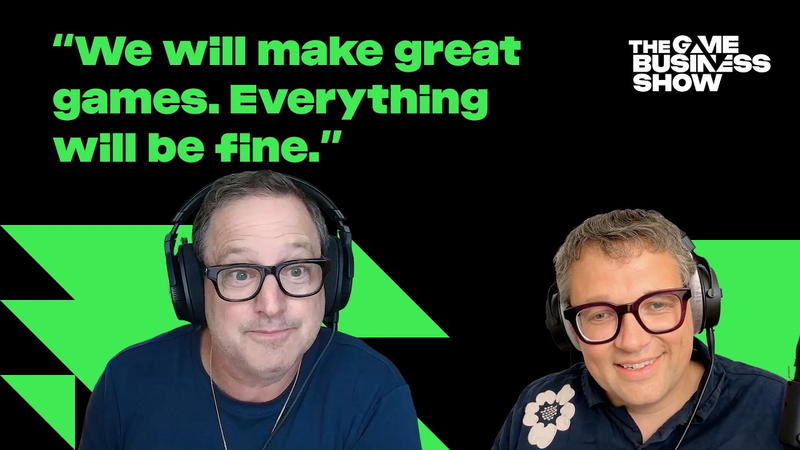
Unity CEO: “The cost of building a game is coming down markedly”
The gaming industry is currently undergoing a significant structural transition characterized by a shift away from massive, resource-heavy projects toward more efficient development models.
- The gaming industry is shifting away from massive, resource-heavy projects toward smaller, agile teams and shorter production cycles to mitigate the risks of prolonged development timelines.
- Development costs are decreasing markedly, which is lowering barriers to entry and creating new opportunities for independent creators and innovative intellectual property.
- AI and coding agents are being integrated into production workflows to accelerate content creation, though these tools act as facilitators rather than replacements for human creative vision.

Video Game Consoles Will Bounce Back: Here’s The Dring
The video game console market is currently experiencing a significant downturn, marked by the weakest US sales performance in six years.
- US video game hardware revenue reached its lowest point since July 2020, driven by higher console prices and increased costs for components like RAM and storage.
- Total US sales for games, hardware, and accessories fell 10% year-on-year to $4.5 billion in July 2026, with mobile gaming cited as the primary contributor to the decline.
- Ampere Analysis projects that if next-generation consoles like the PlayStation 6 or Xbox Project Helix launch at a $1,000 price point, their combined five-year sales could be up to 38% lower than the current generation's performance.

The video games most at risk from PlayStation’s physical switch-off
The global video game industry faces a critical inflection point as hardware manufacturers and publishers navigate a transition toward a fully digital ecosystem.
- PlayStation plans to phase out physical discs by January 2028, requiring a strategy to convert consumers who rely on physical media resale value to justify day-one purchases.
- Projections suggest a $1,000 price point for next-generation consoles could lead to a 38% decline in sales volume over a five-year period as consumers retain existing hardware.
- To combat market stagnation, the industry must shift focus from incremental graphical upgrades toward software innovation and the development of new intellectual property.

The Video Games Most at Risk from PlayStation’s Physical Switch-Off
The video game industry faces a significant structural shift as PlayStation prepares to cease the manufacturing of physical game discs in January 2028.
- PlayStation will cease the manufacturing of physical game discs in January 2028, forcing a transition to an all-digital distribution model.
- Physical game sales remain significant for specific genres, with family-oriented titles like Astro Bot and story-driven action-adventure games showing higher boxed-copy demand compared to online-centric shooters and RPGs.
- Market reliance on physical media varies by region; while the US is highly digital-centric, countries including France, Australia, the UK, and Japan maintain strong demand for boxed retail products.

Arkane Veterans Harvey Smith and Ben Horne Reunite: “We’re Back to the Games We Love”
The formation of Black Pony Immersive, a new studio founded by Arkane veterans Harvey Smith, Ben Horne, and Ricardo Bare, signals a strategic return to the immersive sim genre.
- Arkane veterans Harvey Smith, Ricardo Bare, and Ben Horne have launched a new independent studio called Black Pony Immersive, which has been operating for one year with a team of 26 people.
- The new studio has secured funding from an unnamed publisher to develop single-player, narrative-driven, first-person immersive sims in the tradition of Deus Ex and Dishonored.
- Harvey Smith noted that the original Dishonored project achieved a return on investment of four to five times its total budget, demonstrating the commercial viability of the immersive sim genre.

Arkane veterans Harvey Smith and Ben Horne reunite: “We’re going back to the games we love”
Black Pony Immersive, a new independent studio founded by industry veterans Harvey Smith and Ben Horne, aims to revitalize the immersive sim genre through a commitment to single-player, narrative-driven experiences.
- Black Pony Immersive, founded by Harvey Smith and Ben Horne, is a new independent studio focused on developing single-player, narrative-driven immersive sims.
- The studio operates with a core team of 26 U.S.-based professionals and utilizes a milestone-based funding model to maintain financial control.
- The founders explicitly reject games-as-a-service models, prioritizing a singular, cohesive creative vision over industry trends.

2K Is the Only One That Could Take on EA Sports FC
The establishment of Small Axe Studios by 2K Games marks a strategic expansion into the competitive sports simulation market.
- 2K Games has launched a new Vancouver-based studio, Small Axe Studios, specifically tasked with developing a new blockbuster sports franchise.
- The new studio is staffed by high-level industry veterans formerly of EA Sports, including leaders who worked on EA Sports FC, Madden, FIFA, UFC, and Skate.
- Small Axe Studios originated from the 2K Sports Lab, an internal research and development unit established by 2K in 2023.