
Pixel Federation
On Steam
Steam estimates as of 9 Oct 2026. Revenue is premium revenue on Steam only: game sales, without DLC.
- Revenue as publisher
- $4K
- 3 games
- Revenue as developer
- $4K
- 3 games
- Units sold
- 495K
- as publisher or developer
- Headquarters
- Slovakia
Pixel Federation’s best-selling games on Steam
| Game | Released | Share of the best seller | Revenue | Units |
|---|---|---|---|---|
| CoLabDeveloper and Publisher | 2016 | $4K | 906 | |
| Galactic Junk LeagueDeveloper and Publisher | 2017 | — | 404K | |
| EmporeaDeveloper and Publisher | 2016 | — | 90K |
Connections
The documents about Pixel Federation on the inner ring, the other games and companies they name on the outer one. Select a cover to see it up close and open it in a new tab; drag to move, pinch or Ctrl + scroll to zoom.
Documents
No published documents yet
Reports about Pixel Federation
20 documents by other writers name Pixel Federation in the title or summary.
Slovak Game Industry Catalog: 2026
The Slovak Game Developers Association has released its 2026 industry catalog, providing a comprehensive overview of the domestic video game sector.
- The Slovak game industry currently comprises 80 active video game companies.
- Pixel Federation maintains its position as the largest company in Slovakia by both total turnover and headcount.
- Leading companies by turnover include PowerPlay Studio, Nine Rocks Games, Inlogic Software, Blue Brain Games, Gentlemen’s, Games Farm, SuperScale, BLUE FACES, and Noise Artillery.
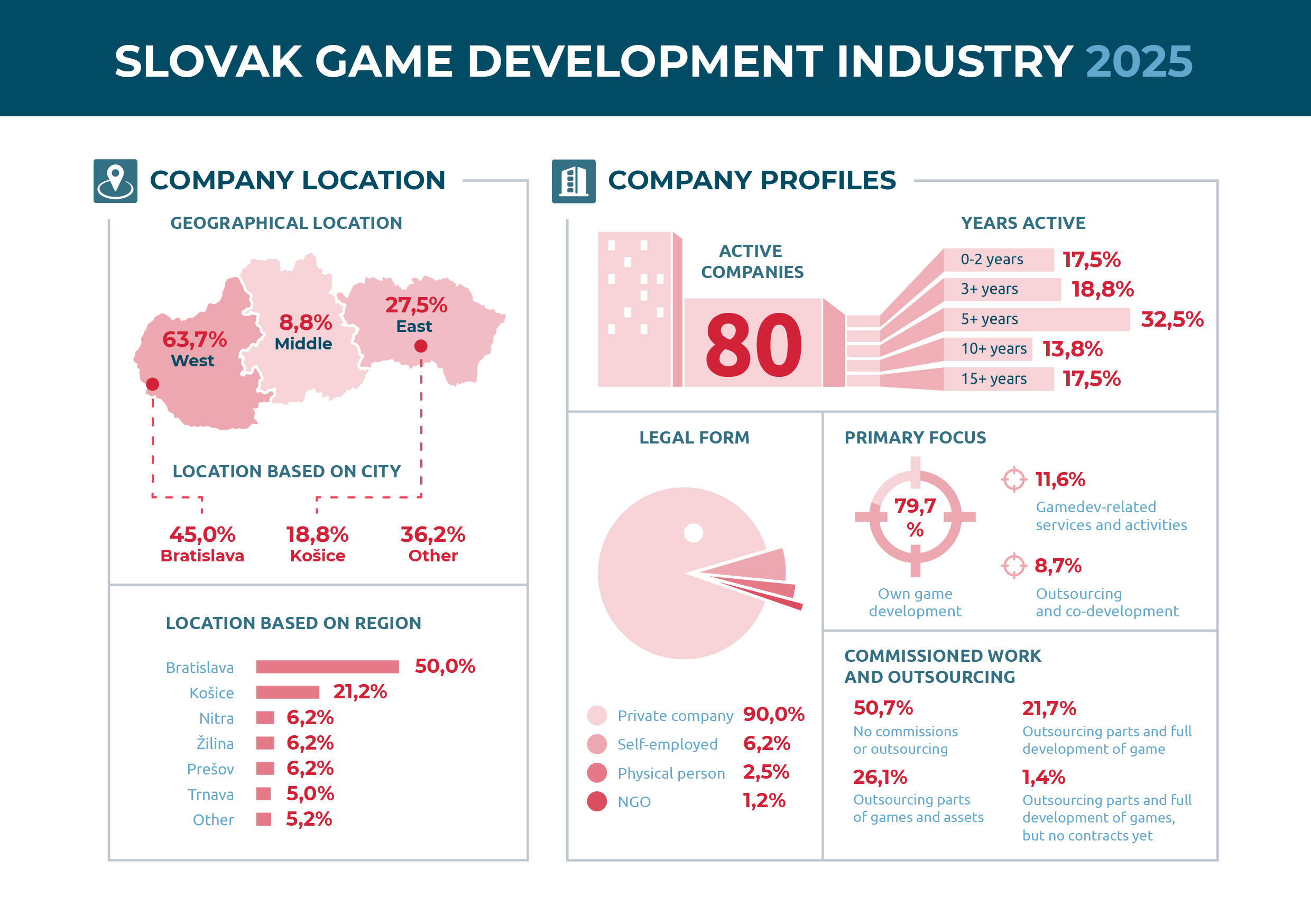
Slovak Video Game Industry Statistics 2025
The Slovak video game industry experienced a period of stabilization and renewed financial growth in 2025, marking a recovery after three years of declining turnover.
- The Slovak video game industry returned to growth in 2025, with total turnover increasing to €75.16 million from €67.8 million in the previous year.
- Economic performance remains highly concentrated, as the top 10% of companies generated €63.6 million, accounting for 84.6% of the industry's total turnover.
- Despite the rise in turnover and an increase in active companies from 77 to 80, industry employment declined for the third consecutive year, falling to 840 people in 2025 from 982 in 2024.
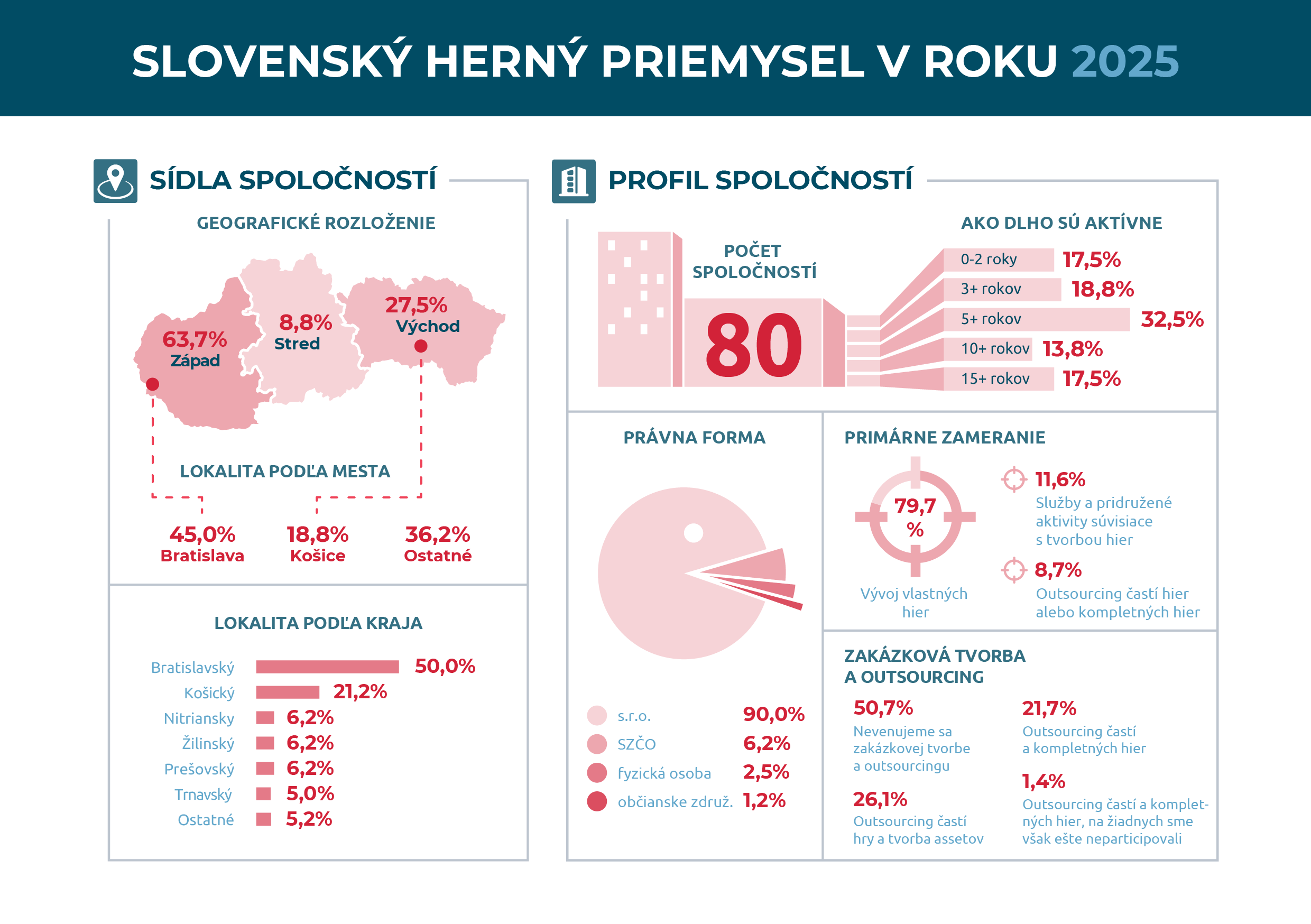
Slovenský videoherný priemysel: Štatistická správa 2025
The Slovak video game industry experienced a period of financial recovery in 2025, marking a return to growth after three years of decline.
- The Slovak video game industry returned to growth in 2025, reaching a total turnover of 75.16 million euros, up from 67.8 million euros in 2024.
- Industry success remains highly concentrated, with the top 10% of companies generating 84.6% of the total sector turnover.
- Employment in the sector declined for the third consecutive year, falling to 840 workers in 2025 from a 2022 peak of 1,080.
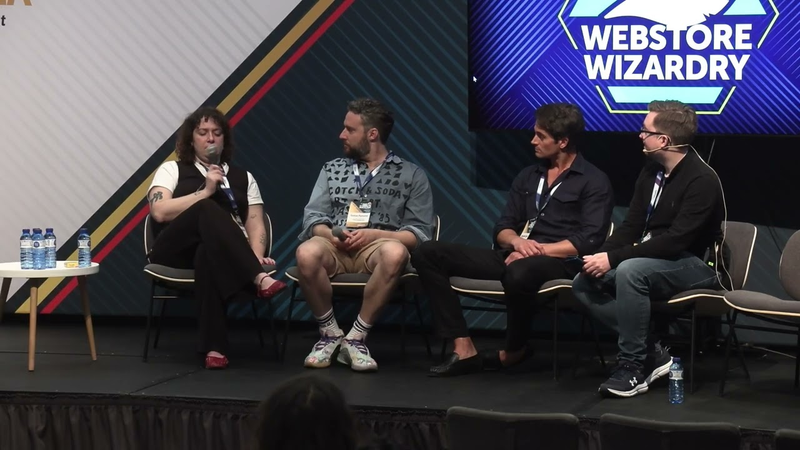
Panel: The 2026 D2C Playbook: Unlocking One Of The Biggest Revenue Drivers In Games.
Direct-to-consumer (D2C) strategies have emerged as a critical imperative for game publishers aiming to reclaim revenue and cultivate deeper, more resilient relationships with their player bases.
- Direct-to-consumer (D2C) strategies are essential for publishers to reduce reliance on platform-controlled ecosystems, thereby mitigating risks from sudden policy shifts and high platform fees.
- The gold standard for monetization is a hybrid approach that combines immediate direct-payment links for quick conversion with robust, dedicated web shops for long-term player habituation.
- Studios should avoid the resource-intensive process of building D2C infrastructure in-house, opting instead for specialized third-party providers to facilitate rapid iteration and optimization.

🎮 The 3 Rewarded UA Personas: Reward Hunter, Casual, Gambler. How TyrAds Segments for Profit
Rewarded user acquisition has evolved into a sophisticated, data-driven sector that currently commands approximately 30% of total advertising budgets.
- Rewarded user acquisition now accounts for approximately 30% of total advertising budgets in the gaming industry.
- Modern platforms are shifting from manual optimization to fully automated, ROAS-based models that prioritize long-term LTV curves between day-7 and day-30.
- AI-driven user labeling categorizes traffic into three distinct personas—reward hunters, casual social users, and gamblers—to prevent ROI erosion from over-reliance on high-cost gambler segments.

MDM Podcast, Season 7, Episode 7: MDM Mailbag #7 (with Matej Lancaric)
The mobile gaming industry is undergoing a structural shift toward web-based onboarding and direct-to-consumer payment strategies to mitigate the impact of platform-level tracking restrictions and high app store fees.
- Mobile game developers are increasingly using web-based onboarding and shops to bypass the 30% platform fees charged by Apple and Google, though major companies remain hesitant to fully move their monetization stacks due to security concerns and the difficulty of auditing web-based transactions.
- Artificial intelligence and no-code tools have drastically shortened production cycles for high-quality video and playable ads, allowing developers to deploy new creatives in as little as one day using pre-built templates.
- The effectiveness of mobile measurement partners (MMPs) remains debated, with smaller studios often lacking the internal resources to manage complex data attribution, leading to a reliance on internal dashboards built on top of Firebase and Looker.

Speed Panel: New Revenue Pipeline: How To Effectively Monetise HTML5 Games.
The panel discussion at Pocket Gamer Connects London 2026 explores the evolving monetization landscape for HTML5 games, emphasizing the transition from purely ad-supported models to more sophisticated, multi-layered revenue strategies.
- HTML5 games are evolving beyond simple ad-supported models to include sophisticated, multi-layered revenue strategies like in-app purchases (IAP).
- Developers can expect web versions of successful mobile titles to generate approximately 10% of their total revenue, with further growth potential as distribution channels expand.
- The web platform offers a strategic advantage by allowing developers to reach new audiences while reclaiming revenue shares typically lost to mobile platform fees.
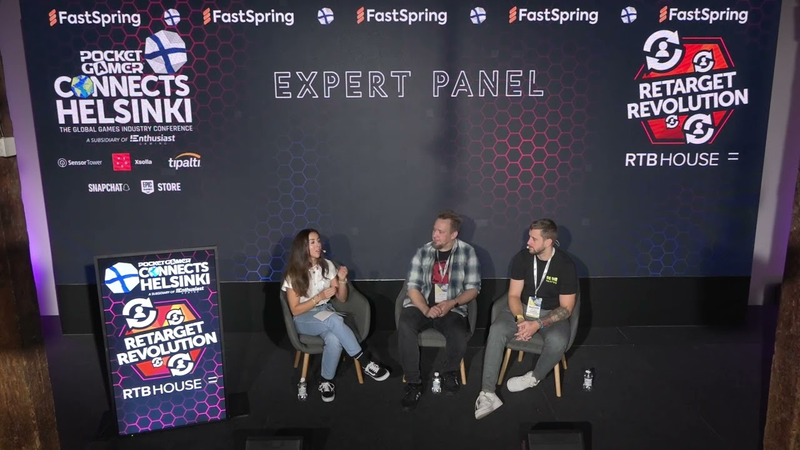
Panel: Future Of Retargeting - Hopes & Expectations.
Retargeting in the mobile gaming industry has evolved into a complex, non-evergreen strategy necessitated by increasing audience fragmentation and stringent privacy regulations.
- Retargeting strategy has shifted from broad outreach to granular, data-driven engagement that leverages in-game monetization metrics to identify and target high-value users.
- Industry focus is moving away from simple Return on Ad Spend (ROAS) toward measuring true incrementality to validate retargeting as a cost-effective alternative to rising user acquisition costs.
- Artificial intelligence is now essential for scaling re-engagement, specifically for automating audience segmentation and predicting individual player preferences in privacy-restricted environments.
Slovak Game Industry Catalog: 2025
The Slovak Game Developers Association has released its 2025 industry catalog, providing a comprehensive overview of the domestic gaming landscape.
- The Slovak game industry currently comprises 77 active companies, with the sector dominated by major studios including Pixel Federation, QORPO, Nine Rocks Games, Superscale, and PowerPlay Studio.
- Geographically, the industry is concentrated in Bratislava and its surrounding region, which hosts 63.7% of all gaming companies.
- Eastern Slovakia, centered around Košice, accounts for 28.6% of the country's gaming companies, with Inlogic Software and Games Farm serving as the region's largest employers.
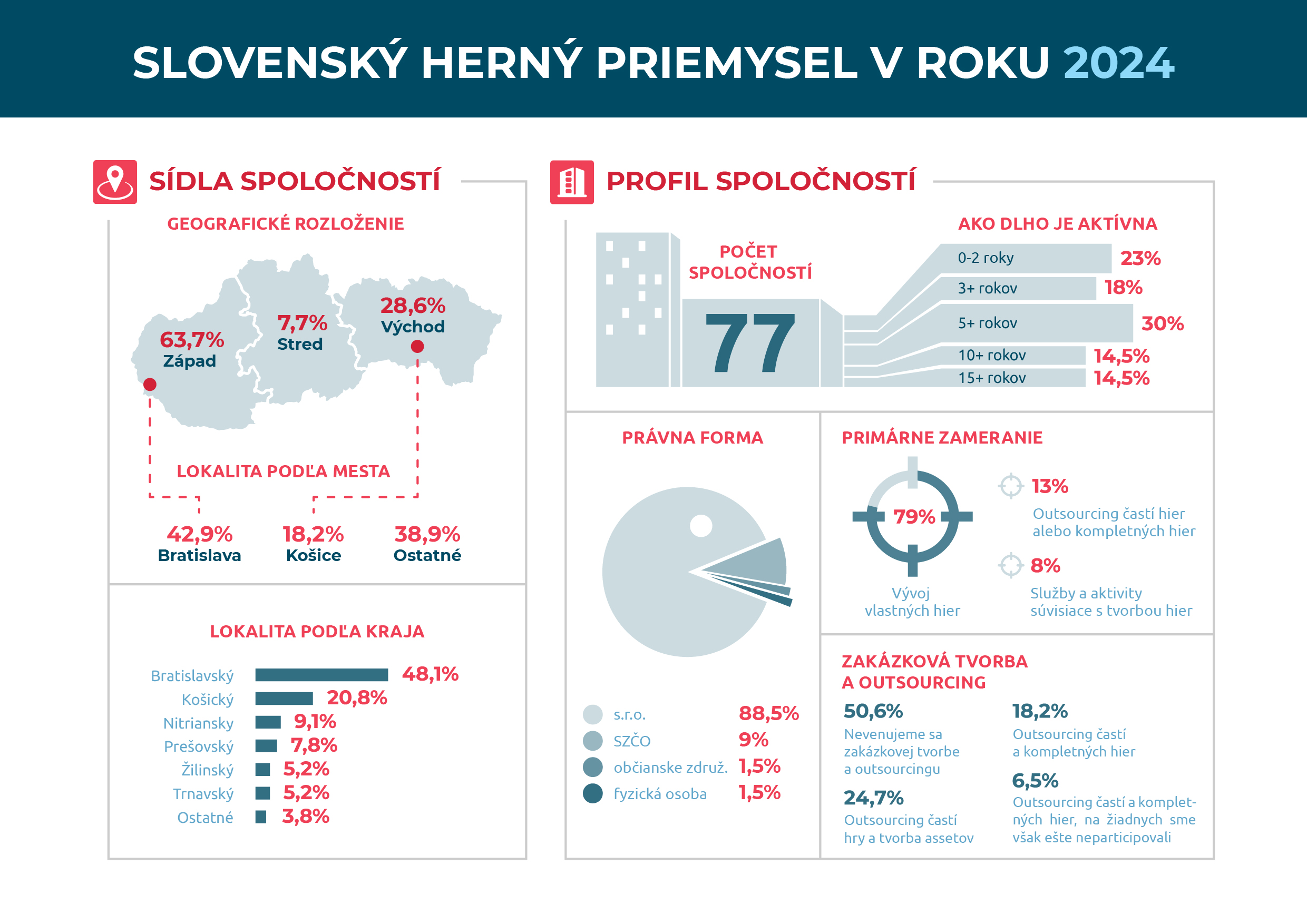
Štatistiky herného priemyslu na Slovensku 2024
The Slovak video game industry experienced a period of consolidation and moderate decline throughout 2024, mirroring broader global market trends characterized by reduced profitability and cautious investment.
- The Slovak game industry generated a total revenue of 67.85 million EUR in 2024, with the top 10% of companies accounting for 56.5 million EUR or 83.2% of the total.
- There are currently 77 active game development companies in Slovakia employing 982 professionals, representing a workforce decrease of 35 people compared to 2023.
- Slovak developers released 83 original games in 2024 and contributed to 178 additional projects through collaborations, with over 366 titles currently in development.
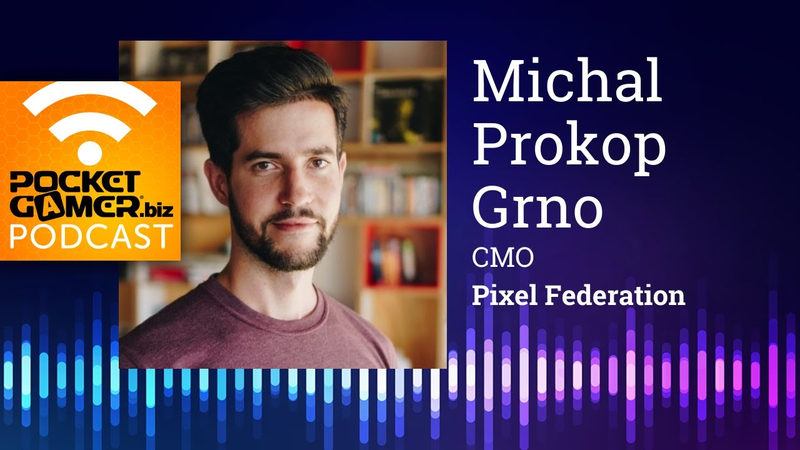
"If You Aren't Curious, Your Bottom Line Will Show It": A CMO's Warning for Game Marketers in 2025
In the evolving landscape of 2025, game marketing success is increasingly defined by a commitment to deep curiosity and data-driven decision-making.
- Financial performance in 2025 is directly tied to a marketer's ability to rigorously analyze player behavior and treat marketing as a calculated, iterative risk rather than a static process.
- The industry has moved past post-IDFA uncertainty by adopting probabilistic attribution and sophisticated modeling, which have restored stability to user acquisition efforts.
- Small, agile studios are achieving significant profitability by targeting niche audiences and maintaining high-quality performance metrics, proving that scale is not the sole determinant of success.
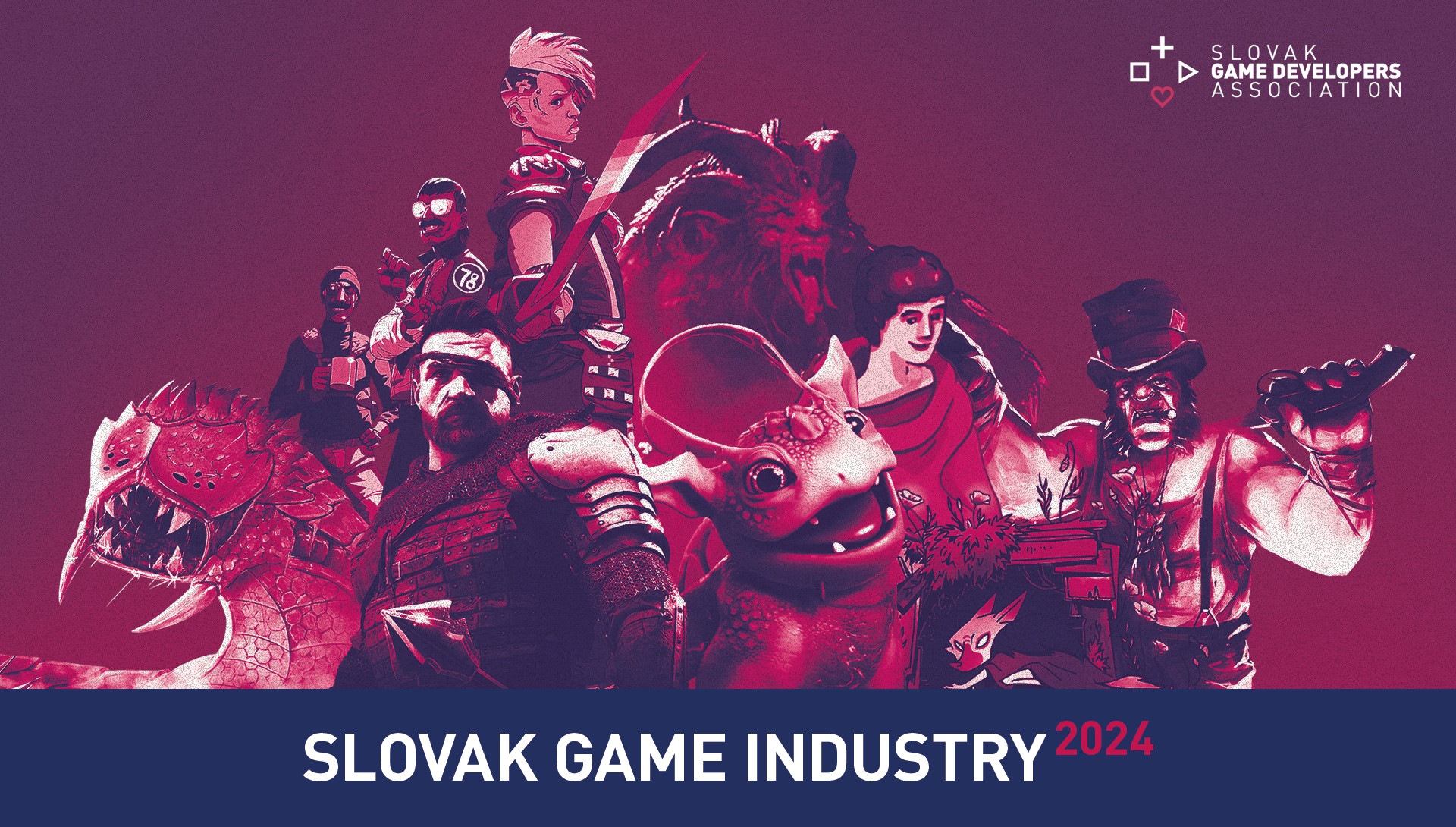
Slovak Game Industry: 2024 Catalog
The 2024 Slovak Game Industry catalog serves as a comprehensive reference for the current state of the game development sector in Slovakia.
- The Slovak Game Developers Association (SGDA) has released its 2024 industry catalog, providing a comprehensive overview of the nation's game development sector.
- The report features detailed quantitative data on the Slovak game industry, covering economic performance, demographic trends, and other key industry indicators.
- The catalog serves as a directory for the local ecosystem, including indie developers, small studios, and major industry players such as Pixel Federation, QORPO, PowerPlay Studio, Inlogic Software, Nine Rocks Games, and Games Farm.